Proper Grazing for Deer and Other Wildlife

Proper Grazing for Deer and Other Wildlife

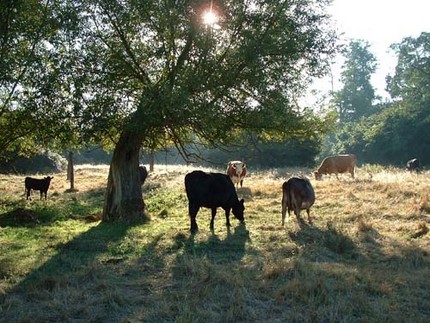
A ranch must be divided into at least two pastures before even the least complex two pasture/one herd deferred-rotation grazing system can be implemented. If not cross-fenced, the land manager would need to have access to other areas where livestock could be moved to during the prescribed rest periods. Electric fencing is a lower cost and less labor-intensive alternative to barbed wire for dividing a ranch into multiple pastures.

For a deferred-rotation grazing system to be most effective, all the pastures in the system should be more or less equal in size and/or have similar grazing capacities (e.g., pastures on the most productive, deep soils of a ranch would have higher livestock grazing capacities and should therefore be smaller than pastures on shallower, less productive soils). Continue reading “Proper Grazing for Deer and Other Wildlife”

Vegetation Management – Deer Cover Requirements

Vegetation Management - Deer Cover Requirements

The white-tailed deer has a certain requirement for cover. Cover provides a sense of security from disturbance and protection from inclement weather and predators. The amount and kind of cover vary somewhat throughout the country.

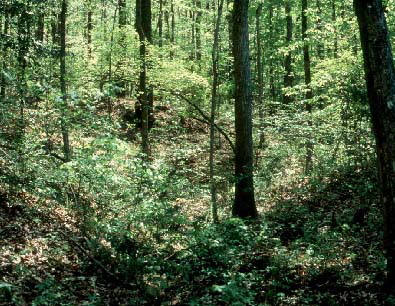
A stand of herbaceous plants may provide adequate cover for deer in open, grassland country, even though deer prefer woody cover (trees and shrubs). The best cover for a large species such as white-tailed deer is a pattern or mosaic of woody brush and trees interspersed within open areas at an approximate 2/1 ratio of open area to woody cover. Clumps or strips of brush should be wide enough so that a person cannot see through them from one side to the other during the winter months when deciduous species are bare of leaves. Cover strips should be as continuous as possible to provide travel lanes. A habitat that provides several different types and arrays of cover benefits more species of wildlife than a habitat that has limited types, amounts, and distribution of cover.

Management of vegetation, whether it be deciduous woodlands, coniferous woodlands, mesquite woods, or open grasslands, requires long-term planning. Any vegetation manipulation practice will have an impact on resident wildlife species, either good or bad, depending on the type of treatment used, the degree of use, and location. Before implementing vegetation control techniques, determine what the long-term effects will be for deer and other wildlife species that occur in the area and minimize the negative impacts. Consider the location and size of sensitive wildlife habitats that provide important nesting or roosting sites, feeding areas, desirable wildlife food producing plants, cover, water, and space needs.

Wildlife can be displaced by disturbance from an area without adequate escape or security cover. The amount and distribution of cover on adjacent lands need to be taken into consideration when assessing the cover needs of wide-ranging wildlife species such as deer and turkey. A small ranch would need a larger amount of security cover on a percentage basis than would a larger ranch where the vastness of the area provides security. The need for security cover is not as great for a deer herd that is enclosed by a high fence since the fence prevents deer from moving to areas with denser cover to avoid disturbances.

Typically, increased predator control is allowed on high-fenced properties as well. However, having suitable cover available for an enclosed deer herd to retreat into when disturbed is highly recommended, and may keep the animals calmer and less stressed, and ultimately more productive.

Magellan Introduces the eXplorist 500 LE

Magellan has finally announced the Magellan eXplorist 500 LE, a new GPS receiver for hikers, kayakers, fisherman, and other outdoor enthusiasts. What is unique about the eXplorist 500 LE is that you can choose between triple-A batteries or a rechargeable Lithium Ion battery. The new Magellan 500 LE comes with a 14 channel parallel receiver which is WAAS enabled.

The eXplorist 500 LE is waterproof and weighs less than four ounces. Maps are displayed on a 2.3 inch color, backlit display. You can store additional maps on SD cards.

Packages are offered to bundle the Magellan eXplorist 500 LE with certain maps for different activities. The bundles offer 25% off the original map cost.

Hikers can use the 500 LE to calculate area, perimeter, as well as view vertical profiles of trails. Kayakers and fishermen are offered tools to view hunting and fishing times as well as a sun and moon calculator. The MapSend Lake maps display shorelines, water depth charts, vegetation, bottom composition, and locations of boat ramps.

Geocachers can use the Magellan eXplorist 500 LE for paperless caching by downloading geocache data directly to the 500 LE. Purists can also directly enter coordinates into the GPS.

Blue Tongue in White-tailed Deer

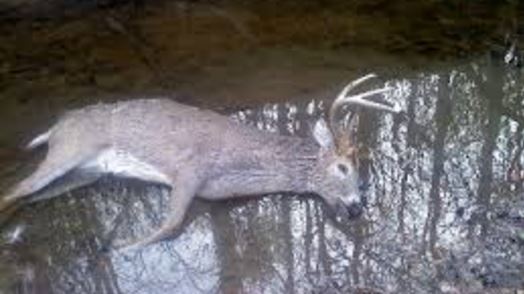
Blue tongue is an insect-borne, viral disease primarily of sheep, but it occasionally goats and even white-tailed deer. The disease is non-contagious and is only transmitted by insect vectors, especially during periods of drought. The disease is actually caused by a virus belonging to the family Reoviridae.

Species That Can Be Affected

As mentioned, this is primarily a disease of sheep but other species such as goats, cattle, buffalo, antelope and whitetail deer can be infected. Don’t worry, humans can not be infected.

Distribution of Blue Tongue

The virus is present in the United States, so any area can potentially harbor the virus. However, outbreaks typically occurs repeatedly in areas where it has occurred before and especially during dry conditions.

Blue Tongue Disease in Deer

Key Signs To Look For

Characters of disease include fever, widespread bleeding of the oral and nasal tissue, excessive salivation, and nasal discharge. In acute cases the lips and tongue will become swollen and this swelling may extend below the lower jaw.

Lameness, due to swelling of the cuticle above the hoofs and emaciation, due to reduced feed consumption because of painful inflamed mouths, may also be symptoms of this disease. The “blue tongue” that actually gives the disease its name occurs only in a small number of cases.

How Blue Tongue is Spread

The virus cannot be transmitted between susceptible white-tailed deer without the presence of insect carriers. The incidence and geographical distribution of bluetongue depends on seasonal conditions, the presence of insect vectors, and the availability of the density of deer. The insect carriers, biting midges, prefer warm, moist conditions and are in their greatest numbers and most active after it rains.

Life of the Blue Tongue Virus

Bluetongue virus does not survive outside the insect vectors or susceptible hosts. Deer carcases and products such as meat and hide are not a method of spread. Survival of the virus within a location is dependent on whether the vector can over winter in that area.

Controlling Blue Tongue

Within a wild population of deer, there is not much that can be done. With domestic animals, you can use a combination of quarantine and movement controls to prevent spread and reduce transmission and protect susceptible animals. As with just about every disease, less animals will become infected under lower densities.

Fertilizing Your Whitetail Food Plot

Once you’ve had your soil tested, identified your soil’s pH, and corrected any issues, the next concern is how much fertilizer will you need? Nitrogen (N), phosphorus (P), and potassium (K) are the main concerns. Typically, one of the most obvious signs of a lack of nitrogen is stunted forage growth and yellow leaves or stems. Why does this happen?

Because nitrogen makes forage, leaves grow green and grow fast, especially if you are planting and growing grasses. However, if you are planting clover, the nitrogen won’t visibly help the plant since clover fixes its own nitrogen, but planting clover with grassy plants does work in a mutually positive way.
Fertilizing Your Food Plot

Buying Fertilizer for Your Food Plot

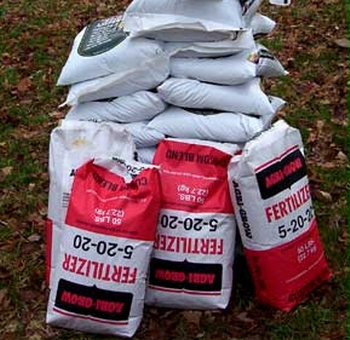
On each bag of fertilizer there will be three numbers corresponding to the ratio or nitrogen, phosphorus, and potassium per 100 pounds. For example, a fertilizer marked as 5-10-15 has five pounds of nitrogen, 10 pounds of phosphorus, and 15 pounds of potassium for every 100 pounds of fertilizer.

If your soil test results show that nitrogen is the biggest deficiency of the soil, ammonium nitrate may be your best option. Ammonium nitrate is listed as 34-0-0, so 34 pounds of nitrogen per 100 and zero phosphorus or potassium.
Food Plot Fertilizer Recommendations

Food Plot Fertilizer Recommendations

Soil reports are more than the big three macronutrients. Detailed soil reports also list secondary nutrients such as calcium, magnesium, and sulfur as well as the micronutrients zinc and manganese, but once optimum pH is achieved, the secondary and micronutrients will often be corrected. Pay attention to pH as it’s important for micronutrients and the overall production value of the food plot.

Ideally, you want to get the pH level around 6.5 for optimum growth. Buying lime in bulk is a very considerable savings over the 40-pound bags of pelletized lime. In some areas, you can buy and have bulk lime spread over the land for around $50 a ton. Pelletized lime is about $3 per 40-pounds, so it would take 50 bags to equal one ton. That’s $50 for a bulk ton versus $150 a pelletized ton, making a big difference on a per acre basis. It adds up!

How Much Per Acre?

In short, once you have your soil analyzed, do what is necessary to correct for your soil’s deficiencies in order to get great performance out of your food plot, but shop around. Do a little shopping around online to get an idea on cost then call, or better yet, head to the feed store or agriculture supply dealer find out where you can save some money! Now, you are just about ready for that cool season or warm season food plot.