The Importance of Soil Samples for Your Deer Food Plot

The Importance of Soil Samples for Your Food Plot

No soil is perfect. And by the way, it’s soil, not dirt. Dirt is a four letter word. Well, at least according to the professor during my “Introduction to Soils” class I took in college. But once again, no soil is perfect. Rain and previous growth will remove nutrients and affect pH. A soil test will reveal these deficiencies and that is exactly why it is necessary.

Soil testing involves collecting samples of soil from your food plots, filling out a form describing your plans for the plot, and mailing the samples to a lab for analysis. Once the lab makes an appraisal of the soil, you will receive a soil sample report containing the soils deficiencies and recommendations to maximize its growing potential.

It cost about $8 to $10 to have soil analyzed at a university lab and your county extension agent can supply the paperwork and supplies for collecting and mailing soil samples. Contact them through the listing in your phone book or get online and either call or email. Mossy Oak’s Web site provides soil testing service for a mere $7.50. You can contact them at www.mossyoakbiologic.com.

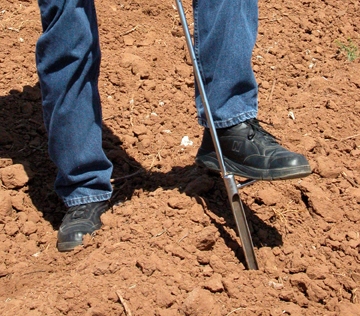
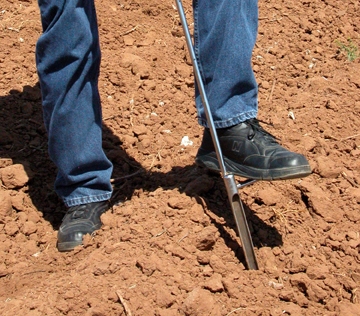
For every 1 to 3-acre food plot, it is recommended that you collect 10 to 20 sub samples of soil. First, remove any plant residue from the ground. Using a shovel, garden spade, or soil probe, make a vertical core or thin slice down to the depth that will be plowed, which is typically about 4-inches. Place the sub-sample into a clean bucket and mix it well. Be sure the soil is not excessively wet and use a clean bucket without lime, fertilizer, or pesticide residue because this will skew the lab results. Next, mix the soil thoroughly and pack the soil into boxes or bags for shipping to the testing lab.

Once you receive your test report, an important measurement to pay attention to is the pH. Soil pH affects the plant’s ability to absorb nutrients and grow. A common problem with many soils is that they are too acidic (which means they have a low pH). In fact, it’s quite common for soil test reports to come back recommending three tons of lime per acre! Too much lime is rarely a problem, so don’t worry if you think you put out slightly more limestone than the soil report recommends.

In acidic soils, the nitrogen and phosphorus will be bonded to the soil and will be unavailable for the plant. Even when fertilizer is applied, only a small amount can be used by the plant and the rest will remain locked in the soil particles. Lime raises the pH level unlocking soil nutrients and helping in the break down of organic matter for use by the plants.
White-tailed Deer Food Habits – What They Eat

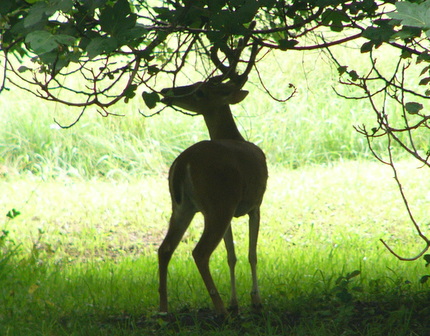
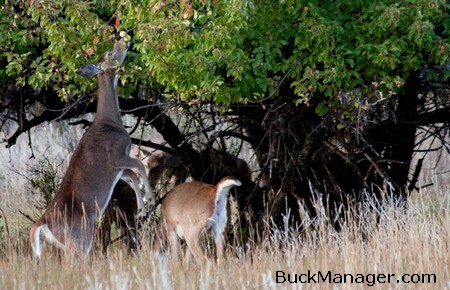
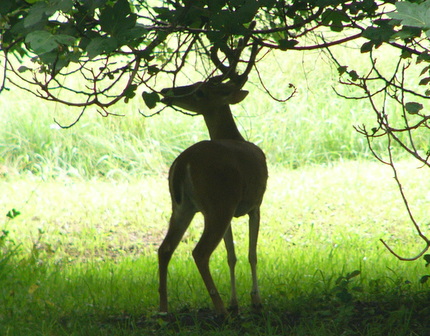
What do deer eat? Deer eat mostly browse (leaves, twigs, shoots of woody plants and vines) and forbs (weeds and other broadleaf flowering plants). They do eat some grass, but only when it is young, green, and succulent. Sheep, goats, and exotic game species compete directly with the whitetail for preferred deer foods.

Deer food shortages usually occur during late summer and winter months. Adequate forage is usually available during the spring and fall seasons because of mild temperatures and increased rainfall. A variety of foods and habitat types is essential to good deer production and survival.

What do Whitetail Deer Eat?

Deer eat a variety of plants, and different plant species become more important at different times of the year and importance can even vary year-to-year depending upon environmental conditions. The following plants are examples of some good deer foods which are readily eaten by deer when and where they are available.

Browse: oak leaves and acorns, yaupon, greenbriar, hackberry, mulberry, sumac, hawthorns, poison oak, American beautyberry, wild cherry and plum, wild grape, honeysuckle, dogwood, elm, blackberry and dewberry, acacias, walnut, and chinaberry. The will utilize additional plants species depending upon the area you are located.

Forbs: Illinois bundle flower, euphorbias, bayflower, tickclovers, clover, verbena, wild lettuce, wild onions, old man’s beard, wildbean, snoutbean, lespedezas, spiderwort, vetches, lamb’s quarters, plantain, groundcherry, pigweed, carelessweed, and partridge pea.

Grasses: rescue grass, wintergrass, witchgrass, panic grasses, sedges, and rushes, as well as wild and cultivated rye, oats and wheat.

Parrie Haynes Ranch – Celebration of History

The Friends of Parrie Haynes Ranch has arranged to have more than 200 young people attend an event on Saturday, October 13, 2007 to mark the 50th anniversary of the passing of Parrie Haynes, who donated the property near Killeen that eventually became a Texas Parks and Wildlife Department outreach facility.

Parrie and Allen Haynes were married in 1895 and started working as tenant farmers. Through hard work and determination, and by saving and living a frugal life, they eventually built a modest cattle empire. After Mr. Haynes died in 1953, Parrie took over the ranch. The Haynes were very fond of children, but were childless. So, upon her death in 1957, Mrs. Haynes bequeathed $100,000 to the Killeen School district for scholarships, and donated about 4,500 acres of her beloved ranch to the Texas Youth Commission to serve “the orphans of Texas.”

In 1993, the Stae of Texas, specifically Texas Parks and Wildlife Department, in partnership with the Texas Game Warden Association, leased Parrie Haynes Ranch to establish camps for children. In 2003, the Camp Coca Cola Foundation (now the C-5 Foundation) generously added new facilities at the ranch which are used for their summer residential camping program. Today, the Communications Division manages the ranch as a youth activity, conference, and equestrian facility open to groups on an advance-reservation basis. This Saturday from 10 a.m.- 4 p.m. youth will fish, nature walk, ride ponies and enjoy other activities at the 50th anniversary celebration. At 2 p.m., the friends group will unveil a new stone pedestal and marble plaque dedicated to Parrie Haynes’ legacy.

White-tailed Deer Food Preferences

White-tailed Deer Food Preferences

It is commom knowledge that deer need food, water, shelter and space for survival. When a casual observer sees the countryside with abundant trees and plants it may appear that deer have plenty to eat. But that is not necessarily the case. First, some plants are not edible. Second, some plants are not palatable. And lastly, some are only availalbe at certain times of the year. White-tailed deer use three major plant groups as food.

They are: 1) forbs, which consists of broadleaf herbaceous weeds, 2) browse, which consists of leaves and tender twigs of woody plants, and 3) grasses. Deer flat-out prefer forbs, but these plants are normally available only in certain seasons and if rains do not come at the right time, they may not be available at all. Continue reading “White-tailed Deer Food Preferences”

Texas Warns Hunters About Fever Ticks

Texas Warns Hunters About Fever Ticks

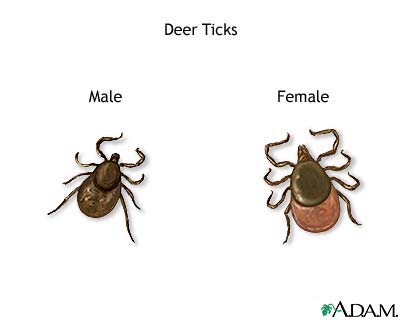
Texas Parks & Wildlife Department sent out a news release urging deer hunters and meat processors, specifically those in South Texas, to take additional precautions when harvesting and handling deer carcasses during the upcoming season, due to concerns about possible spread of fever ticks in the region. Portions of Maverick, Dimmit and Webb counties are currently under livestock quarantine by the Texas Animal Health Commission due to heightened levels of fever ticks outside the permanent quarantine zone along the Rio Grande border.

If not contained, fever ticks could continue to spread northward outside the permanent fever tick quarantine area and become re-established in other areas of Texas. In addition to cattle, horses, white-tailed deer, Nilgai and elk can act as hosts for the tick.

“We’re asking that hunters use common sense and take precautions when handling and transporting deer taken on ranches within the quarantine zone,” said Wildlife Director Mike Berger, PhD. See the complete news release online by clicking here.