Shooting Spikes: Yes or No?
Deer management and selective harvest are closely connected when it comes to improving buck antler quality. One question that consistently arises among deer hunters is whether shooting spike bucks helps improve herd quality. That’s a valid question, but it doesn’t exist in a vacuum. Whether or not to harvest a spike buck depends on the unique goals, habitat conditions, and management strategy of the property.
To be clear, this article focuses exclusively on 1½-year-old spike bucks carrying their first set of antlers.
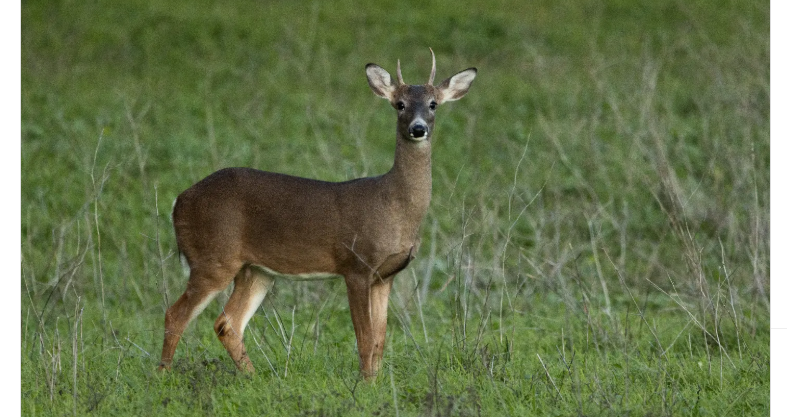
Effective deer management focuses on maintaining a balanced herd structure, ensuring adequate nutrition, and allowing bucks to reach maturity. Shooting spikes at 1½-years of age does not promote older age class bucks. However, selective harvest is one of the primary tools wildlife managers and landowners use to achieve these goals. By making intentional decisions about which deer are harvested and which are allowed to mature, managers can positively influence the age structure of the herd and create conditions that support the development of larger, healthier antlers.
One of the most important factors affecting antler quality is age. Many bucks do not reach their full antler potential until they are five years old or older. When young bucks are harvested before they mature, the herd consists primarily of younger age classes. This type of management limits the overall number of trophy-quality deer on the property. Selective harvest programs often encourage hunters to pass on young bucks, giving them additional years to grow and express their genetic and nutritional potential. As a result, more mature bucks become available, leading to improved antler size and characteristics across the managed herd.
Nutrition also plays a critical role in antler development. Deer management practices such as habitat improvement, food plot establishment, and population control help ensure that deer have access to adequate resources. When deer densities exceed the land’s carrying capacity, competition for food increases, which can negatively affect body condition and antler growth. Selective harvest helps balance deer numbers with available habitat resources, allowing remaining deer to benefit from better nutrition. Bucks with access to high-quality forage are more likely to develop larger antlers with greater mass, tine length, and overall symmetry.
The topic of shooting spike bucks is often debated among hunters and wildlife managers. Some hunters believe that harvesting spike bucks can improve the genetic quality of the herd, while others argue that antler characteristics in yearling bucks are heavily influenced by age, nutrition, and environmental conditions rather than genetics alone. Modern deer management programs often emphasize age-based harvest strategies over simple antler-based decisions. In many cases, a yearling spike buck may develop into a respectable mature buck if given adequate time and resources. Therefore, decisions regarding shooting spike bucks should be based on the specific management objectives, habitat conditions, and herd data available for a particular property.
Ultimately, successful deer management combines science-based population control, habitat enhancement, and selective harvest strategies. When these elements work together, they create an environment where bucks can reach maturity and maximize their antler potential. While selective harvest alone cannot guarantee exceptional antler quality, it is an essential component of a comprehensive management plan designed to produce healthier deer and increase the number of mature bucks with impressive antler growth. For landowners and hunters seeking to improve hunting opportunities and herd health, integrating selective harvest with sound deer management practices remains one of the most effective approaches available.
Shooting Spike Bucks
There are several situations in which harvesting a young spike buck may align with a property’s deer management objectives. On properties focused on balancing deer numbers with available habitat, harvesting spike bucks can help maintain population goals while providing hunting opportunities. Removing a spike buck can reduce competition for limited food resources, potentially benefiting the overall health of the herd.
For hunters managing properties with specific harvest quotas or quality deer management plans, taking a spike buck may be preferable to harvesting a more advanced young buck that has greater future antler potential. Ultimately, the decision should be based on the property’s age structure, habitat quality, population density, and long-term goals rather than antler characteristics alone.
12 Reasons to Shoot Spike-Antlered Bucks
- Helps achieve harvest quotas while preserving larger-antlered young bucks with greater future potential.
- Can assist with managing overall deer population density on properties where deer numbers exceed habitat capacity.
- May reduce competition for food, water, and cover resources among deer in the herd.
- Supports management plans that prioritize a balanced buck-to-doe ratio.
- Can provide hunters with additional harvest opportunities while still meeting management objectives.
- Allows landowners to focus harvest pressure on bucks exhibiting below-average antler development compared to peers of the same age.
- May help maintain a healthier herd when combined with broader habitat and population management strategies.
- Can reduce browsing pressure on native vegetation and food plots in areas with high deer densities.
- Provides valuable biological data, such as age, weight, and body condition, that can inform future management decisions.
- Aligns with some property-specific quality deer management programs that call for the selective removal of certain young bucks.
- Helps ensure available nutrition is distributed among fewer deer, potentially benefiting the growth and health of the remaining herd.
- Can contribute to long-term herd management goals when used alongside habitat improvements, doe harvests, and age-structure management.
14 Reasons for Not Shooting Spikes
- A spike buck’s antler characteristics as a yearling may not accurately predict its mature antler potential.
- Poor nutrition, late birth dates, habitat conditions, and environmental stress can cause yearling bucks to develop spike antlers despite having strong genetics.
- Harvesting spike bucks removes deer that might develop into quality mature bucks if given additional years to grow.
- Antler development is influenced more by age and nutrition than by antler appearance in a buck’s first year
- Selective harvest based solely on antler characteristics can lead to mistakes in identifying which bucks truly have lower genetic potential.
- Shooting spike bucks can reduce the number of mature bucks available in future hunting seasons.
- Research in some regions suggests that many spike bucks eventually develop respectable antlers when allowed to reach maturity.
- An aggressive spike-buck harvest strategy can skew the age structure of a herd toward younger bucks.
- Passing young bucks, including spikes, often supports management programs focused on increasing the population of mature bucks.
- Focusing on doe harvest and overall population management may have a greater impact on herd health than targeting spike bucks.
- Determining a buck’s age, body condition, and overall health can provide more useful management information than evaluating antlers alone.
- Some wildlife biologists argue that culling spike bucks offers little measurable improvement to overall herd genetics in free-ranging deer populations.
- Harvesting spike bucks may conflict with management goals centered on maximizing buck age structure and trophy potential.
- A spike buck that survives and reaches 4½ to 6½ years of age may contribute significantly to the mature buck segment of the herd.
Are Spikes Inferior Bucks?
If a landowner or hunting club is practicing intensive buck management, harvesting spike bucks may be considered part of a highly selective harvest strategy. The goal of these programs is often to maximize the number of mature bucks with superior antler characteristics by carefully evaluating and managing the buck segment of the herd.
In this context, some managers choose to harvest young spike bucks that appear to be underperforming relative to other deer in the same age class, believing that doing so may help direct limited habitat resources toward bucks with greater antler potential. While this approach remains debated among wildlife biologists, it is a common component of some intensive deer management programs focused on producing older-age-class bucks with exceptional antler quality.
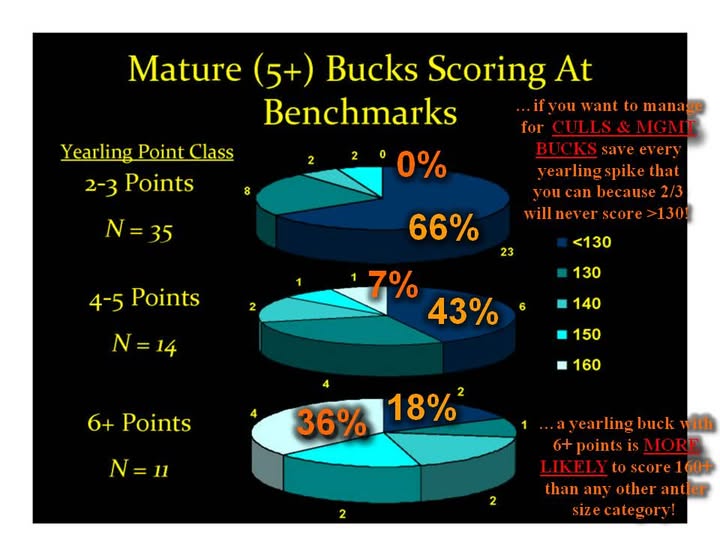
Data collected in South Texas strongly suggests that spike buck deer are inferior to other bucks within the same cohort. Mickey W. Hellickson recently shared this information in a Facebook post:
IN SOUTH TEXAS, THE ANSWER IS UNEQUIVICALLY, YES!!
This slide is the result of 10+ years of random captures of wild bucks across 5 different South Texas ranches as part of the South Texas Buck Capture Project that I created & co-directed.
The research took place starting in the fall of 1998 & by the last year of the study nearly 5,000 different wild, South Texas bucks had been captured, measured & entered into the data set.
More importantly, were all of the 100’s of buck fawns & yearling bucks that were captured. These two age classes are the only two age classes where aging a deer “in hand” is 100% accurate. This was the key that set our study apart from all previous studies… capturing & marking known-aged bucks & then later “recapturing” (thru hunter harvest &/or recapture) those same buck fawns & yearling bucks at older ages through age 7 years. Targeting fawns & yearlings was my “lightbulb moment” that has later been copied over & over again.
The data and sample sizes were the world’s largest at the time… & the results are black & white to this day nearly 30 years after our first capture!
The results are unequivocal… SPIKES (2- & 3-point bucks) GROSS-SCORED AN AVERAGE OF 14 TO 22 INCHES SMALLER THAN THEIR FORK-ANTLERED (4+ antler points) COUNTERPARTS AT EVERY AGE CLASS THRU 7.5 YEARS OLD! Those are huge differences!!
Even BIGGER DIFFERENCES are found when comparing yearling spikes to yearling bucks with 6+ total antler points.
Obviously, exceptions to the rule that spikes are inferior happens, especially with captive-raised bucks. However, the bottom line is that the lowest scoring yearling bucks almost always remain within the lowest scoring group at every older age class, including captive-raised bucks.
One copycat study that followed our study in 1999, falsely reported a different result, but their analyses were seriously flawed, as was pointed out in a published, peer-reviewed rebuttal. Another study recently reported indicated smaller differences between spikes & forks, but this study was only conducted on one ranch & the ranch was managed much differently than the 5 ranches in our study & frankly, much differently than the vast majority of ranches across South Texas are managed.
And it doesn’t matter at all what is behind the reason the buck was a spike in the first place. It doesn’t matter if he was born late. It doesn’t matter if he was born to a young, inexperienced mother. It doesn’t matter if he had 2-3 siblings & had to share nursing bouts more often than other fawns. None of these “reasons” matter, because when a buck fawn is stunted for whatever reason, on average, he remains stunted throughout the rest of his life. Obviously, we had no clue why any of the spikes in our study were spikes.
CONCLUSION – despite the fact that spikes are inferior, it doesn’t at all mean that they should be shot on sight. The decision whether or not to shoot spikes on your ranch, or lease depends far more on your individual goals than the fact that spikes are inferior. More on this in another post to come.
The Spike Debate: Everyone is Correct
The research makes a compelling case. In fact, I agree with the the findings. However, protecting spikes makes sense is many situations, too. In the end, the applicability of the practice depends on the specific situation.
After considering all the information provided in this article, it becomes clear that there is no universal right or wrong answer. Every property is different, and deer management goals can vary significantly from one landowner to another. Ultimately, the decision to harvest a spike buck rests with the landowner establishing the management objectives and the hunter behind the trigger.
Factors such as herd density, habitat quality, buck age structure, and long-term goals should all play a role in that decision. Whether a hunter chooses to shoot or pass a spike buck, the most important thing is that the choice aligns with a well-thought-out management strategy for the property.