Screwworms in Wildlife: Management Strategies in Texas

Screwworms in Wildlife: Risks, Impacts, & Management in Texas

Screwworms in wildlife represent one of the most serious parasitic threats to mammals in North America. Although the United States successfully eradicated the New World screwworm decades ago, wildlife managers, livestock producers, hunters, and conservationists remain alert because the pest has returned to Texas. The devastating impacts these parasites can have on wild animal populations.

Texas, with its extensive wildlife resources, international border, and diverse ecosystems, is particularly important in ongoing surveillance and prevention efforts.

Understanding how screwworms affect wildlife, which species are most vulnerable, and how managers can detect and reduce outbreaks is critical for protecting both wild animals and agricultural interests.

Screwworms in Wildlife

What are Screwworms?

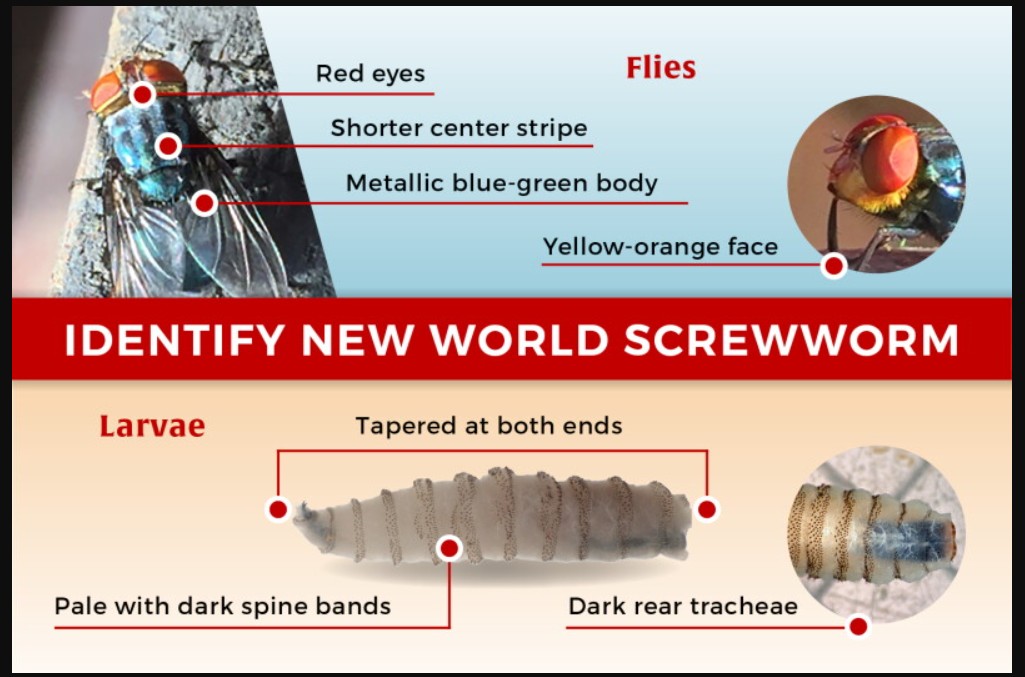
The New World screwworm is the larval stage of a parasitic fly, Cochliomyia hominivorax. Unlike many other fly larvae that feed on dead tissue, screwworm larvae feed on living flesh. Adult female flies lay eggs in open wounds, including cuts, abrasions, insect bites, branding marks, antler velvet injuries, or surgical sites.

Once the eggs hatch, the larvae burrow into the wound and feed on healthy tissue. As they grow, the infestation becomes larger and more severe, attracting additional flies that may deposit even more eggs. Without treatment, animals can suffer extensive tissue damage, secondary infections, debilitation, and death.

The name “screwworm” comes from the larvae’s screw-like appearance and their tendency to burrow deeply into wounds.

Why Screwworms Are a Concern in Texas

Texas has long been at the forefront of screwworm prevention efforts. Historically, screwworm infestations caused significant losses among livestock and wildlife throughout the state. Before eradication, ranchers and wildlife managers spent enormous amounts of time and resources treating infected animals.

Today, the primary concern is reintroduction. Texas shares ecological and economic connections with regions where screwworms could potentially spread northward. The state’s large populations of deer, exotic game species, feral hogs, livestock, and other wildlife provide abundant hosts should an outbreak occur.

Because many wildlife species roam across vast landscapes, a screwworm infestation could spread rapidly before detection. This makes surveillance and early response especially important.

Screwworms in Wildlife: Species at Highest Risk

Virtually any warm-blooded animal can become infected with screwworms, but some species face higher risks due to their behavior, habitat use, or frequency of injuries.

White-Tailed Deer

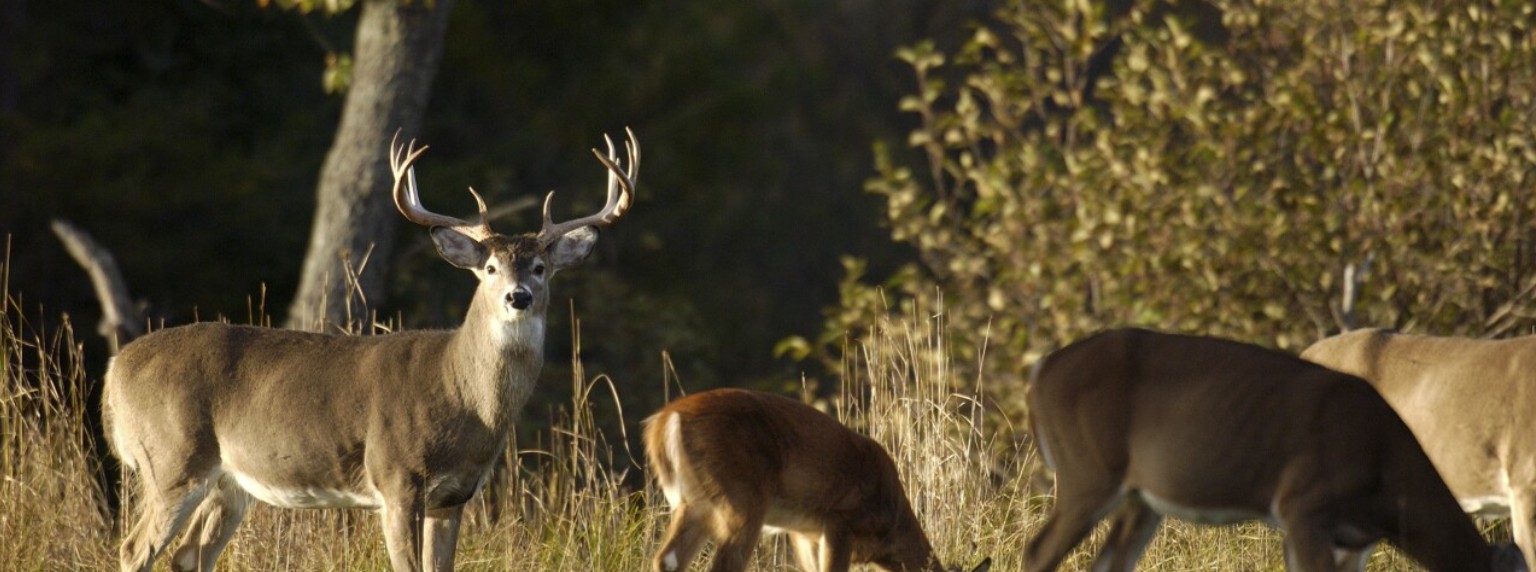
White-tailed deer are among the wildlife species most vulnerable to screwworm infestations in Texas. Screwworms and deer populations don’t coexist well. The eradication of the New World screwworm more than 50 years ago is widely considered one of the key factors behind the success of Texas’ deer herd.

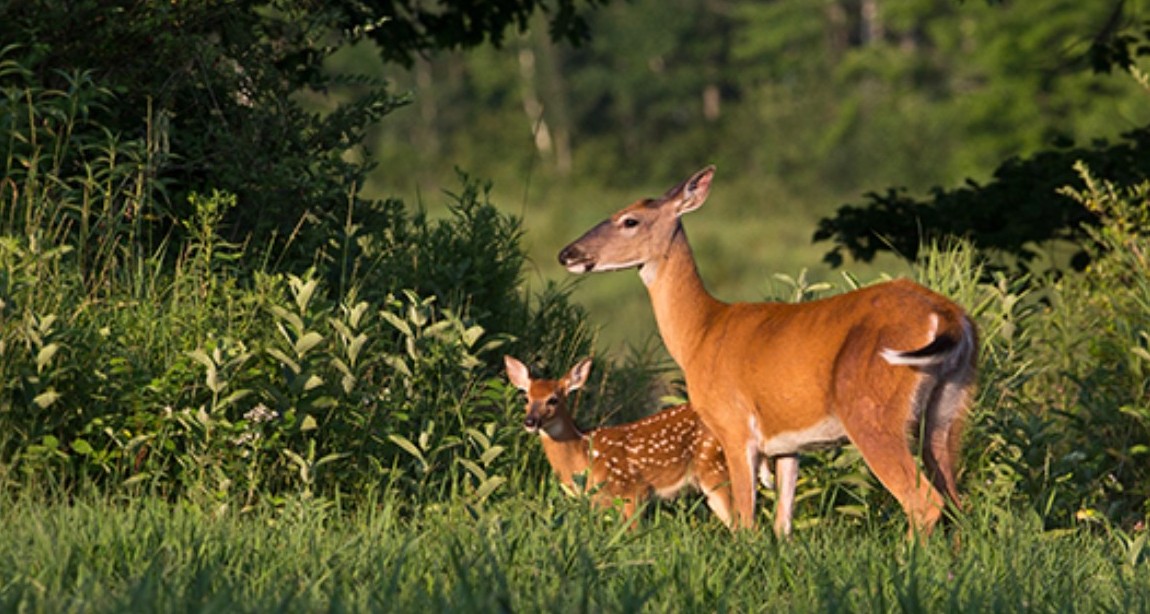
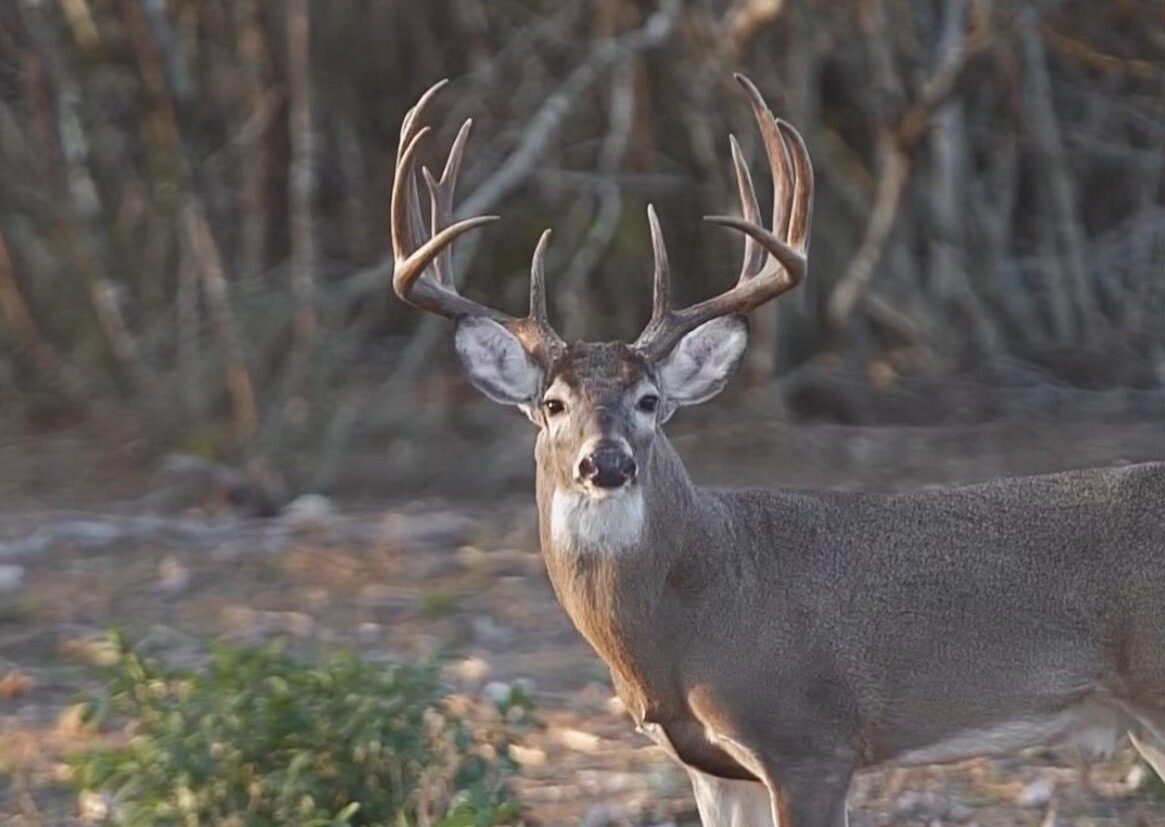
Bucks frequently sustain wounds during the rut from antler fights and territorial disputes. These injuries create ideal sites for screwworm flies to deposit eggs. Fawns can also be susceptible through wounds associated with birth or injuries sustained during early life. Because white-tailed deer are abundant across Texas, they are often considered a key species in surveillance effort.

Mule Deer

Although less widespread than white-tailed deer in Texas, mule deer can face similar risks. Antler injuries, fence entanglements, and environmental wounds can all provide opportunities for infestation.

Exotic Game Species

Texas supports large populations of exotic hoofstock on private ranches, including species such as axis deer, blackbuck antelope, and various African antelope species. These animals may experience injuries from fighting, handling, transportation, or environmental hazards.

Because many exotic game operations involve high-value animals, screwworm infestations can result in significant economic losses as well as animal welfare concerns.

Feral Hogs

Feral hogs frequently suffer cuts and abrasions while moving through dense vegetation or competing with other hogs. Their high population densities in many areas of Texas could facilitate screwworm spread if an outbreak occurred.

Bighorn Sheep

Desert bighorn sheep populations are carefully managed and relatively small. Even limited screwworm infestations could have disproportionate impacts on local herds because population numbers are often already constrained by habitat and disease challenges.

Predators and Scavengers

Coyotes, bobcats, mountain lions, and other carnivores are also susceptible. Territorial disputes, hunting injuries, and encounters with prey can create wounds attractive to screwworm flies.

While predators may not experience the same population-level impacts as some ungulates, individual mortality can occur when infestations go untreated.

Population-Level Impacts of Screwworms in Wildlife

The effects of screwworms extend far beyond individual animals. During significant outbreaks, entire wildlife populations can experience measurable declines. The most direct impact is death from severe tissue damage, infection, blood loss, or exhaustion. Young animals are especially vulnerable because they possess fewer energy reserves and may be less capable of surviving extensive infestations.

For deer hunters and wildlife managers, the return of the New World screwworm could create significant challenges for herd management and harvest objectives this fall. If infestations become widespread, increased mortality could reduce local deer populations and alter age structures, potentially affecting harvest quotas and management goals.

Wildlife agencies may need to intensify monitoring efforts, adjust harvest recommendations in affected areas, and rely on hunters to report deer exhibiting unusual wounds or signs of infestation.

At the same time, hunter observations and harvested deer could provide valuable surveillance data, helping biologists detect new infestations quickly and respond before screwworms become established across larger portions of the landscape.

Population Declines

Animals weakened by screwworm infestations may fail to reproduce successfully. Females may experience lower pregnancy rates or reduced ability to care for offspring. Males weakened during breeding seasons may be less competitive.

When infestations affect large numbers of animals across a region, wildlife populations can decline significantly. Historical outbreaks demonstrated that deer populations, in particular, can experience substantial losses.

Economic Consequences

Wildlife contributes billions of dollars annually to the Texas economy through hunting, wildlife viewing, tourism, and land management activities. Significant wildlife losses can negatively affect landowners, outfitters, rural communities, and conservation programs.

How Wildlife Managers Detect Screwworms in Wildlife

Early detection is one of the most effective tools for limiting the spread of screwworms in wildlife. This means monitoring for wounds and unusual behavior.

Wildlife professionals routinely watch for animals displaying signs of screwworm infestation, including:

  • Large or expanding wounds
  • Visible maggots in living tissue
  • Foul-smelling lesions
  • Head shaking or excessive grooming
  • Weakness and lethargy
  • Isolation from normal social groups

Any suspicious wound should be noted. If observed in domestic or exotic livestock then it should be investigated and treated promptly.

New World Screwworm Identification

Hunter & Landowner Reporting

Hunters, ranchers, wildlife photographers, and landowners often serve as the first line of detection. Individuals who observe animals with unusual wounds or maggot infestations can provide valuable reports that trigger rapid investigations.

Because many wildlife populations occur on private lands in Texas, cooperation between landowners and wildlife agencies is especially important.

Sample Collection and Laboratory Confirmation

When screwworm infestation is suspected, larvae are collected and submitted for identification. Laboratory confirmation helps distinguish screwworms from other fly larvae that may colonize wounds but do not feed on living tissue.

Accurate identification is essential because management responses can differ dramatically depending on the species involved.

Surveillance Networks

State and federal agencies maintain surveillance programs designed to identify potential screwworm introductions as quickly as possible. These programs often involve cooperation among wildlife biologists, veterinarians, livestock producers, and border inspection personnel.

Immediate reporting and investigation help prevent isolated infestations from becoming larger outbreaks. The sooner infected animals are identified, the greater the likelihood of containing the problem.

Managing Artificial Sources of Injury

Wildlife managers and landowners can reduce unnecessary injuries by:

  • Maintaining fences and infrastructure
  • Using safe wildlife handling practices
  • Minimizing trauma during capture operations
  • Monitoring animals after management activities

Reducing wounds decreases opportunities for screwworm flies to reproduce.

Sterile Insect Technique

One of the most successful insect control programs ever developed involves the release of sterile male screwworm flies. When wild females mate with sterile males, no viable offspring are produced, causing populations to collapse over time.

This strategy played a major role in eliminating screwworms from the United States and remains an important tool for preventing future establishment.

The Future of Screwworm Management in Texas

The threat of screwworms in wildlife has become a reality again. Texas occupies a critical position in North American surveillance efforts due to its geography, wildlife abundance, and livestock industry.

Continued cooperation among wildlife agencies, livestock producers, hunters, veterinarians, and private landowners will be essential for protecting wildlife populations. Early detection, rapid reporting, and proven control strategies for livestock offer the best defense for ag producers.

By remaining alert and maintaining strong surveillance programs, Texas can help ensure that screwworms in wildlife remain a manageable threat rather than a widespread ecological and economic crisis.

Texas Doe Days: More Deer Hunting This Season

More Antlerless Opportunity for Deer Hunters

In a significant update to Texas deer hunting regulations, the number of scheduled doe days will increase starting this season. This means more Texas doe days for hunters looking to harvest antlerless deer across 21 counties within the Post Oak Savannah region.

These counties include Austin, Bastrop, Caldwell, Colorado, Comal (east of Interstate 35), DeWitt, Fayette, Goliad (north of U.S. 59), Gonzales, Guadalupe, Hays (east of Interstate 35), Jackson (north of U.S. 59), Karnes, Lavaca, Lee, Travis (east of Interstate 35), Victoria (north of U.S. 59), Waller, Washington, Wharton (north of U.S. 59), and Wilson.

More days for doe hunting in Texas.

Texas Doe Days Quadrupled

Originally, hunters in these counties were limited to just four “doe days,” a regulation first introduced in 2019 season. Following a recent decision by the Texas Parks and Wildlife Commission, that number has now been increased to 16 days. This change marks a substantial expansion in opportunity for deer hunters in the region.

“Doe days” are specific dates during the general white-tailed deer season when the harvest of antlerless deer is permitted. Across Texas, 89 counties currently have some version of this regulation in place. This reflects the state’s broader effort to manage white-tailed deer populations more effectively.

Prior to the 2019 rule change, hunters in these 21 Post Oak Savannah counties faced much tighter restrictions. Does could only be harvested during archery season, youth-only seasons, or muzzleloader season—or during the general season if the property was enrolled in the Managed Lands Deer Program (MLDP).

Deer Population Management Using Texas Doe Days

The expansion of doe days is largely a response to increasing deer densities in the region. Wildlife biologists have observed growing deer populations. In addition, biologists cite sex ratios in the area are skewed towards does. By allowing more opportunities to harvest antlerless deer, the state aims to promote healthier herd dynamics, reduce habitat pressure, and improve overall ecosystem balance.

Under the new framework, the extended doe season begins annually on the second Saturday of the general deer season and continues through the Sunday following Thanksgiving. Depending on how the calendar falls in a given year, this could provide hunters with as many as 23 potential days to harvest does. Going forward, this regulation change offers considerably more flexibility for doe harvest than in previous seasons.

Doe Days Have Mandatory Harvest Reporting

Hunters should also be aware that harvest reporting is mandatory for all antlerless deer taken in these counties. Harvest reporting is not new for this year. The reporting of harvest does was required during past seasons too. This requirement helps Texas Parks and Wildlife officials collect accurate data, which is essential for making informed management decisions in the future.

Balancing Bucks & Does Through Harvest

Effective management of antlerless deer plays a critical role in maintaining a balanced sex ratio within the herd. When doe populations outnumber bucks by a wide margin, it can lead to a prolonged and less synchronized rut, increased stress on bucks, and reduced breeding efficiency overall.

By harvesting does at appropriate levels, wildlife managers and hunters can help bring the sex ratio closer to balance. Appropriate sex ratio results in a shorter, more intense rut and healthier deer across all age classes.

Managing Deer Populations & Habitat

In addition to improving herd dynamics, doe harvest is essential for promoting habitat quality. An overabundance of deer—especially does, which drive population growth—can quickly lead to overuse of native vegetation. This pressure reduces the availability of food resources for deer and for other wildlife that depend on the same plants.

Strategic harvest of antlerless deer helps prevent habitat degradation, supports plant diversity, and ensures that the landscape can sustain a healthy deer population for years to come.

Now, you may find yourself asking, “How many does should I harvest?” To figure that out, start conducting deer surveys annually. This is particularly true if you want to improve the quality of deer found on your land. Then, take advantage of the Texas doe days if you have more antlerless deer than you need.

How Many Deer Should My Property Hold?

How Many Deer Should My Property Hold?

One of the most important—and most misunderstood—questions in white-tailed deer management is how many deer a property should hold. The answer is not a fixed number. In addition, it has little to do with the total acreage of the property. Instead, the ideal deer population is determined by the land’s ability to provide adequate food, cover, and space throughout the entire year. This includes the time of year when resources are most limited, during late winter.

When deer numbers exceed what the habitat can support, body condition declines, habitat quality suffers, and long-term herd health is reduced. Proper management focuses on balancing deer numbers with habitat capacity. This balance ensures healthy animals, sustainable plants, and consistent deer hunting opportunities through healthy fawn survival.

Density: How many deer should my property hold?

Carrying Capacity: How Many Deer?

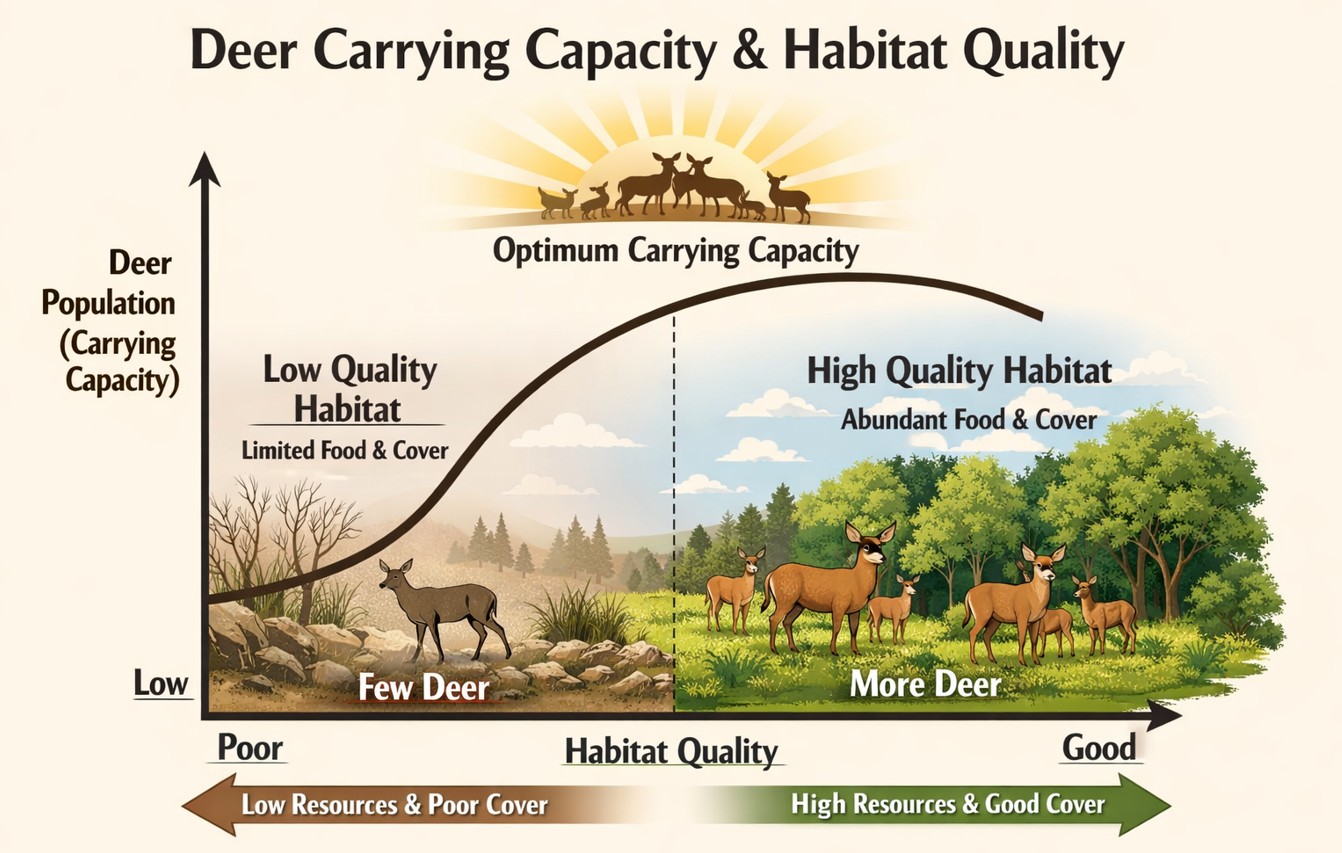
Carrying capacity is a foundational concept in deer management and refers to the number of deer a property can support without degrading habitat or herd health over time. It is not determined simply by acreage, but by the quantity and quality of available food, cover, and water—particularly during the most limiting period of the year, which is typically late winter.

When deer numbers exceed carrying capacity, the effects show up quickly in the form of overbrowsed woody plants. This results in declining body weights, reduced fawn survival, and poorer antler development. Effective deer management aims to keep populations at or below the land’s carrying capacity through habitat improvement and appropriate harvest. Proper deer numbers ensures both the habitat and the deer herd remain healthy and productive long term.

Habitat Quality & Deer Carrying Capacity

White-tailed deer carrying capacity and habitat quality are directly linked. So much so, that understanding that relationship between the two is essential when trying to answer the question of how many deer should my property hold. As stated prior, carrying capacity is not a fixed number. Carrying capacity rises or falls based on the land’s ability to provide high-quality food, adequate cover, and minimal stress throughout the year.

Conducting surveys is essential for keeping deer numbers in balance with the habitat. Annual deer survey estimates provide objective information about population trends, herd structure, and habitat pressure. There are a several standardized deer survey methods that can be used to track deer populations from year to year.

Without survey data, management decisions and harvest are often based on assumptions. A lack of information generally leads to overharvest or overpopulation. Surveys help managers detect changes in deer numbers early, evaluate whether habitat improvements or harvest strategies are working, and adjust management before habitat quality or herd health declines.

Habitat Quality Determines How Many Deer

Properties with diverse native forage, early successional habitat, secure bedding cover, and access to seasonal food sources can support more deer without negative impacts. Conversely, land dominated by mature timber, overgrazed understories, or limited winter cover may have a much lower carrying capacity, even if the acreage appears large.

How Many Deer Should My Property Hold?

When deer numbers exceed what the habitat can support, habitat quality begins to decline, creating a negative feedback loop. Overbrowsing reduces plant diversity and prevents regeneration of preferred forage species, which further lowers the land’s carrying capacity over time. As habitat quality drops, deer body condition, fawn recruitment, and overall herd health also decline.

Effective deer management recognizes that improving habitat can increase carrying capacity, but only if deer numbers are managed accordingly. The goal is balance—maintaining a deer population that the habitat can sustain long term while preserving the quality of the land itself.

The Best White-tailed Deer Habitat

Ideal white-tailed deer habitat is built around plant diversity and structure rather than any single “perfect” species mix. The most productive properties are dominated by early successional vegetation—such as native forbs, shrubs, and young regenerating trees—which should make up roughly half or more of the landscape.

These plants provide the bulk of a deer’s year-round nutrition, including high-protein forage during spring and summer, while also offering critical bedding and fawning cover. Woody browse like blackberry, dogwood, sumac, and greenbrier, along with regenerating hardwood sprouts, are especially valuable because they are both nutritious and resilient to browsing pressure.

Mature forest and mast-producing trees remain an important component of quality deer habitat, typically making up about a quarter of the plant composition. Oaks and other hard-mast species supply energy-rich food during fall and early winter, while conifers and closed-canopy areas contribute thermal protection and secure travel corridors. Open areas, soft mast species, and food plots play a supporting role by providing concentrated seasonal nutrition and diversity, but they should not dominate the landscape.

Ultimately, the goal is a layered, regenerating plant community with abundant native species and continuous growth across seasons. Habitat that is structurally diverse, slightly “messy,” and always renewing itself will support healthier deer and higher carrying capacity over the long term.

So, How Many Deer Should My Property Hold?

As you can see, there is no easily defined answer to the age old question of, “How many deer should my property hold?” The answer is directly tied to habitat composition and overall habitat quality rather than acreage alone. Landscapes dominated by diverse native plants, abundant early successional cover, and year-round food sources can support more deer without sacrificing body condition or long-term sustainability, while poor or overbrowsed habitats quickly limit healthy deer numbers.

When habitat quality declines, deer health follows—resulting in lower body weights, reduced fawn survival, and increased stress during winter. The best way to evaluate the plants that deer use on a property is to conduct a browse survey each year. The results can determine whether a property has too few, just right, or too many deer.

The encouraging reality is that habitat management can improve both habitat and herd health by increasing carrying capacity, but only when deer numbers are balanced with what the land can support. Healthy deer numbers are ultimately a reflection of healthy habitat.

Texas Deer Hunting Forecast 2025

It’s that time of year, so what does the Texas deer hunting forecast look like for the upcoming 2025-26 season? This deer hunting season in Texas, you can expect a dynamic and rewarding experience while chasing white-tailed deer, especially given the state’s diverse ecological regions, strong deer population, and the generally good habitat conditions experienced this growing season.

“Historically good fawn recruitment over the last several years will provide deer hunters plenty of opportunities to bag a quality buck,” said Blaise Korzekwa, White-tailed Deer Program Leader for Texas Parks & Wildlife Department (TPWD). He’s right. It takes annual reproduction to support annual harvest.

Texas Deer Hunting Season 2025

Weather Impact on the Texas Deer Hunting Forecast

Texas began the growing season under drought conditions in March, but much of the state received abundant rainfall later in the spring. The vegetation growth from these rains boosted antler development in bucks and allowed does to pack on reserves for fawning and lactation, and those regions should expect an excellent hunting season.

Forbs, a.k.a weeds and flowering plants, are a critical component of a whitetail deer’s diet. They became abundant during late spring and offered essential nutrients to boost antler development in much of the state. However, hunters in portions of the Edwards Plateau and South Texas ecoregions may see average to below-average antlers on bucks this season, as rainfall wasn’t received in these regions until the summer months.

This is too late in the antler growth cycle to have played a role. However, the late-summer rains will help lactating does and should boost fawn recruitment.

Timing the Seasons

Bucks during this time of year gather in bachelor groups and provide plenty of hunting opportunities before the rut kicks off. Early season hunters can take advantage of this opportunity, but it’s generally no fun to “sweat it out” while deer hunting. Let’s hope some cooler weather moves in as the archery and general opener approach. Temperatures generally ebb and flow in Texas during the fall season, so plan to pick your times and pick your shots.

The deer hunting seasons are once again structured very similar to prior years. While the archery-only and Managed Lands Deer Program seasons begin Sept. 27, the general season opens more than a month later, on Nov. 1. The general season runs through Jan. 4, 2026, in the North Zone and Jan. 18, 2026, in the South Zone. A youth-only deer season is set in both zones for Oct. 24-26 and Jan. 5-18. For additional late season deer hunting opportunities, county specific regulations and information on how to properly tag and report a harvest, consult the 2025-26 Outdoor Annual.

Deer Hunting, TPWD, & CWD

Landowners and hunters also play a critical role in managing Chronic Wasting Disease (CWD). We all know that CWD has been a hot topic in the deer world for many years now, and nobody wants it. TPWD suggests the most effective way to help manage CWD is by reporting sick deer, properly disposing of unused carcass parts and voluntarily testing harvests.

More information about carcass disposal requirements and voluntary CWD check station dates and hours of operations can be found on TPWD’s CWD website. As the saying goes, an ounce of prevention is worth a pound of cure.

A New Wrinkle This Hunting Season

It seems there is seldom a dull moment in the white-tailed deer world. And just in time to spice things up this year, let me introduce you to the the New World Screwworm (NWS) saga. Wait, what… screwworms in deer? The formally-eradicated NWS is making a comeback, trekking north through Central America from South America. This little insect threatens not only white-tailed deer and other wildlife, but also domestic livestock production.

TPWD is asking hunters to assist with surveillance for New World screwworm. If hunters or landowners observe a live animal infested with live maggots, they should quickly report the observation to a local TPWD biologist. It’s said that through active surveillance hunters can help protect the state from a pest that could have devastating impacts.

Texas Deer Hunting Forecast

Final Look at the Texas Deer Hunting Forecast 2025

We know that good habitat is the foundation of successful deer hunting because it directly supports healthy, abundant white-tailed deer populations. Quality habitat provides everything deer need to thrive—nutritious food sources like native grasses, forbs, acorns, and agricultural crops; reliable water; and diverse cover for bedding, protection from predators, and shelter from harsh weather.

When these elements are present and well-balanced, deer are more likely to stay in an area, grow larger, and follow predictable movement patterns—making them easier to locate and hunt. Fortunately, much of Texas has just had a couple of really good rainfall years. This should translate into above average antler quality across most of the whitetail’s range in Texas.

In contrast, poor habitat can lead to lower deer numbers, smaller body and antler size, and inconsistent activity. This is the camp you can generally find the Hill Country and South Texas regions in for 2025. According to Korzekwa, “Texas leads the nation in terms of the number of deer hunters, annual harvest, and deer population. Even an average year in Texas is worth hunting. Those landowners who properly manage the state’s natural resources have shown year after year that their management can pay off.”

With all that said, deer management practices and age structure can overcome some deficiencies in decreased habitat conditions. This means you play a role in your Texas deer hunting forecast each year. Hunters who understand and develop areas with balanced deer herds and good habitat—whether it’s dense brush in South Texas or mixed hardwoods in East Texas—are far more likely to enjoy success this deer hunting season.

Can Fawns Breed? Understanding Whitetail Maturity & Breeding

Do Fawns Breed? Do Fawns Get Bred?

White-tailed deer are prolific animals. For this reason, people often ask,  “Can fawns breed?” It’s a reasonable question, too. Many have witnessed rapid reproduction in deer with populations expanding quickly over short periods. In fact, deer populations often exceed the carrying capacity of habitat in many areas. Too many deer results in degradation of the habitat.

Whitetail populations have the ability to grow rapidly because most adult does give birth twin fawns each year. However, do fawns contribute with more fawns? Do fawns get bred during the breeding season? Okay, so the answers to these questions really depends on a few things that can impact individual deer as well as deer populations.

The primary factors impacting reproduction in deer are age and nutrition. A straightforward answer to these questions is also a little tricky; both yes and no are correct. So, let’s discuss breeding in white-tailed deer and the variables that contribute to whether or not fawns can breed.

Can Fawns Breed? Maturity in White-tailed Deer.

Can Fawns Breed in the Fall?

No, fawns generally do not breed in the calendar year in which they are born. However, this does not mean that fawns do not breed. Fawns are defined as young deer, typically less than a year old, and generally are not sexually mature. However, the age at which a white-tailed deer reaches sexual maturity depends a deer’s individual nutrition and body condition.

Fawns are generally still dependent on their mothers and focused on growth and development rather than reproduction. For reference, bucks usually reach sexual maturity at about 1.5 years. However, young bucks are often not dominant enough to mate until they are older and stronger. However, does can become sexually mature around 7 to 8 months if they have good nutrition. So, can fawns breed? Yes. However, they typically breed for the first time in their second year, at about 1 1/2 years of age.

Most white-tailed deer fawns are conceived during the species’ breeding season. The exact timing varies depending on the geographic region but generally occurs in the fall. In most parts of North America, this is generally between October and December. During this time, adult does (female deer) are in estrus (heat) and are receptive to breeding.

Adult and Fawn Breeding Specifics

The peak whitetail breeding season in most of North America, Canada and the United States, tends to peak in November in adult deer. The peak of the breeding season is often referred to by hunters as the rut. In far southern regions, like parts of Texas and Florida, the timing can vary more widely, occurring as early as September or as late as February in adult deer.

Do fawns get bred during the rut? No, fawns generally are not available to be bred during the fall. This has to do with the age and size of fawns. However, doe fawns mature over time and as they increase in size.

Can Whitetail Fawns Breed?
A white-tailed buck chases a doe fawn in a field, attempting to breed in the winter.

Can Fawns Breed: Timing of First Estrus 

The gestation period for white-tailed deer is approximately 210 days, or about 6.5 months. This means that most fawns are born in the late spring or early summer,  typically May through July. This timing generally enhances the availability of abundant food resources for the mother and the fawn.

If a doe fawn (female fawn) reaches a sufficient body weight (about 70-80 pounds) before the end of the breeding season, she may enter her first estrus and breed when less than one year of age, but this is less common and depends on good nutrition and environmental conditions.

In most cases, first estrus in doe fawns will not occur until very early the following year (January-February). At this point, fawns born in late-May and June will be 7-8 months of age. So, can fawns breed? Yes, but it’s not the norm. In general, fawns born from adult does are conceived during the main rut of their region. However, the fawns of healthy, bred fawns are actually are born a couple months later than peak fawning dates.

Unfortunately, environmental conditions are generally less favorable for both mother and baby in mid- to late-summer, so this reproduction is is likely not additive to the population. So can fawns breed? Yes and no. Doe fawns can breed, but it’s not the norm for all doe fawns to breed, and they are unlikely to contribute additional fawns into the population.