Three Bucks Found Locked, Dead

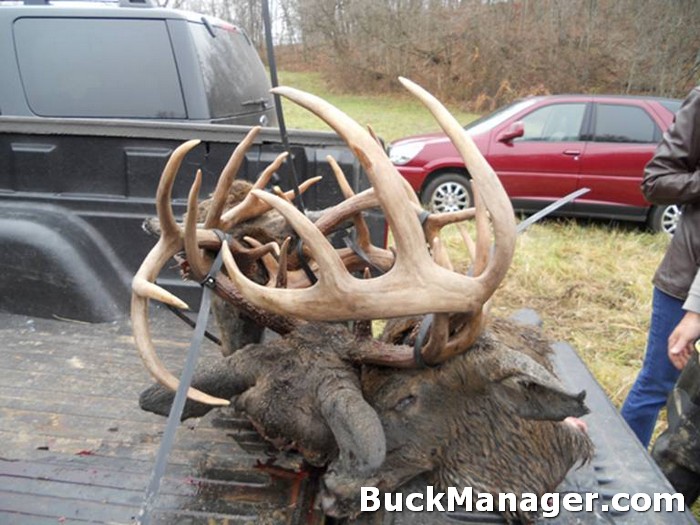
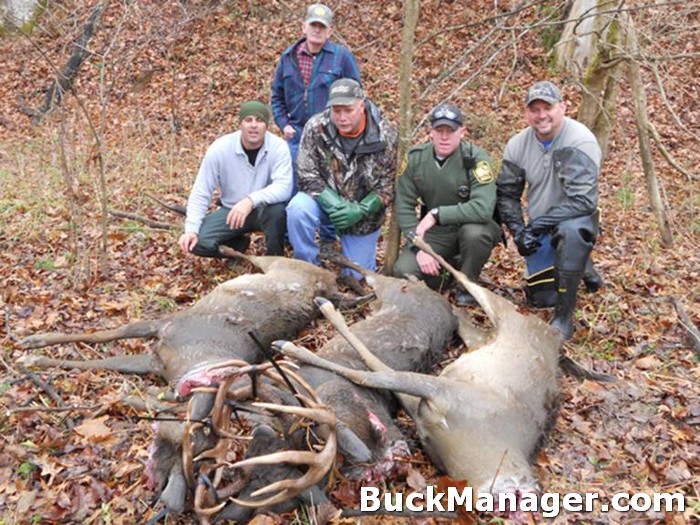
A big part of deer management is maintaining promising bucks in healthy condition until they are mature and ready for harvest, so there is nothing worse than finding a dead buck that you did not shoot, but how would you feel if you found not one, but three dead bucks on your property? Okay, it gets worse. What if those three bucks totaled 450 inches of antler?

That is exactly what a hunter in the mid-West found on his Ohio farm while walking through the woods. Apparently, two bucks were fighting for the right to breed area deer when a third buck jumped in to kick both of their butts. That didn’t happen.
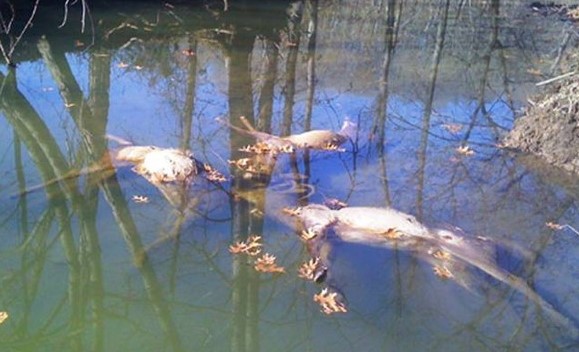
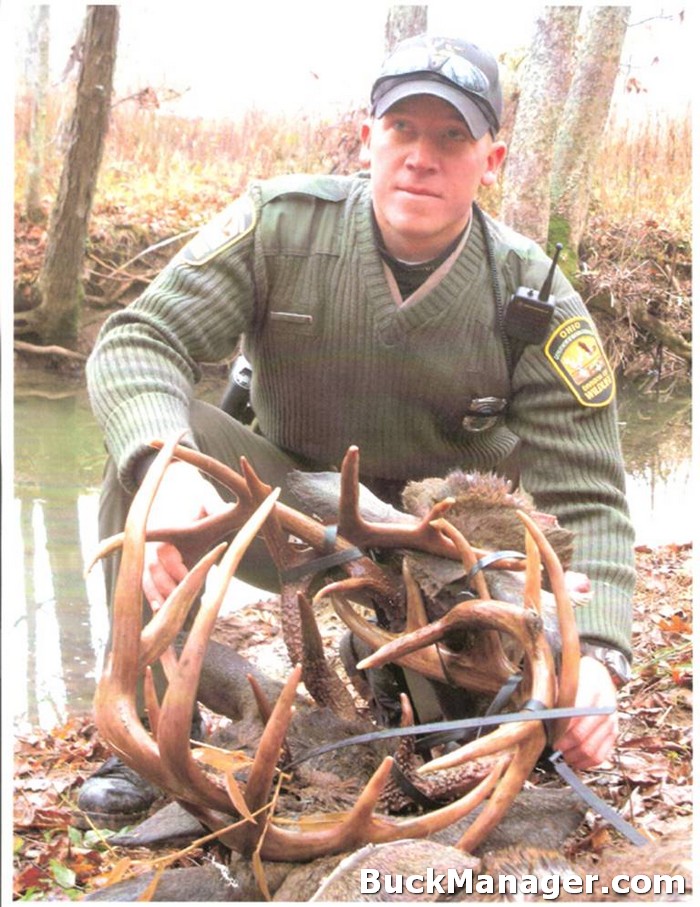
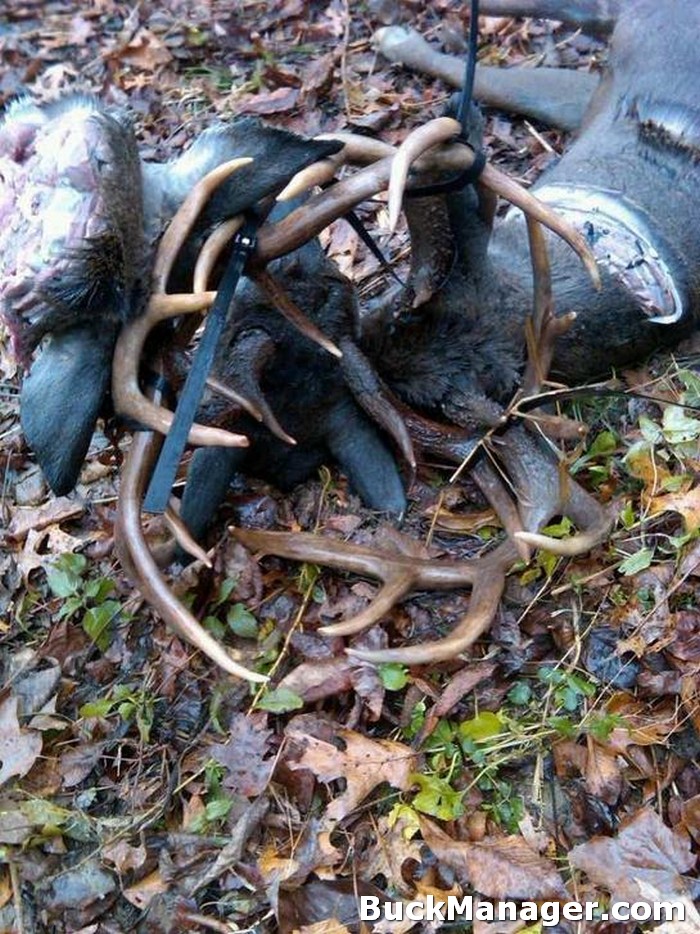
The three whitetail bucks were found dead, drowned in a creek on the Ohio property. This is not the first time three bucks have locked horns and died, but it’s the first I’ve heard about this phenomenon year. And the quality of the bucks involved is impressive, so you know the guys hunting this property had to have been more than a bit deflated. I know that I would have been sick to my stomach. Here is what a staff member of the Ohio Department of Natural Resources wrote after being called out on the 3 dead bucks:

“Wow, 3 bucks locked together, wow! Wish I could have walked up them alive. This is the result of three bucks all fighting for one lady. They had the bank of this creek all tore up. All together, I estimated the deer to score well over 400 inches of antler. The biggest one was a massive 6×5, approximately 165 inches. The other two were around 130 to 140.”

Three Bucks Found Locked Up in Ohio Three Bucks Found with Antlers Locked in Ohio

Three Big Bucks Lock Antlers in Ohio

Ohio Bucks Lock Antlers Together in Fight for it All Three Whitetail Bucks Lock Antlers and Drown

The bucks were all green scored and the 9 point went 130-ish, the 10 point went 140-ish, and the big 11 point went 169 inches. It looks like the young guns will get to do the breeding on that Ohio property this year. That is why it’s important for anyone serious about deer management to keep quality bucks of all ages on a property at all times. Simply amazing!
Hunt Scrapes After a Rain

White-tailed deer management is about controlling the age, genetics, and nutrition of a deer herd. These components are the nuts and bolts of producing and growing big, healthy deer. Hunters understand that whitetail, like other game animals, are a renewable natural resource that can be used for both recreation and food. This is exactly why we enjoy getting out in the woods and doing a little deer hunting each fall. Although proper doe harvest is essential for maintaining a deer population within the carrying capacity of the habitat, let’s face it, hunters really look forward to hunting for big ole mature bucks.

There are several strategies that can be used to bag a buck, but for the most part hunters are limited to hunting food, water, travel areas, or deer sign. Whitetail bucks often leave visual evidence of where they have been in the form of rubs and scrapes. Of the two, scrapes can predict the location that a buck is likely to return. Despite the fact that many mature bucks check scrapes under the cover of darkness, hunting scrapes after a rain could increase your chances of crossing paths with a big whitetail buck. Continue reading “Hunt Scrapes After a Rain”

Improve Wooded Habitat for Whitetail

Hunters and landowners  interested in deer management know that the bread and butter of white-tailed deer’s diet are browse plants. Although a deer would prefer to eat higher-in-protein forbs, those plants are primarily only available during the spring and fall. Though ideal deer foods consists of preferred browse plants and high protein forbs, many of these plants are not as abundant as they could be across the landscape.

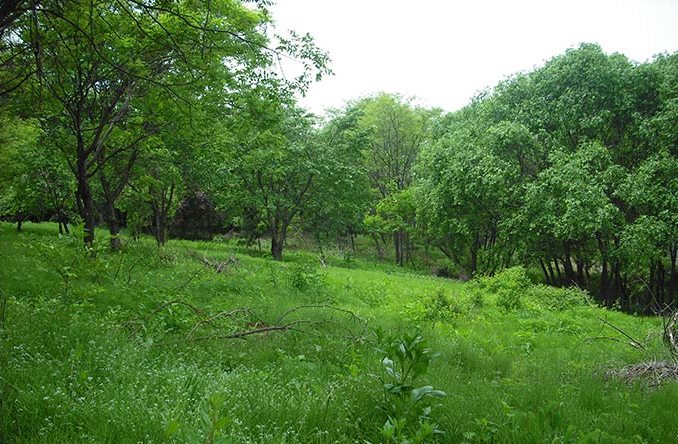
Good deer  habitat always has some wooded component. This woody structure provides screening shelter, overhead protection, and food from both leaves and mast. This wooded component can range from brushland to  mid-story tree species to mixed forests of a variety of species. Deer habitat can vary a great deal from place to place, but too much wooded area can become a detriment to deer and the plants they eat. Proper habitat management practices, however, can make the most out of the land you hunt. Continue reading “Improve Wooded Habitat for Whitetail”

Lumpy Jaw in White-tailed Deer

Lumpy Jaw

The white-tailed deer hunting season sneaks up on us each year. Most hunters are already in the woods looking for a big, mature buck. Hunters often see some strange things while in the woods. Have you ever seen lumpy jaw in deer? Sometimes, those odd things include deer afflicted with a variety of diseases and other internal and external physical issues.

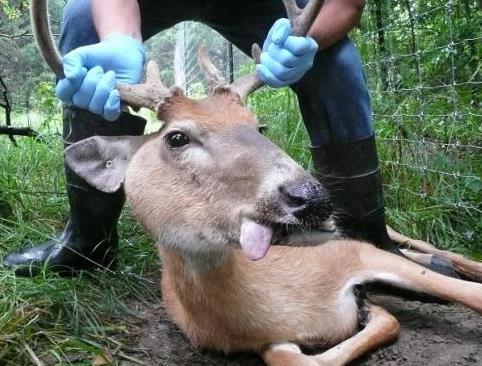
One fairly common problem in whitetail is lumpy jaw. The name “lumpy jaw” says it all because deer with this problem stick out; The animal looks like it has a lump between (or under) its jawbone and the hide. The lumpy jaw many hunters witness is the result of adult arterial nematodes (Elaeophora schneideri). These worms live primarily in the whitetail’s carotid arteries. In fact, partial paralysis of the deer’s jaw muscles occurs when high arterial worm infestations reduce blood flow.

Whitetail Deer Management: Lumpy Jaw in Whitetail Deer

Impact of Lumpy Jaw

An overabundance of arterial worms is bad news for deer. As a result of jaw muscle paralysis, food becomes trapped inside the deer’s mouth. This food becomes impacted and leads to the lumpy jaw and/or swollen cheek appearance. Over time, the impaction often causes tooth loss, bone decay, and sometimes even death.

So now your thinking, how do white-tailed deer get lumpy jaw? Good question! The common horsefly passes the nematode larvae from an infected deer to an uninfected one by feeding on deer blood. The horsefly carrying larvae-infected blood is ultimately what perpetuates this lumpy jaw condition in deer.

Deer Management: Lumpy Jaw in Whitetail Deer

Lumpy Jaw & Deer Populations

Lumpy jaw in deer is widespread, but it poses little threat to deer populations. Luckily for property owners, hunters, and the deer, infection rates in are not high enough to impact white-tailed deer populations. Arterial worms, like most other deer issues, do not pose a risk to humans. Hunters can consume deer that exhibit lumpy jaw. Many deer have arterial worms and show no symptoms, so you’ve eaten deer with arterial worms.

However, as a hunter I don’t like to think it too much. Who wants to think about arterial worms, nasal bots, or any other of the many diseases, viruses, or things deer can possibly tote around?

Deer Management: Lumpy Jaw in Whitetail

More Lumpy Jaw in Deer?

Arterial worms are not the only game in town. Other creatures can give white-tailed deer that lumpy jaw appearance. A bacterium called Actinomyces bovis can also cause an infection of the jawbone. This bacterium is actually a common inhabitant of the mouths of healthy whitetail. It is only a problem when a sharp object such as a thorn punctures the inner lining of a deer’s mouth. This oral puncture allows A. bovis bacteria to invade the tissues.

Additionally, healthy deer — like all animals — can simply get large or odd-shaped food items caught in their mouth. However, food impaction in white-tailed deer is most often the result of arterial worms.  This results in muscle issues that lead to food impaction and lumpy jaw syndrome. As mentioned, lumpy jaw in deer does not pose a health problem for hunters. The meat can be safely consumed.

New Non-typical Whitetail Deer Record

Back in mid-August of this year I wrote an article that touched on conducting deer surveys and how the abundant rainfall received during 2010 really set up most of Texas up for a great year of white-tailed deer hunting. I had a feeling that a lot of the bucks carried over from last year would be looking good this fall.

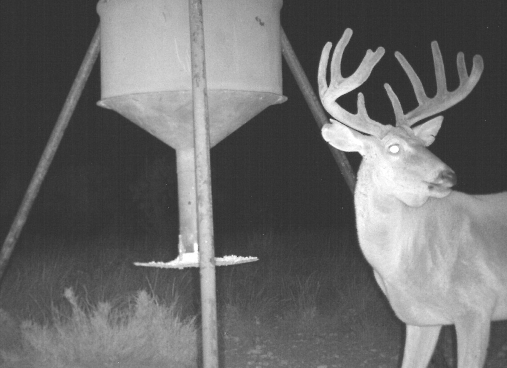
That said, really was not expecting a new Texas non-typical white-tailed deer record to be harvested on the first day of the 2010 deer hunting season! By the way, I’m talking about over 300 inches of native buck antler. That’s awesome!

Texas Nontypical Record Buck

Mark Barrett Tags Mark Barrett Tags New Texas Non-Typical Whitetail Buck - 311 4/8

You may recall that hunter Marko Barrett harvested a big South Texas buck on the Las Raices Ranch back in 2007. That non-typical deer was a brute in his own right with 34 points that measured out at an impressive 275 7/8 inches.

Well, it looks like his father, Mark Barrett, has raised the bar even higher with his own giant, non-typical whitetail buck. And right from his Facebook page, Marko wrote:

New Texas Non-Typical Whitetail Buck - 311 4/8

“We’ve been keeping this one pretty tight to the vest, but now that he is down we can share these pictures. He is potentially, by our score, the largest native Texas deer EVER! Rough score in velvet of 311 4/8. Congratulations, Mark Barrett (aka Dad)!”

Managing for Better Habitat, Bigger Deer

The Las Raices has been actively involved in whitetail deer management for many years, so producing high-quality whitetail bucks is nothing new for this family-owned property. With the Las Raices’ commitment to on-going deer population and habitat management, it’s starting to look like they could be their only competition for producing record-breaking native deer into the future.

But what am I saying? Big bucks are produced all across Texas every year.

New Texas Non-Typical Whitetail Buck - 311 4/8

“The buck’s score is reported as 311 4/8” green gross, in full velvet. This score is not official, but is almost certain to replace the current state record. In Encinal’s own words, “Las Raices is a family owned and operated hunting ranch in Webb County, Texas that has exclusively non-manipulated nor transported native genetics.

This is a 100% native pasture deer that has not been manipulated in any way. Just rain, protein feed and patience…'”

New Texas Non-Typical Whitetail Buck - 311 4/8

One for the Record Book

Congratulations are in order for Mark Barrett and the Las Raices Ranch for bettering their very own state white-tailed deer record. I don’t think every property can produce a 300+ inch non-typical whitetail buck because, let’s face it, this buck is several standard deviations away from average.

But hey,  it does show that anyone can exceed their deer management expectations by managing for good habitat and allowing those buck to get some age on them. And then hoping for a little rain, too!