The Rut and Young Bucks

The white-tailed deer rut came and went with the the deer hunting season, but let’s not forget the importance of successful breeding in deer management as we look forward to yet another (hopefully) wet spring and summer. Many hunters and deer managers looking to provide additional food sources for whitetail have already started planning their spring food plots while others are knee-deep in brush management, which will mean more high quality forbs. By the way, let’s not forget that winter is the time for managing and reducing brush — not July and August!

The rut is a great time for a deer hunter because mature bucks can become quite vulnerable as they search for or trail hot does, but the rut is also the time of the year when bucks and does handle the business of reproducing the next generation of deer for your property. The length of gestation is plus or minus 200 days for whitetail deer, so it’s pretty easy to calculate when fawns will start hitting the ground on your property or lease. Will the habitat on your property be ready?
Whitetail Deer Management: Young Bucks and Breeding

Do Young Bucks Breed?

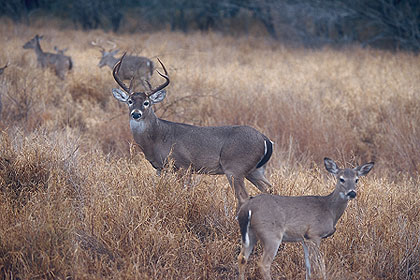
Until more recently, it’s long been believed that young whitetail bucks did not participate much during the rut. It was often assumed that young bucks bred young does while the middle-aged and mature bucks took care of the middle-aged and older does. The mating system in white-tailed deer was commonly described as dominance-based hierarchy, where dominant bucks did the lion’s share of the breeding. Under this assumption, the bigger, older bucks would pass their genes on to bunches of fawns, while the younger and less dominant (middle-aged and young) bucks would be lucky to sire a fawn or two.

Additionally, it was often thought that older does would simply reject young, unimposing bucks. This reasoning meant the only way a young buck would participate in the rut was to breed a young doe. But as I eluded to earlier, this was the line of reasoning until more recently. Thanks to genetics and the ability to track the DNA of specific animals, research has taught everyone that all bucks participate during the rut.

In fact, a research project out of Texas A&M University-Kingsville found that yearling males successfully mated with females of all ages.

This blew that old theory out of the water and it also documented the occurrence of multiple paternity in the fawns that were produced. In short, the study found several instances where twin fawns born from the same doe were sired by different bucks. So in some cases, mature does were bred by mature and allegedly dominant bucks, but also by yearling (1 1/2 year old) bucks. This information should change the way you view those young bucks on your property. After all, when it comes to deer management — and apparently breeding — both age and genetics are important.

The study, which took place at the infamous King Ranch, also yielded some other interesting tidbits. It found that the breeding success of young bucks was primarily restricted to the peak of the breeding season when most does were in estrous. It was believed that young whitetail bucks had the most success during the peak of the rut because mature bucks will often form tending bonds with does, and this means mature bucks are not available to cover the other receptive does. This is where the young bucks step in.

Now you know that all bucks on your property will participate in the rut each year, regardless of age. What’s next, and how does this work into your deer management program? Simply said: Be highly critical of all bucks found on your property, regardless of age, if you are interested in improving the quality of the bucks in the future. Improving any whitetail herd through deer management comes down to controlling age, genetics and nutrition. In the case of bucks that participate during the rut, age may not be important, but quality certainly is.
Two Headed Deer Hoax

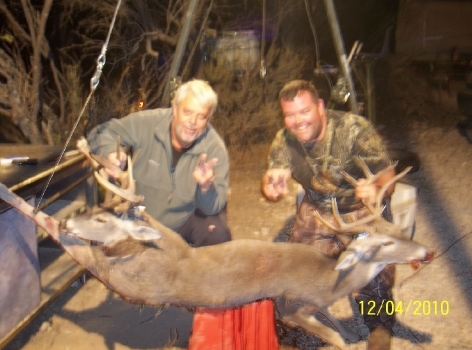
This white-tailed deer hunting season has really been one for the record books, and not just in Texas. Not only have the true-to-life hunting stories been amazing this year, but now it seems whitetail hunters around the Lone Star State are processing the story of a two-headed deer being shot near Rock Springs, Texas. The website reporting the rare harvest has come up with some pretty amazing stories in the past, but this one is luring in the hunters like a a young buck to a doe in heat.

For those of you that have yet to hear about the alleged two headed deer hoax, the photo may blurry, but the story is at least an entertaining one. In fact, I’m kind of surprised this story did not take place in Louisiana because it definitely has the makings of a Thibodeaux and Boudreaux joke. Only in this one it’s Bill and Steve Jr. out at their West Texas deer lease. Continue reading “Two Headed Deer Hoax”

Hunter Tags Two Locked Bucks

The white-tailed deer hunting season may be in the recent past for most of us, but hopefully we all have the memories and some good eating to help us make it through until next season’s opener. Until then, it’s time to focus on habitat management and wishful thinking that this spring and summer will be a wet one. Almost as much as the deer hunting itself, the one thing that I will really miss about deer season is hanging out at camp discussing deer management and trading hunting stories from past trips.

Whitetail Deer Hunting: Locked Bucks Shot by Hunter

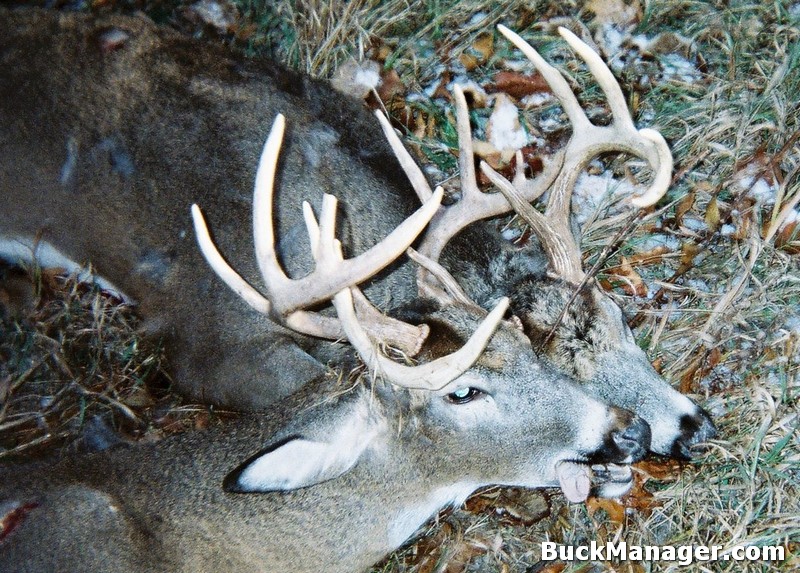
It seems ironic to many non-hunters that hunters really do respect the animals that they pursue and kill. The same can be said of deer hunters across the whitetail’s range. Deer hunters relish the opportunity to tag just a single buck each year, but some lucky hunters manage to tag a couple of bucks each fall. This was the case for Illinois’ Phillip McGowan. While out deer hunting this past hunting season he never expected to stumble into two bucks, especially two bucks locked together. Here is his story: Continue reading “Hunter Tags Two Locked Bucks”

Managing White-tailed Bucks by Age Class

Selective harvest is an important part of white-tailed deer management. This is equally true for both the buck and doe segments of a deer population, but many hunters become obsessed with trying to determine which bucks to shoot or not shoot. Buck harvest is part of the equation, but how should the deer on your property be managed, hunted?

For regular visitors to this site, you know that I have covered shooting deer and harvest management in the past, but this time I really want to stress the importance of not stressing out over the harvest aspect of a deer management program. Selective harvest is not something that can be perfectly implemented on a property, but rather a strategy to remove less desirable animals in an attempt improve the deer herd, whether that simply be nutritionally or possibly even genetically.

Whitetail Buck Management

The most controversial issue on any hunting property typically involves around what is and is not a cull or management buck. There is no stock answer to this debate because the quality of a cull buck will vary from property to another. It could be said that one deer hunter’s “trash” is another hunters treasure.

We have all seen bucks with obviously inferior antlers that have been shot as culls, but I bet you have also seen some really good looking bucks on the web, in magazines, and on television that were harvested by someone and referred to as cull deer. So what’s the deal?

Whitetail Deer Management: An Old Cull Buck

Managing Bucks by Age

I mentioned earlier that the quality of “cull deer” will vary from property to property, but the most important consideration to keep in mind when thinking about cull deer is that the quality of bucks will vary within each age class (cohort) on a particular property.

Grade bucks of the same age on a comparative basis and the manager/hunter will be comparing apples to apples. This is the easiest way to determine what may or may not be a cull buck on a piece of property — bucks of the same age must be judged head-to-head against one another to determine which has desired (or at least more desired) antler characteristics and which one will end up in the sausage. Hey, we all gotta eat!

An Example of Whitetail Buck Management

Believe it or not, there are some properties under intensive deer management that consider a yearling (1 1/2 years old) buck with 5 or less antler points a cull buck. This does not mean every property owner or guy trying to manage his deer hunting lease should hammer every deer with less than 5 points.

It would be grossly oversimplified (and a bad idea) to say everyone should do the same thing on their hunting property. This just would not be the case. There are just too many variables for a one-size-fits-all deer management approach for every property.

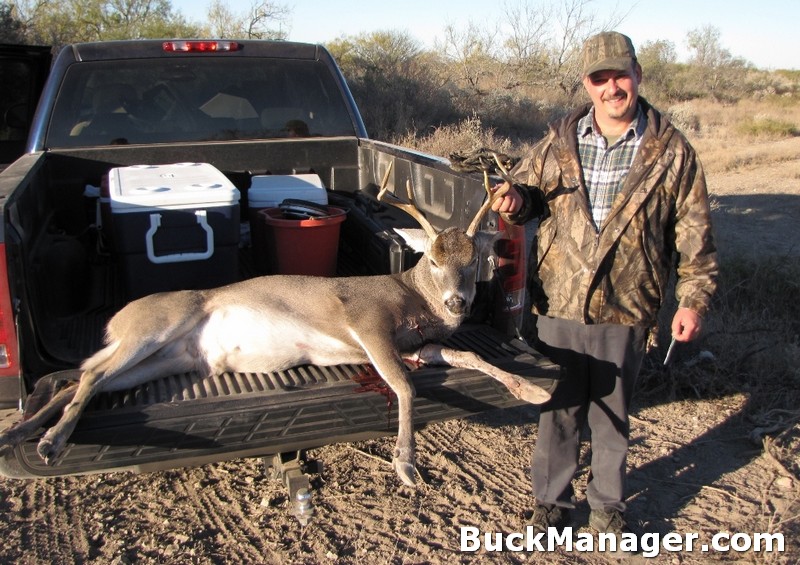
Deer Hunter with Management Buck

Spike Buck Management

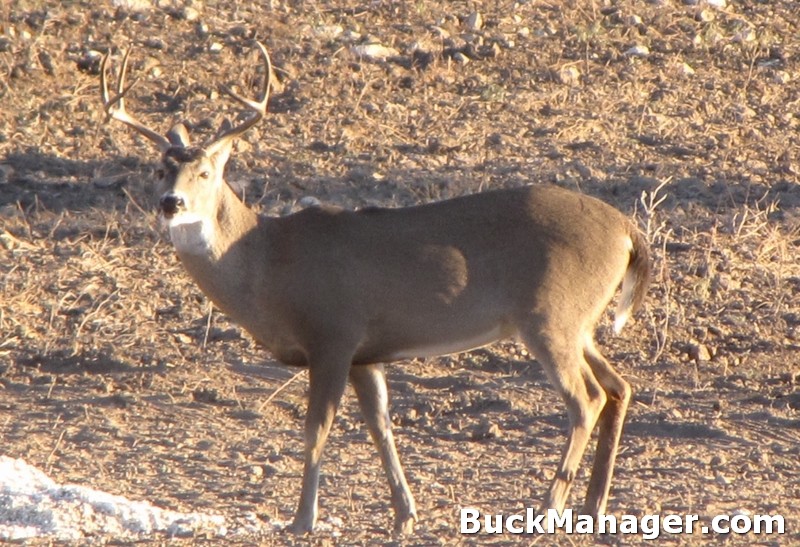
Let’s discuss spike bucks for a minute. Now, this is a can of worms that hunters and even researchers have been actively discussing for decades, so I am not going to try to change anyone’s thoughts on the subject in this article. But, using the spike buck as an example, I just want to throw out an example of culling bucks by age class.

Let’s first assume that we need to harvest some number of bucks and that I am trying to improve the overall end-quality of bucks on a property. If two yearling spikes walk out and one has 3 inch antlers and the other has 10 inch antlers, I will shoot the one with shorter tines and leave the better buck of the same age every time. Why?

Because my goal when culling is to remove the most undesirable bucks. The 10 inch spike grew over 3 times as much antler as his same-aged friend.

Selective Harvest for Better, Mature Bucks

Although selective genetic manipulation through buck harvest is an important component of any whitetail deer management program, it is not the only component. Keep in mind that better deer habitat means better bucks at every age class. Overall, providing quality deer habitat is the best type of whitetail buck management.

A key to producing good deer on your hunting property may be  to remove the very low-end bucks and then allow the rest to get some age on them. This strategy is best applied in areas where deer are at or have exceeded the carrying capacity of the property. If the deer density is low, below the carrying capacity, then it probably does not make sense to cull bucks since there are not many deer to spare. In this case, you will likely want to let each and every buck walk in hopes that it can grow older and eventually become a target for harvest.

The final key to buck management is to manage harvest. Harvest mature bucks and then cull by age class (if warranted) so that you remove no more than 20% of the total number of bucks in the area each year, and then provide the best deer habitat that you can so that all deer on your property remain healthy and bucks reach their full genetic potential.

New Nebraska State Record Typical Buck?

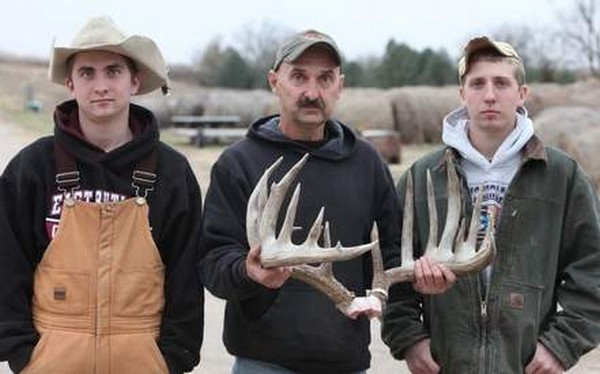
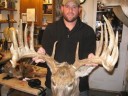
The state of Nebraska is known for some big-bodied, big-antler bucks, but nobody, not even deer hunter Kevin Petrzilka, was expecting to bag a potential Nebraska state buck just outside of the town of Loma in Butler County, Nebraska. However, that’s exactly what he did on his last hunt.

And if the measurements hold up the big buck looks to rank at least number 6 on the Boone and Crockett Club’s all-time list of whitetails with typical antlers taken by a firearm. To say this 17 point whitetail buck is big would be a serious understatement of an animal of remarkable proportions.

Kevin Petrzilka - Potential Nebraska State Record Typical Whitetail Buck

In fact, the Petrzilka buck is sizing up to be the largest buck taken by firearm in North America since 1993! An official Boone and Crockett Club scorer put the preliminary score at 203 4/8 inches over the weekend, but the antlers must go through the mandatory 60 day drying period before they can be officially scored for the record book. For those keeping score, the current Nebraska record for a typical whitetail buck is 199 1/4 inches on a buck taken in 1983 in Saunders County.

Deer antlers usually shrink when hunters walk up on their kill. However, that didn’t happen to Petrzilka. The inside antler spread on Petrzilka’s deer was 21 inches and the heavy mass followed the tines from the base all the way out to the ends of the beams. The antlers have eight points on one side of the rack and nine on the other. “My boy got there first and all I heard him say was, ‘Big! Big! Big!” Petrzilka said. The local taxidermist had this to say about the antlers of this potential Nebraska state record typical buck:

“If the buck stays as a typical, because there is a concern that his G3’s may count as non-typical, he will rank near the top in the world. No matter what happens with this buck as far as scores go, he is a once in a lifetime trophy and will be in a few magazines, no doubt. I have physically seen a couple bigger non-typical deer in person, but this is the biggest typical by far.

Milo Hanson’s world record typical buck is 213 inches just to put into perspective, and Nebraska’s #1 typical is 199 inches. Time will tell, but I had to share because talk of a Nebraska state record buck is all the buzz in this part of the state.”

Mr. Petrzilka said he knew the buck was big, but did not take time to notice the buck’s rack before he fired at the deer, which at the time was 150 yards away and on a dead run. “It was there, I shot and it was over with,” he said. “I sort of wish I’d missed and Dillon got it, but it worked out.” I’d say so. A Nebraska state record buck is nothing to snort at.