Habitat Conditions Bad, Deer Hunting Good?

With the official start of summer almost upon us and whitetail bucks rapidly putting on new antler growth, it is never to early to speculate about the fall white-tailed deer hunting seasons in Texas. Unfortunately for everyone, dry weather has kept a damper on many deer and habitat management practices to date, but poor habitat conditions may help hunters across the state this fall.

Most folks know that dry weather is not good for wildlife. Deer hunters are also aware that low rainfall equates to below average antler sizes for bucks relying on natural forage to get them through the year. That being said, it comes as no surprise that severe drought across the state has dimmed what usually is a bright outlook for white-tailed deer quantity and quality. Continue reading “Habitat Conditions Bad, Deer Hunting Good?”

Deer Habitat Improvement Through Prescribed Burning, Fire

White-tailed Deer Habitat Improvement

The wildfires plaguing various parts of Texas have got me thinking a lot about prescribed burning over the past few days. Prescribed burning, prescribed fire, controlled burning, or however one refers to it, is a tool used for many purposes. It is commonly used for white-tailed deer habitat improvement, but it can also be used to prevent, contain and extinguish wildfires.

In recent years, prescribed fire for range and wildlife habitat improvement has increased substantially. Granted it’s not for everyone, but many land managers understand the utility of this management cost efficient management practice (which is also a naturally occurring process).

Using Fire for Deer Habitat Improvement

Prescribed burning is a tool used by land managers for increasing forage quality for livestock, reducing and controlling invasive brush species and for actively managing wildlife habitat. In fact, prescribed fire can accomplish many objectives simultaneously. For example, one fire be used to reduce brush cover, eliminate fine fuel loads, increase forage quality for wild and domestic animals, and improve wildlife habitat for deer, turkey and quail. Fire sets back many woody species and eliminates fire intolerant ones such as ashe juniper (cedar).
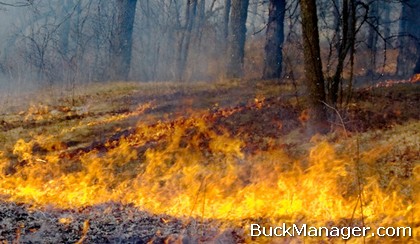
Deer Habitat Improvement: Prescribed Burning for Wildlife

Why Use Prescribed Fire?

Prescribed fire is used to reduce fuel loads (existing dead and dormant vegetation) and reduce the threat and severity from wildfires should one occur. Prescribed fires also reduces woody plant encroachment and are beneficial for many native plant species in a way mechanical and chemical management treatments cannot duplicate.

Wildlife, both game and nongame species, also benefit from prescribed fires which results in new plant growth and restoration of habitats which they use both for both food and cover. Benefits from prescribed fire include:

  • Reduce hazardous fuels, protect communities from wildfires
  • Reduce the spread of pests and disease
  • Provide habitat and forage for game and nongame species
  • Recycle nutrients back into the soil
  • Promote native species
  • Promote a diverse natural landscape

Prescribed Burns Often Misunderstood

Most landowners realize that not all fire is bad. Wildfires are bad when the loss of life and property are involved, but  prescribed, controlled fires are not. Often times, the vegetation found on a particular property requires a managed fire, not a wildfire, to come along at the right time and under the right conditions in a controlled manner. This is prescribed burning.

Once the objectives of the fire are determined and the conditions under which the fire should be used are established, it is only then than a prescription for carrying out the fire have been developed.

The prescription should include landowner objectives, personnel requirements, firebreaks and environmental factors such as air temperature, relative humidity and wind direction and speed. The bulk of the work takes place long before the first flame hits the ground. However, proper land management after the burn is essential for both wildlife and livestock. Cattle frequently concentrate on a burn because forage is more palatable and nutritious. However, this does not mean these grass-eating machines should be released onto burn sites immediately. As with any major event, some rest is warranted afterword.
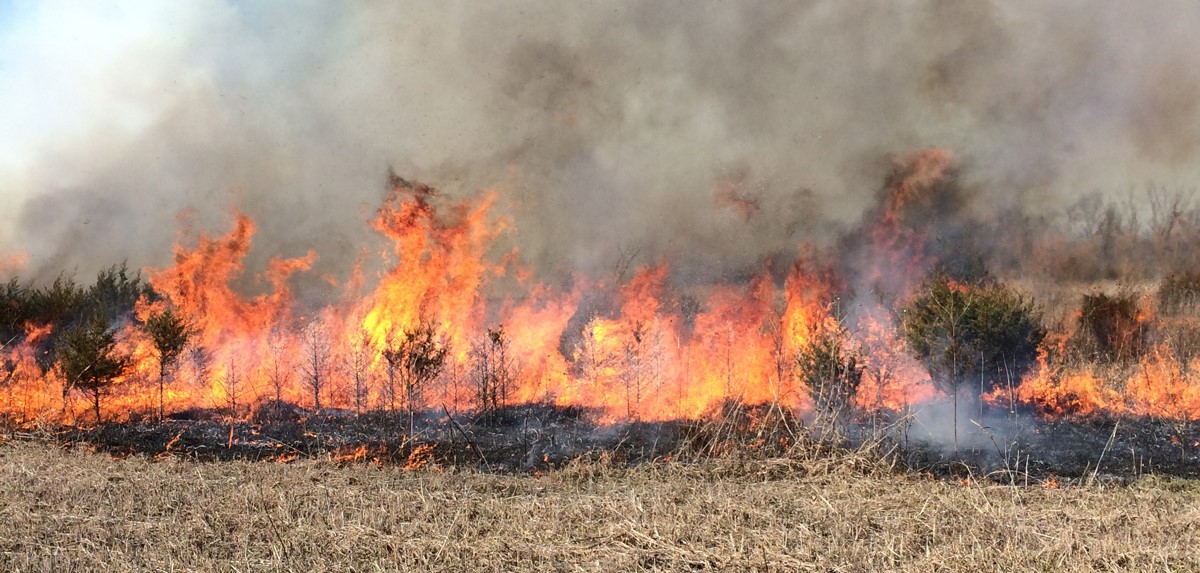
Using Prescribed Fire for Habitat Improvement

Fire is a Tool for Active Managers

As with many tools, the quality of the work depends on how good you are with the tool. Prescribed fire for brush management/control and deer habitat improvement is no different. Without a doubt, experience is the best teacher of fire behavior. Inexperienced managers can learn a lot by observing prescribed fires lit by other folks. Considerable knowledge can be learned about fire behavior relatively quickly, but it takes years of experience to get good, but even then you will not (should not) feel totally confident. Even trained professionals do not lose their fear of what fire can do.

The benefits of controlled burning for wildlife are well documented. Burning is good for deer because of the nutrient-rich browse and forbs that respond post-fire. Fire also knocks back many of the root-sprouting browse species that have outgrown the reach of deer. Fire promotes native grasses, which in turn creates better quail nesting habitat, improved water infiltration, and drought-tolerant forage. Additionally, fire is a relatively inexpensive management tool, especially for landowners interested in controlling cedar. Costs can range from $2 to $8 per acre depending on the size of the burn, prep work, and personnel needs.

To wrap up, prescribed fires have different uses depending on the objectives. The most common use of controlled burns is to reduce fuels such as pine needles, leaves and dead herbaceous vegetation such as grass and weeds. Controlled burning can also be used for brush control and quail, turkey and white-tailed deer habitat improvement. Although prescribed burning is a very effective tool, it can be incorrectly applied. Prescribed fire, just like any habitat management practice, should only be implemented once the need has been completely evaluated and deemed effective for achieving the desired objectives.
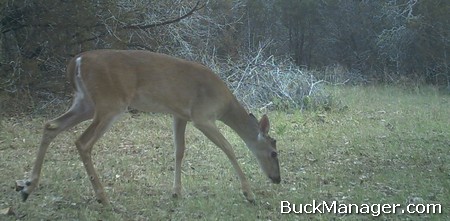
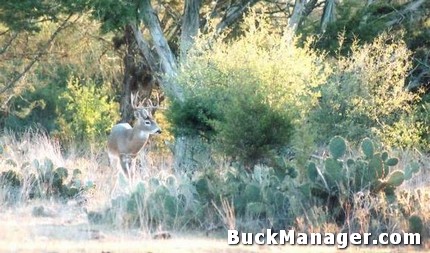
Rainfall, Habitat and Antler Growth

Managing for good white-tailed deer habitat on a property is the key to maintaining a healthy deer herd. Plain and simple, deer in good body condition are more productive than deer in poor condition. A problem many landowners face is that Mother Nature does not always do her part. This is the major reason why supplemental feeding has become an integrated part of deer management on many ranches.

A property can generally have good deer habitat, but that does not necessarily mean that the plants found on the property are in good condition. Rainfall makes a big difference from year to year. In fact, research conducted in South Texas, on what was coined the “South Texas Buck Project,” by the Caesar Kleberg Wildlife Research Institute at Texas A&M-Kingsville found that spring rains explained 70% of the year to year variability in buck antler size.

Grow Bigger Bucks: Deer Management, Habitat Improvement and Rain!

Spring rain and antler growth were highly correlated, meaning bucks grew larger antlers following wet springs and smaller antlers following dry ones. During the South Texas Buck Project, researchers classified spring rains as those occurring during March, April and May. And over much of the whitetail’s range, it is during this time of the year when good rainfall can produce bountiful crops of high protein forbs and set up browse plants for the long, hot, and typically dry summer. If the rains do not arrive, then deer can forget about the would-be protein buffet.

Okay, so I will admit that South Texas is much different than many parts of the white-tailed deer’s range, including most parts of Texas, but the results of this study are a bit staggering. The data collected during the South Texas Buck Project conclusively found that spring rains alone accounted for as much as a 20 inch shift in gross Boone and Crockett scores for mature bucks! These findings really illustrate the importance of precipitation, habitat condition and food availability to any landowner or hunter interested in deer management.

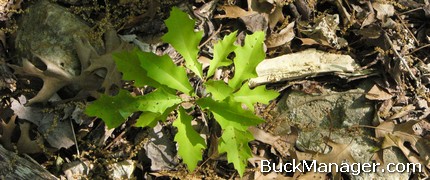
Texas Oak: Habitat Management for Improved Whitetail Deer Hunting

So this all makes enough sense, but how can it help hunters on their property given that they can not control the rain? Well, no one can turn on the faucet that makes it rain, but hunters can control whitetail food availability through management practices such as maintaining proper livestock grazing rates, brush management, prescribed burning, supplemental feeding and managed deer harvest. Allowing deer to grow older is one way to produce more mature bucks, but age is not the only factor that affects antler size.

In mature bucks, rainfall determines whether that 20 inch shift I mentioned previously ends up being 20 inches up or 20 inches down. Food availability is of utmost importance in allowing old bucks to reach their genetic potential. For hunters interested in trophy buck management, I would seriously considering shooting any buck 5 1/2 years of age following a wet spring. Why? For the simple reason that the chances of getting two good years in a row are slim, and therefore antlers are not likely to be better the next year. During a dry spring, such as this one, hunters may want see if those deer can add that 20 inches back on next year.

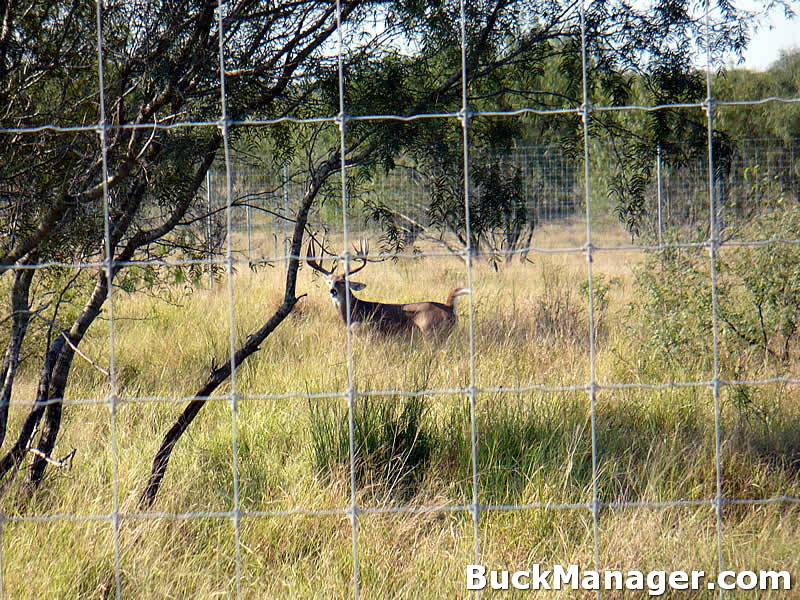
White-tailed Deer Range and High Fences

They have become a part of the Texas landscape. Landowners that have them claim that they are critical for white-tailed deer management. Those that don’t either dislike them or simply can not afford them. Some people, hunters included, hate them. Hard working men make a living building them. “They” are high fences, often referred to as game fences. Like it or not, it seems high fences are here to stay, but a question that has undoubtedly crossed the minds of many deer hunters is, “What impact does a high fence have on the movement of white-tailed deer?”

Game fences are typically 8 or 10 feet in height, so there are high fences and then really high fences. Ask just about anyone and they will tell you that high fences are deer proof—deer inside the fence can’t get out and deer outside the fence can’t get in. This belief is disturbing to hunters and landowners bordering high fenced properties because it seems more and more ranches are turning to boundary fence that consist of high fence. I can see both the pros and cons of high game fences, but neither of them is so compelling that I want to drink to the proverbial Kool-Aid. That being said, high fences make it much easier to manage a deer herd. Continue reading “White-tailed Deer Range and High Fences”

Conditioning Deer to Eat New Foods

The new year is well underway and spring is just around the corner. That is a good thing because habitat conditions are as tough as I’ve seen them in some time and bitter cold weather really works on a white-tailed deer’s body condition. But a new year means resolutions to do new things—even when it comes to deer management. Though the supplementation of a deer’s diet is far from a new idea, I am confident that many landowners and managers will begin offering supplemental feed during late winter, spring and summer for the first time ever.

Most of that feed will be in the form of protein pellets. Regular readers of this site know that food supplementation is just a small part of an overall deer management program, but it can be an important component for maintaining and increasing the overall condition of the deer herd found on a property. This is especially true during the food stress periods that occur each year, summer and winter. Right now is as good of time as any to start, but I recommend following the simple suggestions below when beginning a supplemental feeding program for white-tailed deer.

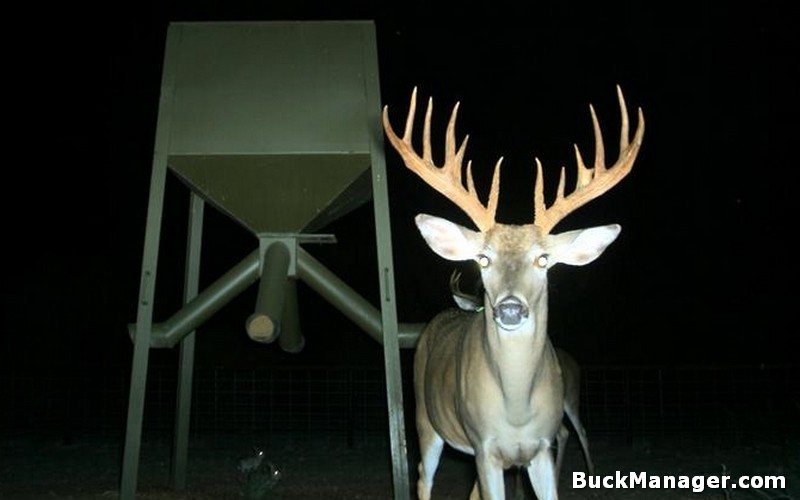
Whitetail Deer Management: Conditioning Deer to Eat New Foods

Supplemental feeding itself is not rocket science, but there are some things you can do to increase its effectiveness. First and foremost, do not use supplemental feed as a tool to maintain substantially more deer on a property than the habitat can support. Habitat management and population management are much more important than pouring feed into a system.

If a deer manager can combine good habitat and the appropriate number of deer with a supplemental feeding program kicker, then the result will be far superior to just placing out feed and expecting quality deer to simply show up.

It also needs to be said that protein pellets should not be put into timed, spin-feeders. The unfortunate hunters out there that have tried this delivery method will attest to this advice. For one thing, dispensing “supplemental” foods from timed feeders is not really supplemental. It’s bait. And deer can not consume enough in this manner for it to truly supplement their diet.

Protein pellets contain much more moisture than corn or roasted soybeans and will sweat inside a feeder once temperatures begin to rise. It does not take much heat to make the temperature rise rapidly within a confined area. Because pellets move through timed feeders very slowly, this release of moisture will cause the feed to mold and cake-up. Use free-choice feeders.

Do not be disappointed if deer ignore your tasty offerings. Whitetail know a lot about their natural environment, but deer do not have an understanding of manufactured feeds or any new-to-them feed for that matter. Although deer are quick studies, don’t expect them to hammer your protein feeder right off the bat. There is a learning curve involved.

I’ve been contacted my numerous managers and hunters over the years that have filled new protein feeders with tons of high-protein pellets only to be disappointed when they return to their property and not a deer has touched it. In many cases, the problem is simply about timing.

Properties that have offered free-choice feeds for years know that deer consume supplemental foods in varying amounts during different times of the year. This phenomenon is especially evident during the spring and fall, when forbs and mast are abundant and readily available. This happens even on properties where deer have been supplemented for long periods of time. When available, whitetail deer prefer high quality natural foods over any supplemental food we can offer. This is why good white-tailed deer habitat is so important.

To get to the point, do not expect a lot of activity around your feeder when habitat conditions are good, such as after spring green-up or when acorns fall or during those rare years when rains continue throughout the summer. And although habitat conditions come into play, the time of year is not the only factor that can impact deer use of supplemental foods. It also depends on deer density and feeder density.

Lastly, when new foods are introduced onto a property deer must be conditioned to consume these new foods. Managers can either introduce the new food and just wait them out, or the new food can be mixed with foods that are familiar to deer. For example, if deer on a ranch commonly eat corn, then mix corn with the new feed to introduce it to them. Then, decrease the amount of corn and up the percentage of the new food. This is by far the best way to transition white-tailed deer to consume new foods.

Again, getting deer to eat new foods is not terribly difficult, but there are some factors that can effect how fast they hit new food sources. Habitat conditions, food availability, deer density, season and other deer management practices can all impact the consumption of supplemental foods. Simply keep all of these variables in mind if you plan on introducing new foods to whitetail and prepare to be surprised. Because once deer begin using their new food source you may be looking for supplemental income to help pay for it all!