On Predator Control: Coyotes and Whitetail

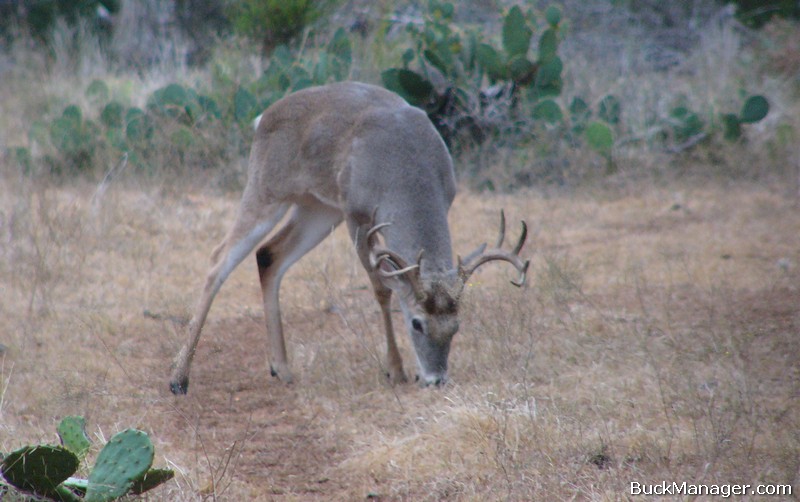
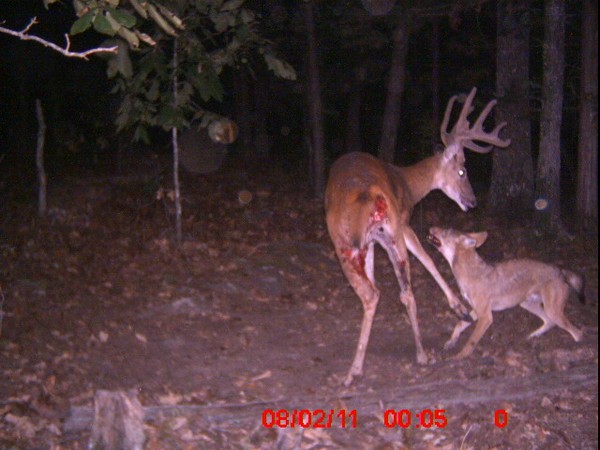
Many hunters and landowners believe that predators are a major threat to deer management on their properties. Over most of the white-tailed deer’s range the primary predator of concern is the coyote. It’s true, coyotes do kill and eat deer. The real question is, “How many deer do coyotes kill each year?” That is a hard one to nail down because it depends on many local variables, but it is a question that many hunters and deer managers would like to have answered.

There are other animals that will also kill deer, such as bobcats, bears, feral hogs and mountain lions, but because of a hosts of variables, these species are typically believed to have little impact on local deer populations. But coyotes, well, that is one animal where most deer hunters will say predator control for the benefit for a whitetail deer herd should take place. It’s a rather simplistic view, but in a few cases it could be exactly what the doctor ordered.

Continue reading “On Predator Control: Coyotes and Whitetail”

Determining Deer Harvest Goals on Small Properties

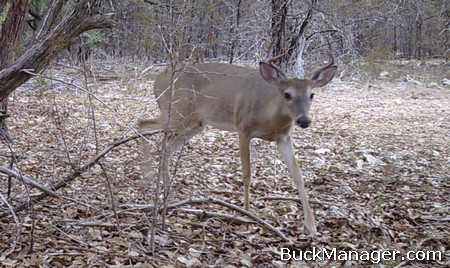
The white-tailed deer hunting season is underway and things, at least here in Central Texas, have definitely picked up over the past week. It had been tough hunting with tons of cool season forbs and, believe or not, acorns on the ground! The warmer temperatures did not help the early season deer hunting action either. However, whitetail bucks are now actively seeking out and staying with does. Most of the does observed over the past few days have had anxious bucks right on their heels. The rut is definitely on around here.

Many, but not all, hunters have commented that deer harvest is down in their areas due to an abundance of natural foods. Many places have reported corn just piling up under their feeders. It’s hard to believe that the little bit of rain the region received turned things around so quickly, but that’s very good for the deer. That said, many places involved in deer management programs still have harvest goals they would like to achieve. There is still plenty of hunting season left, so don’t panic yet.
Deer Hunting: Doe Hunting and Management Tips

Deer Hunting Small Acreage

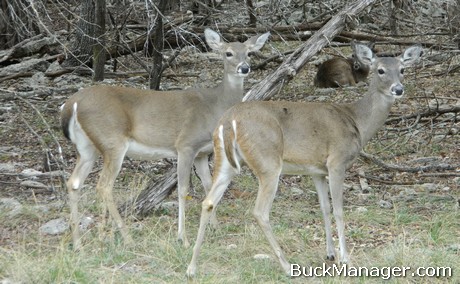
A common question asked by hunters on lands located across the white-tailed deer’s range is, “How many does should we shoot?” As one might suspect, there are many variables that will determine the “right” answer to this question. Check out this real life scenario submitted by Brad from Illinois:

“I have a big concern with our family deer hunting property in southern Illinois. We had nine people hunting our 130 acre property during the first week of the shotgun season. During this time, there were only eight whitetail bucks seen, in which two were harvested. During that same time, we observed at least 20 does. We have only harvested one doe in the last 15 years and I’m having a problem with that.

We have six deer food plots on our property that range from about 1/8 to 1/4 acre in size. We also have a three acre lake and a pond. Our property is surrounded by woods and a majority of my family thinks that the hunters around us take out enough does and we do not have to harvest any. We have already had one blue tongue epidemic run through our area about five years ago. I am curious to know what you think about this.”

Tips for Hunting Small Tracts of Land

First, let me just say that nine hunters on 130 acres is a serious amount of deer hunting pressure. However, the important factor is not so much how many hunters are out there, but rather the number of deer on the place and the number of deer that are ultimately harvested. From a habitat management and a deer health standpoint, it is also important to consider how many deer should be out there. How many animals can this 130 acre property support?

When considering small acreage deer management, hunters must consider the reality that deer will move on and off the property at will. Even a doe will have a home range that is several hundred acres in size. Bucks will use larger areas, particularly during the rut. So how many does should you shoot?

There is no simple answer here, especially when the next question to be asked is, “How many do you have?” Deer surveys can help estimate the whitetail deer density in your area and are most beneficial on properties that are smaller than a couple hundred acres in size when neighboring lands are willing pitch in too. Surveys, as well as data from harvested animals, can help answer many questions for you. What percent of does are having fawns each year? Do the body weights of the deer found on my property indicate a healthy herd?

Based on the observations that Brad mentioned above, the buck to doe ratio in his situation is not all that bad, with one buck for every one and half does (at least before two bucks were shot). Some areas can be badly skewed towards females, with as many as five or six or more does per buck, so not bad for Brad. In his situation though, an important, missing component is the number of fawns observed. Fawn production is a good indicator of overall deer herd health.

Small Acreage Deer Hunting and Management

It goes without saying, but I will say it anyway, that trying to manage a deer herd on a small piece of land is difficult, and deer management is sometimes impossible, especially if small neighboring properties are not willing to work together towards a common goal. My recommendations in this situation would be to perform deer surveys prior to the deer hunting season, record deer harvest information such as age, antler and body weights and use habitat condition as a gauge for overall herd health.

Also, contact the state’s department of natural resources. They likely have a local biologist that can visit your property free of charge and offer some insight into the areas deer numbers based on information they have, as well as how whitetail deer are using the habitat found on your property.

Deer Hunting in Texas – A Family Tradition

It’s time—the day before the opener of Texas’ General White-tailed Deer Hunting Season! That means the trucks are packed, the trailers are loaded, the guns have been sighted-in (hopefully), the knives are sharpened, the corn used to “chick-chick” the roads is waiting at a gas station to be purchased along the way, and guys and gals and boys and girls all across the great state of Texas will be making tracks today on the way to their deer leases, public hunting lands or personal properties. It’s amazing at just how fast a year goes by now days, but another deer hunting season is upon us.

Like many hunters, I grew up with a father that hunted. He introduced me to the outdoors and taught me how to spot the dove flyways on the property where we ran cows,  how to hunt squirrels, rabbits, deer and how to skin them all, including coons and nutria that we trapped, as well as anything else you could skin. Actually, furbearers brought a good price back then, and I think that really help control a lot of those mid-sized predator populations. Now that I think about it, we did see more quail and even some pheasants around still at that time. Hunting allowed me to experience nature up close, as well as spend time with family and friends. Continue reading “Deer Hunting in Texas – A Family Tradition”

Deer Management Strategies for Burned Properties

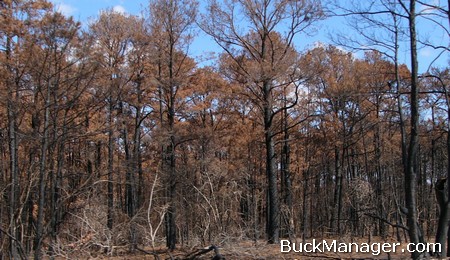
All wildlife species need food, cover, water and space to survive. White-tailed deer are no different. Most regions of Texas have been pretty thin on food and water for wildlife this year due to pitifully low amounts of rainfall, but many properties have been impacted by wildfires too, consuming dry vegetation (food and cover) and completely setting back white-tailed deer habitat. Burned lands can look bad, real bad at first. However, the benefits of fire on native habitats have been well documented.

Fires used for habitat management purposes are always prescribed fires, not wildfires. Prescribed burns differ greatly from wildfires in that planned fires can be set to accomplish specific objectives. This is not the case with wildfires, which can also destroy homes and other valuable infrastructure. But from a habitat perspective, fire is fire. The plant communities found in Texas are well-adapted to fire. But what can properties impacted by recent wildfires expect? Continue reading “Deer Management Strategies for Burned Properties”

Shoot Early This Deer Season

Providing high quality habitat and good whitetail nutrition are some of the major building blocks of a successful deer management program. Regular readers of this site know that I stress this point constantly. Although the plant communities on a property can be manipulated to provide outstanding native forage for resident deer, even good habitat can “take it on the chin” during drought years like this one. Supplemental feeding can help struggling deer big time, but filling tags early in the deer hunting season is another way to “create” food for the remaining deer.

When it comes to individual animals having more food, it never hurts to eliminate the competition. This is why it’s always, always, always important to keep deer numbers in line with the available habitat. The past 12 months have been beyond dry here in Texas. So just like the commercial beef producers have been reducing their herds, it’s almost time for the deer hunters to step up to the plate and do the same to Texas’ whitetail. Pasture management and habitat management can be one in the same. Proper herd management, whether it be cow or deer, can moderate some of the impacts of drought—to both the animals and the plants they eat. After all, it will rain again someday. You just have to make sure there is something left to grow.

Deer Hunting in Texas: Shoot Early for Best Results!

Source: “It doesn’t take a biologist to understand that drought has serious impacts on the state’s nearly 4 million white-tailed deer,” said Alan Cain, deer program leader with the Texas Parks and Wildlife Department. “Everything from antler quality, to fawn production and overall survival will be affected by the tough range conditions this year.”

“By reducing deer numbers early on, hunters can help ensure enough groceries will be available through the winter months,” Cain said. “As with many wildlife species the very young and the very old often have much more difficult times dealing with extreme weather events.” These stress periods are a way for nature to ‘thin the herd,’ especially in areas where deer populations are already exceeding the carrying capacity of the native range. As deer become stressed they are more susceptible to infections or other disease. Drought like this can be a contributing factor towards stress.”

The Texas deer hunting season opens Saturday, October 1, for bowhunting and November 5 for the general gun season. A special youth-only weekend season is set for October 29-30. The general season runs through January 1, 2012 in North Texas and January 15, 2012 in South Texas. A late youth-only season is also in the books for January 2-15, 2012, but I highly encourage everyone to not procrastinate on deer harvest this fall.

The deer will be hungry,  so expect whitetails to be much more visible than last year and hitting feeders like clockwork right from the get-go. And yes, they will be thirsty too. Water is in high demand this year so take advantage of its deer-concentrating power and shoot some animals near water sources as well. During last year’s deer hunting season, Texas hunters harvested a record 688,000 deer. Cain predicted that record could be topped this year if conditions stay the same. I think he’s right. There should be a lot of brown on the ground, and rightfully so.