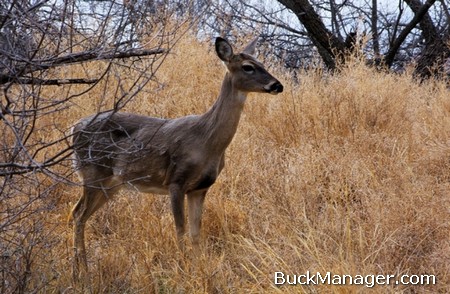
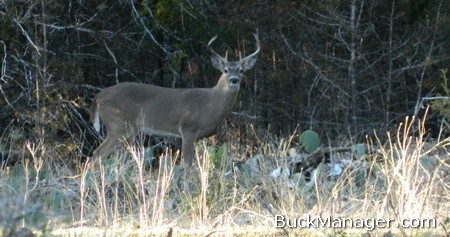
Trophy Whitetail Buck Harvest Up, Way Up

The results are in: White-tailed deer management efforts are working great across North America. According to the guys over at the Boone and Crockett Club, the number of trophy class whitetail bucks has increased significantly over the past few decades. As interest by private landowners in wildlife habitat and deer management techniques continues to accelerate, this big buck boon should come as no surprise. It appears the North American Model of wildlife management, at least as it pertains to whitetail deer, is going strong.

So, which areas are producing the most B&C trophy bucks? The old go-to states, such as Wisconsin, Illinois, Iowa, Ohio and Missouri are still going strong, but you might be surprised that states such as Minnesota, Michigan, Oklahoma, Nebraska and Texas are inching up in the number of book entries. There have also been record breaking bucks in Tennessee as well as Kentucky in recent years.

Producing quality whitetails has always been about animals getting good nutrition and allowing bucks to mature. It appears white-tailed deer in North America, and the folks that hunt them, are benefiting from both as well.
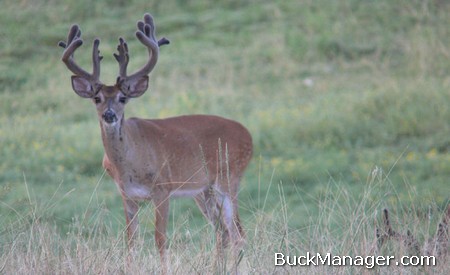
Whitetail Deer Hunting Benefits from Management

Source: Trophy whitetail entries from 2011 hunting seasons are beginning to pour into Boone and Crockett Club headquarters. But while the sporting world waits to see which states are hot–or not–producers of giant bucks, North America’s overall robust trend in whitetail entries is a story for all conservationists to celebrate

B&C historical records show that trophy whitetails are up 400 percent over the past 30 years.

“It’s worth remembering where America’s favorite big-game species stood not so long ago—at the brink of extinction,” said Ben Wallace, Club president. “In 1900, less than 500,000 whitetails remained. But habitat programs, research, science-based management, regulations and enforcement, all led and funded by hunters, brought this game animal back to extraordinary levels. Today there are more than 32 million whitetails!”

The Boone and Crockett system of scoring big-game trophies originated in 1906 as a means of recording details on species thought to be disappearing. Over time, these records evolved as an effective way to track the success or failure of conservation efforts.

As North America’s whitetail herd has grown, numbers of big bucks also have risen. For the period 1980-1985, hunters entered 617 trophy whitetails into Boone and Crockett records. For the period 2005-2010, the total jumped to 3,090, an increase of 400 percent.

During this 30-year span, many states and provinces saw percentage gains much greater than the continental average (see data below). For example, trophy whitetail entries from Wisconsin have risen 857 percent. In Illinois, the increase is 896 percent. Ontario went from a single entry to a whopping 41—a 4,000 percent gain!

Six states and provinces had zero entries in 1980-1985. For 2005-2010, they combined for 48.

Boone and Crockett offers two premier ways to trace and detail historic conservation developments, not just with whitetails but many other species as well.

A book, “Records of North American Big Game,” offers detailed tabular listings for trophies in 38 different categories of game. Each entry includes the all-time entry score, date harvested, location of kill, hunter and owner names, and selected measurements. At 768 pages, the book retails for $49.95.

A searchable online database, called “Trophy Search,” is another exceptional resource. By buying an annual subscription, users can sort B&C archival data in infinite ways to identify national as well as local trends. An annual subscription is $50.

Boone and Crockett Club Associates receive discounts on both items. Order online at www.boone-crockett.org or by calling 888-840-4868.

B&C Trophy Whitetails, 2005-2010:  Typical and non-typical combined

1. Wisconsin, 383 entries (1980-1985 rank 3rd, 40 entries)
2. Illinois, 299 entries (1980-1985 rank 6th, 30 entries)
3. Iowa, 224 entries (1980-1985 rank 2nd, 59 entries)
4. Ohio, 215 entries (1980-1985 rank 14th, 16 entries)
5. Missouri, 214 entries (1980-1985 rank 9th (tie), 25 entries)
6. Kentucky, 199 entries (1980-1985 rank 9th (tie), 25 entries)
7. Indiana, 195 entries (1980-1985 rank 16th, 14 entries)
8. Kansas, 181 entries (1980-1985 rank 4th, 35 entries)
9. Minnesota, 172 entries (1980-1985 rank 1st, 76 entries)
10. Saskatchewan, 147 entries (1980-1985 rank 7th (tie), 27 entries)
11. Texas, 132 entries (1980-1985 rank 12th, 19 entries)
12. Alberta, 115 entries (1980-1985 rank 7th (tie), 27 entries)
13. Nebraska, 78 entries (1980-1985 rank 18th (tie), 12 entries)
14. Oklahoma, 48 entries (1980-1985 rank 22nd (tie), 7 entries)
15. Ontario, 41 entries (1980-1985 rank 42nd (tie), 1 entry)
16. Arkansas, 40 entries (1980-1985 rank 34th (tie), 3 entries)
17 (tie). Michigan, 39 entries (1980-1985 rank 17th, 13 entries)
17 (tie). Mississippi, 39 entries (1980-1985 rank 18th, 12 entries)
19. North Dakota, 31 entries (1980-1985 rank 31st (tie), 4 entries)
20. Pennsylvania, 26 entries (1980-1985 rank 45th (tie), 0 entries)
21. New York, 25 entries (1980-1985 rank 28th (tie), 5 entries)
22. South Dakota, 24 entries (1980-1985 rank 20th (tie), 8 entries)
23 (tie). Georgia, 23 entries (1980-1985 rank 5th, 31 entries)
23 (tie). Maryland, 23 entries (1980-1985 rank 28th (tie), 5 entries)
25 (tie). British Columbia, 19 entries (1980-1985 rank 24th (tie), 6 entries)
25 (tie). Maine, 19 entries (1980-1985 rank 11th, 20 entries)
27. Virginia, 17 entries (1980-1985 rank 22nd (tie), 7 entries)
28. Tennessee, 15 entries (1980-1985 rank 20th, 8 entries)
29. Colorado, 13 entries (1980-1985 rank 42nd (tie), 1 entry)
30. Idaho, 11 entries (1980-1985 rank 24th (tie), 6 entries)
31 (tie). Massachusetts, 8 entries (1980-1985 rank 45th (tie), 0 entries)
31 (tie). Quebec, 8 entries (1980-1985 rank 45th (tie), 0 entries)
33. Delaware, 7 entries (1980-1985 rank 42nd (tie), 1 entry)
34 (tie). Louisiana, 6 entries (1980-1985 rank 28th (tie), 5 entries)
34 (tie). Manitoba, 6 entries (1980-1985 rank 15th, 15 entries)
34 (tie). Washington, 6 entries (1980-1985 rank 31st (tie), 4 entries)
37 (tie). Montana, 5 entries (1980-1985 rank 13th, 17 entries)
37 (tie). Alabama, 5 entries (1980-1985 rank 34th (tie), 3 entries)
37 (tie). North Carolina, 5 entries (1980-1985 34th (tie), 3 entries)
40 (tie). Connecticut, 4 entries (1980-1985 rank 38th (tie), 2 entries)
40 (tie). New Hampshire, 4 entries (1980-1985 rank 38th (tie), 2 entries)
42 (tie). New Jersey, 3 entries (1980-1985 rank 45th (tie), 0 entries)
42 (tie). New Brunswick, 3 entries (1980-1985 rank 24th (tie), 6 entries)
42 (tie). West Virginia, 3 entries (1980-1985 rank 34th (tie), 3 entries)
45 (tie). Mexico, 2 entries (1980-1985 rank 24th (tie), 6 entries)
45 (tie). Wyoming, 2 entries (1980-1985 rank 38th (tie), 2 entries)
45 (tie). South Carolina, 2 entries (1980-1985 rank 45th (tie), 0 entries)
45 (tie). Nova Scotia, 2 entries (1980-1985 rank 31st (tie), 4 entries)
49 (tie). Oregon, 1 entry (1980-1985 rank 38th (tie), 2 entries)
49 (tie). Rhode Island, 1 entry (1980-1985 rank 45th (tie), 0 entries)

Whitetail Deer, Hunting in North America

Whitetail numbers have changed drastically over the past century. In general, deer hunting has gone from poor to great. Deer populations are at all-time highs across much of the whitetail’s range, with the number of animals even exceeding the capacity of the habitat in some localities. Most of these areas, however, are no longer deer habitat (urban areas). The success of this species is a testament to private landowners and state agencies that have worked together over the years to provide good habitat for whitetail deer. Countless other wildlife species have benefited along the way, too.
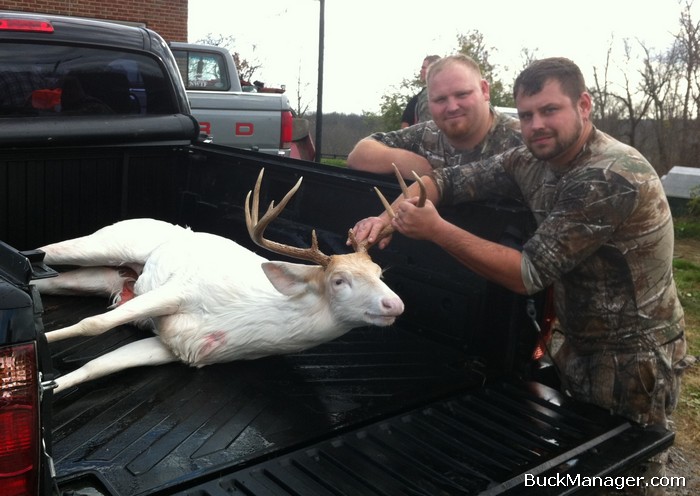
Kentucky Hunter Bags Albino Buck

Interest in white-tailed deer hunting and management has increased significantly over the past 25 years. Most hunters realize that age, genetics and nutrition are they management trifecta when it comes to growing big, healthy whitetail deer. Genetics get a lot of attention in today’s world because of the prevalence of commercial deer breeding operations. As such, genes are most often mentioned when talking about the antler characteristics of bucks, but genes also determine a lot of other things too, such as a deer’s coat color.

Every hunter gets a little dreamy-eyed thinking about harvesting his or her ideal monster buck, but I suspect most hunters have also thought about harvesting an albino deer, and specifically, an albino buck. Albino deer are much more rare than big whitetail bucks, so it would be an awesome experience for most deer hunters to even see one in the field, let alone have the opportunity to shoot one. Most probably do not even consider it a possibility, but shooting an albino buck is exactly what one fortunate hunter, Donald Goodrich, did while deer hunting in Kentucky this past season. Continue reading “Kentucky Hunter Bags Albino Buck”

Shed Hunting Ideas

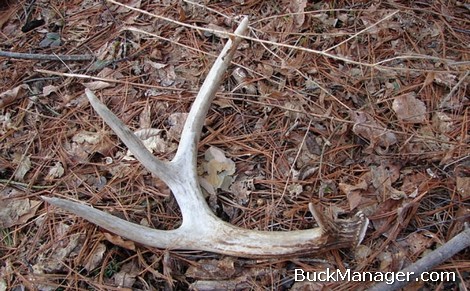
Whitetail hunters look forward to fall each year because it signifies deer hunting season. Shed hunters, on the other hand, look forward to very late winter and early spring because that means it’s time to search for dropped antlers! Okay, not everyone is on board with shed hunting, but for those of use that enjoy getting back out into the woods between seasons it can be quite rewarding, as well as informative. It’s also good exercise and helps hunters learn more about the woods they hunt.

Finding shed antlers is always cool. A shed antler lets me know that at some point in the recent past the buck that lost the antler was standing, traveling or bedding right there. It may not seem like much, but years of finding shed antlers can allow a hunter to get some good data about where antlers are lost, or better stated, where bucks are hanging out. From a deer management perspective, it can give hunters and landowners an idea of buck habitat use after the rut and before spring green-up. Continue reading “Shed Hunting Ideas”

How Long Do Deer Breed? Do Barren Does Exist?

White-tailed Deer Breeding & Fertility

White-tailed deer are prolific breeders, meaning they have the potential to reproduce and grow local deer populations quickly over just a few years. The majority of whitetail does will give birth to twin fawns each and every year after their first birth, when they usually have just a single fawn. One of the biggest deer management issues in many areas, both suburban and rural, continues to be deer overpopulation and the resulting degradation of habitat.

It would seem that deer are in large numbers everywhere, but the fact is they are not. Many hunters often encounter animals in the field that appear to be barren deer, does without fawns. So what gives? How long do deer breed?

“Is there such a thing as a barren doe? I believe there is, as I have shot quite a few does in the 115 to 130 pound-plus weight range that have no signs of ever lactating; very small nipples, no evidence of ever having a milk bag. The nipples, as well as milk bag, are tight to the belly as to have never produced. I have friends that argue the barren doe thing, but I am convinced that there is such a thing. My theory is that they come into heat, get bred, but are sterile and do not take. Could you clear this up please? Thank you.”

Deer Hunting and Management: Barren Does

Are Barren Does Out There?

Although some number of barren does can inevitably be found somewhere, they are very rare, comprising less than one percent of the doe population. Research on free-ranging whitetail deer has found that does bred when less than a year of age (fawns basically) normally produced a single fawn, with 10 percent of these animals bearing twin fawns.

Older does average almost two fawns each annually; about 60 percent have twins, 30 percent have single fawns, 3 percent have triplets and 7 percent have complications that result in no fawns being produced. However, the overwhelming majority of “non-performers” are not barren and can go on to successfully produce fawns in the future.

Using the numbers above, this means that about 160 fawns are born for every 100 does in the population. This shows just how prolific white-tailed deer can be, but it’s important to remember that just because fawns were birthed does not mean that they will survive.

Factors that Impact Deer Reproduction

Habitat quality, as in protective/hiding cover for fawns, and food availability, for lactating does, is extremely important for recruiting fawns into the adult deer population. This is where many properties fall short: inadequate deer habitat.

Source: “Failure of does to breed is not a problem, so where do the fawns go? Life is full of dangers for a fawn, and food and cover (fawning habitat) is the difference in living and dying for fawns. In many parts of the state, predation is severe unless there is adequate hiding cover for young fawns. Imported fire-ants are a problem for fawns in heavily infested areas, but their impact can often mask the real problem. Adequate deer nutrition is often limiting, and if fawns make it past fire-ants and predators to weaning, they still face the challenge of finding food and cover.

Fawn survival depends primarily on habitat quality. Malnutrition and associated problems are probably responsible for poor fawn survival in much of the state. Dry conditions aggravate the problem of inadequate food. “Empty belly disease” is the most limiting factor on whitetails in Texas. Delayed rutting and breeding could cause fawns to be born late, which would be a disadvantage on ranges where food is scarce.”

Whitetail are Fertile, Productive Animals

In short, observing does without fawns is not a barren doe issue. A large number of does without fawns by their sides, especially those in good physical condition, is an indicator of other deer management issues. Although the most common limiting factor of deer populations in many areas is a lack of deer habitat management, or more bluntly stated, poor habitat quality, I don’t believe this is the case in the situation presented by the questioner above.

In Texas, does with body weights of 115 to 130 pounds would be considered quite healthy. When deer have good, healthy body weights, one would expect the habitat to also be in good condition and that fawn recruitment would be high. In the case above, it’s suspected that predators could be the problem rather than inadequate nutrition. So, how long do whitetail deer breed? Well, they will produce fawns as long as nutrition is adequate.

Providing good deer habitat typically alleviates predator issues in whitetail, but there have been instances when predators at extreme numbers, particularly within high-fenced ranches, can become a serious deer management issue. Barren does are not the problem, but predator numbers very well could be.

Late Season Deer Hunting

The white-tailed deer hunting season will be ending shortly, so there’s no better time than right now to employ a few late season deer hunting tips and tactics to bag that last-second buck. In Texas, many hunters take time off between Christmas and New Year’s in anticipation of putting deer on the ground, but whitetail bucks that have made it this far into the deer hunting season are well educated.

Still, there’s no need to panic. Careful planning combined with the wise use of time in the field can still result in a successful deer hunt later in the season, but let’s discuss some of the things you need to know to up your chances. Hopefully, these tips will tip the odds in your favor.

Deer Hunting Tips and Tactics

The Late Season: Deer Know

The hunting season has been on for a while and the deer are most definitely in the know. Patterns are extremely important to them. Not so much their patterns, but the patterns of hunters. A deer knows that the sound of a four wheeler running or a truck door closing means a hunter is in the area. Deer will stick with moving very early, before sunrise, and then after mid-morning, when most hunters have long left the field. It’s time to change things up. First, be quiet.

Next, be flexible. By late season, even young deer realize that bad things can happen to good deer that hang out too close to deer stands and deer feeders. Older deer will be on full alert and will avoid all of them. Instead of jumping into your stand out of habit, find a travel corridor and catch whitetail moving around your setup. Deer move even when you are not seeing them from your stand, they just know how to avoid the average hunter by late season. Deer will not expect you to be somewhere else, out of your stand. Put the wind in your favor and you will see deer.

Use Late Season Feeding to Pattern Deer

Another great late season deer hunting tip is to watch the moon. Deer naturally become more nocturnal, feeding during the night, as temperatures drop into the fall and winter, but their nightly movements are greatly reduced during the dark of the moon. Avoid full moon periods and stick with hunting the days around a new moon. This hunting tactic will also work in between nights that are hampered with heavy cloud cover. Whitetail will hold tight overnight, so be in the woods when daylight comes, especially when these conditions coincide with really cold temperatures.

This next hunting tip is a no-brainer, but it works. Look for deer foods. As mentioned previously, deer do not stop traveling altogether, but their movements will be modified late into the deer hunting season. Hunt food sources such as cool season forbs, winter food plots, or even deer feeders at non-traditional times. Whitetail deer have to move and eat more as the mercury drops, so find a food source and camp out on between late morning and early afternoon.

Weather for Late Season Hunting Success

A last, but often overlooked, deer hunting tip is to pay attention to the wind speed. Many deer hunters pay attention to wind direction, and rightfully so, but wind speed alone can dictate deer movement. High wind speeds (more than 15 mph) make for difficult hunting conditions and deer do not like to move during these times either. Whitetail deer are nervous creatures already, so high winds and lots of moving limbs do not help. High wind inhibits their ability to detect danger, so deer movement will be greatly suppressed.

Use a weather web site such as AccuWeather.com to get hour-by-hour temperature and wind direction and speed information for your hunting area. It may be the late season, but there is still plenty of deer hunting to be had. Find time to use these deer hunting tips and tactics in combination before the end of the season and the odds will be in your favor. Happy holiday hunting!