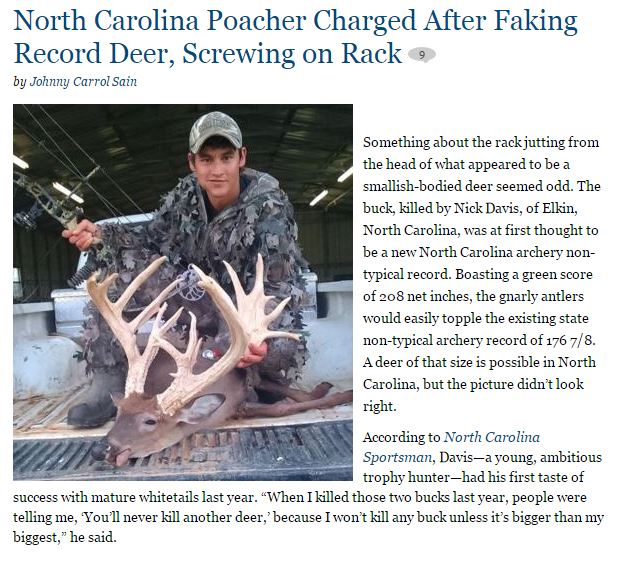
A would-be big buck and state record turns out to be a total hoax. North Carolina deer hunter poacher Nick Davis even fooled an official scorer, but the disproportionately-large antlers did not trick the whitetail hunting community. Continued pressure from deer hunters finally spurred action within the state’s wildlife agency.
Davis recanted after investigation by the North Carolina Wildlife Resources Commission (NCWRC).
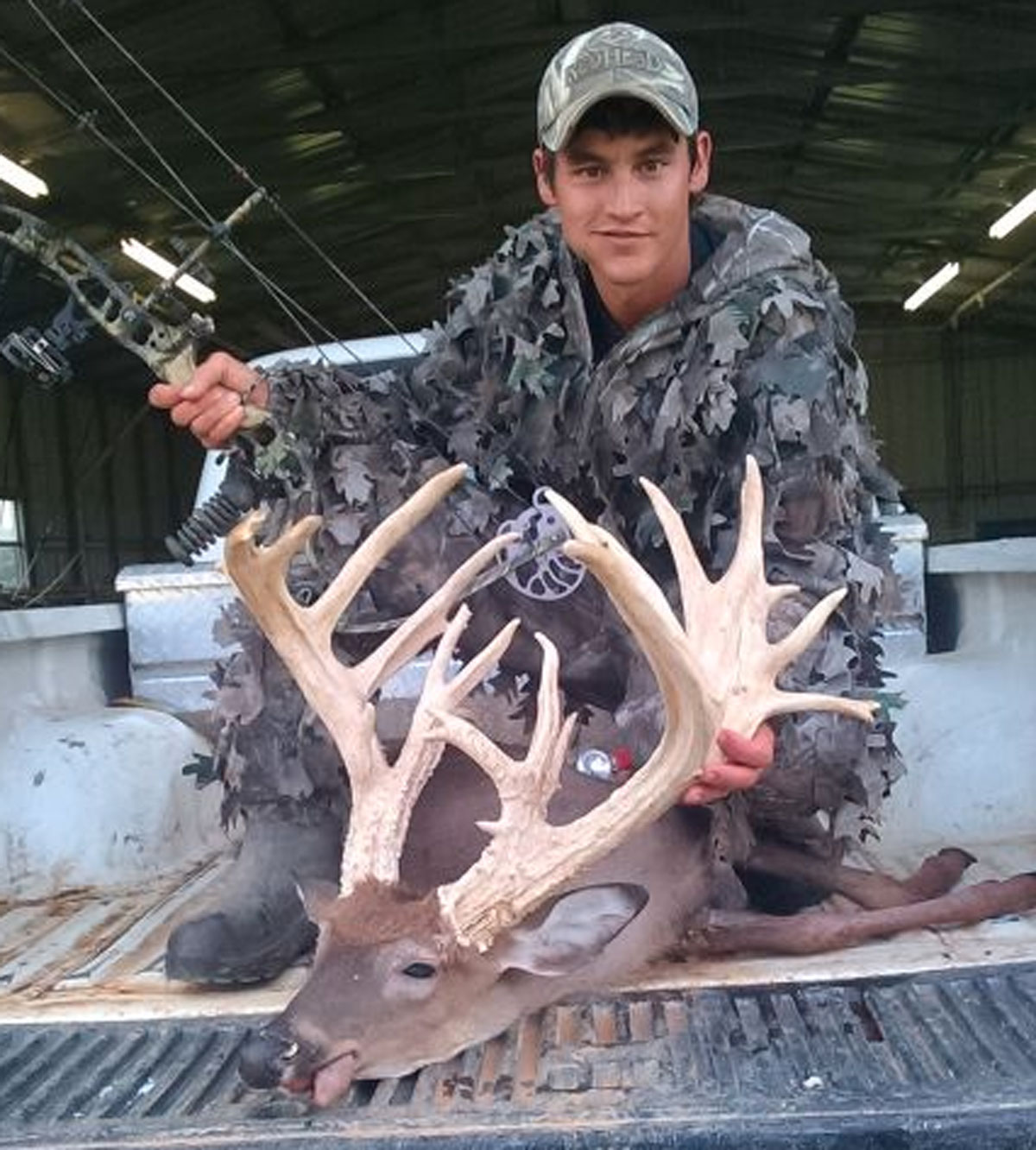
The deer was reported to have been shot last Wednesday by the Surry County deer hunter and was measured by Joey Thompson, who happens to be an official scorer for the North Carolina Bowhunters Association. He put the big whitetail buck at a gross score of 223 1/8 inches, a net score of 208 2/8 inches.
Too Good to be True
The buck looked good. Too good. The remarkably white antlers were almost flawless. Hunters continued to point out the pristine rack and commented that the antlers were too white. The inquisitions prompted the North Carolina Wildlife Resources Commission (NCWRC) to take a closer look.
Wildlife officials eventually determined that the antlers were not from North Carolina, but apparently the small-bodied buck was. Based on casual observation, my first thought was that the buck has genes from a northern subspecies of whitetail. It takes a big-bodied buck with a large skeletal system to grow antlers of that size.
North Carolina, or Pennsylvania?
Apparently, the antlers were from a Pennsylvania buck that had been screwed onto the skull plate of a recently taken 3 point buck. As it turns out, the young buck was poached using a rifle. Ouch. Davis finally confessed to wardens that the oversize antlers were from another state.
Davis almost pulled the switcheroo off, but some skeptical hunters turned out to be right. That’s not always the case. Davis hoped his giant, fake buck from North Carolina would get him a little attention from the deer hunting community. As it turns out, Davis got way more publicity than he ever wanted.
Wondering how to get deer tested for CWD after the shot? Texas Parks and Wildlife Department (TPWD) will test your harvested deer for chronic wasting disease (CWD) during the upcoming deer hunting seasons. They start on October 3 for archery hunters and properties participating in TPWD’s Managed Lands Deer Permit (MLDP) Program.
CWD was recently found in two captive deer breeding facilities, one in Medina County and the other in Lavaca County. As a result, TPWD will increase efforts to strategically sample hunter harvested deer during the 2015-16 hunting season.
Image aces.edu
Testing Deer for CWD
Whitetail and mule deer hunters are encouraged to assist with this statewide monitoring effort by voluntarily submitting CWD samples for testing this fall. TPWD biologists will collect and submit samples to the Texas A&M Veterinary Diagnostic Lab at no cost to the hunter. Tissue samples from the heads of harvested deer must be collected within 24 hours of harvest, up to 48 hours if kept chilled. It is very important that the deer head not be frozen.
Since 2003, TPWD biologists have been monitoring the state’s free-ranging deer population for CWD. Using statistical sampling tables commonly used by animal disease experts, biologists set a sampling goal that would detect the disease with 95 percent confidence if at least one out of every 100 deer was infected.
Thus far, biologists have collected nearly 30,000 samples from hunter-harvested deer across Texas’ eight ecological regions, in most cases surpassing 95 percent confidence standards. To date, CWD has not been found in Texas free-ranging white-tailed deer.
CWD Sampling Based on Risk
The sampling strategy for the 2015-16 hunting season is being refined to target CWD disease risk levels within the state’s 33 unique Resource Management Units (RMU). These RMUs are wildlife conservation areas that TPWD uses for all other deer management decisions. Criteria for establishing risk levels include factors such as deer density, susceptible species importation history, proximity to a CWD-positive site, etc.
Sampling goals will rely upon hunter harvest submissions ranging from 60 to 433 (lowest to highest risk) deer for each RMU, and if biologists can achieve these goals, will result in excess of 7,000 samples. TPWD will also specifically target sampling/testing efforts within a 5-mile radius around the CWD index facility in Medina County to determine the prevalence and geographic extent of the deer disease in that specific area.
“In the wake of our increased concern about CWD in Texas we are ramping up our sampling effort statewide,” said Mitch Lockwood, TPWD Big Game Program Director. “We will be collecting samples from deer and elk, and other cervid species, in every county where deer hunting occurs.”
How to Get Deer Tested
Hunters wishing to submit CWD samples from harvested mule and white-tailed deer for testing should contact the local TPWD biologist for the county. Biologists will provide information on how to get deer tested for CWD. In addition, biologists will provide a CWD sample receipt hunters can use to track test results online. TPWD anticipates test results could take 3-4 weeks to process.
In some cases, biologists may request to retain the entire deer head for later sample collection; a resource document will be given to the hunter as proof of sex in those instances. More information about the disease, CWD testing of harvested deer, safe carcass handling tips and deer processing precautions can be found here.
Reading the headline, “Hunting has Big Support Nationwide,” brought a smile to my face this morning. I cut my teeth hunting small game, honed my skills pass shooting doves and finally got the go-ahead to pursue white-tailed deer. My family was instrumental in introducing me to the outdoors, which hunting was a part of. Good times!
We live in a highly polarized world. Technology is great, but nothing allows people to slug one another right in the face easier than a computer, especially when social media allows otherwise “nice” people to dogpile onto individuals for a “cause.” That cause could be a number of things, but hunters get their share of cyber-bullying.
Image noble.org
I would venture to guess that most hunters were introduced to hunting at an early age. It’s easy for them to “get” what hunting is about. However, the majority of the people living in the US have not and will never be introduced to hunting. That’s okay. I have nothing against them, so it made me smile when I realized that most of them do not have anything against what we, as hunters, do.
Hunting Approval Rate High
Source: According to a nationwide survey it conducted this year, 77 percent of those polled strongly or moderately approve of hunting. That compares to 73 percent overall approval in 1995.
The support for hunting has been fairly consistent so far this century, previous surveys have found. Its lowest dip came in 2011 with a 74 percent approval. Just as important, disapproval of hunting overall has fallen from 22 percent in 1995 to just 12 percent. That leaves another 11 percent undecided.
The survey was in depth enough not only to find out attitudes toward hunting, but also which species is more acceptably hunted. These numbers are a little surprising because mourning dove come out at the bottom of the heap, below both black bear and mountain lion. Only 40 percent of those polled approved of dove hunting.
Deer hunting had the strongest support with 78 percent, followed by turkeys and small game such as squirrel, waterfowl and elk. All of those were above the 50 percent threshold.
Probably not surprisingly, hunting for meat got high marks, while trophy hunting and hunting within a high fence both scored last in support in categories called motivation and methods. The latter is understandable because they are issues even hunters can’t agree on, and without a deeper understanding of what really happens to create trophy hunts or within a high fence the names alone make it sound sinister.
Under the category of motivation, several reasons for hunting scored high along with collecting meat. Protection of habitat, wildlife management, population control and to protect humans from dangerous animals earned support from more than two-thirds of those polled.
Even hunting for sport had the support of more than half of respondents. While the public supports hunting overall, it has little support for hunting methods. Only hunting with dogs, presumably for upland birds and waterfowl, had an approval rating over 50 percent. Hunting on Sundays, hunting over bait, use of scent attractants and high tech gear were only as popular or slightly more than hunting within a high fence.
Details of the Harvest Option and Conservation Option “arms” of the soon-to-be-changing Managed Lands Deer Permit (MLDP) Program were released by Texas Parks and Wildlife Department (TPWD). The changes are said to be in effect in 2017, which should mean the 2017-18 white-tailed deer hunting season.
For those unfamiliar with the MLDP Program, the program is intended to help landowners interested in deer population and habitat management. Historically, the MLDP program offered incentives to landowners willing to implement deer habitat management practices on their lands in exchange for property-specific deer harvest recommendations and longer hunting seasons.
The new and improved MLDP program looks to contain two components, the Harvest Option and the Conservation Option. The Conservation Option appears to operate much like the MLD Permit program of the past, with the Harvest Option having fewer obligations on the part of the property owner.
Harvest Option for White-tailed Deer
The Harvest Option is a completely automated version of MLDP that provides landowners with a deer harvest recommendation, tag issuance, and general correspondence about wildlife and habitat management. Administration of the Harvest Option will be conducted through the Land Management Assistance (LMA) web site and does not require a wildlife management plan, habitat management practices, deer population data, or the participant to receive technical assistance from a TPWD wildlife biologist.
This provides enhanced harvest opportunities through longer seasons and bag limits with minimal involvement from TPWD. Although, individuals participating in the Harvest Option may still request to receive technical guidance from a TPWD biologist through our technical guidance program with MLDP deer harvest recommendations and tag issuance being automated and not customizable.
Requirements, Deadline for Harvest Option
An online application must be completed by applicant in LMA. Prior to completing enrollment, applicant will be able to preview tag issuance to decide whether to participate in the Harvest Option. Deadline to apply for the Harvest Option is September 1.
Image wildlifedepartment.com
Aggregate Acreage Enrollment
TPWD will allow multiple landowners to combine contiguous tracts of land to create an aggregate acreage for program enrollment. A single program participant must be designated to receive MLDP tags and they may be used on any property within the aggregate acreage during the MLDP deer hunting season.
Under the Harvest Option of the MLDP Program, property owners will have to make some choices with regard to tag issuance. Tags are only to be issued for white-tailed deer, but program participants may choose a harvest recommendation and tag issuance for:
Only buck deer
Only antlerless deer or
Buck and antlerless deer
Note: Any deer harvested on the property for which MLDP tags have not been issued must be tagged with an appropriate hunting license tag and recorded on the hunting license log, and county seasons and bag limits apply.
How are Tags Issued?
Tag issuance for the Harvest Option will be determined through LMA and will take into account TPWD deer population estimates for a specific deer monitoring unit, information regarding the property such as acreage, types and amounts of habitat types, fencing, whether deer have been liberated onto the enrolled property, and other information deemed relevant by the Department.
TPWD biologists will not be able to adjust or customize an individual harvest recommendation for a property.
Harvest Option Season Dates
Antlerless Deer
Saturday closest to September 30 through the last day of February.
Harvest allowed by any lawful means, including modern firearm.
Buck Harvest
Saturday closest to September 30 for 35 consecutive days.
Any buck may be harvested with lawful archery equipment.
Any buck with at least one unbranched antler may be harvested by any lawful means, including modern firearm.
First Saturday in November through the last day of February.
Any buck may be harvested by any lawful means, including modern firearm.
Reporting Requirements
Participating property owners in either the Harvest or Conservation Option will be required to report the number of buck and antlerless deer harvested each season. Those in the Conservation Option will be required to report the habitat management practices conducted on the property each year, but this will not be a requirement for properties enrolled in the Harvest Option.
All reporting of required information is to be completed electronically in LMA and is the responsibility of the landowner or landowner’s designated agent to insure data is reported by the deadline. The deadline for reporting required information is April 1.
Harvest Option Tag Issuance
The new MLDP program will shake things up, so to speak, with regards to tag issuance. In the past, tags were received through the mail. The new “print your own tag” system will be utilized with the new options where a PDF file of the permits will be emailed to participants who will then print out MLDP tags for the current deer hunting season.
Harvest Logs
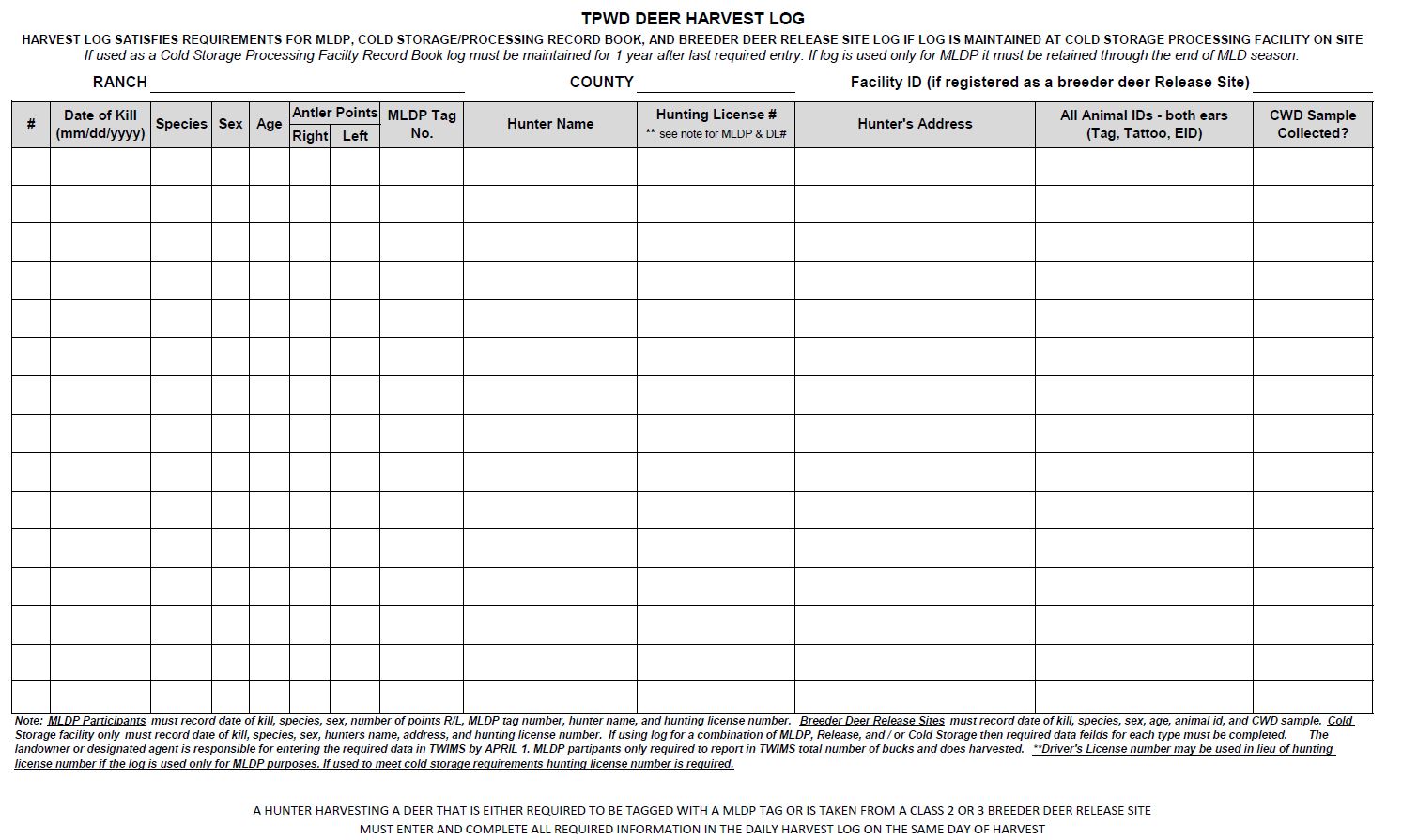
Program participants under both options are required to maintain a TPWD-approved daily harvest log on the property enrolled in MLDP because of the new “print your own tag” system. The harvest log must be maintained for the property through the end of MLDP hunting season.
A hunter harvesting and tagging a deer under the authority of MLDP must enter appropriate information, such as date of kill, species, sex, MLDP tag number, hunter name, hunting or driver’s license number of hunter, into the harvest log on the same day of harvest.
Additionally, the harvest log may satisfy the cold storage and processing facility record book provided certain information is included in the harvest log and is retained on the property for 1 year following date of the last harvest entry.
Learn about the other option, the Conservation Option deer management program in Texas.
Still waiting to catch a big nontypical buck in one of your game camera photos? Me, too. Seeing a big buck in one of my camera photos always gets me pumped up, but nothing beats seeing that deer in real life. And putting a tag on him is the best. We aren’t yet up an running in Texas, but in many states the white-tailed deer hunting season is already open!
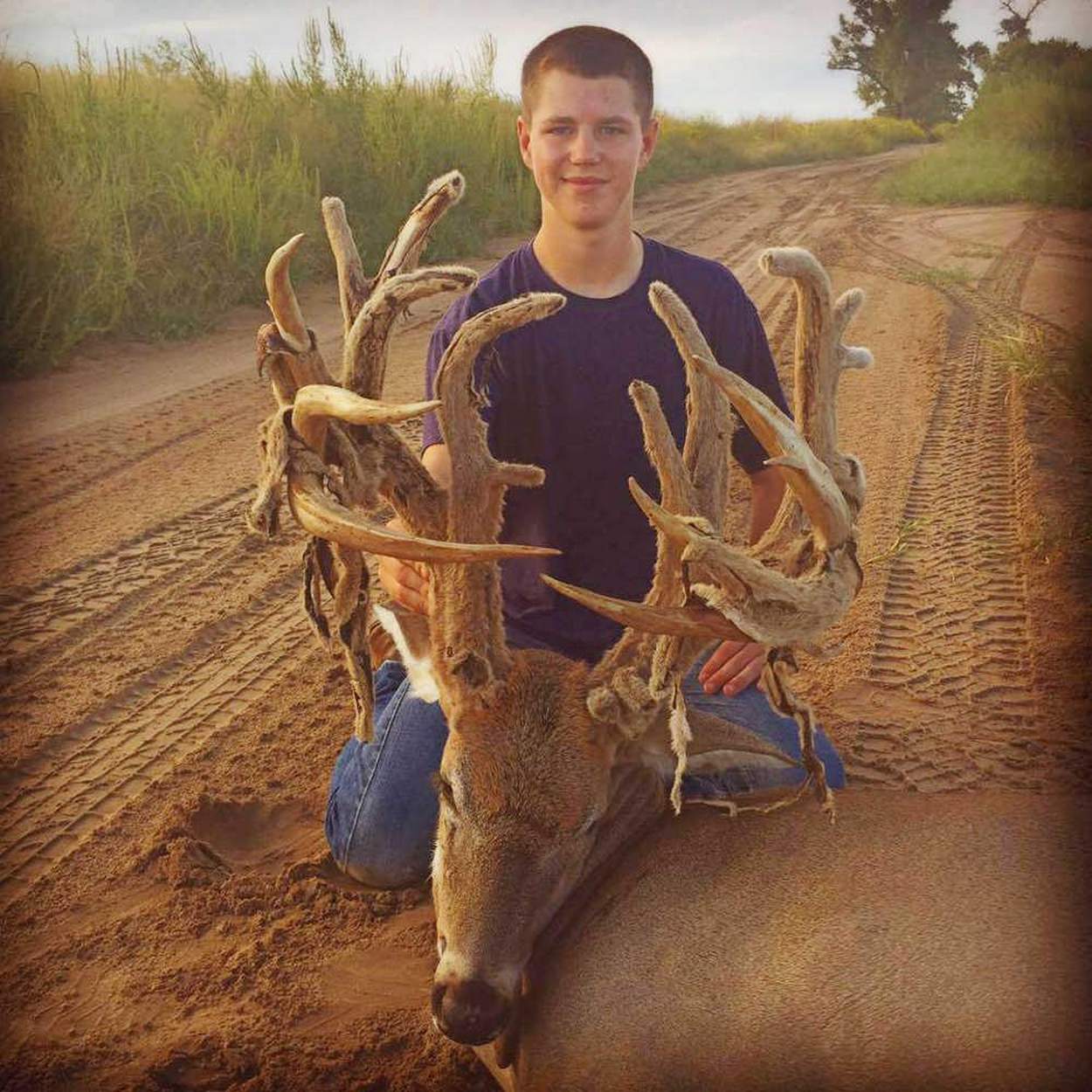
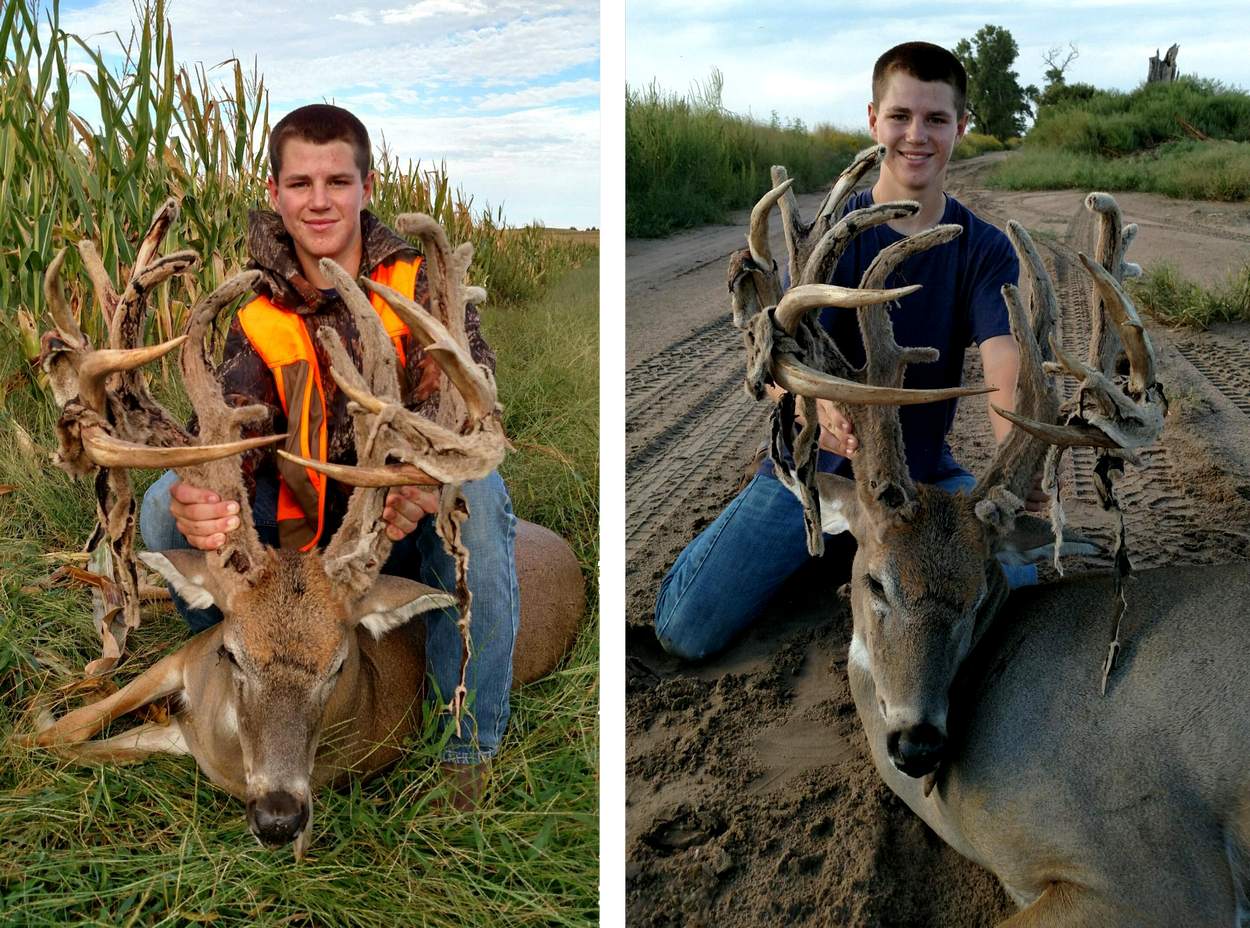
And some hunters are making the most of an open season. Sixteen-year-old Clayton Brummer tagged this half-velvet nontypical in Stafford County, Kansas, on September 8 during the state’s youth season. After an encounter with the big buck earlier in the season, Brummer got a second chance while sitting on stand with his father near the confluence of two cultivated fields.
A few hours before dusk, the 21 point nontypical buck appeared in the milo field they were watching and trotted down the rows before disappearing into a large cornfield. While sitting on pins and needles, the giant buck emerged from the corn at 30 yards with tattered velvet still adorning his nontypical antlers.
With years of whitetail hunting experience already under his belt, the teen wasted no time in making his shot count. The buck dropped. I can only imagine the look on his face after the shot. I bet that smile got even wider as he approached the giant buck.
Hunting a Nontypical
Source: Brummer said it was still several hours before dark when they watched the buck rise from the milo, running down the rows shaking its head as it tried to avoid insects as it headed in to the large field of unharvested corn.
“All we could do was sit, wait and watch,” said Brummer. “We knew he was in the corn and that he’d probably have to come out sometime.”
He said he was surprised when the buck stepped out at about 30 yards and there wasn’t even time to alert his father, who was looking through binoculars at other parts of the field.
“It all just kind of runs in the family,” he said. “My dad and I try to get older deer and let some of the younger deer grow. We do take some management bucks.” That’s normally a term given to a buck with inferior antlers that trophy hunters don’t want to breed and pass along such genetics.
The Brummers live and hunt in Stafford County, one of America’s best-known trophy whitetail areas largely because of outfitted hunts featured on outdoors television. Such attention can make finding places to hunt difficult for middle-class residents. Brummer said he is blessed, and thankful, to know a few landowners who avoid offers of leasing so they can share deer hunting ground with their friends.
Deer Hunting in Kansas
Kansas is well known for producing quality whitetail bucks year after year. Not all of them are 21 points and of the proportions of the one shot by Brummer, but the state generally has some very healthy deer. That quality may be under pressure as deer populations in some parts of the state continue to rise. When it comes to free-ranging whitetail, having quality and quantity is a balancing act.
Having too many deer puts pressure of the food supply, and that results in smaller deer. Too few deer and hunting opportunities become slim. It’s the same on any ranch, farm or forest land. If you have or lease property for hunting, consider managing the local deer herd to meet you goals. Otherwise, Kansas is always an option!