Hunters are constantly on the lookout for animals while deer hunting, but this is not always the case while we’re driving. Most accidents, auto or otherwise, happen when we are not fully engaged in what we are doing. An accident is typically a result of being complacent or preoccupied with other stuff in our lives. Doing something successfully takes focus.
There are a multitude of things to distract us when driving on “down time” (ie. not hunting) as well as while we are heading to and from our favorite deer hunting grounds. We are even more prone to an automobile accident while conducting our normal activities , such as commuting to and from work, running to the grocery store or just picking up the kids after school.
Hunters are especially busy navigating winding roads, trying to keep at least one eye on the vehicle in front of us, evaluating podcast, and checking our hunting packs to make sure we didn’t forget our grunt call, rattling horns, and the like. There are also those occasional text messages, even though we know we should be focused on the road in front of us… as well as the deer!
Don’t get distracted while driving, just pull over and do what you need to do. Easy to say, more difficult to actually put into practice.
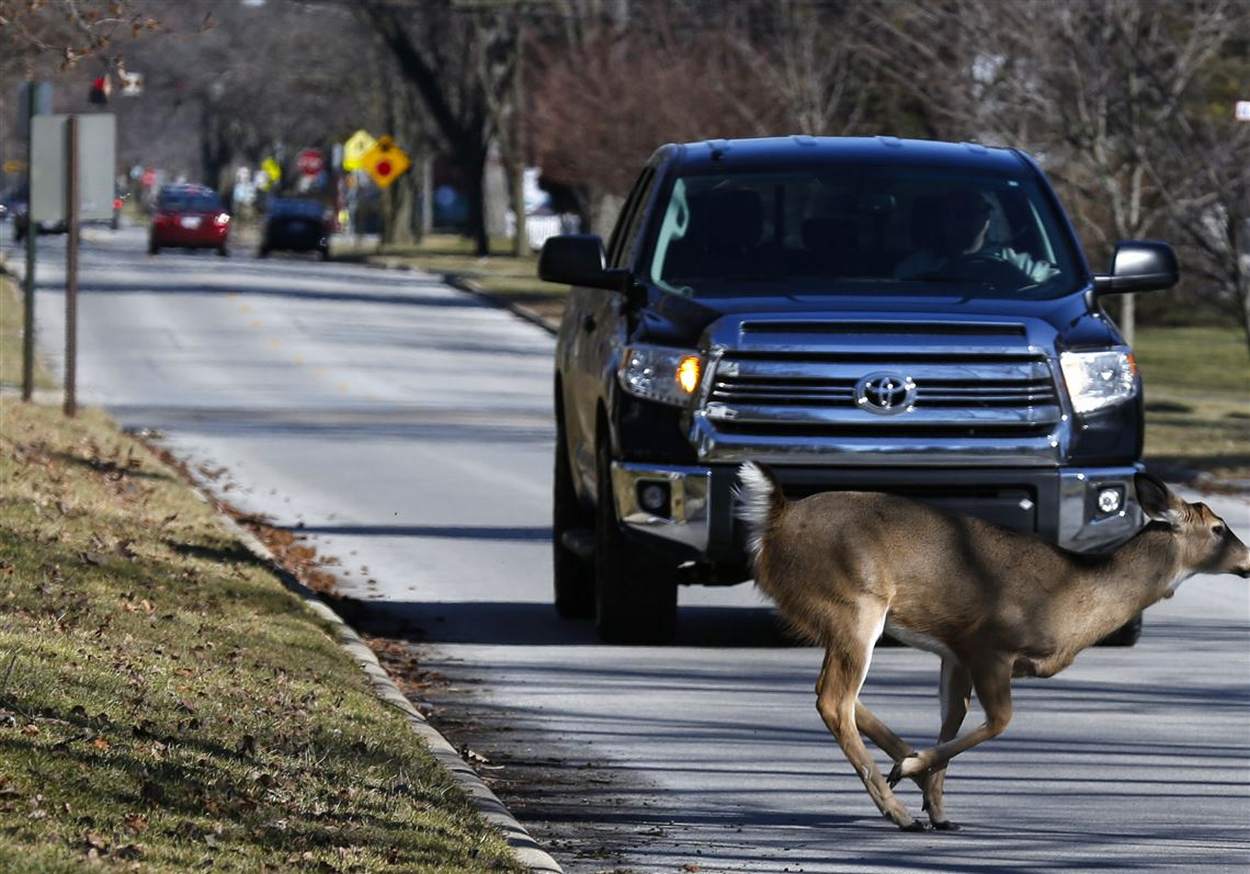
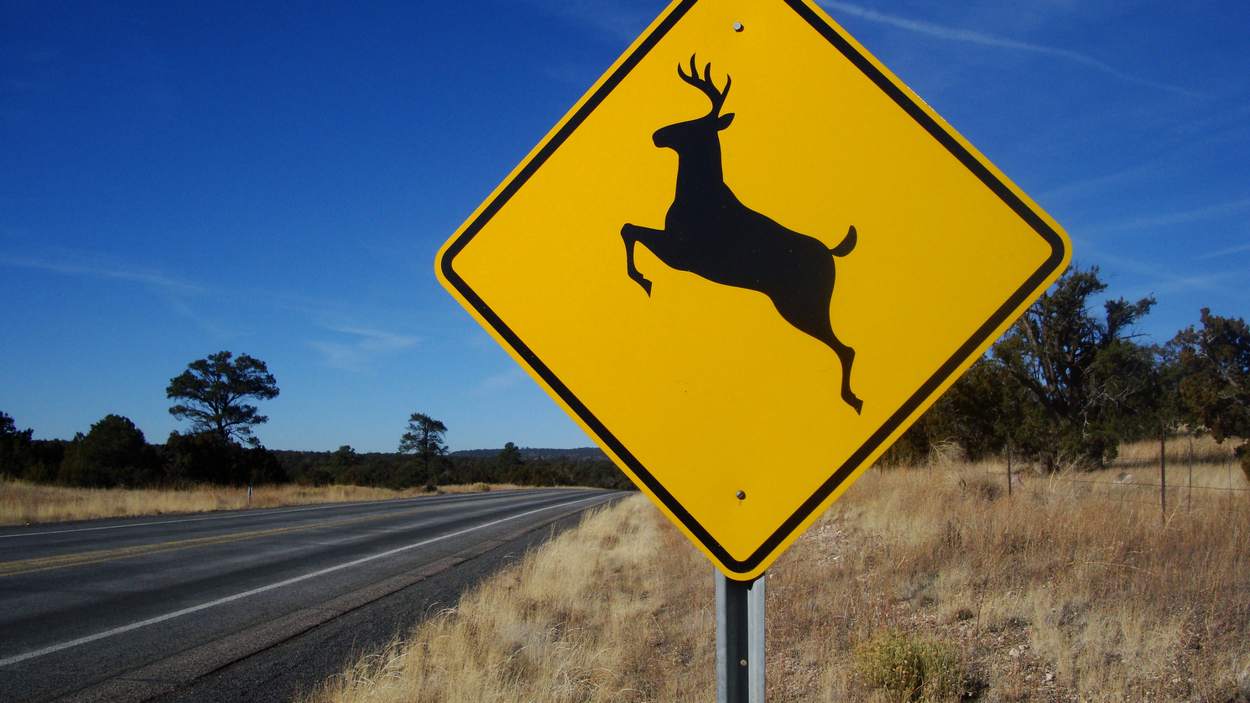
We often know which stretches of road are the “hot spots,” the places were deer typically cross back and forth across public roadways. State highway department’s have even marked many of them for automobile drivers using the readily-identifiable deer crossing sign, but it’s the places where we don’t expect deer that can get us into trouble.
The Experts on Deer-Auto Collisions
Source: U.S. drivers are just as likely to have a claim involving a collision with deer, elk or moose than they were last year, according to new claims data from State Farm. The odds drivers will have a claim from hitting one of those animals is 1 out of 169, the same as it was in 2014. That likelihood more than doubles during October, November and December, when deer collisions are most prevalent.
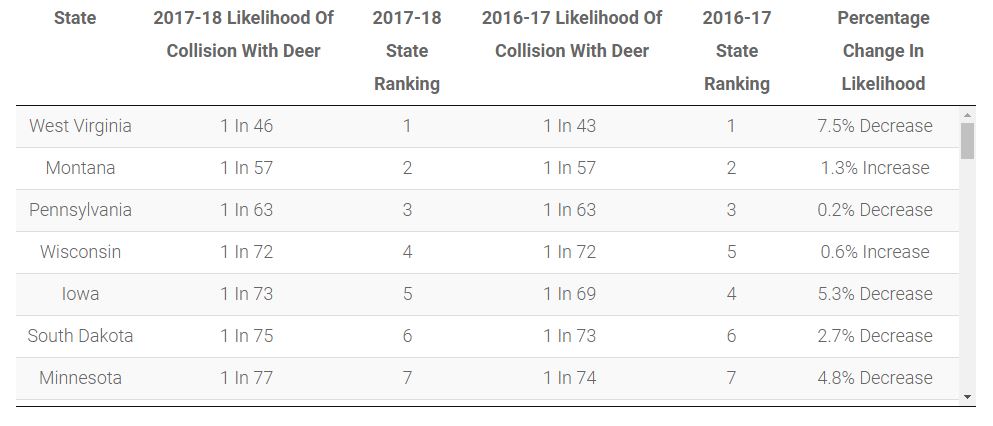
Update: Data for Deer-Auto Accidents for 2017-18
For the ninth year in a row, West Virginia tops the list of states where an auto insurance claim is most likely to occur because of a collision involving a deer. The odds that a driver in the Mountain State will have a claim actually improved to 1 in 44, up from 1 in 39 in 2014, an 11.4% decrease. Hawaii rounds out the bottom of the list also for the ninth year in a row with odds of 1 in 8,765.
Peak Times for Deer Accidents
“Periods of daily high-deer movement around dawn and dusk as well as seasonal behavior patterns, such as during the October-December breeding season, increase the risk for auto-deer collisions,” said Ron Regan, executive director for the Association of Fish & Wildlife Agencies.
“Changes in collision rates from year to year are a reflection of changing deer densities or population levels – more deer in a given area increases the potential for collision and other costs associated with whitetail. Deer populations are also affected by conditions such as new or improved roads with higher speeds near deer habitat, winter conditions, and other related factors.”
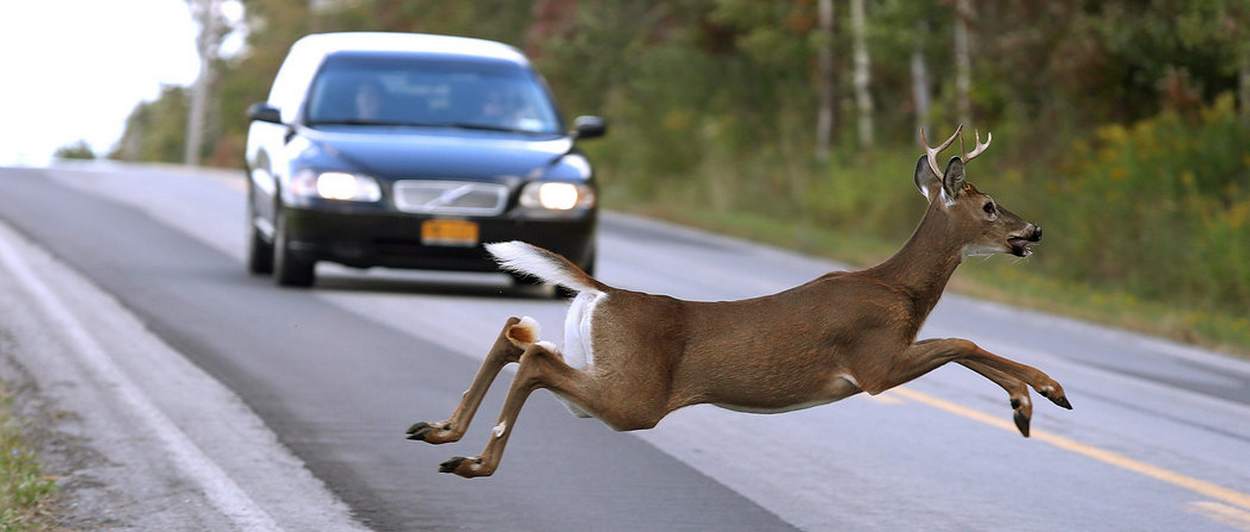
So, whether you’re just running some errands or heading out to hopefully bag a deer, make certain to keep an eye out for those four-legged critters. The is especially important to remember during the whitetail breeding season since bucks increase their movements substantially. Deer can show up in some very unusual places, and one of those places does not need to be your radiator.
It’s much better to bag a deer with your bow or gun rather than your vehicle, and it’s a lot less costly. Deer-auto collisions can equate to big costs in terms of property damage, but an accident could also cost someone’s life. It really does not matter how many deer are hit by automobiles each year in the area where you live, as long as you are not the one hitting, or alternatively, being hit. Slow your ride down, be careful and good luck out there, whether hunting or driving.
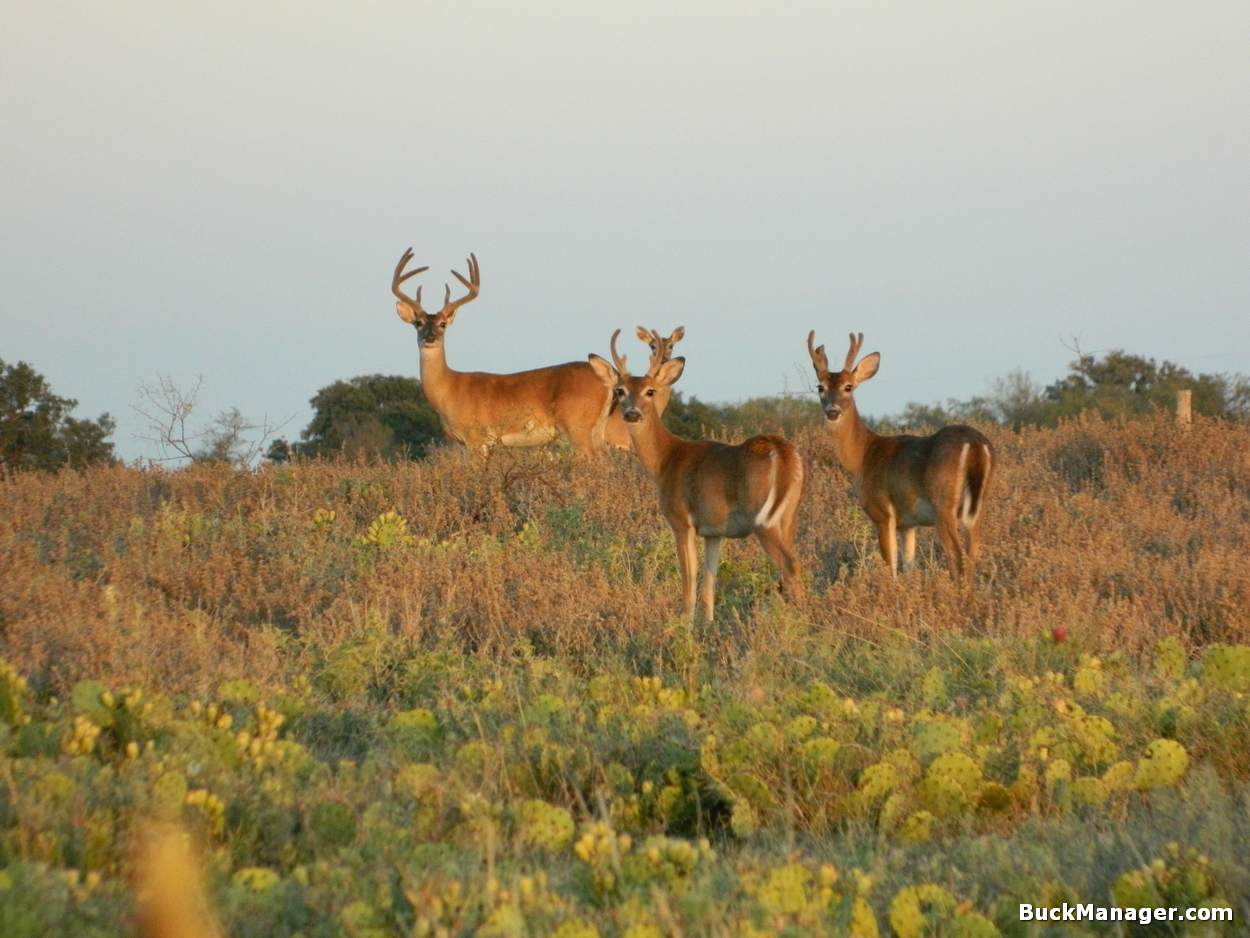
It’s been a good fall for deer hunting in Texas and the month of November is not yet over. There have been numerous reports of really nice whitetail bucks being harvested all across the state, as well as Oklahoma, with everyone indicating above average body weights and antler growth in deer. Sounds like a lot of full freezers for deer hunters.
Nothing grows more muscle, fat and antler than good habitat that is is good condition. Fortunately for both deer and hunters, that is mostly what we had this past year. We were flush with new-growth throughout the growing season. As they, say, it’s better to be lucky than good. Having a deer management plan in place on your property will help you be both.
Image wildlifedepartment.com
“We saw a diverse buffet of whitetail deer foods this spring where vegetation growth was measured in feet rather than inches this year,” said Alan Cain, TPWD white-tailed deer program leader. “Meeting nutritional demands of antler growth, raising fawns and building up body fat reserves for the rigors of breeding as well as the winter should be an easy venture for white-tailed deer this year.”
Unlike in recent years, whitetail did not have to look far to find a highly-nutritious diet of native weeds and browse plants. White-tailed deer are quite selective and prefer native forbs and browse high in protein and energy that are easily digestible. Forbs, a biologist term for weeds, fit that bill, and there were in abundance this year. The can have protein levels ranging from 20 to 35 percent!
Source: Buck antler growth should be well above average, predicts Cain. Exceptions to this overall excellent outlook may be in areas of East Texas where unusually wet years can result in lower-than-normal fawn recruitment. But overall, deer hunting will be good.
“I have no reservations suggesting antler quality will be above average this year, and with a good number of bucks in the 5-year-old age class I expect a number of hunters to harvest some exceptional bucks this year,” Cain said. “The habitat conditions statewide are much better than we’ve seen in years, and the abundance of native forage will help bucks maximize antler growth this year.”
So what can hunters expect with regards to deer numbers and quality. For starters the 2014 statewide deer population estimate was 3.95 million deer, the highest estimated population since 2005. Statewide whitetail population trends indicate a slow but steady growth in the deer population during the last 10 years.
Good rainfall helped produce a lot of fawns, which added to the deer herd this year. It also means that that more deer should be considered for harvest, at least in most parts of Texas.
“Although these numbers are from 2014 I would predict the deer population to be about the same if not break the 4 million deer mark for 2015, so hunters should experience a quarry-rich hunting environment this year,” Cain predicted, citing above average fawn production this year.
He also suggests hunters take advantage of opportunities to harvest antlerless deer this season, too, in order to offset high fawn production. “Hunters need to keep deer numbers at a level the habitat can sustain during lean years,” said Cain. If next year ends up being a poor rainfall year, then a smaller deer herd is more likely to have a better fawn crop, as available food is divided up among fewer mouths.
The key to producing good white-tailed deer year-in and year-out is to maintain the proper deer carrying capacity for the habitat. There really is no substitute for population control and habitat enhancement. Of course, it helps when ample rain falls because then every property produces good deer, even in areas with fair habitat for whitetail.
In Texas, dry or low rainfall years seem to be more common than wet ones. It’s best to plan on every year being a tough year. Then, on those years when it does rain you can reap the benefits in terms of both habitat and deer conditions.
Rainfall equates to forbs and those forbs translate into healthy deer, good fawn production and big bucks, even in areas where deer numbers are higher than what would be considered optimal. Again, shooting (literally) for a lower deer herd helps make every year a good year.
Chances are the next spring will not be as good for whitetail as the last one, so do your part for local deer management and take a doe or two if there is a need to do so. Improving the whitetail hunting in your part of Texas means taking inventory of what you have, then making a plan and taking the steps to make it even better.
What makes a person want to hunt an animal, whether it be a squirrel or a white-tailed deer? Admittedly, it’s strange to imagine myself never having experienced hunting. But if I was an adult that had never gone hunting, would I feel a need to learn more about it, try it, or would I even understand it?
It’s tough to say because again, I really cannot imagine myself not hunting. It’s an activity that goes hand-in-hand with the way I was raised from the beginning of my life. I guess we, like many generations before, were locavores. With the food industry now a big business, hunting and gathering food locally is now coming back to roost, so to speak.
For those persons never exposed to deer hunting or even small game hunting, whether it be as a child or a young adult, it would take a lot of initiative to gear up, get out there and try it all on their own sometime later in life. People definitely do it. It takes a lot to be a self-starter, regardless of the activity.
Hunting an Innate Action
The act of hunting is definitely something natural within humans, but it’s not necessarily easy to start doing—at least not in today’s world. Let’s face it, hunting is much more of a financial commitment today than it was in the past. Even a just a few decades ago, before hunting leases were the norm, everyone at least knew someone that knew someone were a person could do some sort of hunting.
Now, hunting land translates into income for landowners, so in some cases that means even children of landowners are not allowed to hunt the family land.
There are still public lands, but depending on when and where a first-time hunter went, well, that could ruin a person for life. There are a lot of great public hunting lands out there, too, especially the managed state and federal properties.
Locavores Hunt for Fresh Foods
Source: “Millennials are now our society’s largest group, but they don’t participate in hunting at the same rates as baby boomers,” Warnke said. “Meanwhile, the boomers are aging and dropping out of the hunting population. Their losses wouldn’t be so noticeable if more millennials started hunting. In business terms, the hunting community leaves a lot of money on the table by not engaging more millennials.”
Warnke said millennials represent a great opportunity for hunting, much as digital cameras once did for Kodak.
“People forget that the driving force in digital photography was a Kodak employee who Kodak ignored,” Warnke said. “Kodak didn’t embrace change, and look what happened to it. We can’t afford to ignore millennials, especially when so many of them are open to hunting, including females.”
Warnke said half the millennials in adult “Learn to Hunt” programs are young women. That trend is also apparent in DNR license sales. In 2006, females made up 7.66 percent of the state’s roughly 645,000 gun-deer hunters. By 2014, female participation accounted for 10.6 percent of gun-hunters.
Female participation rates for gun-deer hunting are increasing fastest among millennials. For instance, female participation never exceeded 20 percent for any age group until 2007, when girls represented 20.6 percent of all 12-year-old gun-deer hunters. In 2014, girls represented nearly 26 percent of 12-year-old gun-deer hunters.
Image pureairnatives.com
Our Hunting Heritage
Hunting is something that can be taught, but it’s also something that can be learned. Hunting is a natural part of every animal, including humans. It’s in our DNA from the beginning of our lives. Like other activities millennials choose to engage in, it takes experience to become a proficient hunter, but we all start with the same amount of experience, zero.
In a time when many our concerned about our hunting heritage, it’s refreshing to hear about people with little or no hunting experiences taking to the outdoors. These new hunters join the rank and file and I welcome their participation. Historically, hunting has always been an activity of locavores, before we had a term for simply living off the land.
It’s a good idea that we return to the land. Many are far removed, to the detriment of our society. As Aldo Leopold wrote, “There can be no doubt that a society rooted in the soil is more stable than one rooted in pavements.” Call these new men and women taking to the field millennials or locavores or whatever you wish, I’ll simply refer to them as hunters.
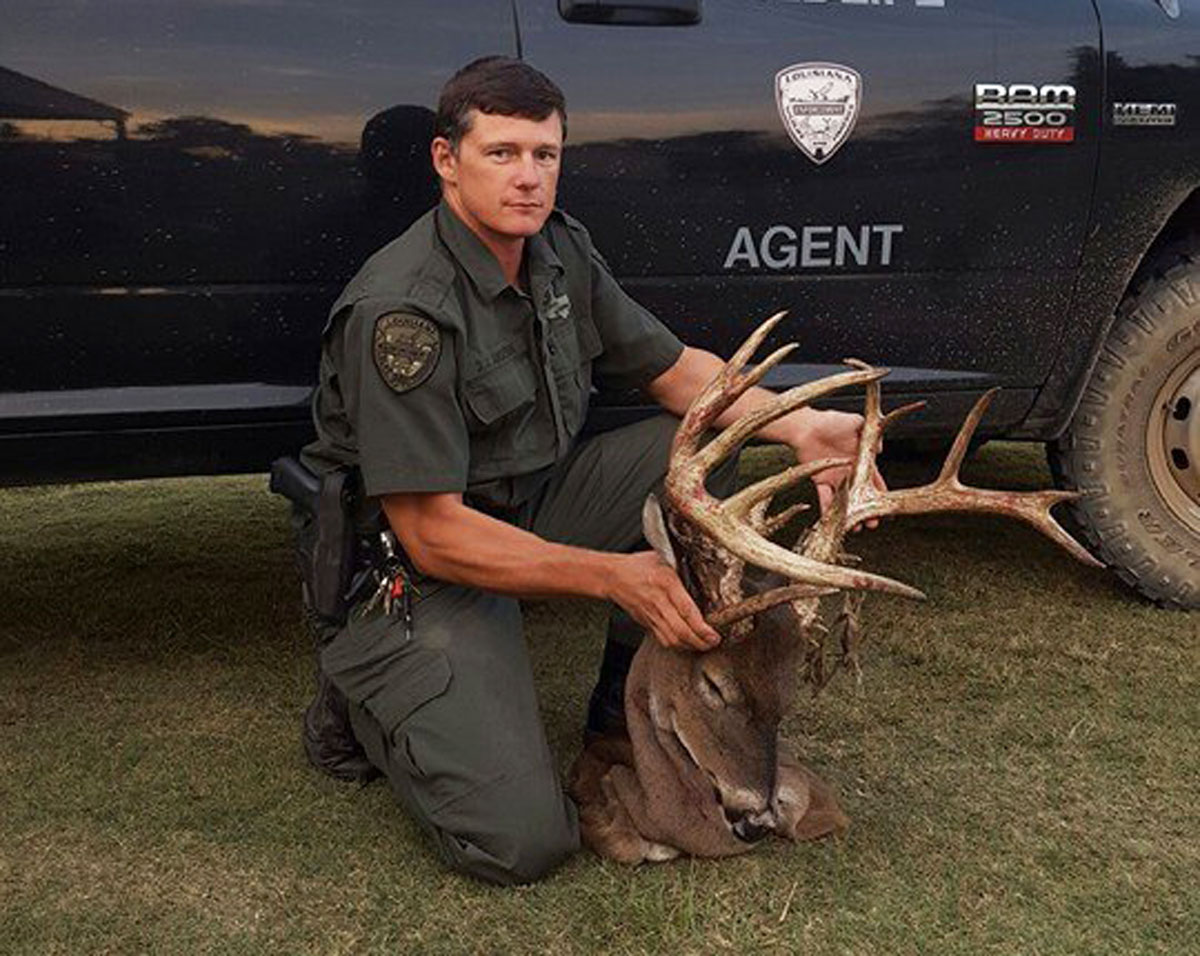
Get this: A deer hunter shot a monster, 200+ inch buck without a deer hunting license. Now, we’ve all made mistakes while out hunting, but this bowhunter in Louisiana simply takes the cake — a big, fat, huge cake with tree trunks coming out of its skull! This indiscretion more than likely falls under “bad decision” rather than a mere mistake.
This white-tailed deer-hunt-gone-wrong turned out not to be straight-up deer poaching, but the fact that the successful hunter called up a state wildlife agent to score the big buck, well, that was just another dumb move on his part. Of course, that’s kind of the way it works with criminals that eventually get caught, they just don’t know when to stop.
LA Wildlife at Work
Source: Officials say Senior Agent Douglas Anderson received a call at 10 a.m. Saturday about a trophy buck that had been shot on a private lease in Avoyelles Parish near Simmesport by a guest hunter. The club wanted someone to come measure the giant buck for record keeping purposes. Upon arrival, Anderson was informed that the big deer may have been shot by an unlicensed hunter.
He says he interviewed the hunter, Glen Toups Jr., 40, and Toups confessed to not having a basic hunting license, big-game license or deer tags. The agent cited Toups for the violations, and seized the record-worthy deer, which was unofficially scored as a 208-inch buck.
Taken by a licensed deer hunter, it would have qualified as one of the largest bow kills ever in Louisiana.
The state’s largest non-typical archery buck was a 219 1/8-inch deer taken by Billy Husted in Tensas Parish in 2007. The No. 2 deer was Rodney Lee’s 203 5/8-incher taken in East Feliciana parish in 1983.
Mature Buck Fooled, Not Game Warden
A mature white-tailed buck is a smart animal. Apparently, the Louisiana hunter was able to fool the old buck, but couldn’t get one past the LA wildlife department. It takes good deer habitat and a deer with a freakish genes to put 200 inches of bone on a free-ranging buck. It happens every year, but not on very many bucks. That’s a truly impressive animal.
Unfortunately, since the buck was shot illegally, he will not get his proper due in the Louisiana state rankings. The poacher not only took the buck, but also stole the opportunity for one of his fellow hunters to legally harvest it. Wonder if he’s still in that hunt club?
Texas, Oklahoma and Louisiana were blessed with late-winter rains that carried through spring and into early summer of this year. The relatively mild winter last season allowed white-tailed deer to come out of winter in good condition and then they stepped right into excellent habitat conditions. In short, deer populations are in good shape going into the fall hunting seasons.
Reports from the field indicate that buck antler growth is well above average by age class this year. This is simply the result of an ample food supply and good habitat conditions that lasted into mid-summer, a time when the majority of antler growth has already taken place. This is good news for both deer and bowhunters.
Good Food, Good Bowhunting
All that food, as well as great cover, leads to increased reproduction and recruitment into our deer herds. That means more white-tailed deer, as well as bigger deer. For those hunting in Texas, the archery season has been especially good!
As good as the first-half of the year was rain-wise, since about mid-June it’s been a complete opposite—very dry across most of Texas. This has caused deer movement to increase into the fall. With many areas reporting low acorn crops, whitetail have been hitting feed stations and fall food plots hard, at least in areas that caught some of sporadic moisture earlier this month.
October Lull
Source: With the long drought gone for now adult deer are fat, healthy and likely reproduced well this spring and summer. “They should be in great condition and there should be a good crop of fawns from this year,” said Craig Endicott, northeast region supervisor for the Oklahoma Department of Wildlife Conservation.
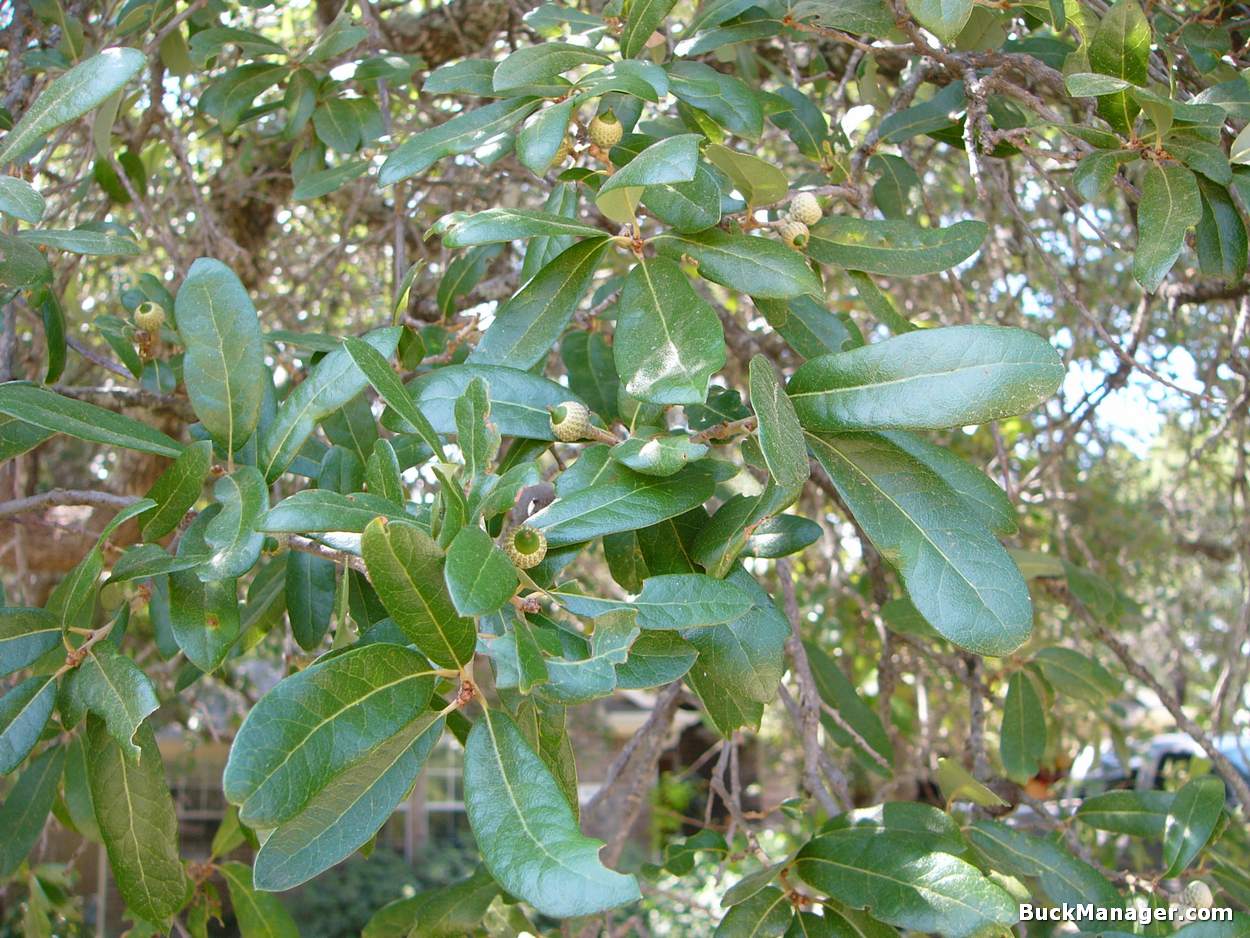
Archers in the field the first few weeks will find deer concentrating on natural food sources, he said. Oak trees are loaded and the chinkapin oaks already are starting to drop their small, sweet acorns, he said.
“Persimmons have been productive too so there is plenty of soft mast out there as well,” he said. Deer may be difficult to see, but the October lull will fade away once the bowhunting season ends and even cooler weather begins.
One of the greatest challenges for archery hunters this year may be something they had not faced during the years of drought – heavy vegetation and a lot of natural foods. “If anything that’s the only problem, the woods are a lot thicker and that can kind of hurt the hunters just in terms of visibility,” he said.
Bowhunting for Beginners
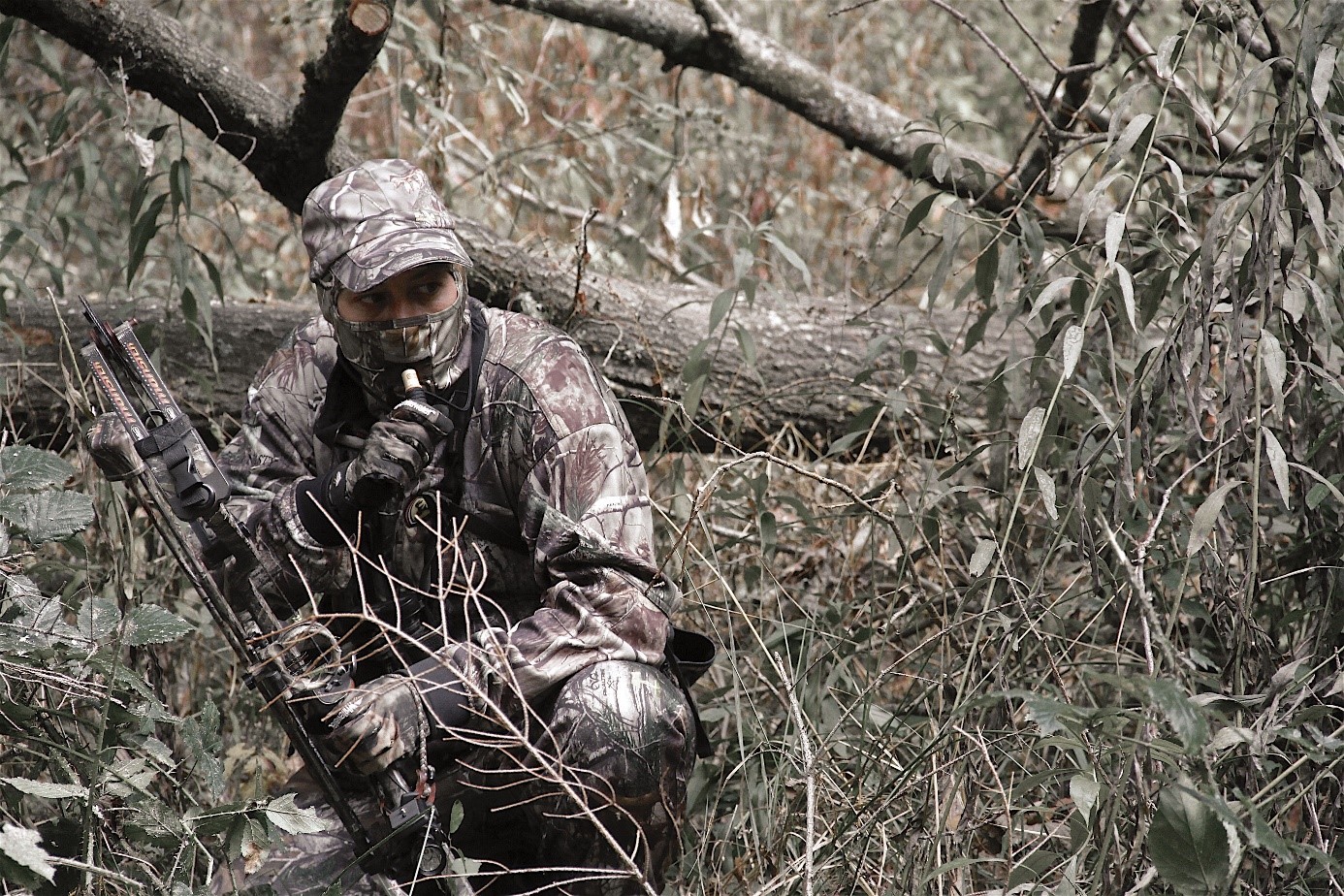
Hunting white-tailed deer at close range is no easy task. Doing so with a bow only makes that job more difficult. For anyone that plans to take advantage of bowhunting season, the first step is to get a bow that you are comfortable with. That takes a bow that fits you, that you can draw comfortable, are experienced with and have confidence in.
The rest boils down to outsmarting deer so that you can get them within range for a bow shot. Whether you are in Texas, or elsewhere, the key is using the wind to your advantage. Despite what folks say, a whitetail’s greatest line of defense is its nose. Stay downwind of the deer you are hunting and the shot will take care of itself, assuming you put in the practice beforehand.