Deer Breeding, Hunting: Debated in the News

There is a gradient of acceptance when it comes to white-tailed deer hunting and the commercial deer breeding business. In many states across the US — where maintaining penned deer is legal — the whitetail hunting tradition has hybridized with deer farming to deliver a product that some hunters seem willing to buy. But it’s not for everyone. Literally on the other side of fence are hunters that do not want to accept farm-raised “wildlife.” They just do not agree with the raising or hunting of pen-raised deer.

I can see both sides. For one, the laws are law. It is completely legal to hold, breed and sell deer. In Texas alone there are approximately 1,200 permitted facilities that can help provide ranches with bucks, does and fawns that have the genetics to produce gargantuan antlers. But is deer hunting all about shooting bucks with big antlers? Traditional hunters say no, hell no. They will tell you that hunting is less about the kill and more about the experience, more about spending time with family and friends while hunting free-ranging deer.

Deer Breeding and Hunting Debate Continues

There is no doubt that every hunter has an opinion on the issue. And since opinions are rooted in personal beliefs they are not often swayed by facts. Each camp can come up with supporting facts to debate their side of the issue, but where you stand on the issue of hunting line-bred, pen-raised deer likely depends on which side of the fence you sit. Either way, the topic remains in the news.

Source: “The quest for better deer — specifically bucks with antlers as freakishly big as possible — has created a rift among deer hunters.

Prize bucks are measured on a complicated scale that involves measurements between antlers, but suffice to say the more and bigger the antlers, the more valued the animal in deer hunting circles. But hunters who stalk deer through the woods and take them down the old-fashioned way are seeing their records obliterated by bucks created by deer breeders and set free in enclosed areas for weekend warriors to bring down – and mount in mancaves back home.

“They’ve now created deer that are beyond human belief in terms of their antler size,” said Brian Murphy, CEO of the Quality Deer Management Association. “[The deer] staggers around under the weight of those antlers.” Murphy said some some breeder deer are released into 10,000 acres of land, while others, in the most egregious cases, are released into three to five acres before they are shot down. “Most hunters find great disdain in a known outcome,” he told FoxNews.com. “That is not hunting. There has to be a high degree of not being successful. The deer has to have a fair chance to escape.”

People who kill deer in that fashion follow “a code of ethics that is beyond reproach,” he said.

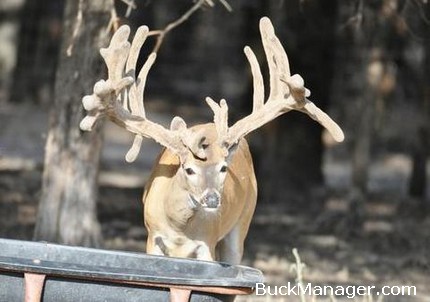
Breeder Buck Shows Off Big Antlers

The race for bigger deer has prompted some to fear that cloning methods, first pioneered at Texas A&M laboratories in order to protect the species, could soon be used to accelerate the race for bigger antlers. In an investigative article written for Outdoor Life magazine, Chris Dougherty describes what he called “Frankenstein Bucks.”

“One look at this pen-reared buck tells you there is something wrong, something terribly wrong. His obscenely disfigured antlers look more like something you would find growing on a coral reef or in a post nuclear war sci-fi thriller,” Dougherty wrote. “They twist and turn and droop and bulge and fork and then fork again.”

But other deer breeding groups, like Michigan-based Whitehouse Whitetails, said there’s no difference between killing deer in the wild and killing them in an enclosed space.

“They have the right to do that because it isn’t to hunt. They just want the head to mount on their wall,” said Laura Caroll, who, along with her husband, owns the deer breeding company. “They [critics] are saying that one way of killing them is different from another way of killing them,” she said. “But the end result is that they kill them. It’s no different than raising cattle that’s going to go on people’s tables,” Caroll said.

It’s true, a dead deer is dead deer. The race to grow bigger and bigger bucks is no different than anything else humans try to take to the next level: the fastest car, the highest building, the meatiest cow, the biggest ear of corn. I’m not even sure how many hunters and non-hunters are really against deer in pens, but it seems like a good percentage of people take issue with calling the shooting of released deer a “hunt.” To me, that decision is best left up to the person who decides to pull or not pull the trigger.

Texas Deer Study Group: Management & More

In today’s world it seems that successful white-tailed deer management programs are just like everything else; they never sleep. There are always  things for managers to do out on the land, be it checking feeders, developing food plots or “sculpting” brush or forest openings. It never really stops.

There are also opportunities available to hunters and land managers to gain additional, helpful information about deer, their habitat and the methods to improve the overall deer hunting and herd quality on a piece of property. There is always something new to be learned about whitetail, whether it be from university research or a salty ole ranch hand. Learning should never sleep.

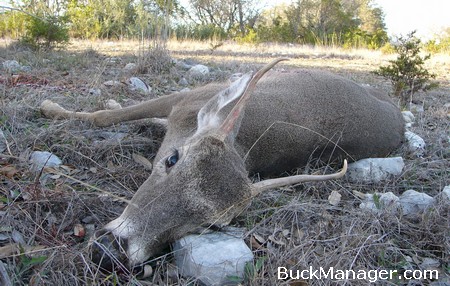
Deer Hunting & Management - 2 1/2 Year Old Spike
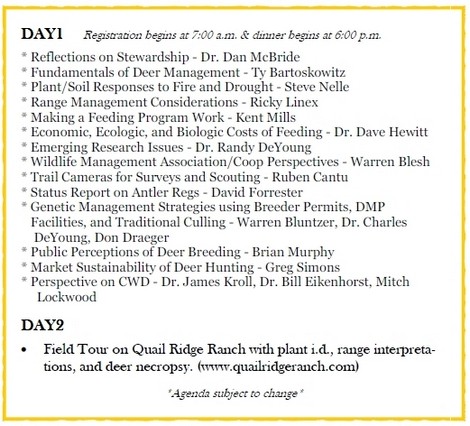
For those looking to spend a day or two off the ranch (or out of the office), The Texas Deer Study Group is slated to meet in mid-April. The presenters at these annual forums are typically well-versed in wildlife management and offer the latest details on what’s happening in the world of whitetail.

Attendees this year can expect to hear about genetics, nutrition, and diseases, as well as talks on the social and economic factors impacting deer hunting in Texas. There is also a ranch tour on the second day that allows folks to see on-the-ground deer habitat management.

Source: “This year’s theme is Navigating the Deer Management Continuum, which reflects the spectrum of deer management intensity and technologies,” said Dr. Dale Rollins, AgriLife Extension wildlife specialist at San Angelo and steering committee member. “A growing trend towards more intensive deer management, including deer breeding, illustrates some managers’ goals, while others believe such intensive management diminishes the overall value of deer in the eyes of the hunter and the public.

“The slate of speakers assembled for this year’s meeting is a who’s who among deer biologists. Topics will range from biology to ethics. Several veterinarians will lead the group in a hands-on deer dissection which will help set the stage for the other presentations. The hands-on teaching method will continue during the second day’s tour of the Quail Ridge Ranch where participants will be trained on proper habitat management.”

Texas Deer Study Group - Deer Hunting and Management Information

If you’ve not attended a Texas Deer Study Group meeting in the past, let me just say that they can be quite interesting. In fact, anytime you get a group of experts together, regardless of the subject, you are going to have the opportunity learn a lot, and from many different takes.

Spoiler alert: You will also find that the experts do not always agree. You should, however, leave with more information about the management of the deer and the habitat found on your property. You can get more information and register at the Texas Wildlife Association web site for the 2013 Texas Deer Study Group meeting.

Anthrax Confirmed in Deer in Uvalde County

White-tailed deer diseases are common. Although most only result in minimal impacts on a local deer population, some deer diseases can can have a severe impact on deer hunting and management activities. Anthrax is one of the diseases that is really good at making deer dead. This bacterial disease not only kills deer, but all other mammals as well. The Texas Animal Health Commission (TAHC) announced in a news release last week that the first confirmed case of anthrax in a Texas animal for 2012 has been detected in a whitetail buck in Uvalde County.

An anthrax outbreak occurred on June 6, 2012, and involved 10 dead white-tailed deer on a newly purchased ranch approximately 20-25 miles north of Uvalde, Texas, on Highway 55 (to Rocksprings). There was one freshly dead deer when the veterinarian visited the ranch, and this was the one he sampled and sent to the Texas Veterinary Medical Diagnostic Laboratory in College Station for confirmation. Information from that sample spurred TAHC’s anthrax news release. The high fenced ranch where the anthrax outbreak occurred has both whitetail and exotics deer species. There are no livestock grazing on the property and the size of the ranch is not available at this time.

Anthrax in Texas - Deer Hunting to be Impacted

The 10 deer are said to have died over a two day interval. This tells me that there are already other prior cases in that general area that either no one is talking about (not unusual), or they have yet to get out and check their stock and watch the vultures. The fact that “ten” deer were affected essentially at once would confirm fly activity, because in dry years, it is usually just single or double deaths and no follow through. The flies feed on an index case, and then with contaminated mouthparts feed on other deer, mammals nearby. From the nature of commercial deer breeding in Texas, the deer density is high, as they are frequently fed with protein pellets or cracked corn at multiple feeding stations, so the female flies do not have trouble finding another deer to feed upon, infect and kill.

The new ranch owner had been moving dirt, as new owners often do, and it is theoretically possible he had disturbed an old anthrax grave site, which, with the recent four to six inches of rain, the turned soil could have sprouted some tasty deer foods. Though normally browsers, whitetail deer will graze on fresh, succulent grasses. Anthrax outbreaks based on grazing usually start with a single affected animal from which the infection spreads. Ten “at once” is not likely to be from grazing, but the full story has yet to unfold.

Because of the increase in rainfall in early May 2012 in the area bounded by Interstate 10 and Interstate 90, essentially between Uvalde and Sonora, Texas state veterinarians had been warning the local deer ranchers of the risk from a sudden tabanid hatch and resulting anthrax outbreaks involving numbers of animals. Additionally, they have been reporting a lot of flies in the area. Unfortunately, it looks like they have been correct their prediction about this deadly deer disease. Expect an active summer in this part of Texas, where wildlife anthrax is endemic.

Whitetail Deer Diseases - Anthrax in Deer in Texas

TAHC News Release:

“Anthrax Case Confirmed in White-tailed Deer near Uvalde

The first confirmed case of anthrax in a Texas animal for 2012 has been detected in an adult white-tailed male deer near Uvalde (Uvalde County). At this time no domestic livestock are involved.

Anthrax is a bacterial disease caused by Bacillus anthracis, which is a naturally occurring organism with worldwide distribution, including Texas. It is not uncommon for anthrax to be diagnosed in livestock, whitetail deer or other wildlife in the Southwest part of the state. In recent years, cases have been primarily confined to a triangular area bounded by the towns of Uvalde, Ozona and Eagle Pass.

“The TAHC will continue to closely monitor the situation for possible new cases across the state. Producers are encouraged to consult with their veterinary practitioner or local TAHC office about the disease,” Dr. Dee Ellis, State Veterinarian, said. For more information regarding anthrax, visit the Texas Animal Health Commission website or call 1-800-550-8242.”

CWD Regulations on Red Deer, Sika Deer

Texas has been keeping an eye on Chronic Wasting Disease (CWD) for a number of years now. Whitetail, mule deer and elk are known to be highly susceptible to the disease. CWD poses a significant threat to the social and economic importance of both mule deer and whitetail deer hunting in the state. State agencies have done as much as possible to safeguard CWD from entering into Texas by regulating the movement of deer through the commercial deer breeding industry, but CWD is currently knocking on Texas’s door, found just north of the Texas-New Mexico border in the Trans-Pecos region.

To complicate matters, recent findings have discovered that other ungulates can carry the disease. This has resulted in two more deer species being added to the list of “CWD susceptible” species, the Red deer and the Sika deer, both exotic species commonly found with whitetail deer on hunting ranches across Texas. The Texas Animal Health Commission (TAHC) announced that effective immediately it is has determined that Red deer (Cervus elaphus), and Sika deer (Cervus nippon) are “susceptible species” for Chronic Wasting Disease (CWD) and thereforemust meet the same entry requirements as other cervid species regulated by the agency such as moose and elk.

Deer Hunting in Texas - Red Deer and Sika Deer CWD Regulated Now

The new entry rules for Red deer and Sika deer will require they originate from herds with at least five years of participation in a herd certification program from states where CWD has been detected, and at least three years participation in programs from states that have not found CWD thus far. The TAHC decision was based in part on the disclosure that a farmed Red deer herd in Minnesota was confirmed positive for CWD in May of this year.

Additionally, the United States Department of Agriculture (USDA) released an interim final CWD rule on June 8, which designates Sika deer and Red deer as susceptible CWD disease species. The USDA rule is intended to establish minimum requirements for interstate movement of all deer, elk, moose, and other susceptible cervids, and to also establish a national CWD certification program.

Under the new deer entry requirements, besides originating from a herd with three or five year status as described above, Red deer and Sika deer shippers must also obtain an entry permit and request entry in writing. Proper supporting documentation must also accompany the request for entry at least 10 days prior to the proposed entry date. More information on TAHC entry requirements related to cervids can be found in Texas Administrative Code.

Sika Buck - Deer Hunting in Texas

Native cervid species such as white-tailed deer and mule deer are regulated by the Texas Parks and Wildlife Department (TPWD), not the TAHC. Currently those species are entirely prohibited from entering Texas based on TPWD rules. Will all of these agency regulations prevent CWD from enter Texas? The answer is definitely no, especially since a deer (probably a mule deer) carrying CWD can walk right into West Texas. The bigger question is, “Will CWD ever severely impact deer hunting in Texas?” That I do not know, but I’m definitely in favor of slowing the spread of CWD and waiting as long as possible to find out.

QDMA Says No to Deer Breeding

The breeding of white-tailed deer has been a controversial issue from the very beginning. After all, the commercialization of any game animal is always a touchy subject. To add gasoline to the fire, almost all breeder deer are produced, grown and harvested behind high fences – another subject of debate in many hunting circles. Even though deer breeding and all of the activities associated with it are legal based on state regulations, the whole situation does not sit right with a number of deer hunters.

Enter the Quality Deer Management Association. The QDMA is well known, especially throughout the Southeastern US, for providing information on deer management and is a long-time supporter of increased antlerless deer harvest. This organization has made inroads with deer hunters and landowners over the years by providing guidance on population and habitat management for white-tailed deer. Now the QDMA is taking a stance on whitetail deer breeding in the US: They do not like it.

Deer Hunting: QDMA Opposes Deer Breeding Legislation

QDMA: “The Quality Deer Management Association (QDMA) is urging hunters in seven states to oppose the expansion of the deer breeding industry, which QDMA perceives as a growing threat to wild deer and the deer hunting heritage. Legislation designed to loosen or dismantle regulatory barriers to white-tailed deer breeding and farming is being considered in Georgia, Indiana, Mississippi, Missouri, North Carolina, Tennessee and West Virginia.

“There are no benefits for deer hunters in the growth of the captive deer breeding industry – only risks,” said Kip Adams, QDMA’s Director of Education & Outreach and a certified wildlife biologist. “It is QDMA’s mission to protect the future of white-tailed deer and our hunting heritage, and we oppose anything that puts those at risk.”

In opposing the proliferation of “deer breeding,” QDMA is referring to captive deer facilities where controlled, artificial breeding technology is used primarily to produce whitetail bucks with enormous, often grotesque antlers – an industry that includes sales of semen, artificially impregnated does, and live bucks to other breeders or to captive deer shooting facilities. Current estimates suggest there are nearly 10,000 deer breeding operations in North America, and the number is growing as the industry pushes to expand into areas where it was historically not legal.

“Some argue this is an innocent endeavor with no negative impacts to wild deer or the everyday deer hunter. As CEO of North America’s leading whitetail conservation organization, I emphatically and unapologetically disagree,” said Brian Murphy, QDMA’s Chief Executive Officer. “Not only does this industry undermine the North American Model of Wildlife Conservation in which wildlife is a public resource, it also threatens the health of wild deer and the public’s perception of hunting.”

The distribution map of chronic wasting disease (CWD) – a fatal disease of deer and elk – suggests the disease likely arrived in several new states through transportation of live deer, either legally or illegally, and not through natural deer movements. Legalizing deer breeding in new areas increases the incentive for illegal transportation of untested animals at a time when these human-aided movements must be stopped. Transporting any captive whitetails is risky, as there is no acceptable and practical live-animal test for CWD in deer. Once CWD appears in wild deer in a new area, slowing the spread of the disease requires costly investigation, testing and surveillance efforts for many years and often requires drastic reductions in deer populations. There is currently no known way to decontaminate an environment once CWD is present.

In more than 40 states, regulatory authority over captive deer facilities is held by state agriculture agencies, or shared between agriculture and wildlife agencies. QDMA recommends that wildlife agencies have sole responsibility because they have more experience with wildlife species and wildlife disease issues, and they fully understand what is at stake with regard to transmission of diseases like CWD to free-ranging deer.

“QDMA’s current effort is to halt expansion of the deer breeding industry,” said Adams. “We also want sole jurisdiction for existing facilities to remain with or be reassigned to state wildlife agencies. Considering the implications for our hunting heritage, we can’t afford to allow this industry to expand. The ramifications of being wrong are simply too great.”

QDMA is currently urging resident hunters to oppose existing or potential legislation in the following states:

Georgia: House Bill 1043 – Legalizes the importation of live whitetails into Georgia for breeding purposes and creates a permitting system for deer-breeding operations, all under the jurisdiction of the state Department of Agriculture. Current status: House second-readers as of February 22.

Indiana – House Bill 1265 – Provides for the licensing and operations of hunting preserves on which farm-bred, captive deer and elk will be hunted. Current Status – Senator David Long (President Pro Tempore) refused to hear the bill. It remains in committee.

Mississippi – Senate Bills 2554 and 2555 – Legalizes importation of captive deer, semen and embryos and authorizes deer breeding facilities, under the jurisdiction of the state agriculture department. Current Status – Both bills referred to Wildlife, Fisheries and Parks Committee on February 20.

Missouri – House Bill 1375 – Adds deer to the definition of “livestock” for the purposes of the state sales and use tax law, meat inspection law, Missouri Livestock Disease Control and Eradication Law, and the Missouri Livestock Marketing Law. Current Status – House second-readers as of February 22.

North Carolina – Currently at the proposal stage; no bill number yet. The spoken intent is to loosen regulations to allow for expansion of the captive deer industry. A QDMA staff member will attend a board meeting with the North Carolina Wildlife Resources Commission in Raleigh on March 7 on this topic.

Tennessee – House Bill 3164 – Present law classifies white-tailed deer as Class IV wildlife, which may only be possessed by zoos, temporary exhibitors, and rehabilitation facilities. This bill adds authorization for possession of white-tailed deer by breeding facilities that receive a permit from the Department of Agriculture to breed or ranch such livestock for purposes determined by the Department. Current Status – Placed on calendar for Agriculture Committee for March 6.

West Virginia – Senate Bill 421 – Captive Cervid Farming Act – Transfers regulatory authority over captive white-tailed deer facilities from the Division of Natural Resources (DNR) to the Department of Agriculture. Current Status – referred to Rules Committee on February 17.

Texas: In my home state, white-tailed deer breeding has become common place, with well over 1,000 registered breeder operations. It’s important to reiterate that deer breeders can only start a breeding facility by buying deer from other registered breeding operations. The rearing of pen-raised deer is one thing, but I suspect the QDMA is more concerned about how those animals are handled (hunted) after the leave a commercial facility. Is the idea and the heritage of “deer hunting” threatened by shooting pen-raised animals?