Trophy Whitetail Buck Harvest Up, Way Up

The results are in: White-tailed deer management efforts are working great across North America. According to the guys over at the Boone and Crockett Club, the number of trophy class whitetail bucks has increased significantly over the past few decades. As interest by private landowners in wildlife habitat and deer management techniques continues to accelerate, this big buck boon should come as no surprise. It appears the North American Model of wildlife management, at least as it pertains to whitetail deer, is going strong.

So, which areas are producing the most B&C trophy bucks? The old go-to states, such as Wisconsin, Illinois, Iowa, Ohio and Missouri are still going strong, but you might be surprised that states such as Minnesota, Michigan, Oklahoma, Nebraska and Texas are inching up in the number of book entries. There have also been record breaking bucks in Tennessee as well as Kentucky in recent years.

Producing quality whitetails has always been about animals getting good nutrition and allowing bucks to mature. It appears white-tailed deer in North America, and the folks that hunt them, are benefiting from both as well.

Whitetail Deer Hunting Benefits from Management

Source: Trophy whitetail entries from 2011 hunting seasons are beginning to pour into Boone and Crockett Club headquarters. But while the sporting world waits to see which states are hot–or not–producers of giant bucks, North America’s overall robust trend in whitetail entries is a story for all conservationists to celebrate

B&C historical records show that trophy whitetails are up 400 percent over the past 30 years.

“It’s worth remembering where America’s favorite big-game species stood not so long ago—at the brink of extinction,” said Ben Wallace, Club president. “In 1900, less than 500,000 whitetails remained. But habitat programs, research, science-based management, regulations and enforcement, all led and funded by hunters, brought this game animal back to extraordinary levels. Today there are more than 32 million whitetails!”

The Boone and Crockett system of scoring big-game trophies originated in 1906 as a means of recording details on species thought to be disappearing. Over time, these records evolved as an effective way to track the success or failure of conservation efforts.

As North America’s whitetail herd has grown, numbers of big bucks also have risen. For the period 1980-1985, hunters entered 617 trophy whitetails into Boone and Crockett records. For the period 2005-2010, the total jumped to 3,090, an increase of 400 percent.

During this 30-year span, many states and provinces saw percentage gains much greater than the continental average (see data below). For example, trophy whitetail entries from Wisconsin have risen 857 percent. In Illinois, the increase is 896 percent. Ontario went from a single entry to a whopping 41—a 4,000 percent gain!

Six states and provinces had zero entries in 1980-1985. For 2005-2010, they combined for 48.

Boone and Crockett offers two premier ways to trace and detail historic conservation developments, not just with whitetails but many other species as well.

A book, “Records of North American Big Game,” offers detailed tabular listings for trophies in 38 different categories of game. Each entry includes the all-time entry score, date harvested, location of kill, hunter and owner names, and selected measurements. At 768 pages, the book retails for $49.95.

A searchable online database, called “Trophy Search,” is another exceptional resource. By buying an annual subscription, users can sort B&C archival data in infinite ways to identify national as well as local trends. An annual subscription is $50.

Boone and Crockett Club Associates receive discounts on both items. Order online at www.boone-crockett.org or by calling 888-840-4868.

B&C Trophy Whitetails, 2005-2010:  Typical and non-typical combined

1. Wisconsin, 383 entries (1980-1985 rank 3rd, 40 entries)
2. Illinois, 299 entries (1980-1985 rank 6th, 30 entries)
3. Iowa, 224 entries (1980-1985 rank 2nd, 59 entries)
4. Ohio, 215 entries (1980-1985 rank 14th, 16 entries)
5. Missouri, 214 entries (1980-1985 rank 9th (tie), 25 entries)
6. Kentucky, 199 entries (1980-1985 rank 9th (tie), 25 entries)
7. Indiana, 195 entries (1980-1985 rank 16th, 14 entries)
8. Kansas, 181 entries (1980-1985 rank 4th, 35 entries)
9. Minnesota, 172 entries (1980-1985 rank 1st, 76 entries)
10. Saskatchewan, 147 entries (1980-1985 rank 7th (tie), 27 entries)
11. Texas, 132 entries (1980-1985 rank 12th, 19 entries)
12. Alberta, 115 entries (1980-1985 rank 7th (tie), 27 entries)
13. Nebraska, 78 entries (1980-1985 rank 18th (tie), 12 entries)
14. Oklahoma, 48 entries (1980-1985 rank 22nd (tie), 7 entries)
15. Ontario, 41 entries (1980-1985 rank 42nd (tie), 1 entry)
16. Arkansas, 40 entries (1980-1985 rank 34th (tie), 3 entries)
17 (tie). Michigan, 39 entries (1980-1985 rank 17th, 13 entries)
17 (tie). Mississippi, 39 entries (1980-1985 rank 18th, 12 entries)
19. North Dakota, 31 entries (1980-1985 rank 31st (tie), 4 entries)
20. Pennsylvania, 26 entries (1980-1985 rank 45th (tie), 0 entries)
21. New York, 25 entries (1980-1985 rank 28th (tie), 5 entries)
22. South Dakota, 24 entries (1980-1985 rank 20th (tie), 8 entries)
23 (tie). Georgia, 23 entries (1980-1985 rank 5th, 31 entries)
23 (tie). Maryland, 23 entries (1980-1985 rank 28th (tie), 5 entries)
25 (tie). British Columbia, 19 entries (1980-1985 rank 24th (tie), 6 entries)
25 (tie). Maine, 19 entries (1980-1985 rank 11th, 20 entries)
27. Virginia, 17 entries (1980-1985 rank 22nd (tie), 7 entries)
28. Tennessee, 15 entries (1980-1985 rank 20th, 8 entries)
29. Colorado, 13 entries (1980-1985 rank 42nd (tie), 1 entry)
30. Idaho, 11 entries (1980-1985 rank 24th (tie), 6 entries)
31 (tie). Massachusetts, 8 entries (1980-1985 rank 45th (tie), 0 entries)
31 (tie). Quebec, 8 entries (1980-1985 rank 45th (tie), 0 entries)
33. Delaware, 7 entries (1980-1985 rank 42nd (tie), 1 entry)
34 (tie). Louisiana, 6 entries (1980-1985 rank 28th (tie), 5 entries)
34 (tie). Manitoba, 6 entries (1980-1985 rank 15th, 15 entries)
34 (tie). Washington, 6 entries (1980-1985 rank 31st (tie), 4 entries)
37 (tie). Montana, 5 entries (1980-1985 rank 13th, 17 entries)
37 (tie). Alabama, 5 entries (1980-1985 rank 34th (tie), 3 entries)
37 (tie). North Carolina, 5 entries (1980-1985 34th (tie), 3 entries)
40 (tie). Connecticut, 4 entries (1980-1985 rank 38th (tie), 2 entries)
40 (tie). New Hampshire, 4 entries (1980-1985 rank 38th (tie), 2 entries)
42 (tie). New Jersey, 3 entries (1980-1985 rank 45th (tie), 0 entries)
42 (tie). New Brunswick, 3 entries (1980-1985 rank 24th (tie), 6 entries)
42 (tie). West Virginia, 3 entries (1980-1985 rank 34th (tie), 3 entries)
45 (tie). Mexico, 2 entries (1980-1985 rank 24th (tie), 6 entries)
45 (tie). Wyoming, 2 entries (1980-1985 rank 38th (tie), 2 entries)
45 (tie). South Carolina, 2 entries (1980-1985 rank 45th (tie), 0 entries)
45 (tie). Nova Scotia, 2 entries (1980-1985 rank 31st (tie), 4 entries)
49 (tie). Oregon, 1 entry (1980-1985 rank 38th (tie), 2 entries)
49 (tie). Rhode Island, 1 entry (1980-1985 rank 45th (tie), 0 entries)

Whitetail Deer, Hunting in North America

Whitetail numbers have changed drastically over the past century. In general, deer hunting has gone from poor to great. Deer populations are at all-time highs across much of the whitetail’s range, with the number of animals even exceeding the capacity of the habitat in some localities. Most of these areas, however, are no longer deer habitat (urban areas). The success of this species is a testament to private landowners and state agencies that have worked together over the years to provide good habitat for whitetail deer. Countless other wildlife species have benefited along the way, too.

Shed Hunting Ideas

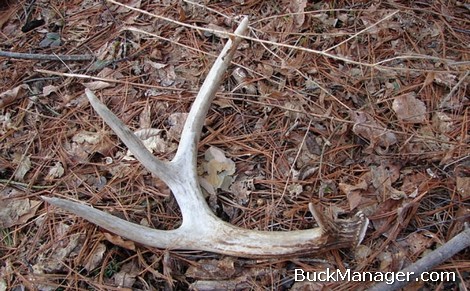
Whitetail hunters look forward to fall each year because it signifies deer hunting season. Shed hunters, on the other hand, look forward to very late winter and early spring because that means it’s time to search for dropped antlers! Okay, not everyone is on board with shed hunting, but for those of use that enjoy getting back out into the woods between seasons it can be quite rewarding, as well as informative. It’s also good exercise and helps hunters learn more about the woods they hunt.

Finding shed antlers is always cool. A shed antler lets me know that at some point in the recent past the buck that lost the antler was standing, traveling or bedding right there. It may not seem like much, but years of finding shed antlers can allow a hunter to get some good data about where antlers are lost, or better stated, where bucks are hanging out. From a deer management perspective, it can give hunters and landowners an idea of buck habitat use after the rut and before spring green-up. Continue reading “Shed Hunting Ideas”

Deer Hunting in Texas – A Family Tradition

It’s time—the day before the opener of Texas’ General White-tailed Deer Hunting Season! That means the trucks are packed, the trailers are loaded, the guns have been sighted-in (hopefully), the knives are sharpened, the corn used to “chick-chick” the roads is waiting at a gas station to be purchased along the way, and guys and gals and boys and girls all across the great state of Texas will be making tracks today on the way to their deer leases, public hunting lands or personal properties. It’s amazing at just how fast a year goes by now days, but another deer hunting season is upon us.

Like many hunters, I grew up with a father that hunted. He introduced me to the outdoors and taught me how to spot the dove flyways on the property where we ran cows,  how to hunt squirrels, rabbits, deer and how to skin them all, including coons and nutria that we trapped, as well as anything else you could skin. Actually, furbearers brought a good price back then, and I think that really help control a lot of those mid-sized predator populations. Now that I think about it, we did see more quail and even some pheasants around still at that time. Hunting allowed me to experience nature up close, as well as spend time with family and friends. Continue reading “Deer Hunting in Texas – A Family Tradition”

Bucks That Never Shed Velvet, Antlers

Hunters are a lot like the white-tailed deer that they hunt, with each one being different from the rest of the herd. Some hunters like bucks with big, wide spreads while others want long tine lengths or bucks with mega-mass. Fortunately, not all bucks are cut from the same template. Late summer is the time of the year when whitetail bucks begin shedding antler velvet. While this is true for most bucks, what about the very small percentage of bucks that do not shed their velvet? How can this happen?

Hunter’s Story: “I heard from my taxidermist about the largest 6 point whitetail buck he had ever seen. Apparently, he was an 8 year old deer, harvested in December while still in full velvet, and the deer had been castrated, most likely by jumping a fence. The explanation goes something like this: The deer was likely injured/castrated in the summer of his 3rd or 4th year. Because the velvet dies off in the fall due to increased testosterone levels, and this bucks levels obviously did not increase, his velvet lived and the antlers continued to grow. Continue reading “Bucks That Never Shed Velvet, Antlers”

Whitetail Deer with Canine Teeth

Most hunters know that a successful white-tailed deer management program is a multifaceted endeavor. For noticeable changes to be observed in a deer population, the age, genetics and nutrition of the herd must be managed at some level. Because age is an important parameter within a deer population, aging deer on the hoof and then re-evaluating that assessment after “ground checking” based on the deer’s tooth wear is a common practice on many ranches.

After cutting a deer’s check, most hunters expect to see teeth with six teeth per side, with some amount of wear, but most never expect to see a deer with fangs in its upper mouth.

Whitetail Deer with Canine Teeth - Deer with Fangs

Canine Teeth are Rare

These “fangs” are actually canine teeth. All whitetail have lower canines, but few deer have upper canines. The harvested deer that do have them often go undetected because hunters focus on the teeth located in the bottom jaw when aging, not those positioned on top.

The upper canine teeth that are seen are usually discovered by taxidermist preparing buck deer for European (skull) mounts, not by curious hunters probing around inside an animals mouth. Common sense would make one believe that most ungulates such as white-tailed deer do not have canine teeth, but a small number of deer actually do.

Whitetail Deer with Canine Teeth

A History of Cervids with Canines

Although most whitetail do not have fangs, there are some ungulates that posses the more appropriately termed canine teeth. But why do these teeth occur at all in deer? Genetics. We have to go back many, many years to understand the relationship between the whitetail and its prehistoric ancestors.

Research suggests that the white-tailed deer evolved from deer that originated in Asia tens of millions of years ago. Several of the deer found on that continent back then had canine teeth. Some, like the Chinese Water Deer and Muntjac (oldest known deer), still do.

Adult Muntjac males have tiny antlers, but have well-pronounced canine teeth that can grow up to three inches in length. In the same manner that whitetail bucks use their antlers to intimidate and fight other bucks during the rut, the canine teeth of Asian deer have similar functions in buck competition during the breeding season. While the whitetail deer’s genetic link to its Asian ancestors has weakened over time, the gene for these vestigial canine teeth still remains.

Whitetail Deer with Fangs

Bucks with Canine Teeth?

Like the Asian deer mentioned above, only whitetail bucks typically possess these small, upper canine deer “fangs.” It’s been reported that whitetail does never grow canines, but there have in fact been documented cases of does having upper canines.

But even when these specialized teeth are not present, deer can pass on the canine gene to their offspring. By the way, whitetail deer are not the only North American cervide with canine teeth. Elk, both male and female, possess canine teeth. In fact, you can age this species based on canine tooth wear.