Deer Hunting in Texas: 2007-08 Looks Good

Deer Hunting in Texas: 2007-08 Looks Good

Habitat conditions throughout most of Texas this year were in excellent condition thanks to the abundant rainfall we received throughout spring and summer. The plentiful rain translated into great warm-season forbs and browse production, which in turn put Texas’ white-tailed deer herd in outstanding condition. Bell county was no exception. Although conditions were not ideal for hunters heading to the field for the General Season opener (due to mild temperatures), that didn’t deter one Bell County hunter.

Deer Hunting in Texas: 2007-08 Looks GoodDeer Hunting in Texas: 2007-08 Looks GoodDeer Hunting in Texas: 2007-08 Looks GoodDeer Hunting in Texas: 2007-08 Looks Good

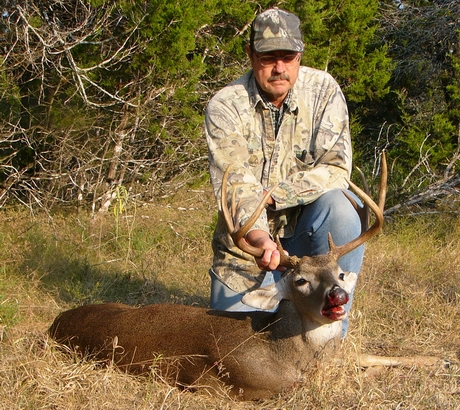
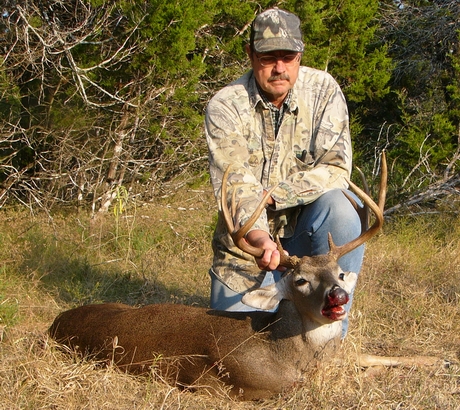
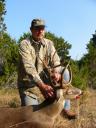
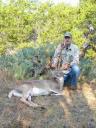
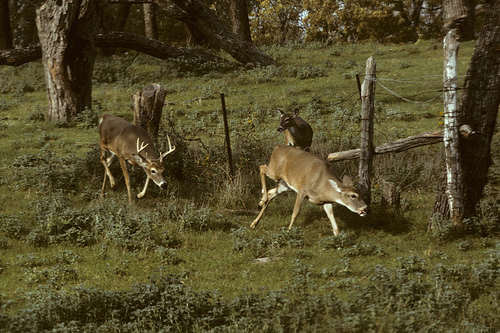
Opening morning didn’t bring the big boy out, but Sunday, just after 9:00 am, he saw this main-frame 8 point buck with split G2s step out that gross scored 130 2/8 Boone a Crockett inches, and that was enough reward for enduring the near 90 degree weather on Saturday. The buck’s main-frame 8 point rack grossed 119 2/8 inches and the buck had 11 inches of non-typical antler due to the split G2s.

Good habitat conditions, good body conditions… make for a nice 10 point buck!

Ted Nugent on Deer Behavior

Ted Nugent on Deer Behavior

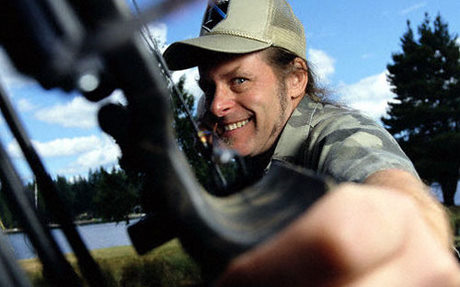
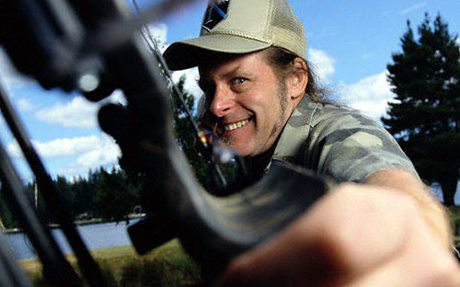
Ted Nugent, rock star and avid bow hunter, was being interviewed by a French journalist and animal rights activist. The discussion came around to deer hunting. The journalist asked Ted, “What do you think is the last thought in the head of a deer before you shoot him? Is it, “Are you my friend?” or is it “Are you the one who killed my brother?” Uncle Ted then replied:

“Deer aren’t capable of that kind of thinking. All they care about is, ‘What am I going to eat next, who am I going to screw next, and can I run fast enough to get away. They are very much like the French.”

The interview ended at that point.

Hill Country Region of Texas Leads Deer Harvest Numbers

Hunters is Lampasas County and the Hill Country ecological region should have an excellent opportunity to bag a trophy buck this season, as range conditions are excellent throughout the area. “The rainfall has ben outstanding and couldn’t have come at a better time for antler production and fawn survival,” said Mike Krueger, Texas Parks and Wildlife Department (TPWD) Edwards Plateau district leader and former technical guidance biologist in Lampasas.

“Last year was the first year in which antler restrictions were in force in Lampasas County, and it looks like they met the intended purpose as many better-quality young deer moved up another age class,” Krueger said.

Derrick Wolter, TPWD Wildlife Biologist for Lampasas, Bell, and Coryell counties, agreed that the 2007-08 hunting season should be a very good one. “In our recent spotlight deer surveys, we noted an increase in fawn numbers and an increase in deer numbers,” he said. “Due to the antler restrictions and adequate forage available, hunter should see older bucks with larger antlers this season.”

The Hill Country region contains several counties in Central Texas that range from Coryell on the northeast, south to Comal, and then west to Crockett and Val Verde County. Lampasas County is included in the region. For many years, the Hill Country has shown the highest deer harvest numbers in Texas.

During the 2006-07 hunting season, TPWD estimates that 172,184 hunters harvested 185,920 deer in the Hill Country. Of these, 97,608 were bucks; does numbered about 88,320. Hunters success was 76 percent.

The region with the second highest harvest was the South Texas Plains with 77,784 deer taken.

Regions with the lowest white-tailed deer harvest were the High Plains (612 deer) and the Trans-Pecos (1,575), however these two regions have a good population of desert mule deer.

Reprinted from the Lampasas Dispatch Record Hunter’s Edition 2007

Whitetail Rut in the Texas Crosstimbers

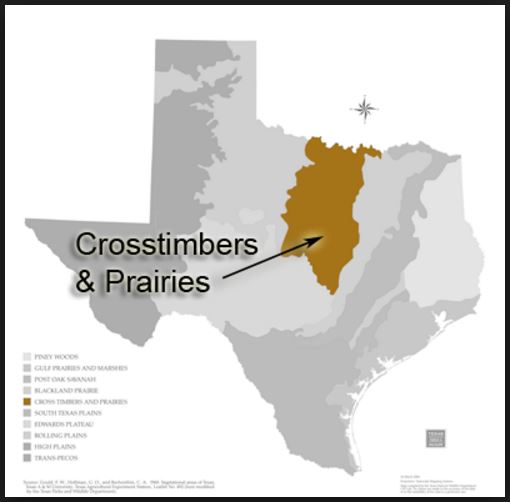
If your white-tailed deer hunting grounds lay in North-Central Texas and want to hunt the rut this fall, research on white-tailed deer in this ecoregion has shown conception dates in the Crosstimbers and Prairies were as early as October 13 and extended to at late as December 17.

There are many factors that determine the intensity as well as the length of the rut in an area.  Photoperiod (day length) is responsible for the timing,  but the buck to doe ratio often determines what hunters see in the field.

Whitetail Deer Rut North-Central Texas

Deer Rutting Season: Things to Consider

Areas, properties with a many more does than bucks tend to observe a breeding period that is stretch out because bucks will miss some does when they initially come into estrus. Then 28 days later, here we go again. This also stretches out the fawning dates, which ultimately lowers fawn survival.

Areas with a lower ratio of does to bucks tend to see more intensive rutting action in whitetail because bucks scramble to cover “hot” does. The rut will be shorter in duration but more intense during that time. As a result, most doe deer will drop fawns earlier and at about the same time, which bodes well for the local deer population.

Rut in the Texas Crosstimbers

Overall, conception dates in the Crosstimbers and Prairies ranged from October 13 to December 17, but there was some variation. Based on timing, mid- to late season bowhunters get the first shot (literally) at rutting bucks in this part of Texas, but whitetails in the region continue breeding almost up until Christmas.

This is good news for deer hunters that enjoy archery hunt and as they can stretch out their hunting days from the early part of the rut in October through the peak of the rut that occurs during Texas’ General Deer Hunting Season.

Whitetail Rut in the Texas Crosstimbers

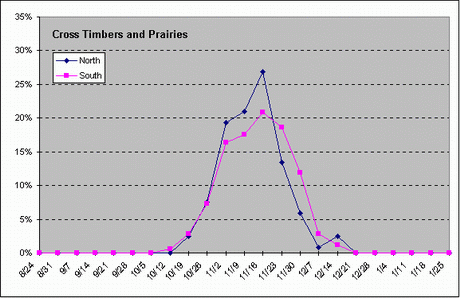
In the northern portion of the region the average breeding date was November 15 and the average breeding date in the southern part was November 17. Biologists recorded an average of 1.7 fetuses per doe and 95 percent of the females had been successfully bred.

Hunting the Rut

Hunters in this region of Texas have the best odds of “hunting the rut” during the two period from about November 11 through November 25. Thinking of taking some time off this hunting season? Now you know when.

The majority (90%) of the fawns in the Crosstimbers are born by June 15 in the northern area and by June 20 in the southern area. In Texas, summer weather can be brutal on white-tailed deer, particularly nursing does and newborn fawns. From their standpoint, the fall whitetail rut can not occur soon enough.

Outlook for Texas’ Deer Season

Last year’s Texas deer hunting season was consiedered textbook by state wildlife biologists. However, this season hunters may have to throw out the book. Indicators leading into the November 3 season opener point to potentially great hunting across much of the state, according to Texas Parks & Wildlife Department biologist.

“Generally speaking, it’s a banner year for (fawn) production,” said Mitch Lockwood, TPWD Deer Program leader. “As far as quality of the animals, the deer we are seeing are in pretty good condition, and I expect antler quality and body weights to be above average. Not only do we expect this year’s crop to be better, but there are more mature bucks out there simply because harvest was down in 2006.”

Whitetails have responded well from last year’s extended dry spell, thanks to an unseasonably wet spring and summer and the deer have taken advantage of resurgent plant growth, Lockwood said.

That bodes well for the deer, but could pose a challenge for hunters hoping to find success from a blind over supplemental feed. Biologist point to 2004, when timely spring rains created ideal range conditions, healthy deer and high expectations from hunters. Due to the abundance of vegetation available to deer during that year, hunters observed fewer animals during the season and overall harvest numbers were down.

When conditions became relatively dry in 2005, deer harvest jumped considerably and, in particular, more mature bucks were killed that season. “That’s what makes this year tough to predict,” Lockwood said. “There will be more deer on the ground this fall, but hunting could be tough early in the season.”

Because some parts of the state are drying up as rainfall slacked off in September and October, deer movements and hunting conditions could change. “Deer were seeing so much good native groceries all year, corn was something new to them,” the TPWD program leader said.

“In the Edwards Plateau, we’re loaded with acorns. Once those food sources run out, deer should hit the feeders.”

With the expected high percentage of recruitment into the deer population this year, it’s important for landowners to actively manage whitetail numbers. “It’s important for hunters to use those antlerless tags this season and get excess animals off the range before winter sets in to ensure there’s enough food to go around,” said Lockwood.