Bottomlands are Important White-tailed Deer Habitat

Bottomlands are Important White-tailed Deer Habitat

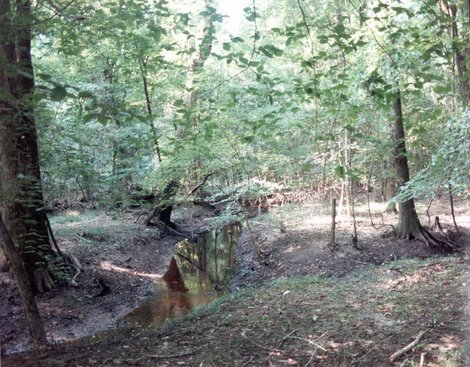
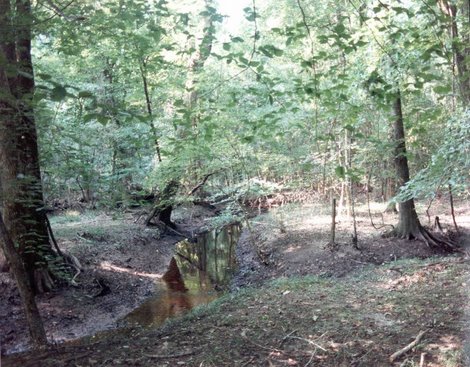
Creeks, streams, rivers, and all riparian areas are important habitat for white-tailed deer. Not only do these areas typically provide access to water and good bedding cover, but they also serve as great travel corridors and have the most fertile soils in most any area. Great bottomland or riparian soil is typically clay and silt-rich and full of nutrients and natural fertilizers.

So why do riparian soils (those found along drainages) serve as outstanding areas of food production areas for whitetail? Well, we know the soil is nutrient rich and this happens over time from flooding and drying and the decay of organic matter. But in addition to being rich in organic matter, riparian soils have a high water-holding capacity. In fact, any soil rich in clay and silt has this ability, but let’s not forget that bottomland soils are also adjacent a seasonal or permanent waterway.

Even without rainfall, many of the plants adjacent a creek or river can simply extract water from the soil below like any other plant, but there is a lot more water. Thus, the amount of forage produced in bottomland areas is often 3 to 5 times that on upland soils during the same year. This soil provides for an abundance of a very lush and diverse plant community. And remember, deer like diversity especially when it comes in the form of forbs and browse!

So what should you do with bottomland areas on your property? As important as they are for deer habitat and the health of the overall wildlife community, I recommend protecting them and revegetating them if necessary. Many bottomland floodplains are cleared and become prime farming and grazing land. If you are serious about deer management, encourage native vegetation to retake these areas, saving some portions for great food plot areas.
Bottomlands are Important White-tailed Deer Habitat
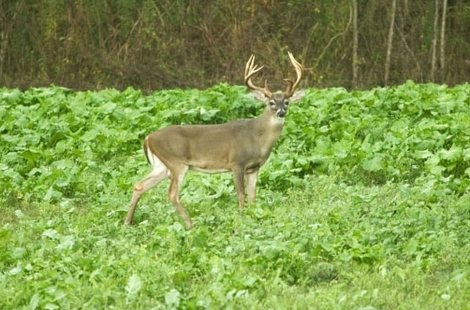
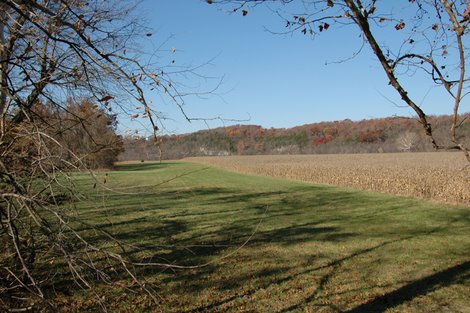
This ag field has a filter strip – but to benefit deer, it needs to be “let go” into native weeds, grass, and brushy plant species

In addition, permanently vegetated areas along creeks, streams, and wetlands reduce erosion and sedimentation, stabilize streambanks, improve plant diversity, and improve wildlife value of these sensitive areas. I also recommend establishing vegetative buffers or filter strips along water courses or runoff areas to trap valuable bottomland soil in the event of heavy rainfall and or channel flooding.

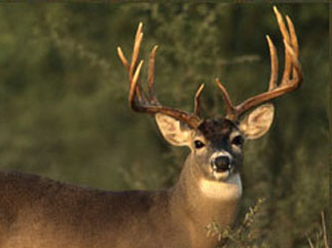
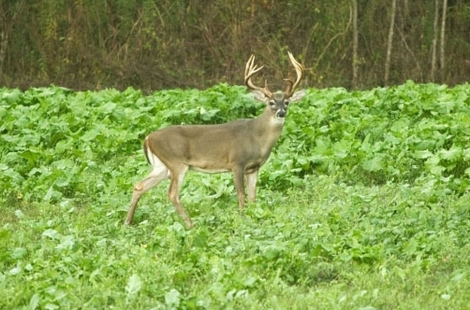
So here’s the bottom line: White-tailed deer and other wildlife love bottomland areas. Not only do these areas attract big bucks, but because of the quality and diversity of habitat, it attracts lots of does. And to a big mature buck, that’s a good thing!
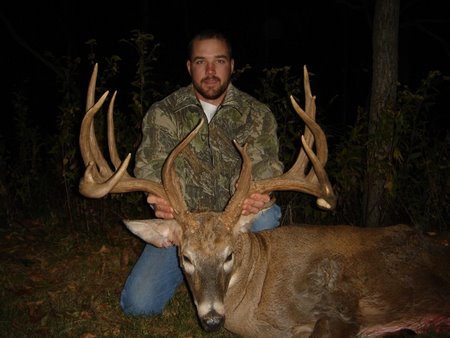
Big Iowa Buck Taken In 2007

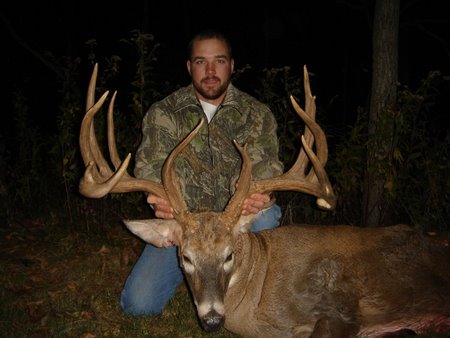
Big Iowa Buck Taken In 2007

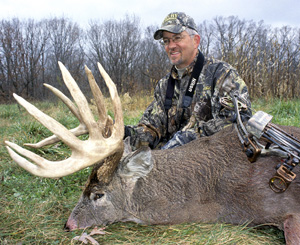
Those of you that live for hunting monster white-tailed bucks, start the drooling. Check out this great Iowa buck harvested during the 2007 hunting season. I don’t know what this big boy scores, but does it really matter! This buck has points, mass, and a huge spread and I think just about anyone would consider this the whitetail of a life time!

Need more antlers? Take a peek at some of the other big white-tailed bucks harvested over the last hunting season. And whipe that slobber off your face!
Big Iowa Buck Taken In 2007Big Iowa Buck Taken In 2007

White-tailed Deer – A Success Story in Texas

White-tailed Deer - A Success Story in Texas

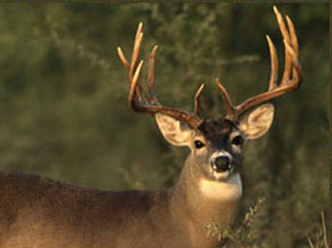
At one point in the late 19th century, white-tailed deer nearly disappeared from the Texas landscape. Over harvest and alteration of natural plant communities had reduced or eliminated deer numbers across much of Texas. Protective measures were taken, including the first deer seasons, harvest limits, and the establishment of the state game warden service.

This protection from exploitation was accompanied by adaptation of deer to altered landscapes and widespread restocking by the state wildlife department. From their near disappearance over 100-years ago, white-tailed deer have been restored to most areas they previously occupied and have even expanded their range into historically unoccupied areas of the state. The restoration of the whitetail is a wildlife management success story in Texas and many other states that went through similar transitions.

White-tailed Deer - A Success Story in Texas

The current status of white-tailed deer populations nationally is also a testament to the resiliency and adaptability of this species. White-tailed deer can thrive side-by-side with human populations through urban and suburban areas throughout the United States. The adaptability of white-tailed deer and the desire of people to live and work in areas that retain green spaces have resulted in deer overabundance in many areas.

White-tailed Deer - A Success Story in Texas

Not only do deer represent a success story for the species, but they represent part of the culture in many rural areas. White-tailed deer now account for a significant portion of local economies in Texas and much of small-town America. With significant biological, economic, and social importance, hopefully the white-tailed deer will always have a place to call home.

How Much to Plant in Deer Food Plots?

How Much to Plant in Food Plots?

How much of your property or ranch should you put into food plots? Good question, but the answer depends upon the actual amount of deer habitat you and neighboring properties have, the carrying capacity of the land, and the amount soil you have that is food plot friendly.

Generally, estimates range from 1 to 6 percent in both cool season and warm season food plots, but that wouldn’t make much sense if your property is smaller in size. Continue reading “How Much to Plant in Deer Food Plots?”

Checking Buck Scrapes for Activity

Hunting Buck Scrapes

You’ve been lucky enough to find a buck scrape. Now, is it active? One method to identify an active scrape is to cover it with leaves and later re-check it a day or few later. This is the most basic approach in finding out whether a white-tailed buck is still in the area and visiting his scrapes.

Checking Buck Scrapes for Activity

If you find the scrape has been freshened upon returning you are probably going to want to set up to determine the quality of the buck working the scrape. However, it’s not uncommon for a smaller, or larger, bucks to stop by and leave their own scent-stamp directly over another buck’s scrape.

Checking Buck Scrapes for Activity

Hunting a Scrape

In this case, you already know a buck is working the scrape, but is he what you want to harvest? You now have two options. First, you could set up downwind of the scrape, as most bucks wont approach directly and prefer to use the wind to check their scrape, and see what stops by.

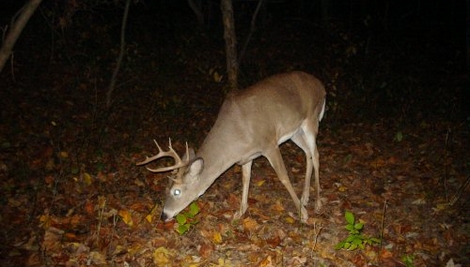
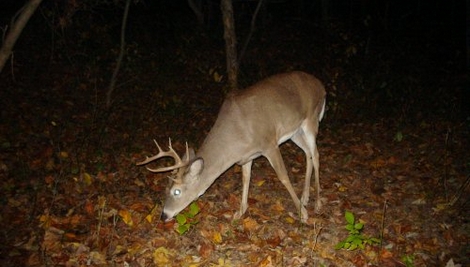
Or, you can use a game or trail camera set near the scrape to get photos of all the deer moving through the area. If you see a big, mature buck on your photos, then it’s time to move in as quickly as possible and make all of your work pay off!