Brush Management Recommendations for White-tailed Deer

Brush Management Recommendations for White-tailed Deer

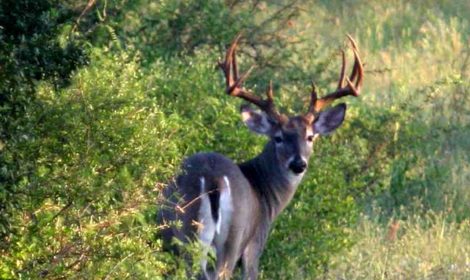
White-tailed deer the need cover and big, mature bucks relish it, but having too much cover is not necessarily a good thing. Open areas are needed to grow beneficial forbs for deer — and deer prefer habitat with a lot of edge — so providing a variety open areas within wooded habitats are deer magnets. This article gives a few tips on things to keep in mind for your brush and deer management program.

In general, brush cleared from better soil types results in higher forage production and typically cost less. As such, before you go to clearing excess brush off or opening up forested lands on your property, do a little preliminary investigating to determine the soil types found on your property. Soil reports are published by the USDA for most counties in the United States and will save you both time and money.

The next step in your brush management plan should be to avoid steep slopes. Steep slopes are not only prone to erosion, but steeper slopes usually have thinner soils and do not respond readily to brush control practices. Use your resources for brush management on level, deeper soils that are more easily cleared, managed, and provide consistent deer forage. Continue reading “Brush Management Recommendations for White-tailed Deer”
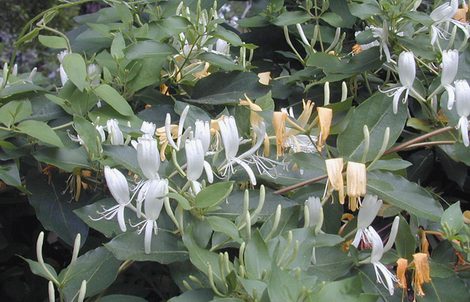
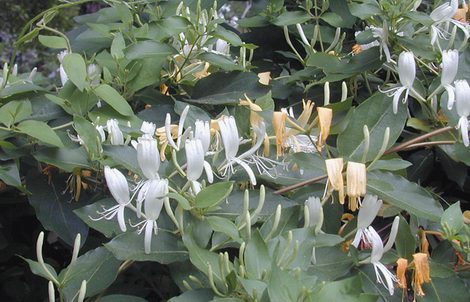
Japanese Honeysuckle is Great Deer Forage

Japanese Honeysuckle is Great Deer Forage

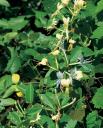
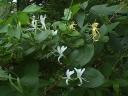
Deer Food: Japanese honeysuckle (Lonicera japonica)

Class: browse; highly preferred by deer

Description: An introduced (from Asia) woody, twining or trailing evergreen vine occurring on moist soil of bottomlands and uplands along streams, fence rows and timber edges. Japanese honeysuckle is often introduced into “wild” areas because it is used as an ornamental around dwellings. It has showy and fragrant flowers in addition to evergreen foliage.

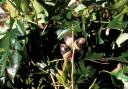
Fruit, flowers, leaves and stems are used by many birds, mammals and insects. Deer love honeysuckled leaves and the fresh-growth of stems. Honeysuckle is a high quality forage with protein contents ranging from 9 to 20 percent and a digestibility of 75 percent. Protein content is dependent upon season and soil fertility with the highest levels reported during the cooler months of the year — when deer need food.

Japanese honeysuckle Photos:

Japanese Honeysuckle is Great Deer ForageJapanese Honeysuckle is Great Deer Forage

Texas Oak is Spanish Oak and Great for White-tailed Deer

Texas Oak is Spanish Oak and Great for White-tailed Deer

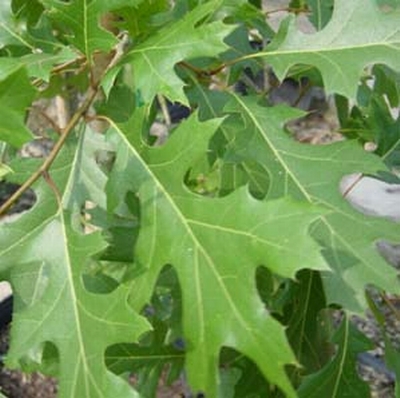
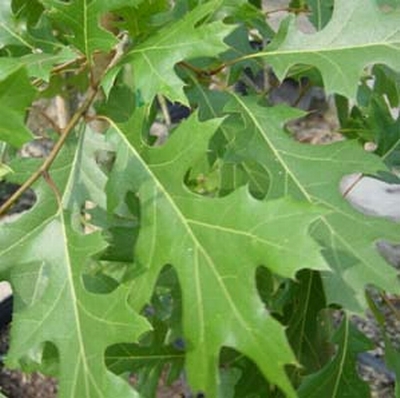
Deer Food: Texas oak (Quercus texana)

Class: browse; highly preferred by deer

Description: Texas oak is type of red oak and typically a medium to small tree that rarely grows over 75-feet in height. It usually grows about 30 to 50-feet with spreading branches. Texas oak is found on alkaline limestone and neutral to slightly acid gravels and sands.

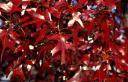
There are hybrids of Texas oak and Shumard Red Oak (Quercus shumardii). Texas oak is smaller, more often multi-trunked, and more drought tolerant than Shumard oak. The foliage of each turns bright shades of vivid red and orange in autumn. The leaves of both trees are relished by white-tailed deer and receive heavy browsing pressure where these species are found. In areas with an abundance of deer, seedlings are unable to grow because they are eaten immediately.

The bark is dark gray to black with platelike scales, although sometimes it is light gray and smooth.

Texas oak Photos:

Texas Oak is Spanish Oak and Great for White-tailed DeerTexas Oak is Spanish Oak and Great for White-tailed Deer

White-tailed Deer Versus Exotic Deer

White-tailed Deer Versus Exotic Deer
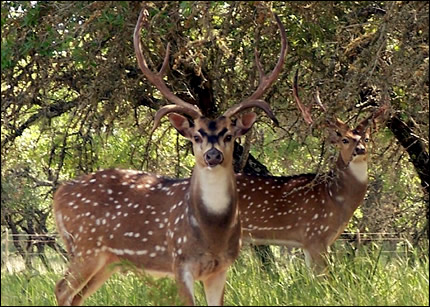
Axis bucks in the shade.

Many exotic big game species, such as sika, fallow, and axis deer, prefer and consume the same forbs and browse as white-tailed deer. Keeping this in mind, it’s then obvious that white-tailed deer and exotic ungulates compete for limited resources on the lands in which they live. This may not be of great concern until habitat conditions become degraded, which you never want to happen. In overpopulated areas, or during periods of stress such as drought or winter, this further increases the competition both between and within these different species in the same area — whitetail compete with whitetail, exotics with exotics, and whitetail with exotics. Everyone has to eat! Continue reading “White-tailed Deer Versus Exotic Deer”

Deer Attacked by Squirrel!

If you are an avid hunter like me, you have probably seen wildlife do a lot of interesting things out their in the field. In fact, sometimes the events are so strange you almost can’t even believe your eyes! Case in point: I found this video just today — and it shows an unprovoked squirrel attacking a white-tailed deer!

The doe (best I can tell) seems to be minding her business while both critters feed on scattered bird seed that has fallen from a supplemental feeder for birds, but apparently the squirrel is not willing to share his (guessing) scattered bird feed. It’s a short video.