Better Deer Hunting: Whitetail Scrapes or Rubs?

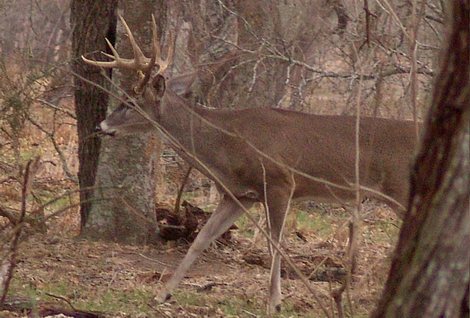
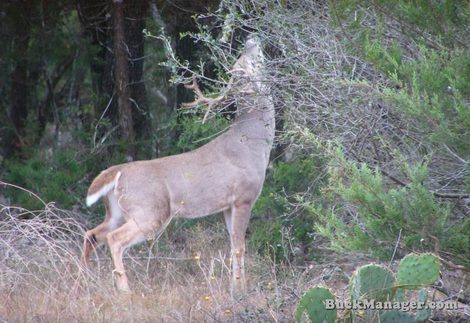
A white-tailed buck making a scrape

Looking to harvest a good white-tailed buck? Who isn’t? I’m going to first assume that you have a place to hunt and know the terrain of your hunting property. If not, this is critical information you need to know, so get out there. In addition to learning the lay of the land, another one of a hunter’s first objectives should be to determine whether or not the hunting area holds any sizable bucks. And I use the term “sizable” as defined by you. To some, sizable may go hand-in-hand with the term “mature buck” while others may put a number to it, such as 140 Boone and Crockett points.

Big bucks are territorial. You can find these areas by looking for both scrapes and rubs, but scrapes are really what you want to be looking for and I will explain why. Other than how they are made, do you know how scrapes and rubs differ? For one, it’s seldom that one particular buck rub will be worked again later in the year. In fact, a certain tree may be rubbed in consecutive years by a particular buck, but seldom is it ever worked again during that same year. This is not the case with buck scrapes because they will often be revisited and reworked throughout the breeding season. Keep in mind that I am not saying that all whitetail scrapes will be revisited, but the odds are more in your favor than against you. Continue reading “Better Deer Hunting: Whitetail Scrapes or Rubs?”

Acorns As White-tailed Deer Food

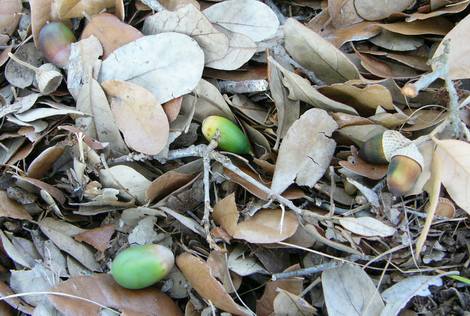
Live oak acorns on the ground

Acorns. We know white-tailed deer like to eat them and that they serve as an important fall and winter food item for deer, but how good are they really? This question crossed my mind as I sat in my bow stand intently listening for deer walking quietly through the leaves, but all I heard over and over again was snap, thud, snap, thud, snap… acorns! Live oak acorns, the dominant oak in my neck of the woods, have been falling for a couple of weeks and they are still going strong. 

Acorns are rich in nutrients although quality varies between oak species. One thing I do know is that all acorns contain high amounts of fats, carbohydrates, and good amounts of protein, too. From what I have researched, one ounce of dried acorn has on average 140 calories, of which 9 grams is fat, 15 grams is carbohydrate, and 2 grams is protein. Using some simple math, that means a whopping 50% (72 calories) of the caloric intake is from fat! Now you now why deer pig out on them prior to the onset of winter. But the buck doesn’t stop there. Continue reading “Acorns As White-tailed Deer Food”

Game Camera Tips for Deer Hunters

Earlier this week I touched on how game cameras and deer management go hand in hand. Not only do digital scouting cameras work 24 hours a day, 7 days a week taking photos of deer on your property, but they also give you a good idea of quality. What could be easier? Here we go.

Camera Placement – I’ve written extensively regarding tips for camera placement, so I won’t go into as much detail here. However, for the beginners out there, the easiest way to photos of white-tail deer is to have something that attracts them. Food, minerals, and water are obvious and good choices. However, although these sites are great for getting deer photos they may not necessarily be the best for collecting deer survey data using your camera.

Game Camera Tips for Deer Hunters

Rechargeable Batteries – This sounds simple, but you can save yourself some heartache and money if you pay attention here. Digital cameras (and make sure you are using digital) are great because they can work around the clock. The problem is that they are motion activated and that requires power.

Each time they are activated and take a photo, the camera uses battery power. This increases with photos taken in the dark. The more photos you take, the more battery power you will need. Invest in rechargeable and be done.

Solar Panels – You have to love the sun! Sure, it’s not all that great when your sweating your butt off setting up feeders and stands in late summer/early fall, but it can take your game camera to the next level. If at all possible, buy a camera that allows you to hook up a solar panel. If you already have a camera, get it converted so that it will work with a solar panel. Then, when you get the chance to check your camera, all you have to do is change out the SD card.

Pattern Bucks with Game Cameras

Time and Date-This a no brainer, but many hunters fail to set the time and date when they place out there cameras. Or when placed out, the user simply fails to set the time. Let me tell you, it is extremely frustrating when you check your photos and the times are wrong. Make sure to set the date and time because it, if nothing else, it will give you the exact time when animals were in the area, regardless of whether they return or not.

Locks – Scouting cameras are not cheap. Even the cheapest cameras aren’t cheap enough to just give away. If you place your camera in an area where someone could steal it or if you even suspect that someone could take it, make sure it is lockable. Option number two is to buy an after-market locking system that works with your camera. It’s very exciting to get a nice photo of a monster buck, but it’s also exciting when you arrive to check your camera and it’s gone. It’s just a different kind of excitement.

Game Cameras and Deer Management

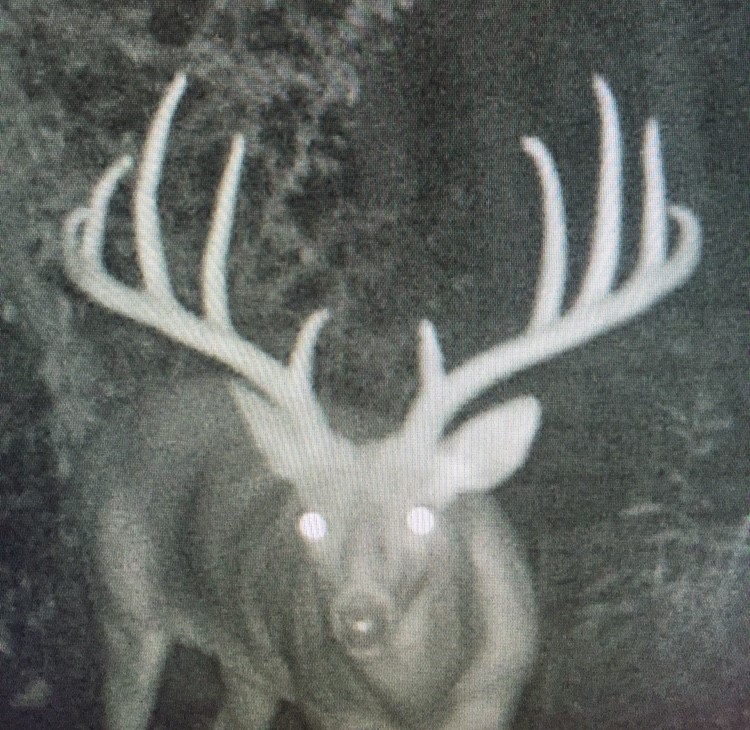
For as long as I’ve been fascinated with deer and deer hunting I have wondered about those big nocturnal bucks that no doubt walked across the land where I hunted. That was a long time ago, even before I knew “nocturnal” was a word. Cameras are great for “capturing” the deer on a property, but they also help with white-tailed deer management.

Nowadays, we don’t have to worry as much about the big whitetail bucks that “might” be out there because game cameras help us do a much more thorough job of scouting prior to and during the deer hunting season. I said “as much,” because there always seems to be bucks that elude everything, including cameras (pays to be scent-free when setting out your cameras).
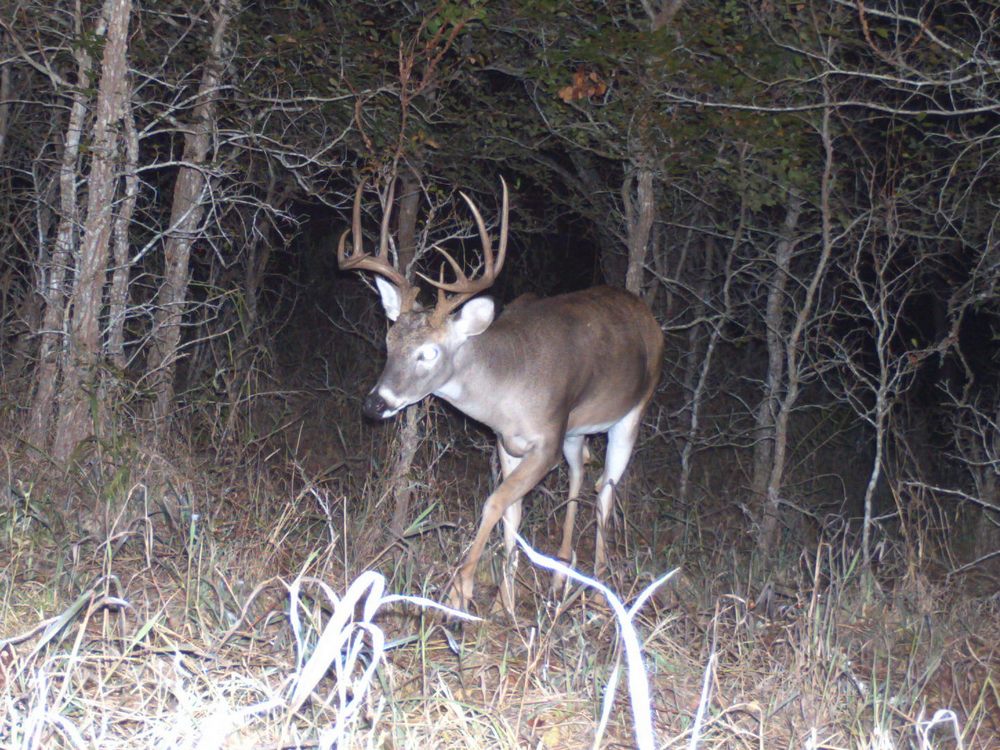
Game Cameras for Scouting Deer

Using Game Cameras for Deer

Using a game camera can be fun and exciting. However, looking back at my first couple of years of using a camera, it was not at all what I had hoped it would be. Sure, I saw some bucks. That’s cool. Some were even better than what I had observed during daylight hours, but nothing like the images that haunted my dreams.

I think deer hunters as a group are very optimistic. How could be get up at the butt-crack of dawn, walk ourselves out into the dark, sit for hours upon hours in adverse weather conditions, and just hope to see a deer if we were not, right? We also want to believe that there is the potential for a “booner” on any given hunt.

Patterning Deer with My Camera

My first season with a game camera was mediocre. The camera proved time and time again that the same spike, 8-point buck, 5 does, and 3 fawns visited the are everyday at about the same time. In addition, an occasional “rogue” buck or two would be spotted overnight, but nothing to write home about. There was no freak nasty.
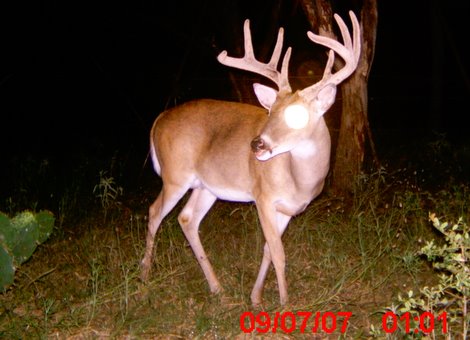
As it turns out, there really weren’t any big, magical bucks that sneaking through the habitat found on the property I hunted. The bucks I thought lived there, in reality, were not there at all!

Were they hanging out on the neighbors property? What was I doing wrong that swamp donkeys weren’t showing up on camera? Did their patterns include areas of the property where I didn’t have cameras. I moved cameras all over, but no massive bucks appeared.

Managing Deer Hunting Expectations with a Camera

Then I thought about it. If I’m not getting photos of quality bucks at night or at different parts of the property (at any time), then there are not any quality bucks to be found. It’s not that I’m not seeing them, then these whitetail bucks simply do not exists, are not found in the area!

The fact of the matter is if you (like me back then) aren’t seeing any good bucks on your trail camera, then it’s not that you’re having a problem seeing the bucks, it’s just that they do not exists. They aren’t on the property. They likely aren’t on your neighbors property either, or at least in close proximity.

In this case, what I had and what you may have, is a deer management problem. It could even be as simple as a deer hunting problem, where young bucks are being harvested well before maturity. If the only bucks you’re seeing on game camera are yearling and 2 1/2 year old bucks then it’s time to take a hard look at the activities on the property.

There are not many monster 2 1/2 year old whitetail bucks running around. I submit that there are none.
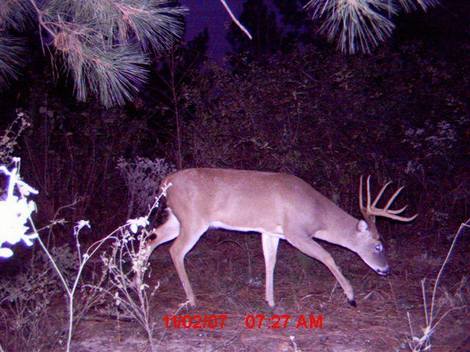
Game camera tips to get your buck!

More Deer Management with Cameras

You can use game camera photos to estimate buck to doe ratios, annual fawning success, and the quality of the bucks on your property, but it also gives you snap-shot after snap-shot of what your overall deer management plan (or lack thereof) is doing for you on a piece of property.

Not even the best trail camera can find something that is not there. Later this week I will talk more about game cameras and even include a few more game camera tips for keeping track of the white-tailed deer on your hunting grounds. Until then, keep your hooks sharp and your ammo dry.
The Best Whitetail Deer Food Plots

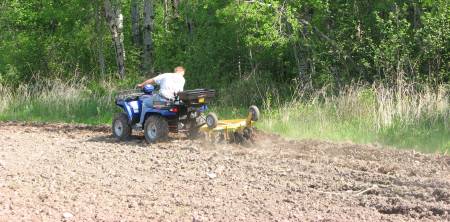
Disking for deer food plots

There are as many different kinds of food plot mixes on the market as there are days in a year, but a lot of people do not realize that the best food plots for white-tailed deer actually grow naturally! In my opinion, natural foods are the best food plots.

I guess by definition what I am writing about today can not really be considered food plots, but more like techniques to provide additional foods for deer. But I believe habitat management is the first step in deer management!

Disking– This is a simple technique that can be implemented (get it) during both the spring and fall. There is nothing magical about how disking works. The only thing necessary is that you use a disk to disturb the surface of the soil so that forb seeds can become “exposed” and germinate.

To promote warm season forbs for deer, disk the selected area before spring green-up. To promote cool season food plots simply disk the area where you would like your native food plot to be during late summer. In addition, to promote more edge and diversity you can alternate disked and undisked strips (strip disking). Continue reading “The Best Whitetail Deer Food Plots”