TPWD Adopts New Deer Hunting Regulations

An important part of any ranch’s deer management program is informed and proper harvest. Without sufficient population data, improper white-tailed deer harvest is inevitable, and management objectives will never come to fruition. Managing proper harvest often means managing deer hunters.

At the big ranch called Texas, the Texas Parks and Wildlife Commission has adopted a series of hunting regulations that expand special buck antler restrictions and liberalize doe harvest opportunities in dozens of Texas counties. The new rules take effect during the 2009-10 hunting seasons.

Citing strong support for the changes during the public comment period, Texas Parks and Wildlife Department (TPWD) staff said the new regulations reflect a shift toward biologically-based communities for managing deer populations. One of the biggest changes involves further expansion of the department’s successful antler restriction regulations into 52 additional counties where biologists have identified a need to provide greater protection of younger buck deer.
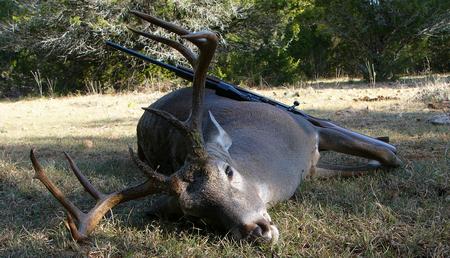
Texas gets new Deer Hunting Regulations

According to Clayton Wolf, TPWD big game program director, the antler restrictions have significantly improved age structure while maintaining ample hunting opportunity, based on data to date in the 61 counties where the rule is currently in effect. New counties under the antler restrictions regulation this fall include: Anderson, Angelina, Archer, Atascosa, Brazos, Brown, Chambers, Clay, Cooke, Denton, Ellis, Falls, Freestone, Grayson, Grimes, Hardin, Harris, Henderson, Hill, Hood, Hunt, Jack, Jasper, Jefferson, Johnson, Kaufman, Liberty, Limestone, Madison, McLennan, Milam, Mills, Montague, Montgomery, Navarro, Newton, Orange, Palo Pinto, Parker, Polk, Robertson, San Jacinto, Smith, Stephens, Tarrant, Trinity, Tyler, Van Zandt, Walker, Wichita, Wise, and Young.

In addition, the department got overwhelming support to increase whitetail bag limits in several areas of the state with growing deer numbers or populations sufficient to support additional hunting opportunity. The department is increasing the bag limit in most Cross Timbers and Prairies and eastern Rolling Plains counties from three deer (no more than one buck, no more than two antlerless) or four deer (no more than two bucks and no more than two antlerless) to five deer (no more than 2 bucks).

Counties affected include: Archer, Baylor, Bell (West of IH35), Bosque, Callahan, Clay, Coryell, Hamilton, Haskell, Hill, Jack, Jones, Knox, Lampasas, McLennan, Palo Pinto, Shackelford, Somervell, Stephens, Taylor, Throckmorton, Wichita, Wilbarger, Williamson (west of IH35), and Young.

The department is increasing the bag limit from four deer to five deer in Pecos, Terrell, and Upton counties. The justification for this change is that white-tailed deer densities throughout the eastern Trans-Pecos are very similar to densities on the Edwards Plateau, where current rules allow the harvest of up to five antlerless deer.

Another change increases the bag limit from three deer to five deer (no more than one buck) in selected counties in the western Rolling Plains. Counties affected include: Armstrong, Briscoe, Carson, Childress, Collingsworth, Cottle, Crosby, Dickens, Donley, Fisher, Floyd, Foard, Garza, Gray, Hall, Hardeman, Hemphill, Hutchinson, Kent, King, Lipscomb, Motley, Ochiltree, Roberts, Scurry, Stonewall, and Wheeler.

The department also extended whitetail hunting from 16 days to the full general open season in Dawson, Deaf Smith, and Martin counties (three deer, no more than one buck, no more than two antlerless). Increased deer estimates equate to longer and more liberal deer hunting seasons.

Areas of the state having sufficient doe populations that warrant additional hunting opportunity will be getting more doe days this fall: from 16 days to full-season either-sex in Dallam, Denton, Hartley, Moore, Oldham, Potter, Sherman and Tarrant counties; from 30 days to full-season either-sex in Cooke, Hardeman, Hill, Johnson, Wichita, and Wilbarger counties; from four days to 16 days in Bowie and Rusk counties; from four days to 30 days in Cherokee and Houston counties; from no doe days to four doe days in Anderson, Henderson, Hunt, Leon, Rains, Smith, and Van Zandt counties.

The department is also expanding the late antlerless and spike season into additional counties. Counties affected include: Archer, Armstrong, Baylor, Bell (West of IH35), Bosque, Briscoe, Callahan, Carson, Childress, Clay, Collingsworth, Comanche, Cooke, Coryell, Cottle, Crosby, Denton, Dickens, Donley, Eastland, Erath, Fisher, Floyd, Foard, Garza, Gray, Hall, Hamilton, Hardeman, Haskell, Hemphill, Hill, Hood, Hutchinson, Jack, Johnson, Jones, Kent, King, Knox, Lampasas, Lipscomb, McLennan, Montague, Motley, Ochiltree, Palo Pinto, Parker, Pecos, Roberts, Scurry, Shackelford, Somervell, Stephens, Stonewall, Tarrant, Taylor, Terrell, Throckmorton, Upton, Wheeler, Wichita, Wilbarger, Williamson (West of IH35), Wise, and Young. In Pecos, Terrell, and Upton counties, the season would replace the current muzzleloader-only open season.

In East Texas, the department is establishing a special muzzleloader season in additional counties, lengthening the existing muzzleloader season by five days to be equivalent in length with the special antlerless and spike buck seasons in other counties, and altering the current muzzleloader bag composition to allow the harvest of any buck (not just spike bucks) and antlerless deer without permits if the county has “doe days” during the general season.

New counties affected include: Austin, Bastrop, Bowie, Brazoria, Caldwell, Camp, Cass, Cherokee, Colorado, De Witt, Fayette, Fort Bend, Goliad (North of HWY 59), Goliad (South of HWY 59), Gonzales, Gregg, Guadalupe, Harrison, Houston, Jackson (North of HWY 59), Jackson (South of HWY 59), Karnes, Lavaca, Lee, Marion, Matagorda, Morris, Nacogdoches, Panola, Rusk, Sabine, San Augustine, Shelby, Upshur, Victoria (North of HWY 59), Victoria (South of HWY 59), Waller, Washington, Wharton (North of HWY 59), Wharton (South of HWY 59), and Wilson.

TPWD also added one additional weekend and 10 additional weekdays in January to the current youth-only deer season. They also established a one buck only, antlerless by permit, nine-day mule deer season for Parmer County — the first ever deer season for that county.In other action, the commission approved a temporary, indefinite suspension of the current lesser prairie chicken two-day season in October until population recovery supports a resumption of hunting.

With all the changes, TPWD is encouraging hunters to check the Outdoor Annual of hunting and fishing regulations for county and species specific rules before going afield this fall. The annual will be available online and wherever hunting licenses are sold beginning August 15.
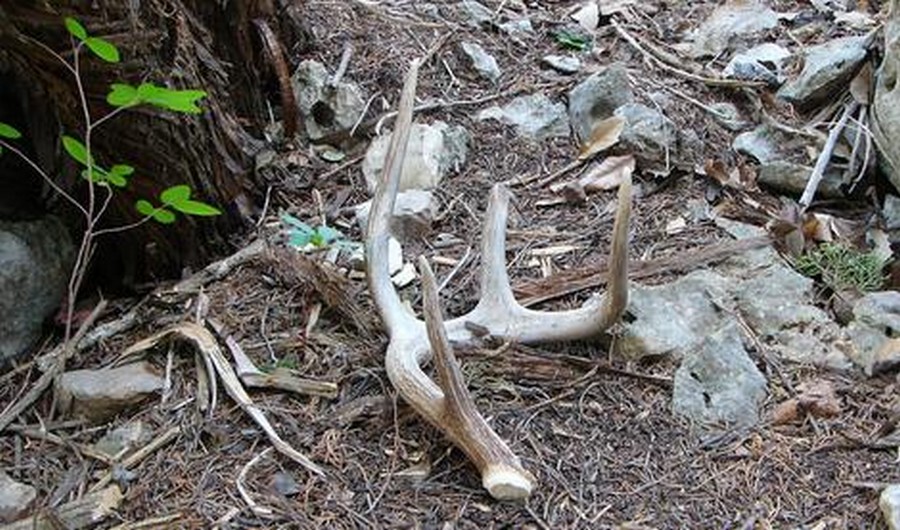
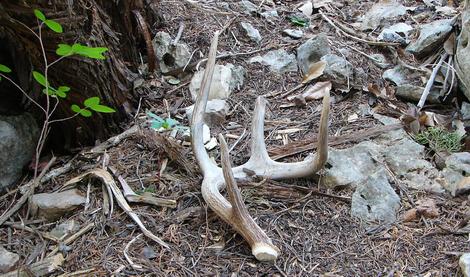
Last Shot at Finding Shed Antlers

Spring has officially sprung and although a few white-tailed bucks may still be holding onto last year’s antler growth, the vast majority of bucks have already shed their antlers. The timing of an individual buck’s antler development depends upon many things, but the primary factor is the buck’s hormone levels. In short, areas where local deer populations breed earlier always shed antlers earlier. And although looking for deer sheds is not an important part of a deer management, it can be awfully fun!

This is an exciting time of the year, not only because whitetail bucks are beginning to grow new velvet-covered antlers, but also because their antlers from last year are lying on the ground… somewhere. A lot of hunters may have their spring food plots in the ground or their supplemental protein feeders filled, but then neglect to get out in the field during the spring. I was once guility of this. Following the close of deer season I would just shut her down and stay out of the field until mid-summer, but that was many years ago.

Finding shed antlers can be fun and informative

Since that time, early spring has become one of my favorite times to get out into the deer’s world. Not only can I get a good assessment of late-winter habitat use, but I have waited long enough that most bucks have shed the last year’s antler growth. And that gives me my best chance at finding a few shed antlers. With short green grass, sparse brush, most antlers laying on the ground, and favorable weather, early spring is my best opportunity to cover some country and see what I can find.

The best spots to find shed “horns” year-in and year-out continue to be food plots, in the general area around supplemental feeders, watering sources, draws, woodlines, and well-traveled corridors. In areas with thick brush cover, I always have good success in tree-covered (closed canopy) areas with an open understories (no brush), primarily because deer often use these spots as bedding areas. In fact, two of the four whitetail sheds I found yesterday were in these types of areas. The other two were along woodlines, where the edge of a wooded area turned into open field.

Since finding shed antlers is not always easy, especially in an area with a low deer density, it is a good idea to look in areas that you think deer reguarly visit. Yesterday, I spent 2 1/2 hours of continuous walking who-knows-how-many miles and covering an untold number of acres to find 4 sheds, and one of those was from the year prior. And this was even after narrowing down my search to areas that I believed deer frequented. Of course, I have spent longer days in the field looking for sheds and have come back with less, often zero.

But yesterday I found 4 sides, no matches, and none of them were exceptional by any stretch of the imagination. It was still enjoyable, and there is always something about standing exactly where something notable happened, at least in a buck’s life anyway. Currently, the deer is without his most notable defenses. His testosterone levels are low, there is no need to battle for receptive does, and the buck has started a new antler growing cycle.

The next time I stand over his antlers they may still be attached.

More Research on the Supplemental Feeding of Whitetail

Spring is officially here and plants are green again, but the lack of rainfall has kept native vegetation from really taking off. On the bright side, trees, shrubs, and vines are leafing out thanks to some precipitation and warmer temperatures, and providing new-growth browse for hungry white-tailed deer.

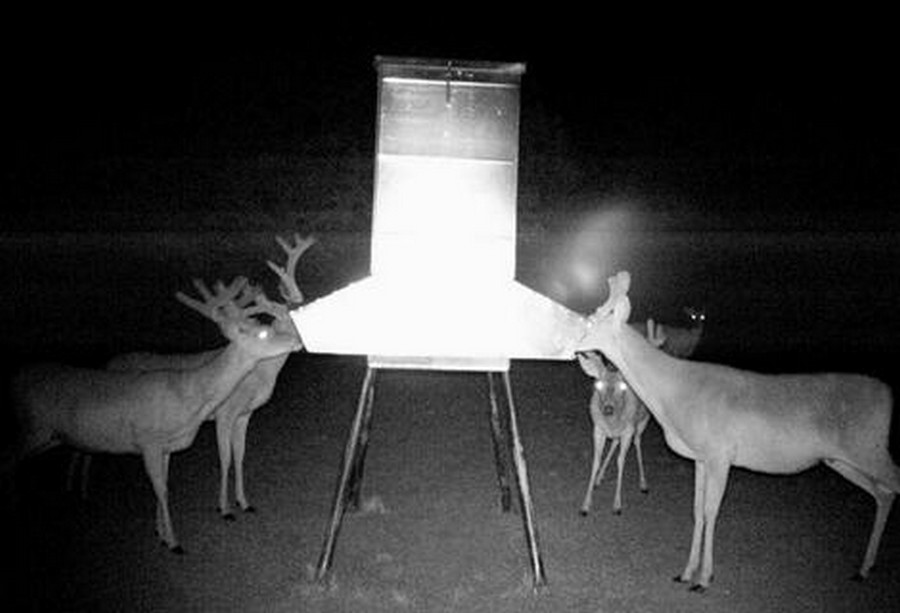
And speaking of deer food, there is some on-going research that may shed more light on the supplemental feeding of deer and its impact on native plants. Deer managers agree that supplemental feeding, whether it be protein pellets, whole cotton seed, or some other type of high-protein food, really helps local deer populations.

However, the words “supplemental feeding” have become almost synonymous with “deer management” in some circles, and although not totally accurate, it’s not far off. Although the management of deer populations incorporates much more than the addition of free-choice protein, most landowners giving deer management an honest effort are providing some sort of supplemental food.

Supplemental Feeding of Whitetail

So as common as this practice is for the management of white-tailed deer, it also deserves further attention. By definition supplemental food is, well, supplemental. The foods placed out for deer are merely there to add to an individual deer’s natural diet, not replace it. If this were false then a property could support an unlimited number of deer as long as food was continually added to the system. This won’t work.

But some often confuse deer breeders and deer management. Yes, deer can live in pens devoid of vegetation with protein pellets and water, but imagining a ranch that looks like a deer pen would be a sad, sad sight and the deer population would still suffer from density-dependent factors. It was commonly thought that the addition of supplemental food reduced a deer’s use of natural plants — and it’s true — but maybe it all goes down a little different.

Past research found that deer provided with supplemental food in the form of free-choice protein pellets still used native plants, but the deer only consumed the most highly preferred plants available to them.

However, preliminary results from research conducted in South Texas suggests that supplemental food does not encourage selective foraging by deer. So why is it important? Well, we all know that deer prefer to browse on certain plant species. Food preference is probably a function of palatability, digestibility, and overall nutritive value.

In areas with high numbers of deer, highly palatable browse species become over-utilized, stunted (hedged), fail to reproduce, and can die. When this happens over a ranch or ranches and year after year, entire plant species can disappear. This leads to an unhealthy system with plant species after species succumbing to over-use over time.

Under the first scenario, supplemental feeding would not prevent the over-use of preferred browse species by deer, but new research may find that free-choice feeds reduce the use of preferred browse. This is important for deer managers that are interested in providing good wildlife habitat because it gives real credit to the fact that free-choice pellets really are supplemental.

Deer not only use preferred browse species, but they also use moderately and slightly preferred browse plants. This widespread use of browse species suggest that supplements can buffer the use of native plants by deer, but not fully protect them.

So regardless of what the current study finds, both scenarios end up proving that deer can not live on supplemental feed alone. Even when supplemental food is provided free-choice, white-tailed deer still desire native browse plants in their diets. Not only are these plants important for food, but also for the shelter and screening cover they provide for deer and other wildlife species. And let’s not forget that browse plants typically contain protein levels ranging from 15 to 35%. And that can feed your deer and really supplement your supplement, for a lot less money.

Cold Weather, Overpopulation Leads to Deer Die-Off

Every hunter wants to harvest a trophy buck, but when it comes to white-tailed deer hunting the reality falls somewhere between shooting a big buck versus deer overpopulation. On one hand, you have hunters that really just want to harvest a single deer, preferably a big, mature buck. Then on the other hand, you have deer numbers that need to be controlled. This will probably not come as a surprise to you, but the average deer hunter only wants to harvest one deer, or more precisely, one buck. While most hunters love seeing numerous deer while out in the field, an important part of deer management is population management.

The reason I bring this up is because just this last week ranches near Kerrville, on the western edge of the Texas Hill Country, were finding dead deer after several days of cold and wet weather. The cause of these deaths — malnutrition. And before assuming that these deer were confined within a high fence that maintained too many animals, I’ll let you know that they were not. In fact, most of the animals found dead were free-ranging white-tailed and axis deer, but they were all starving. Basically, the deer population of the area has exceeded the carrying capacity of the winter range. They were all competing for limited winter forage, and the weakest died.

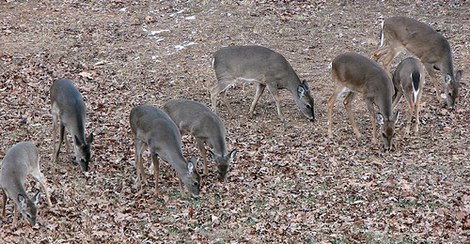
Deer overpopulation can lead to winter die offs

Reports indicate that the found deer were in poor physical condition, hip bones exposed, backbones showing, and no internal fat. The rumens of most of the dead whitetails were packed with cedar, some dead oak leaves, and even yucca leaves. Axis deer rumens were packed primarily with dry grasses. The cedars (ashe juniper) in the vicinity of the dead animals were severely browsed. Obviously, the cause of death was malnutrition caused by overpopulation that was exacerbated by the cold, wet conditions that persisted over several days.

Axis deer are more susceptible to cold, wet weather than white-tailed deer because they are an exotic subtropical species, but the end result of malnutrition is realized when mixed with winter weather. Deer in less than optimal condition are always more susceptible to disease and death. Additionally, parasite loads can only make an individual animal’s situation worse. So how can winter die-offs be avoided?

Subscribe to BuckManager.com

First, the deer population must be kept in check with the habitat. Sure, you may only want to harvest one buck, but realize that the health of each individual deer depends on the availability of food. Supplemental feeding can help, but only if it’s at an adequate level and of the proper type to support the deer population. Each deer impacts every other deer because of the competition for limited resources, but this contest can be greatly reduced if free-choice supplemental food is provided 24-7, year-round. When animals are found dead, remember that the weakest die first.

When monitoring a deer population, many factors can indicate potential deer management problems. Individual body weights, fawn survival (as an indicator of doe and habitat health), and habitat use can all be used to gauge herd health. With that said, pay close attention to the health of deer harvested early in the season. Underweight deer (for their age) are good indicators of a potential problem. In addition, if deer are eating undesirable species, such as cedar, they and the habitat are in very poor condition.

Fire Creates Better White-tailed Deer Habitat

White-tailed deer, like many wildlife species, prefer habitat that is at lower successional stages. Simply stated, deer like plant communities that are dominated by plants that are considered first responders after disturbance. Any disturbance helps set back plant succession, whether it be disking established areas, clear-cutting portions of forests, or natural or prescribed fire. And although hunters understand that deer management practices are designed to improve habitat, many habitat management practices are really only designed to mimic processes that occur naturally.

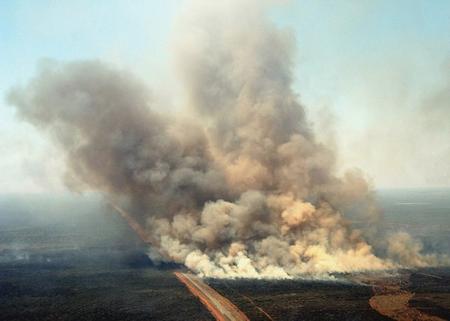
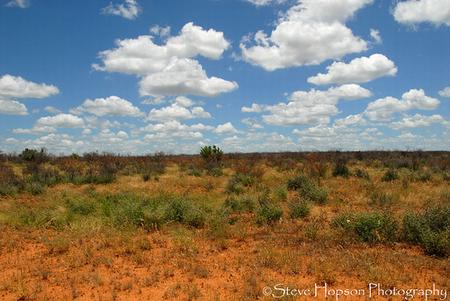
Of course, when it happens naturally land managers have very little control. Such was the case last year in Texas when the almost 15,000 acre Chaparral Wildlife Management Area (WMA) unexpectedly caught fire. It was March of 2008, but because of extremely dry spring conditions, a fire that started adjacent the area burned 95% of the state-owned WMA! Anyone that knows anything about the Chaparral WMA knows that the area is representative of South Texas brushland, but active habitat and deer management practices maintain a healthy deer herd that boast some big ole whitetail bucks.

Prescribed fire is an effective management tool for deer throughout the white-tailed deer’s range because most native brush species respond well by root-sprouting, regrowing, and providing high-protein browse. You see, most plant species are well-adapted to fire, but all deer managers that use fire as a management tool prefer prescribed or controlled burning. The fire that swept across the Chaparral WMA, on the other hand, was a wildfire. And although wildfires and prescribed fires ultimately have the same impact on native plants, prescribed fires are planned and allow burners the most preparation. Prescribed fires allow landowners the ability to pre-select the areas to be burned and the conditions under which they are burned.

Chaparral WMA Fire of 2008

For those interested in using fire as a management tool, it’s recommended that no more than 20% of a property be burned annually. This keeps different successional stages of plants located throughout the property and provides deer with optimal forage. I mentioned earlier that the wildfire that crossed the Chaparral burned 95% of the research WMA. Keep in mind that the perimeter of the area is game-fenced and very few deer were found dead post-fire, so that left all the deer found on the 15,000 acre property about 700 non-burned acres to forage. But white-tailed deer are resilient animals.

Chaparral WMA staff and researchers from Texas A&M University-Kingsville used the effects of the wildfire to monitor how deer living on the area would respond. What would deer eat in the short-term? Would there be enough food to maintain body condition and support fawning? That was just a few of the questions managers needed to answer to determine if the deer herd could respond the the widespread setback in habitat.

It’s important to note that the month of March is smack-dab in the middle of a white-tailed does’ pregnancy. And pregnancy requires a high amount of dietary input. Researchers collected does at two week intervals from mid-April to mid-June and recorded live weight, body condition, rumen contents, and the number and size of fetuses. A total of 28 does were collected and 23 pregnant does carried 6 single fawns, 16 twins, and 1 set of triplets. Shortly after the fire, rumen contents consisted primarily (90%) of cactus and grasses. However, deer shifted to forbs and mast (fruits) as these foods became available after the fire.

 Chaparral WMA Post-Fire

Data collected on the Chaparral WMA found that deer were able to maintain body condition and pregnancy after a large-scale fire. However, the management area did have a lot of things going for it that may or may not be available in some areas. First, the deer herd was below the carrying capacity of the land prior to the fire. In addition, the area was fortunate to have an abundance of cactus that provided a moisture-rich post-fire food for white-tailed deer. Although deer were able to switch their diets in order to survive, would this be the case in your area after a wildfire?

Fire is one of the most beneficial tools in wildlife management because when used properly it is very economical. In addition, fire releases nutrients that are bound in dead organic material, fire stimulates the germination of certain plant species, and fire controls plants such as blueberry cedar that are not fire adapted.  And although we have learned that whitetail can cope with large-scale fire in South Texas, I do not recommend burning more than 20% of your property on an annual basis. Just keep in mind that with burning 90% of the work takes place before you strike the first match.