Better Fawn Survival for More Bucks

Habitat Management to Improve Fawn Survival

It often amazes me when I hear an uninformed hunter talk about deer management and the habitat requirements of white-tailed deer. After hearing them speak just a few sentences, it’s obvious that they do not have a clear understanding of a whitetail’s habitat needs or the foods that they eat. This blows my mind! After all, these are the same guys that proclaim to “love” hunting.

However, I suppose there is a big difference between deer hunting and white-tailed deer management.

Deer hunting can exist without deer management. After all, you don’t necessarily need many (or any?) deer to go deer hunting. However, white-tailed deer management can not occur without hunting as part of the overall equation. In short, you can love hunting while being indifferent to management, but if a deer management program is in place then hunting is part of the package.

Healthy Habitat for Healthy Deer

So where am I going with this? I guess what I’m trying to do is illustrate is the difference between hunters that simply shoot deer and those that manage for them. There is nothing wrong with either of them. Besides, we all go through various stages in our hunting lives. However, there comes a point when some hunters connect the dots and realize that there is a strong relationship between the habitat that the land provides and the health of a deer herd.
Habitat Management Techniques for Whitetail Deer

It’s at this point that we realize the horse goes in front of the cart—not the other way around. You can’t expect to have a well-above-average deer herd and quality bucks if you don’t provide them with the habitat that they need. That habitat includes the food, cover, water and space that a white-tailed deer requires.

Habitat: Investing in Fawn Survival & Future Bucks

Believe it or not, every trophy (insert your definition of a trophy here) buck starts out as a little baby fawn. The desire to shoot a trophy buck on a property where no fawning habitat exists would be like putting the cart in front of the horse. It doesn’t work that way. Every hunter thinks about big bucks, but only a small percentage of land managers consider protecting and providing habitat for deer fawns. This, now, is how we connect the dots.

Taking the effort to provide needed deer habitat today will ensure that you have deer to shoot tomorrow—or rather several years down the road.
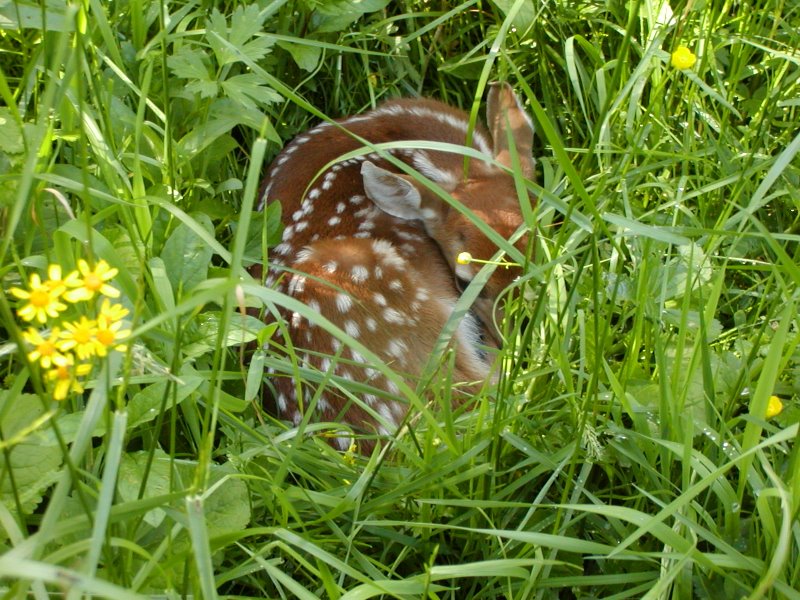
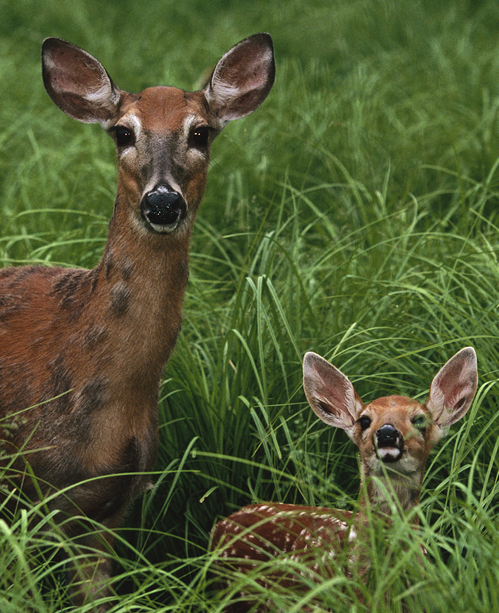
White-tailed deer fawn hides in dense grass.

Although white-tailed deer eat very little grass (less than 10% of their diet), tall grass is an important component of fawning habitat. Does will often leave newborn fawns unattended along field edges or deep within grassy cover. This herbaceous ground cover provides structure that screens fawns, whether moving or lying down, from predators during both the day and night. Trust me, it’s not hard for a predator to locate a fawn in an overgrazed pasture or freshly-cut hay field.

In fact, if you are interested in providing fawning habitat (as well as not cutting up fawns) then I would not hay fields from the beginning of May until the end of July. On properties that run cattle, I suggest deferred grazing of at least 20% of pasture in advance to grow and provide adequate grass cover during the fawning period. Once fawning is completed, return livestock into those areas to consume grass cover and create a more favorable environment for forbs.

To estimate when most does fawn add 210 days to the peak of the rut in your area. This should give you a good idea of when most fawns are born. I’d then add 30 days to the front and 60 days to the back of that date to serve as a window of when fawning habitat is of utmost importance.
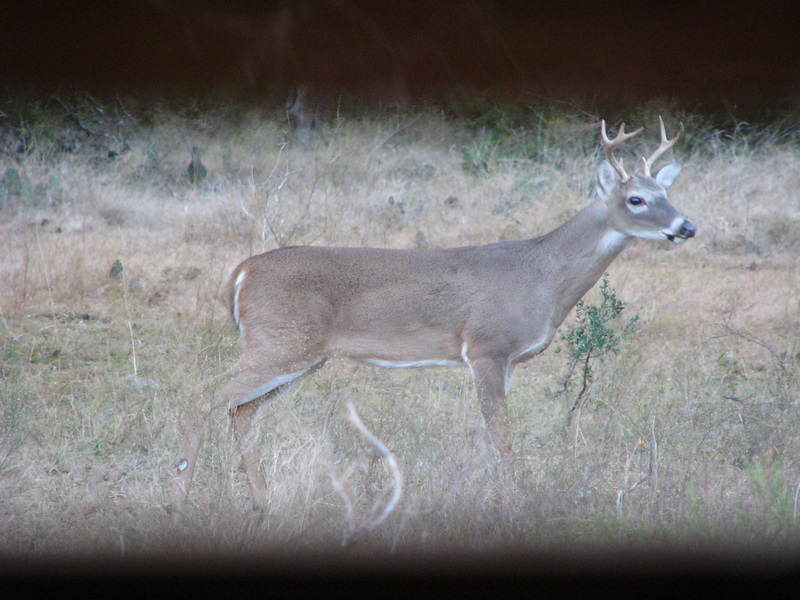
Stand Counts for Surveying White-tailed Deer

From the looks of things, Spring has definitely sprung here in Central Texas! Browse plants are putting on new leafy growth and the moisture-rich soil is covered with high-protein forbs. It appears the white-tailed deer found in this part of the world be eating good for some time to come. Let’s just hope the all-important Spring rains come through for the deer habitat this year. So far, so good. Changing subjects now, and I know it’s a long time until deer survey season, but I recently learned of an interesting study taking place out of Texas State University. The research relates to conducting stand surveys to estimate white-tailed deer populations on individual ranches.

First, I’ve never been a huge fan of stand surveys for whitetail, primarily because I feel other deer survey techniques do a better job of estimating deer populations on individual properties. That being said, some properties just do not lend themselves to being surveyed any other way, so even a low-confidence estimate is better than no estimate at all. In the mentioned study, a high-fenced pasture with a known number of marked white-tailed deer was used. Five deer stands and 5 timed spin-feeders filled with corn were placed within the pasture and were located approximately 1/2 mile from one another, creating a hunting scenario similar to many Texas ranches where deer are hunted. Continue reading “Stand Counts for Surveying White-tailed Deer”

Deer Management Through Browse Use

Habitat is the cornerstone of white-tailed deer management. Plant communities are an important component of habitat and are composed of forbs, grasses, and woody plants (browse). Healthy, diverse habitat sustains native wildlife populations and almost always represent healthy deer herds.

However, browsing of woody plants by overabundant white-tailed deer and domestic livestock may have negative impacts on perinnial shrubs, trees and the overall habitat.

Browse consumption can be used for better whitetail deer management

White-tailed deer are browsing animals, not grazing animals like cattle. As a results, browse plants serve as important food sources for white-tailed deer and grass is of little to no value. Browse plants consists of the twigs, fruits, and nuts of trees, shrubs, and vines.

Excessive browsing may lead to decreased plant vigor, increased susceptibility to disease, or decreased reproduction and seeding establishment. Stresses such as these could potentially cause the disappearance of some plant species important for quality deer habitat. Consequently, deer biologist typically quantify the most palatable browse plants in an area in an attempt to monitor browsing pressure by the local deer herd. Sound deer management decisions can be made by recording browse plant use by white-tailed deer.

In any area, three classes of browse plants exist: first choice, second choice, and third choice. As you would expect, first choice plants are those that deer relish — the ones they look to consume first. Third choice are plants deer really do not care to eat. These third choice plants are foods deer can eat, but they choose not to unless first and second choice plants are unavailable.

Second choice browse plants offer the most information about the local whitetail herd. First choice plants almost always show heavy browsing, unless there are very few deer in an area. On the other hand, third choice plants are often used very little, unless the number of the deer in an area has greatly exceeded the carrying capacity of the property.

Monitoring the consumption of second choice browse plants by white-tailed deer gives landowners interested in deer habitat management the best information. Here are browse plant preferences for South Texas by preference:

First Choice – Coma, Cedar Elm, Southwest Bernardia, Four-wing Saltbush, Guayacan, Granjeno, Manzanita, Sugar Hackberry, Texas Kidneywood, Vine Ephedra

Second Choice – Anaqua, Anacahuita. Blackbrush, Brasil, Catclaw Acacia, Cenizo, Colima, Guajillo, Hog Plum, Huisache, Little Leaf Sumac, Live Oak, Lotebush, Palo Verde, Ratany, Retama, Texas Ebony, Twisted Acacia, Woolly Bucket Bumelia, Wright Acacia

Thrid Choice – Agarito, Allthorn, Amargosa, Coyotillo, Creosotebush, Desert Yaupon, Green Condalia, Honey Mesquite, Knifeleaf Condalia, Mountain Laurel, Narrowleaf Forestiera, Shrubby Blue Sage, Texas Persimmon, Whitebrush, Wolfberry

This list of important woody plants for white-tailed deer in South Texas should be used as an example of the information available to those interested in producing high-quality deer and habitat. Find this information for your area in publications or by contacting a biologist at your local department of natural resources.

Winter Tough on White-tailed Deer

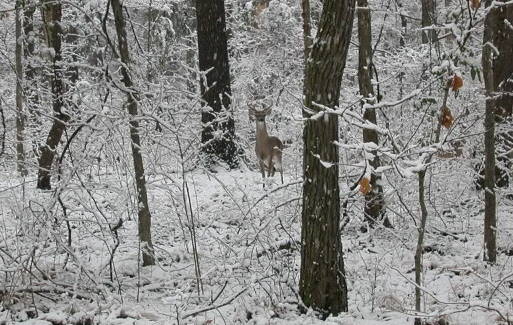
As the snow falls today in Central Texas, I can’t help but think about the white-tailed deer throughout the country. I’m not just talking about the animals living right outside my door, but everywhere throughout the whitetail’s range. This is the time of year when habitat conditions are tough and when the nuts and bolts of deer population management are tested. After all, the white-tailed deer hunting seasons are over and the remaining deer are carryover, the core herd of the upcoming hunting season.

At the heart of deer population management is food availability. With late winter upon us, even though spring is just around the corner, white-tailed deer food is scarce over the landscape. Late winter is the most nutritionally stressful time of the year for a deer. At this point in time, the deer herd on every ranch should be at or below its base population size—the maximum number of animals that the habitat can support. Otherwise, the deer herd is at risk of a die-off from being malnurished due to inadequate food resources. Continue reading “Winter Tough on White-tailed Deer”

White-tailed Deer Warts

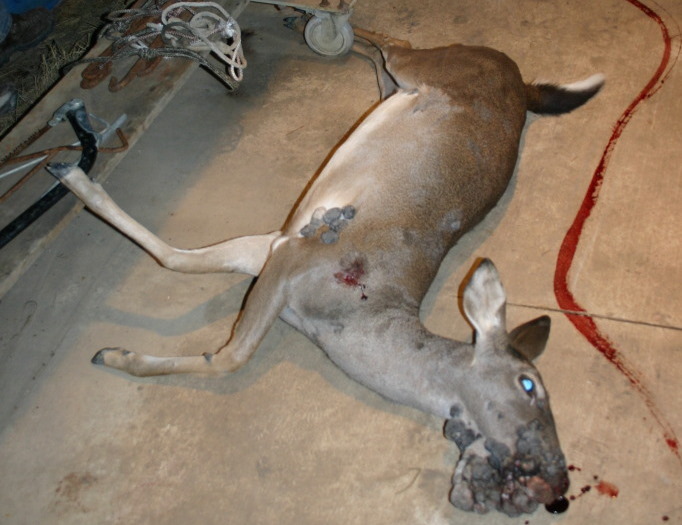
A deer hunter never expects to see giant warts or tumor-like growths on a white-tailed deer, but they do occur. Over the years I’ve seen many of photos of both live and harvested deer with “tumors,” although I’ve never seen one while in the field. The technical term for these growths is cutaneous fibroma and it’s caused by a virus. From a deer management perspective, there is not much you can do to keep wild deer from getting fibroma.

White-tailed Doe with Fibromasts

What are External Deer Tumors?

First, they are not tumors at all — they’re warts. Cutaneous fibromas are caused by a naturally occurring virus of the deer’s skin. The virus that causes these unsightly warts in deer is believed to be transmitted through biting insects and/or direct contact with damaged skin. Once the virus enters the skin, warts begin to form.

As the warts increase in size, the skin surrounding them is typically hairless and grayish in color. The number of warts on an infected animal can vary from one to several hundred, they can sometimes clump, and can in some cases end up covering much of the deer’s body.

Do Warts Bother Deer?

For the most part, these warts will not cause a white-tailed deer any major problems. However, sometimes the growth of the wart can indirectly cause problems by restricting the consumption of food or the deer’s breathing depending on where the growths are located.

Although death from fibromas in deer can occur, death from warts is not always imminent it seems. There have been many hunter testimonials of white-tailed deer with warts “shaking them off,” so to speak. In those cases, where they really the same deer? I can’t say for sure. I could see a situation where a deer with an isolated wart could recover, so to speak.

White-tailed Deer with Warts White-tailed Buck with Warts

White-tailed Buck with Tumors White-tailed Doe with Fibromasts (Warts)

Deer Warts, Deer Hunting

From a deer hunter’s perspective warts are quite unsightly. Since fibromasts are a virus of the skin, they will be removed if the deer is skinned. Notice I said IF the deer is skinned. Although the meat of a deer is typically not affected, most hunters that harvest a deer with a large number of warts are hesitant to put the meat in the freezer.

This is understandable and probably the safest thing to do. Some research reported that a buck with external warts also had internal and cancerous fibromasts. Again, if an animal does not appear healthy then use your own, conservative discretion.

The take home message on warts is that they do occur naturally in white-tailed deer across their range. Fibromasts can occur on any deer, healthy or otherwise. With that said, these warts occur rather rarely and there is nothing that can be done from a deer management standpoint to manage against them. Deer are the only host for the virus, so fear not for yourself should you find yourself standing over an infected, wart-covered animal.