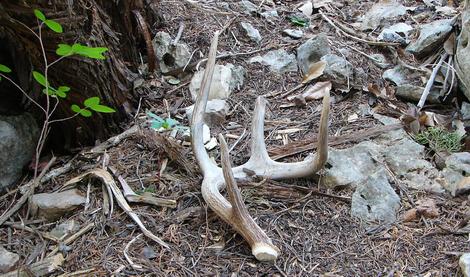
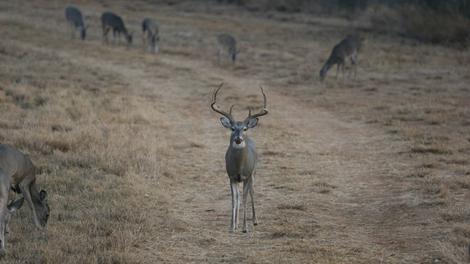
An important part of any ranch’s deer management program is informed and proper harvest. Without sufficient population data, improper white-tailed deer harvest is inevitable, and management objectives will never come to fruition. Managing proper harvest often means managing deer hunters.
At the big ranch called Texas, the Texas Parks and Wildlife Commission has adopted a series of hunting regulations that expand special buck antler restrictions and liberalize doe harvest opportunities in dozens of Texas counties. The new rules take effect during the 2009-10 hunting seasons.
Citing strong support for the changes during the public comment period, Texas Parks and Wildlife Department (TPWD) staff said the new regulations reflect a shift toward biologically-based communities for managing deer populations. One of the biggest changes involves further expansion of the department’s successful antler restriction regulations into 52 additional counties where biologists have identified a need to provide greater protection of younger buck deer.
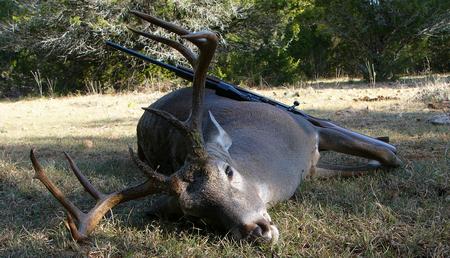
According to Clayton Wolf, TPWD big game program director, the antler restrictions have significantly improved age structure while maintaining ample hunting opportunity, based on data to date in the 61 counties where the rule is currently in effect. New counties under the antler restrictions regulation this fall include: Anderson, Angelina, Archer, Atascosa, Brazos, Brown, Chambers, Clay, Cooke, Denton, Ellis, Falls, Freestone, Grayson, Grimes, Hardin, Harris, Henderson, Hill, Hood, Hunt, Jack, Jasper, Jefferson, Johnson, Kaufman, Liberty, Limestone, Madison, McLennan, Milam, Mills, Montague, Montgomery, Navarro, Newton, Orange, Palo Pinto, Parker, Polk, Robertson, San Jacinto, Smith, Stephens, Tarrant, Trinity, Tyler, Van Zandt, Walker, Wichita, Wise, and Young.
In addition, the department got overwhelming support to increase whitetail bag limits in several areas of the state with growing deer numbers or populations sufficient to support additional hunting opportunity. The department is increasing the bag limit in most Cross Timbers and Prairies and eastern Rolling Plains counties from three deer (no more than one buck, no more than two antlerless) or four deer (no more than two bucks and no more than two antlerless) to five deer (no more than 2 bucks).
Counties affected include: Archer, Baylor, Bell (West of IH35), Bosque, Callahan, Clay, Coryell, Hamilton, Haskell, Hill, Jack, Jones, Knox, Lampasas, McLennan, Palo Pinto, Shackelford, Somervell, Stephens, Taylor, Throckmorton, Wichita, Wilbarger, Williamson (west of IH35), and Young.
The department is increasing the bag limit from four deer to five deer in Pecos, Terrell, and Upton counties. The justification for this change is that white-tailed deer densities throughout the eastern Trans-Pecos are very similar to densities on the Edwards Plateau, where current rules allow the harvest of up to five antlerless deer.
Another change increases the bag limit from three deer to five deer (no more than one buck) in selected counties in the western Rolling Plains. Counties affected include: Armstrong, Briscoe, Carson, Childress, Collingsworth, Cottle, Crosby, Dickens, Donley, Fisher, Floyd, Foard, Garza, Gray, Hall, Hardeman, Hemphill, Hutchinson, Kent, King, Lipscomb, Motley, Ochiltree, Roberts, Scurry, Stonewall, and Wheeler.
The department also extended whitetail hunting from 16 days to the full general open season in Dawson, Deaf Smith, and Martin counties (three deer, no more than one buck, no more than two antlerless). Increased deer estimates equate to longer and more liberal deer hunting seasons.
Areas of the state having sufficient doe populations that warrant additional hunting opportunity will be getting more doe days this fall: from 16 days to full-season either-sex in Dallam, Denton, Hartley, Moore, Oldham, Potter, Sherman and Tarrant counties; from 30 days to full-season either-sex in Cooke, Hardeman, Hill, Johnson, Wichita, and Wilbarger counties; from four days to 16 days in Bowie and Rusk counties; from four days to 30 days in Cherokee and Houston counties; from no doe days to four doe days in Anderson, Henderson, Hunt, Leon, Rains, Smith, and Van Zandt counties.
The department is also expanding the late antlerless and spike season into additional counties. Counties affected include: Archer, Armstrong, Baylor, Bell (West of IH35), Bosque, Briscoe, Callahan, Carson, Childress, Clay, Collingsworth, Comanche, Cooke, Coryell, Cottle, Crosby, Denton, Dickens, Donley, Eastland, Erath, Fisher, Floyd, Foard, Garza, Gray, Hall, Hamilton, Hardeman, Haskell, Hemphill, Hill, Hood, Hutchinson, Jack, Johnson, Jones, Kent, King, Knox, Lampasas, Lipscomb, McLennan, Montague, Motley, Ochiltree, Palo Pinto, Parker, Pecos, Roberts, Scurry, Shackelford, Somervell, Stephens, Stonewall, Tarrant, Taylor, Terrell, Throckmorton, Upton, Wheeler, Wichita, Wilbarger, Williamson (West of IH35), Wise, and Young. In Pecos, Terrell, and Upton counties, the season would replace the current muzzleloader-only open season.
In East Texas, the department is establishing a special muzzleloader season in additional counties, lengthening the existing muzzleloader season by five days to be equivalent in length with the special antlerless and spike buck seasons in other counties, and altering the current muzzleloader bag composition to allow the harvest of any buck (not just spike bucks) and antlerless deer without permits if the county has “doe days” during the general season.
New counties affected include: Austin, Bastrop, Bowie, Brazoria, Caldwell, Camp, Cass, Cherokee, Colorado, De Witt, Fayette, Fort Bend, Goliad (North of HWY 59), Goliad (South of HWY 59), Gonzales, Gregg, Guadalupe, Harrison, Houston, Jackson (North of HWY 59), Jackson (South of HWY 59), Karnes, Lavaca, Lee, Marion, Matagorda, Morris, Nacogdoches, Panola, Rusk, Sabine, San Augustine, Shelby, Upshur, Victoria (North of HWY 59), Victoria (South of HWY 59), Waller, Washington, Wharton (North of HWY 59), Wharton (South of HWY 59), and Wilson.
TPWD also added one additional weekend and 10 additional weekdays in January to the current youth-only deer season. They also established a one buck only, antlerless by permit, nine-day mule deer season for Parmer County — the first ever deer season for that county.In other action, the commission approved a temporary, indefinite suspension of the current lesser prairie chicken two-day season in October until population recovery supports a resumption of hunting.
With all the changes, TPWD is encouraging hunters to check the Outdoor Annual of hunting and fishing regulations for county and species specific rules before going afield this fall. The annual will be available online and wherever hunting licenses are sold beginning August 15.