Deer Hunting and Management is Conservation for All

Benefit of Hunting for Conservation

The benefits of managing habitat for white-tailed deer have been well documented. Decades of anecdotal accounts by land managers substantiate the widespread benefit of deer management, and published research by academics serve as documented proof. Managing deer is good. Taking a hands-off approach is bad for deer, native plants and other wildlife.

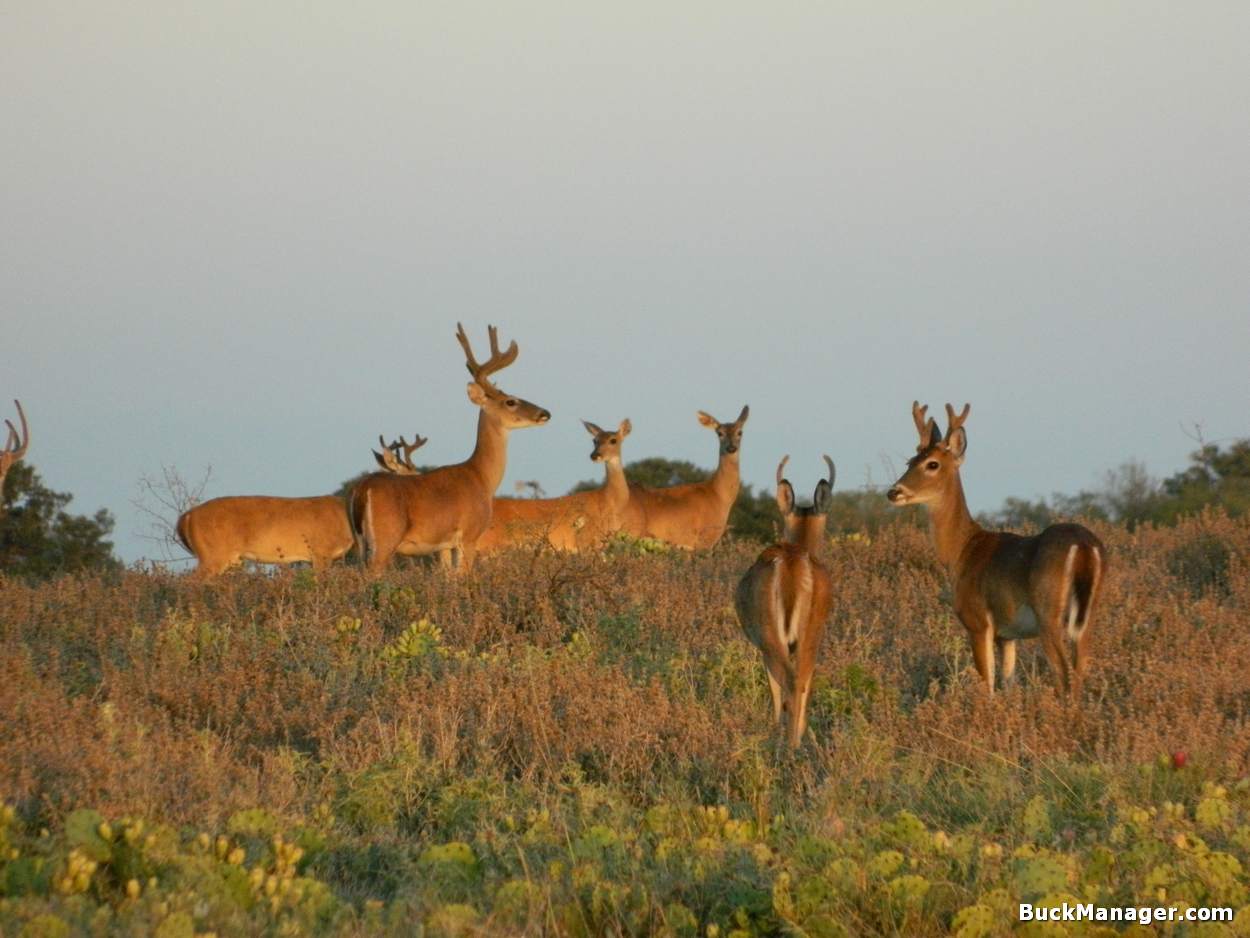
I believe the best way to grow bigger and healthier deer is give them exactly what they want: high-quality natural foods. To paraphrase, if you build it they will come.  If you make whitetail habitat better they will be healthier, at the very least. The truth is that nothing is as good as the food found in prime habitat under good environmental conditions, neither pelleted protein feed nor food plots even come close.
Benefits of Deer Hunting

Albeit, supplemental forages can have their place in a well-rounded management program, since they help maintain a constant nutritional plane for a deer herd during tough times. Even good habitat can find itself in poor condition during drought conditions, which is especially true here in Texas.

However, when you as a hunter or landowner are doing it right there should not be many tough times. Lands managed for deer typically anticipate the worst by keeping the right number of deer.

Working for Deer, Wildlife

It takes hard work to manage deer and the habitat that they need on private lands, so why do we do it? Mostly because we simply love doing it. We enjoy taking care of the natural resources that we love. We like watching wildlife and white-tailed deer. We want to give something back to the sport that we love, deer hunting. We want to give something back to the animal we love, white-tailed deer.

We also realize that deer must be controlled. Wildlife conservation is different that wildlife preservation. Whitetail populations have the ability to increase rapidly. Habitat deteriorates when that happens and we know that negatively affects local deer herds, but also native plant communities and all the other animals that live there. The fallout of having too many deer has numerous, negative impacts, from soil erosion to native plant regeneration to commercial ag production.
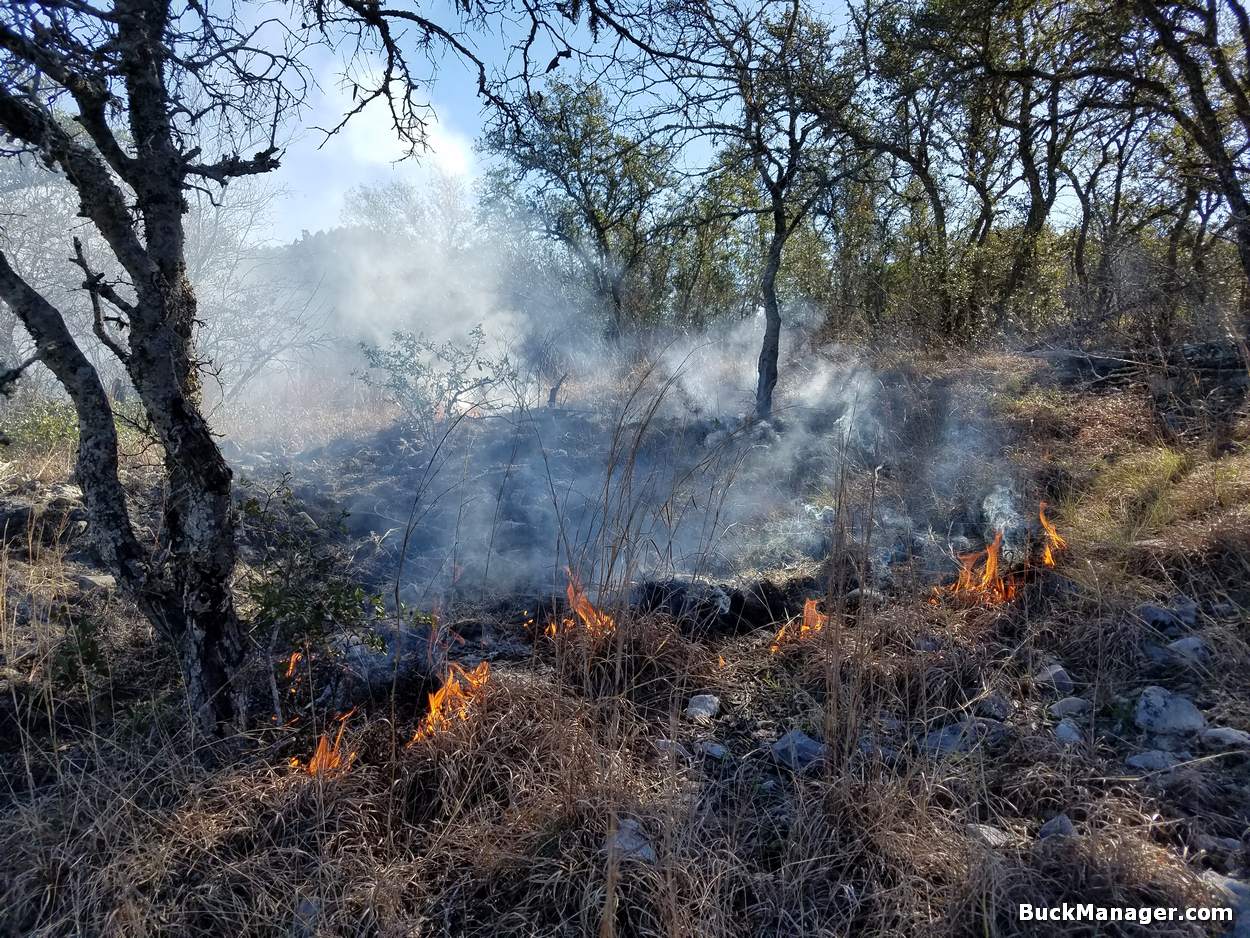
Habitat Management for Deer and Other WIldlife

It boils down to conservation, taking care of what we as people have. It also comes from an understanding that deer are a renewable natural resource. Management is the price we are willing to pay for the tangible and intangible things that we get from stepping into the woods each and every time we go hunting.

Some people will never understand that. And I’m okay with that, because I don’t understand all of them either.

Deer Hunting is Necessary

Every plant and animal has a place in the wildlife world. It’s paramount to realize that although we have allegedly “progressed” as a society, the important things in life will always remain the same: family, friends, good times and proper stewardship of the bountiful natural resources that we’ve been given.

It will not make a hill of beans how fast our phones download data or how many movies we can stream if the environment becomes unsuitable for life. Humans are smart as whole, but as a group we don’t always make wise decisions.
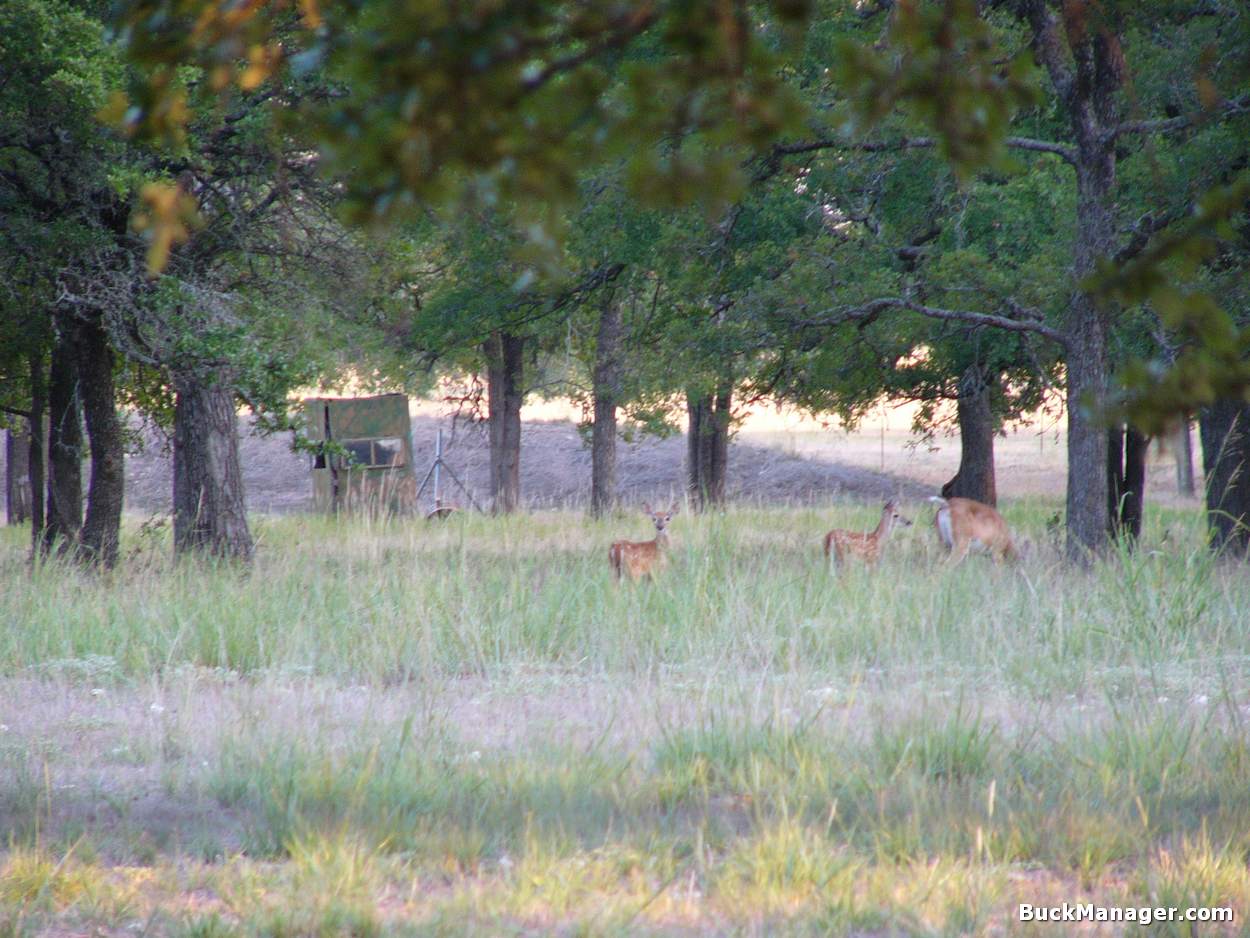
Deer Hunting is Necessary

Habitat-based white-tailed deer management has fueled better deer hunting across the US, without a doubt. But all of the combined management effort has not just benefited deer and the people that hunt them; deer population and habitat management has helped most all other plants and animals that call those places home, too. Deer hunting and management has help fund, directly and indirectly, many forms of habitat management. That benefits everyone.

Leopold and Deer Management

Aldo Leopold: “… I have lived to see state after state extirpate its wolves. I have watched the face of many a newly wolfless mountain, and seen the south-facing slopes wrinkle with a maze of new deer trails. I have seen every edible bush and seedling browsed, first to anaemic desuetude, and then to death. I have seen every edible tree defoliated to the height of a saddlehorn.

Such a mountain looks as if someone had given God a new pruning shears, and forbidden Him all other exercise. In the end the starved bones of the hoped-for deer herd, dead of its own too-much, bleach with the bones of the dead sage, or molder under the high-lined junipers.

Aldo Leopold on Deer Conservation

I now suspect that just as a deer herd lives in mortal fear of its wolves, so does a mountain live in mortal fear of its deer. And perhaps with better cause, for while a buck pulled down by wolves can be replaced in two or three years, a range pulled down by too many deer may fail of replacement in as many decades. So also with cows.

The cowman who cleans his range of wolves does not realize that he is taking over the wolf’s job of trimming the herd to fit the range. He has not learned to think like a mountain. Hence we have dustbowls, and rivers washing the future into the sea.”
Public Hunting in Texas: Draw Hunts Going Online

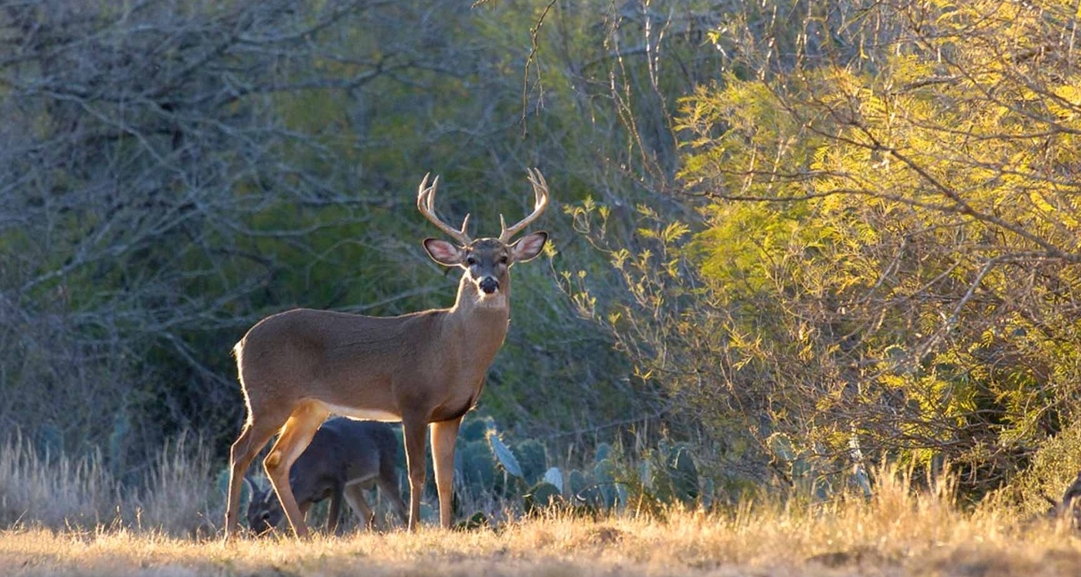
Texas is well-known for white-tailed deer hunting, but it’s also known as a state that is overwhelmingly privately owned. That means finding low cost and/or quality public hunting opportunities can be few a far between. However, with a little luck you could be hunting smack-dab in the middle of some well-managed lands. That’s because Texas Parks and Wildlife Department (TPWD) offers some really good draw hunts on public hunting lands across the state.

We took advantage of these draw hunts growing up, specifically for deer, and it did allow us to see some beautiful parts of the state as well as meet some other awfully nice hunters. The TPWD draw hunt system is basically a lotto system with an entry fee that puts hunters in areas where animals need to be removed. It was an annual, late-summer ritual to sit down with their printed draw booklet and “map out” the areas where we would enter, hopefully hunt.

Texas Public Hunting

It was never a sure thing since the odds of getting drawn were low, but more years than not we were fortunate enough to get to go hunting somewhere. Most of the these public hunts take place at TPWD’s wildlife management areas, but they also hunt state parks and some state and national forest. Now the whole draw system is going online, so although it will make it easier for hunters to apply, it may very well increase the competition.

Source: Effective with this summer’s applications, the Texas Parks and Wildlife Department’s popular Public Hunt Drawing System will be online-only. The Public Hunt Drawing System offers affordable hunting experiences in more than two dozen different hunt categories, including eight specifically for youth only. Applications will only be accepted online — no “Applications for Drawings on Public Hunting Lands” booklets or application forms will be printed and mailed out.

With the new paperless system, hunters will be able to browse the drawn hunt catalog by hunt category and location using interactive maps, as well as complete the application and pay online. Selected applicants will be notified by email and can accept permits and pay any fees online. Permits will be issued by email and can be printed at home or stored on a mobile device. Those applicants who are not selected may still be eligible through a secondary drawing if any permits are unclaimed by the payment deadline. There may still be opportunities for traditional standby hunts at some locations.

In addition to now being able to apply for multiple hunt areas within the same hunt category (i.e. apply for a Gun Deer — Either Sex hunt on more than one hunt area), the online system will give hunters more time to apply. Application deadlines start in August and wrap up in January. Applicants will have until midnight on the day of the deadline to apply.

Non-refundable application fees for drawn Special Permit hunts range between $3-10 for each adult applicant 17 years of age or older. Selected adult hunters pay an additional permit fee of $80 for regular hunts and $130 for extended hunts. There are no application fees or drawn hunt permit fees for youth age 8 to 16. There are no application fees for the e-postcard hunt or the U.S. Forest Service Antlerless Deer permits.

Applicants will also retain and continue to accrue Preference Points, now called Loyalty Points, as in the past. Points will stay with the category and be applied to each application equally.

The new online-only system will begin accepting electronic applications in July for 2014-15 Drawn Hunts, including Special Permit hunts, E-Postcard hunts, and US Forest Service Antlerless Deer Permits.

More information about the new online draw hunt system can be found on their web site.

Deer Hunting with Drones

Deer Hunting with Drones?

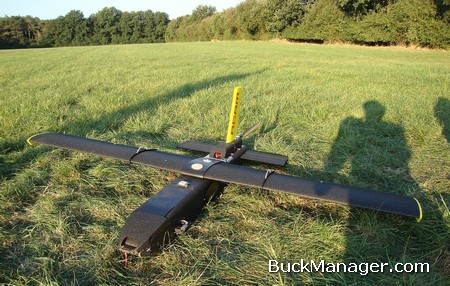
The use of drones for all sorts of things continues to increase. But, what about deer hunting with drones? Like me, I bet most think deer hunting with drones is a bad idea. However, some think drones add an exciting element to finding and hunting deer, especially big bucks. Starting to sound sketchy yet? I see some legitimate applications for using drones for deer surveys and other wildlife management activities.

If you’re like me, then at least part of the reason you head out hunting is to get away from technology, not to use it while out in the field hunting deer. Admittedly, I do use motion-triggered game cameras to document deer using the areas that I hunt. That sounds like an unmanned, immobile drone.

Deer Hunting with Drones?

In case you missed it, the Boone and Crockett Club release their official position on the use of of unmanned drones for hunting white-tailed deer and other big game animals. As you may have already guessed, B&C is not in favor of hunters using advantageous, real-time views from the sky to bag their bucks.

B&C Club: No Drones

Source: Trophies scouted or taken with the assistance of drones/unmanned aerial vehicles (UAV) are not eligible for entry in Boone and Crockett records, the Club announced today. “These highly sophisticated, remote-controlled aircraft have no place in fair-chase hunting,” said Richard Hale, chairman of the Club’s Big Game Records Committee.

“The Boone and Crockett Club stands with state wildlife agencies, the Pope and Young Club and hunter-conservationists everywhere who are discouraging the use of drones in hunting.”

In the early 1960s, the Boone and Crockett Club barred trophies taken with use of aircraft. “Spotting or herding game from the air, followed by landing in its vicinity for the purpose of pursuit and shooting” was deemed unethical. The Club’s policy spawned regulations in Alaska and elsewhere designed to protect the integrity of hunting and
conserve game.

Hale said Boone and Crockett is always on alert for new technologies that could erode the time-honored traditions of fair chase. Fair chase is defined by the Club as the ethical, sportsmanlike and lawful pursuit and taking of any free-ranging wild, native North American big game animal in a manner that does not give the hunter an improper advantage over such animals.

No Deer Hunting with Drones

Hunting in it’s purest form has always been about trying to kill something to eat. Deer hunting with drones seems far removed from such a simple idea. The thought of scouting with drones makes sense on some level, but it also sounds weird. Envision the western skies full of drones looking for the biggest mule deer, elk or pronghorn.

A lot of value gets put on the largest-antlered or largest-horned animals by recreational hunters. Here’s a thought: Do we blame hunters or B&C?

The Key to Late Season Hunting Success

If you’ve noticed the deer hunting season is nearly over and there are license tags left in your pocket, don’t panic just yet. There is still time to fill those tags, as well as the freezer. Many hunters find themselves behind the proverbial eight ball as the season winds down each year. Whether it’s because we’ve run short on hunting time because of other commitments, spent too much time waiting on that big buck that seemed to show up on game camera from time to time but never while we were actually on stand, or if it’s just because we’ve suffered from plain ole procrastination. It happens. The pressure may be on, but the late season is one of the very best times to put deer on the ground.

There are numerous farms and ranches looking to achieve deer management objectives, namely keeping the whitetail population within the carrying capacity of the available habitat. Other hunters are just looking to put something next to the potatoes. No matter which camp applies to you, hunting the late season all comes down to a single four letter word, food. The breeding season takes an awful lot out of deer, especially bucks since they burn a lot of calories fighting one another, searching for and pursuing does, so they are always looking to strap on the post-rut feed bag. Combine that with the fact that the fall and winter (to date) has been colder than normal and deer are forced to forage. Continue reading “The Key to Late Season Hunting Success”

Deer Management & Hunting: Big Buck Down in Bowie County

There are many aspects to white-tailed deer hunting and management. The most exciting part is, of course, the hunting season itself. Every hunter dreams of a big whitetail buck stepping out in front of them, emerging from the wood line from seemingly out of thin air. It can happen to any hunter at any time, but to significantly up the odds of your dreams coming true you’ve got to do the work, put in the time and answer the bell when deer season rolls around. This is when having a combination of strong will, patience and the ability to age deer on the hoof becomes a very real part of harvest management.

Whitetail Deer Hunting: Big Buck Shot in Bowie County, Texas

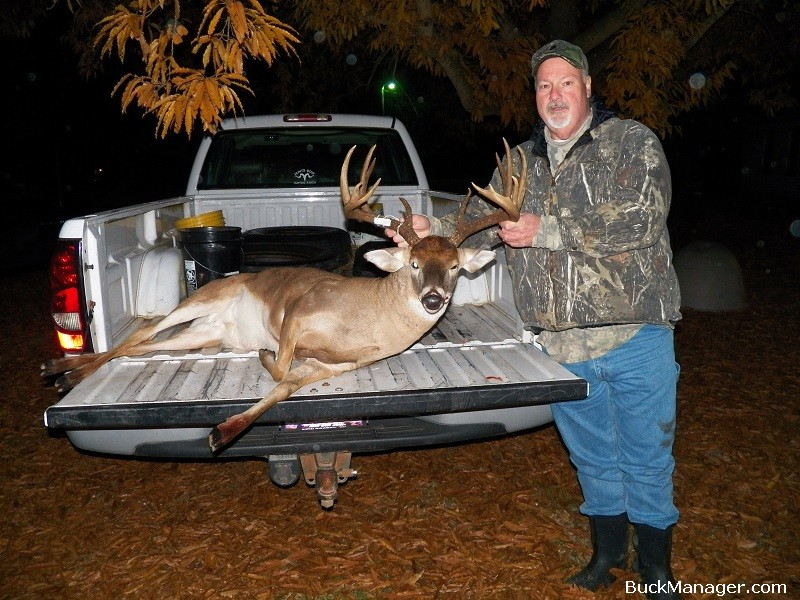
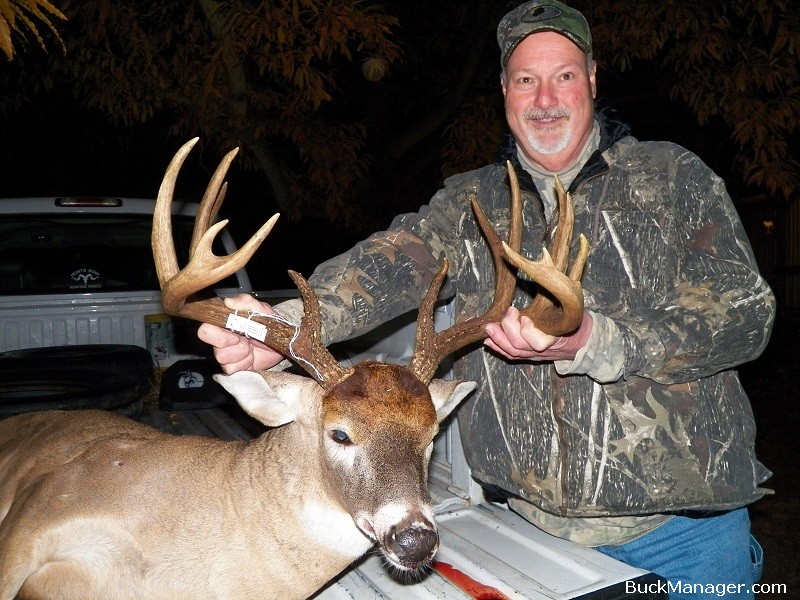
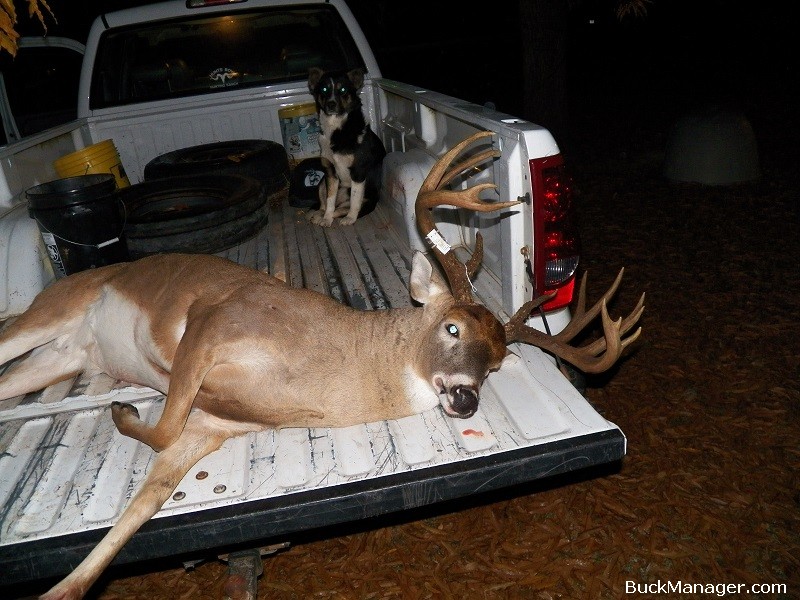
One Northeast Texas hunter had all of these characteristics in spades — and that allowed him to place his tag on a big Bowie County buck. Over the past weekend, Texas hunter Ricky Hunt bagged a whitetail buck that instantly became his personal best. Despite deploying a number of game cameras before and during the hunting season, Ricky had only managed to capture a single photo of the remarkable buck. That one photo proved to be motivation enough to keep Ricky in the woods. Ricky knew this buck was out there, somewhere.

Rick Hunt and His Northeast Texas Buck

Ricky Hunt: “I took this buck this past Sunday evening (December 8). We acquired a new lease about a mile from where we had been deer hunting the past few years. It is a area that is known for some good deer. My personal best buck was taken in this area a couple years back. He scored 137 4/8, a archery kill. We are about a mile from the Red River. A lot of farming, so the deer have good body size to them and good antlers.

Our place is all planted pine trees. A real challenge to hunt and to figure out any patterns to the deer. Most (99%) of our visibility is limited to about 40 yards. Deer sightings have been low because of this. If it wasn’t for game cameras it would have been hard to stick with it. I didn’t see a deer on stand during the month of October and well into November. The camera showed us some amazing bucks and one stood out above the rest.

The only lane we have on the place is a road they made to load logs. It is about 100 yards long and very close to a county road. I was reluctant to put a bowhunting blind on this lane because I was concerned when the leaves begin to fall that someone would see the blind from the road and it possibly get stolen. Putting that aside, I decided to put the blind on the lane in hopes of being able to see more deer. I haven’t used a rifle in years, but I decided I would take my rifle in case I saw a bruiser on the end of the lane.

Fast forward to Sunday evening. At dark thirty, a big bodied buck stepped out in front of me at 25 yards. The buck was so close and it happened so fast that I had a hard time getting the crosshairs on the buck. I shot him at 35 yards. I did not realize just how big this buck was until 30 minutes later when me and my son walked into the pines to find him. When we saw him we knew he was the big buck that we had on camera. To say the least, we were both ecstatic. This Bowie County buck is 20 4/8 inches wide, has 15 points and scores 165 1/8 B&C!”

Deer Hunter Offers Tips for Hunting Mature Bucks Mature Whitetail Buck Harvested in Bowie County, Texas

It seems that no two properties are ever the same when it comes to the management of whitetail deer. Although the fundamentals of management remain the same,  some will focus more on habitat management and others more on harvest management. It should be noted that every place that aims to grow healthier, bigger deer is involved in both aspects to some degree. Bucks can not reach their genetic potential if they do not have adequate nutrition. On the other side of the coin, bucks can not reach their genetic potential if they are shot when young. This can be tough for many hunters since good bucks are big even when they are young.

It takes trigger restraint to produce mature bucks and good groceries for them to grow big, but like most people deer get substantially wiser as they age. This makes hunting well-seasoned bucks much more difficult than the 2 and 3 year old deer that readily run into the middle of a fall food plot or to a timed feeder, especially in areas where deer receive substantial pressure during the hunting season.  When asked about hunting deer in Bowie County, Ricky Hunt said there were several things that help them keep and hunt big deer on their property:

“1.We do not use spin cast feeders. In this part of the country deer won’t tolerate feeders, especially mature bucks. We will pour out corn on the ground. My biggest archery buck 137 4/8 P&Y was harvested this way.

2.We do not use four wheelers to go to our stands. We use them only to retrieve a buck or putting up a stand. We walk straight to our stand and straight out. Excessive walking or four wheeling will cause deer movement to shut down. We don’t want them to know we have been there.

3. If I look out and see my neighbors smoke from their chimney early in the morning go up and then start to settle closer to the ground, I don’t dare climb into a tree stand. The same will happen to your scent. My two biggest bucks to date have been killed using bow blinds. I have only one window open. This keeps it dark inside, but it also helps to contain scent. I have had many bucks and does walk within feet from me and never know I was there.

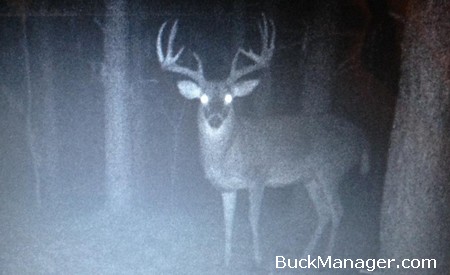
4. We use game cameras pre-season to survey what we have as for as bucks. We try and age them as close as we can. Last year, I passed on a wide 10 point. I did not take a buck last year, but I did not regret passing on that 10 point. He was young. Having game cameras out is a real motivator to sticking it out and putting as much time in the woods as possible. I had numerous pictures of my 137 4/8 archery buck and had only one of my 165 1/8 buck. Game cameras may not get pics of all your bucks, but you can get a good idea of what you have.

5. After deer season is over we do what I coined as ‘A Roll Call.’ We will put out as many game cameras as we have throughout our lease for at least a month. By doing this it gives us an idea of what bucks made it through the deer hunting season. This gives us a good idea of which bucks we can hope to see next season.”