Feeding Corn to Deer: Hunters Concerned

Is Feeding Corn to Deer Good?

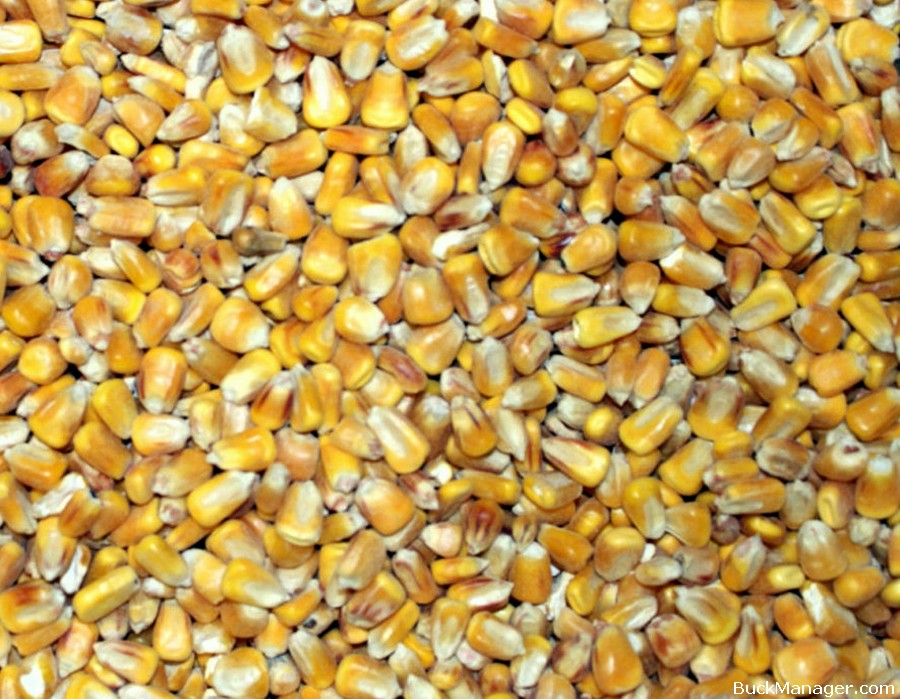
White-tailed deer and corn go hand-in-hand in Texas. However, feeding corn to deer and using corn to attract deer are two completely different things. Corn provides very little for deer in terms of dietary nutrition. However, the grain is often used to bait deer into an area. This allows deer to be captured in camera photos and/or harvested during the deer hunting season. Corn is relatively inexpensive and an effective attractant for whitetail. Unfortunately, corn can sometimes cause problems for deer and other ruminants.

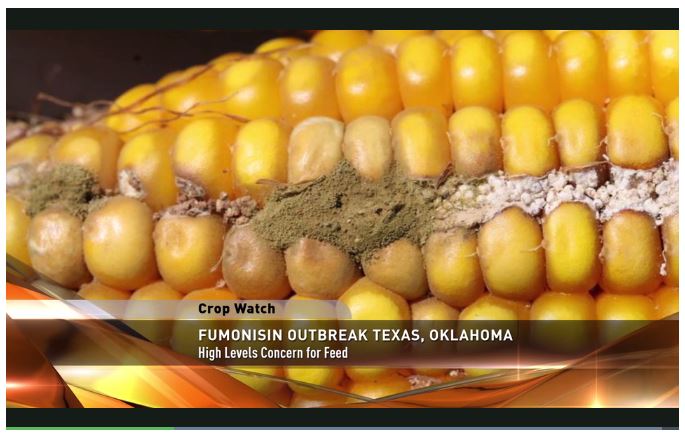
Currently, Texas hunters are concerned with feeding corn tainted with potentially high levels of Fusarium fungi to wildlife. Fumonsin toxin is produced when certain Fusarium fungi are present on corn. This situation is created by the presence of moisture during seed development.

Fortunately, Fusarium fungi do not pose the same threat to deer and other wildlife as aflatoxin. However, it’s still important that hunters do their part and be aware of what they are putting into feeders for deer. Non-target species consume any corn left uneaten by deer. If not done correctly, feeding corn to deer and other wildlife comes with some risks.
Feeding Corn to White-tailed Deer

Feeders Full of Corn

“Shelled corn is the traditional ‘go-to feed’ in Texas for deer. It’s understandable there would be concerns considering how much of it is fed to wildlife,” said Dr. John Tomecek, AgriLife Extension wildlife specialist at Thrall. Tomecek said it’s best forr dee hunters to be aware of the problem and know what they are buying. If buying a quality product, hunters should not be overly concerned.

“I think what is important to remember when we feed corn to free ranging deer, is chances are we aren’t providing much more than a treat to these animals in the greater scheme of their diets,” Tomecek said. “Granted, corn helps provide energy during cooler months and is a great bait for deer hunting success. When corn is used in a spin feeder, it really doesn’t make up a high percentage of most deer diets.”

Corn and Deer Diet

Dr. Cat Barr, veterinary toxicologist with the Texas A&M Veterinary Medical Diagnostic Laboratory at College Station, had similar thoughts. She said the upper limit for deer feeding on Fumonisin-tainted corn should be no more than 30 parts per million. In addition, it should be no more than half their diet. These rates are limits set for confined breeding cattle, a scenario not likely to occur in free-ranging deer.

“Even if the corn kernels themselves are nearing the recommended toxin ceiling, the deer are diluting it with all the browse and forbs they’re eating as well,” she said. Using corn as a bait for white-tailed deer is not an issue. However, feeding corn to deer in large amounts creates a potential problem.

Tomecek said the excellent growing conditions most of the state has enjoyed this year is another strong reason for lesser concern. There is an abundance of native plants available to deer. Aside from its diluting effect, the lush growth tends to limit corn-feeder visits by wildlife. Good news for deer, but maybe not so much for deer hunters.

As far as a human health threat from consuming Fumonisin-eating game, Barr said hunters should not be concerned. Studies of ducks, turkeys and pigs showed no measurable Fumonisin B1 levels in muscle tissues. This was even after animals were fed up to 20 ppm at 50 percent of the diet. This is a level unlikely to occur in free-ranging animals during favorable growing conditions.

Corn Toxicity Impacts Birds

“As for the effects on game birds, we know these kinds of toxins can have serious adverse effects on birds in general,” Tomecek said. “But again, unlike a domestic poultry production scenario where the birds are confined, wild birds — be they game birds or those frequenting a backyard feeder — are using the corn as only a part of their diet, although perhaps at a higher proportion than do deer.

“A concerned hunter can always examine the crops of birds harvested to determine how much of their diet is coming from the corn. Most will find there is a great variety in diets of wild birds.” Fumonsin toxin is produced when certain Fusarium fungi are present on corn, a condition exacerbated by moisture during seed development, Tomecek said.
Problems with Feeding Corn to Deer

Aflatoxin Vs. Fumonisin

“The good news about Fumonisin is that Fusarium molds don’t grow in storage, the way Aflatoxin-producing molds can, “ Barr said, “so at least the amount of Fumonisin in the corn is not going to increase, regardless of changes in temperature or moisture. Just keep in mind that some corn may contain both mold types.”

“An Aflatoxin problem can increase inside metal deer feeders where corn heats and cools at a different rate than the outside air. As a result, condensation forms inside the feeder and on corn,” Tomecek said. “We see this pretty frequently any time of year where dew or condensation forms on vehicles and such things as metal fence posts and uninsulated tin roofs. Typically, this problem is minor, especially in mostly dry West Texas. When it does occur clots of dust from corn or other feeds may form and toxins can grow in this environment.

Feeder Maintenance & Feeding Corn to Deer

“I recommend cleaning feeders before and after the deer hunting season, or when it’s convenient at some point during the year. Letting them run low or out, then refilling them with tested corn devoid of toxins should keep your animals visiting the area. It will also keep the feed and your investment in that feed, protected.”

Tomecek said corn shouldn’t be feared and is an excellent and cost-effective bait for wildlife. However, he does recommend knowing the product and how it should be handled. Common sense handling and storage prevents wildlife issues.

“I don’t think folks should shift away from corn entirely,” he said. “These outbreaks are good reminders to hunters of the importance of proper feed and feeder management; namely to buy quality corn and ask your supplier if they have test results. Ask when the corn was tested and how it has been stored since that date.”

Tomecek said not all corn storage is created equal, especially in productive years, as the grain may have been left outside and is of lower quality. This lesser product is often available at a lower price.

“The main take-home points are to purchase a quality product, store it in dry containers and clean your feeders. Do these things and you’ll have no worries.”  In summary, feeding corn to deer and other wildlife does come with some risk, but be smart about it and both you and the wildlife will benefit.
Deer Urine & Spread of CWD: Are They Linked?

CWD: Urine Trouble?

Chronic Wasting Disease(CWD) is a highly contagious disease that shortens the lives of white-tailed deer and other native cervid species. The disease can be passed from animal to animal and deer can pick it up in a contaminated environment, but can the use of commercially available deer urine by hunters spread CWD to new areas?

It’s a question that many are focused on since CWD causes the mortality rate of infected herds to increase, resulting in lower deer numbers that ultimately threaten socially and economically important game species.

Deer Urine

The commercial sale of urine, specifically white-tailed deer urine, is a big business. Hunters often turn to any perceived advantage during the hunting season to put their tag a buck. During the breeding season, the urine of does that are in estrous smells different, attractive to a buck.

Retailers offer this “love potion” that can be found bottled on shelves and online from a variety of companies (that also sell direct to consumer) that maintain captive whitetail deer herds for the purpose of collecting urine. Distributors say deer urine will not spread CWD elsewhere. Researchers say urine contain CWD prions.

CWD

Every week we read about CWD. It’s been found here or there, research is being performed to learn about how to limit/stop the spread, and hunters are being asked by states to have their harvested animals tested and to comply with cervid carcass restrictions.

Say what you want about CWD, but the disease really has not been around long enough for anyone to know what it fully capable of or what the end-game will be. No doubt, folks are making educated guesses.

There is no easy answer, no quick fix, especially when private companies are up against public agencies.

CWD and Deer Urine

Deer Urine, CWD Spread Debated

Source: Dr. Krysten Schuler, a wildlife disease ecologist at the Cornell University College of Veterinary Medicine in New York, said she isn’t convinced that urine-based deer lure doesn’t pose a risk of spreading the disease.

Schuler, who has researched chronic wasting disease since 2002, said there is no oversight of urine products, and facilities aren’t required to participate in a certification program to test all natural mortality for the presence of CWD. She added that multiple studies have shown CWD prions are shed in urine, and relatively early — within the first six months of infection. A diseased animal can live for a year or more before showing any clinical signs of CWD.

“If you had a sick deer but it looked fine, and you collected the urine for a year and then it dies, and then you find out it had CWD, those products already went out there for a year, and there’s no way to trace it back,” Schuler said.

Adding to her concern is the fact that urine used for lure is collected from captive deer over a grate. In addition to urine, feces and saliva also go through the grate, possibly elevating the level of prions in the bottled product.

“Urine products aren’t pure,” Schuler said.

According to Hunnicutt, the saliva, feces and urine have the lowest concentrations of CWD prions, compared to the brain and spinal cord. He said it would take 33,000 gallons of urine to equal the infectivity of a portion of brain from a deer weighing one gram.

“The urine collected is free and clear of CWD prions. Period,” Hunnicutt said.

There are more than 1,000 deer farms in Pennsylvania — second in number only to Texas — that cater to several markets, including raising quality breeding stock, collecting urine for the scent industry, selling bucks for hunting purposes, and selling antlers.

Pennsylvania also is home to the largest natural urine production facility in the country, which is owned by Amish farmers and played a role in developing the Archery Trade Association monitoring program.

According to Glenn Dice Jr., president of the Pennsylvania Deer Farmers Association, the captive-deer industry has an impact of $7.9 billion to the nation’s economy. While Dice didn’t know the economic contribution of the deer lure industry, he said a ban on urine-based products would be devastating to the facilities that comprise that market.

Rather than look at a ban on deer urine, Dice suggested state wildlife agencies focus on cervid parts that contain the highest CWD risk.

“Expert CWD researchers consider urine the lowest risk of transmitting CWD. These experts indicated that muscle tissue from a de-boned deer carcass is extremely more infectious, potentially 100,000 times more infectious, than urine,” Dice said. “It’s curious PGC’s interest in discussing a potential urine ban, however, a significantly more infectious deer by-product, de-boned meat, is not being discussed.”

Laroche, of the Pennsylvania Game Commission, acknowledged that urine might pose a lower risk of spreading CWD compared to the movement of deer parts and even live animals throughout the state. But that doesn’t mean he isn’t concerned about urine-based deer lure and the threat it poses to the resource and hunting in Pennsylvania.

Big Buck Killed in Louisiana

Giant Buck in LA

Another BBD (big buck down), this time just to the east of me in the state of Louisiana. The state known as the Sportsman’s Paradise is living up to its name, at least for one persistent hunter that was able to scout deer, big deer, right from his office.

It’s just about prime time for white-tailed deer hunting in my part of the world and all the recent photos of giant, hunter-harvested bucks are getting my pumped up. And even though it’s Monday, the temperatures, which were in the 40’s this morning, are telling me I need to be spending more time outside right now… much more time.

Hunter Arrows Big Buck in Louisiana

The Big Buck’s Story

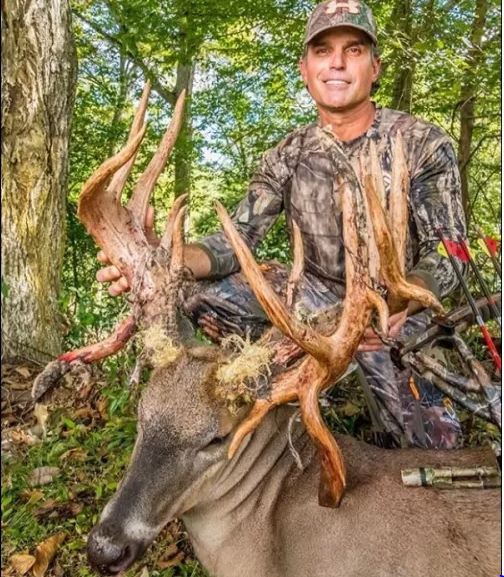
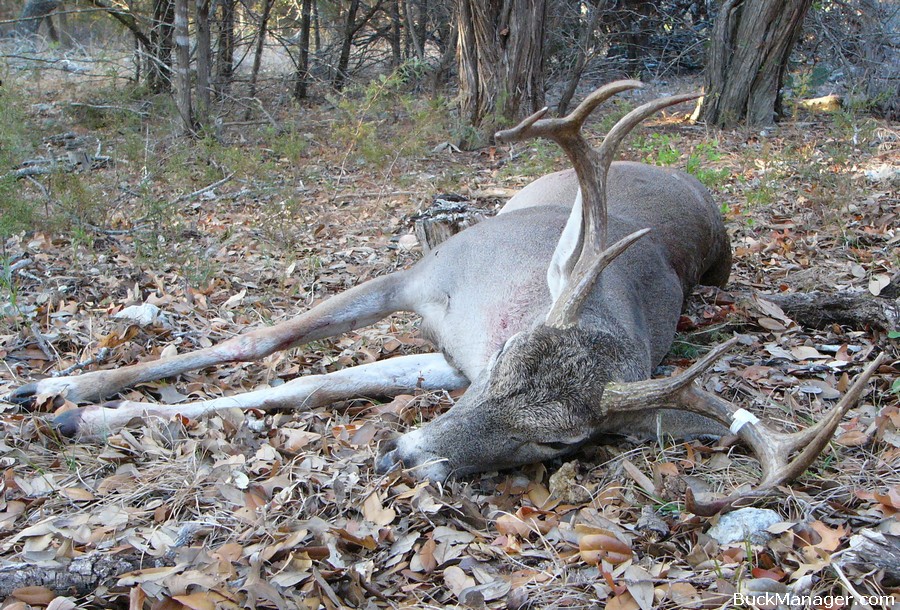
Louisiana Sportsman: A St. Francisville dentist on Oct. 5 arrowed what could be the largest Louisiana non-typical deer to be killed with a bow — and he was hunting pretty much where he works.

“I killed the deer inside the city limits — behind my dentist office,” Dr. Frank Sullivan said of the 18-pointer that grossed between 220 and 230 points.

Sullivan said he and buddy Dr. Travis Links, who killed a 190-inch buck last season, couldn’t narrow down the score any more than that because of the craziness of the rack, which includes three drop tines and a third main beam.

“I truly don’t even know how to score a non-typical like this,” Sullivan said. “I tried to be conservative.”

The buck, which has 11 points and two main beams on the left side and 7 points on the right, can be officially scored after the rack dries 60 days. Former state Deer Study Leader Dave Moreland saw photos of the massive deer and told Louisiana Sportsman that there’s no doubt it will make the Pope & Young record books.

The current state record non-typical bow buck was killed by Vicki Husted in Tensas Parish in 2010 and measured 227 6/8 inches. But Husted’s deer, along with the No. 2 buck on the state’s all-time Big Game Records, was measured in velvet.

Big Nontypical Buck Louisiana State Record?

Louisiana Tough Buck

The state of Louisiana is known for some tough, gumbo-powered dudes that take on everything from alligators to hurricanes. Apparently the white-tailed deer found living within the state are no different, taking on anything that bites… from mosquitoes to reptiles to arrows and even vehicles.

The impressive nontypical buck shot by Sullivan has also experienced his share of tough times, too. Last year, the buck was shot by a hunter on a neighboring property. Done deal, right? Wrong.

Then Sullivan, from inside his own office,  observed the massive buck get struck by a passing vehicle. This would have cut short a great hunting story… but the buck shook it off, got up and ran off… and continued to live! I guess when living in the city you either get tough or die trying.

Big Nontypical Buck Found in Oklahoma

Giant Buck is OK

One of the best things about white-tailed deer hunting is that you never know when or where a big buck could show up. Case in point: a big nontypical whitetail buck that was recently discovered in Oklahoma — the kind of buck that would keep you awake at night if it showed up in your game camera photos.

Unfortunately, deer hunters in the area will not be able to claim this giant whitetail and there is no doubt that a number of hunters have photos of this great animal. You see, the buck actually lived in close proximity to a neighborhood in Edmond, Oklahoma.

Big Buck in Oklahoma

Big Buck Down

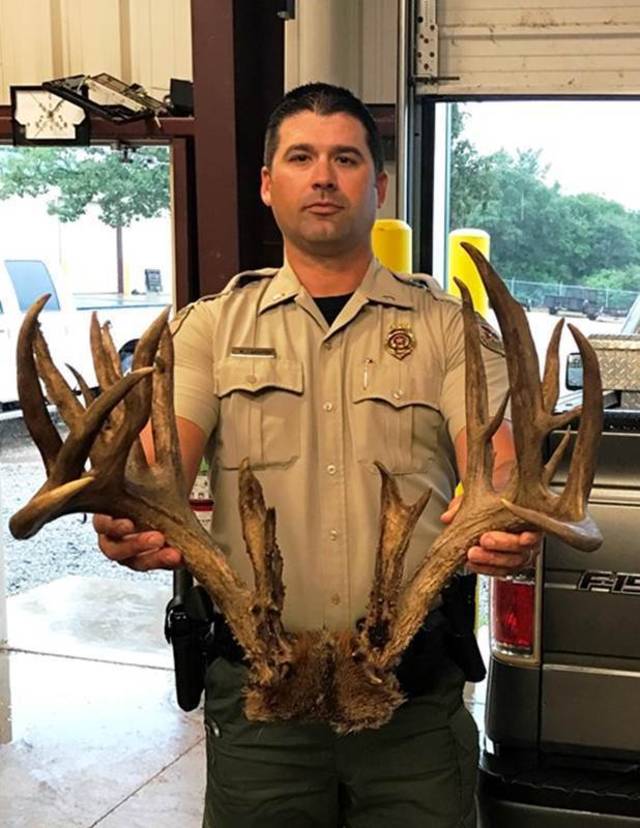
The buck was found in late September, just prior to the Oklahoma deer season opener. Turns out the animal was road-killed, found along the side of the road. Big bummer for area hunters, especially since this mature buck sported a whopping 28 points. I don’t know about you, but from where I come from that is the stuff that dreams are made of.

According to local news outlets the whitetail buck measured 236 3/8 inches using the Boone & Crockett antler scoring system.

Oklahoma on The Map

The state of Oklahoma has produces good deer year-in and year-out. But the OK state is not alone. A number of state’s have seen improvement in the age structure of bucks, with yearling bucks comprising the lowest percentage of buck harvest in the nation just last year.

That bodes well for hunters this season, especially other states in the region such as Texas. With two back-to-back seasons of amazing rainfall, white-tailed deer hunters in Texas have something special to look forward to this hunting season.

Lots of Good Bucks

Not only are bucks in great shape right now, but there will more older bucks in the herd this fall. Good habitat conditions in Okalahoma and Texas last year made deer hunting tough. An abundance of natural food resulted in lower deer movements, less visits to food plots and deer feeders.

This phenomenon allowed a lot more bucks to reach an additional year of age. Maybe this resulted in even fewer yearling bucks being harvested? Hard to say for sure, but I know that I am excited for the season because all those survivors will have even more antler growth this year. With the deer hunting season underway, hopefully you are reading this from your stand!

Definition of Antlers

White-tailed Deer Antlers

Whitetail antlers are an amazing example of nature’s wonderful, yet functional, work. It’s amazing how fast buck deer grow these strong structures atop their head each and every year. Deer antlers range from tiny sharp spikes to amazing typical and non-typical racks.

Antlers develop into every size and shape although most whitetail bucks grow typical antlers . Antler size, growth and irregularities are often misunderstood by many deer hunters. A great deal of misinformation has been passed down over the years. One major misnomer that is commonly made by both hunters and non-hunters who don’t realize that antlers are not horns, and horns are not antlers.

What are deer antlers?

Antlers are Bone

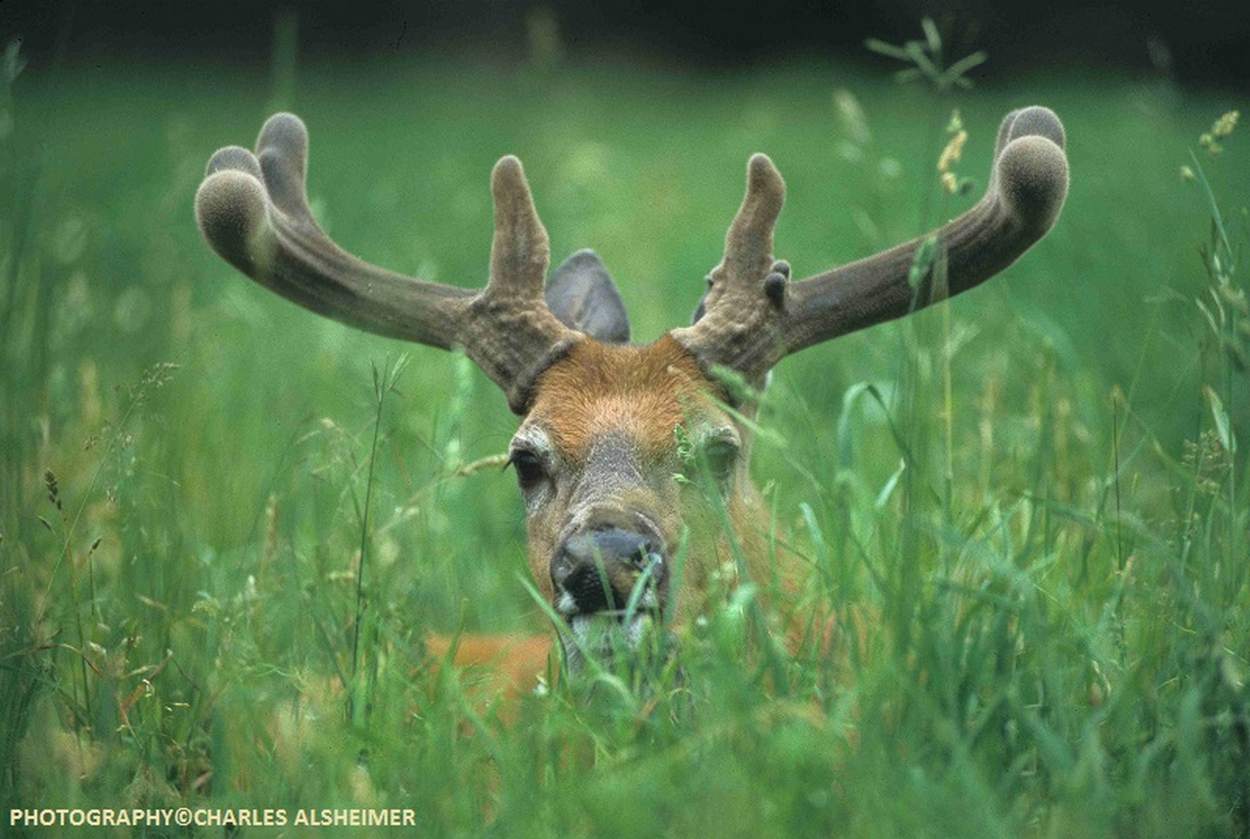
In Fact, a buck’s antlers are made of dead bone and are yearly growths that begin growing from a pair of pedicles on the buck’s head. Antler growth using kicks off in late winter to early spring depending on the age and physical condition of an individual buck. Antlers reach full growth in late summer usually October.

A whitetail bucks antlers are normally branched, except for spikes, and maturity, good nutrition, lack of stress and genetics determine antler size and formation. Bucks tend to develop larger antlers each successive year, with most never reaching their genetic potential; because they don’t live long enough. Most bucks reach peak antler growth at 6-8 years of age.

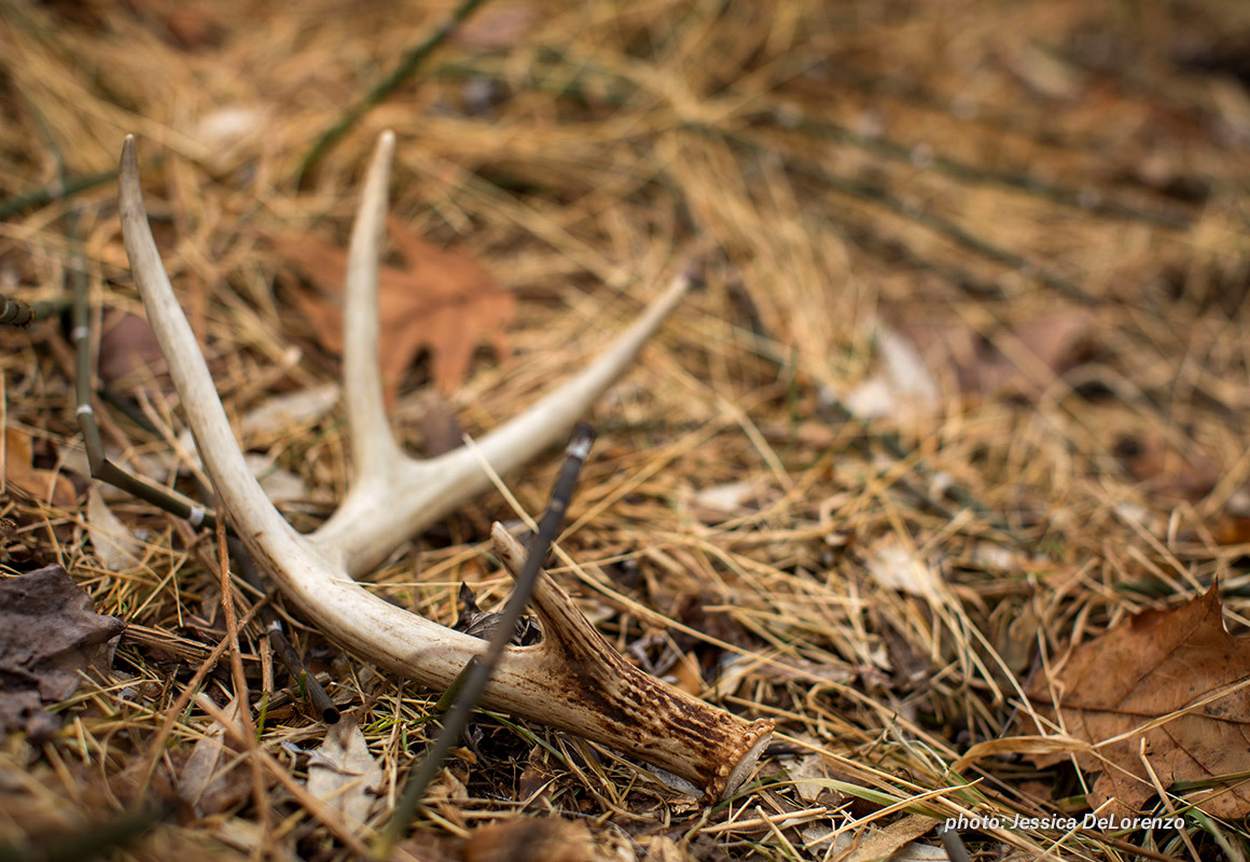
An antler shed from a buck.

Bucks Only?

Generally, only male white-tailed deer grow antlers, but one doe out of several thousand females will grow antlers because of a hormone imbalance. So, it is possible for doe deer to grow antlers.

If you are a hunter that happens to have harvested such an animal then make sure you use a buck tag off of your hunting license to tag your deer. Most states in the U.S. define bucks as deer having antlers, while “doe” tags are for “ant;erless” deer, which also includes buck fawns (because they do not have hardened antlers). Confused yet?

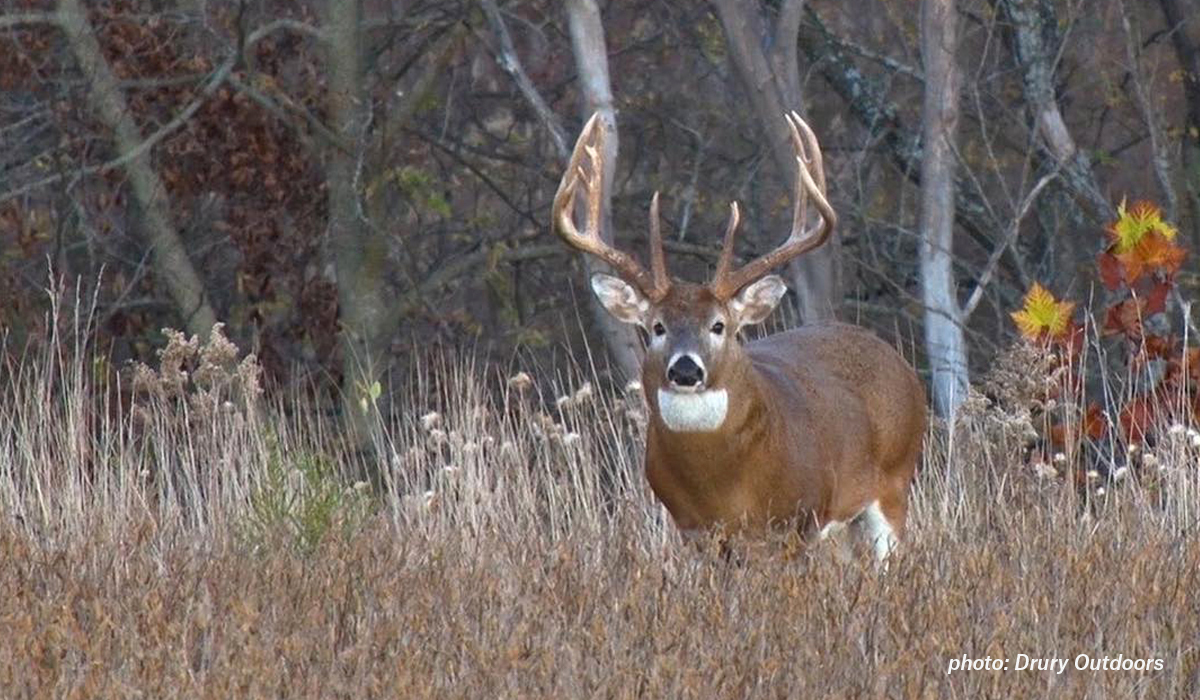
Whitetail Bucks Grow Antlers, Does Don't
Image druryoutdoors.com

More on Horns

Horns, rather than antlers, are living bone that is covered with hard layers of skin. They are typically unbranched and permanently established on the animal’s head. Wild sheep, for example, continue to grow horns throughout their lives. Horns also are found on bison, cows and goats in North America.

White-tailed deer have antlers they shed and grow each year. So the next time someone refers to a white-tailed buck’s antlers as horns, just smile — because you know better.