Air Guns for Deer Hunting in Texas

Air Guns: More Options for Deer

Hunters can now add big-bore pneumatic (air) guns to the list of legal means and methods for deer hunting in Texas. Over the past few years, states across the US, including Texas, have been expanding the options available to hunters (think crossbows and suppressors). This expansion is the result of innovative, improved technology that is able to demonstrate success in the field.

Without a doubt, any regulation that changes takes someone lobbying for things to be different. I’m all for change so long as those changes are positive and big-bore, pre-charged air rifles look to be highly effective on deer and other big game species.

Air Gun Regulations in Texas

Beginning this fall, hunters in Texas will be able to use air guns and arrow guns that meet criteria established under new rules adopted by the Texas Parks and Wildlife Commission. The regulations create a new category of legal means for hunting deer and other wildlife in Texas defined as pre-charged pneumatic devices.

Unlike pellet guns and traditional air rifles that can be charged manually or with an attached CO2 cartridge, pre-charged pneumatic air guns and arrow guns are those weapons for which an unignited compressed gas propellant is supplied or introduced from a detached source.

Air Gun Requirements for Hunting in Texas

The TPW Commission decision follows months of scrutiny to avoid creating undue risks of wounding of wildlife from pneumatic weaponry. These devices must meet minimum standards of ballistic efficacy.

Minimum ballistic specifications of pre-charged pneumatics approved by the Commission for hunting alligators, big game and turkeys are: .30 caliber bullets weighing at least 150 grains powered by an unignited compressed gas propellant charge capable of attaining a muzzle velocity of at least 800 feet per second (fps) OR any bullet weight and muzzle velocity combination that produces at least 215 foot pounds of energy.

For furbearers, pre-charged pneumatics must be at least .30 caliber. For squirrels, chachalaca, quail and pheasant an air rifle does not need to be a pre-charged pneumatic, but it must be able to propel a minimum .177 caliber projectile at least 600 fps.

In addition to minimum standards for pre-charged pneumatic devices, the Commission adopted provisions that hunter education certification requirements be met in order to hunt any wildlife resource.
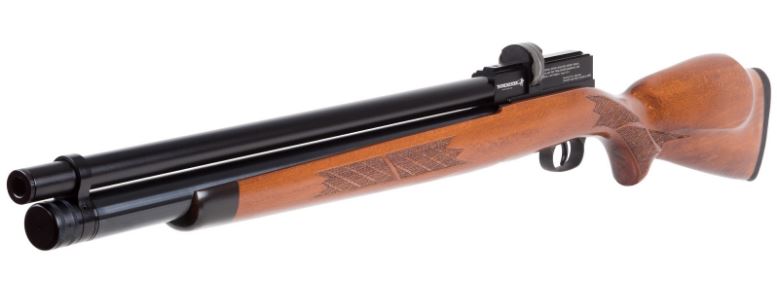
Air Gun Hunting Regulations in Texas

Pneumatic Guns for Hunting

At least 10 other states permit the use of pneumatic devices for hunting big game, and all but three states allow their use for hunting certain other wildlife species. Their use in Texas previously was limited to hunting anything other than game animals (except squirrels), game birds, alligators, and furbearers.

The new rules will take effect Sept. 29, 2018. Additional information on the use of air guns and arrow guns is available online. Update: Read the new Texas regulations on these guns at the end of this article.

Air Gun History: A Tell of Technology

Source: “Technology seldom sits still for long. While air guns have been around for hundreds of years, they have been relegated for the past several decades as paper-punchers and quiet pest eliminators. But when we look back in history, this was not always the case. Every book of American History detailed (or should detail) the Louis and Clark Expedition.

As they were traveling through parts unknown with limited resources, they had to be smart about a method of safely fending off attacks and harvesting game for food. Muzzleloading rifles and muskets of the time were slow and cumbersome to load. Slow, but effective, these black powder rifles and muskets need to keep the powder dry in order to function.
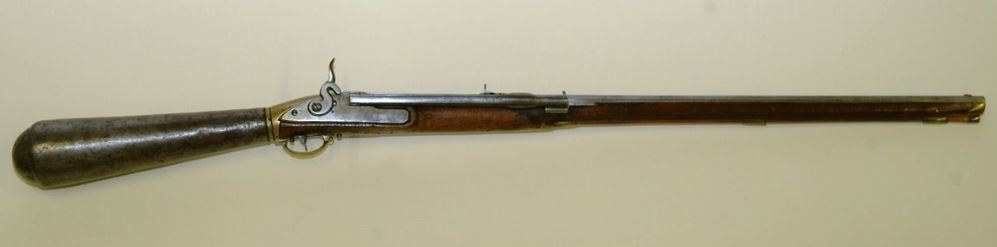
Air Gun Used by Louis and Clark

The expedition called for a considerable amount of boat travel so they opted to include an air rifle that was made in Italy. The .46 caliber Girandoni air rifle accompanied Louis and Clark on their journey to explore the Louisiana Purchase. Not only was this heavy hitting PCP capable of launching a 210 grain projectile with considerable force, it was also a repeater.

But using a high pressure air rifle does come with some downsides. They tend to be more complex than firearm counterparts and require some physical effort to charge the air reservoir with the high pressure needed to launch a projectile with the force needed to humanely dispatch larger game. Thus, the concept for big bore air guns was put on the back burner.

Technology has recently caught up with the concept. Air gun manufacturers have started making air guns that are bigger than the popular .177 and .22 calibers that have been available for decades. The first forays into big bore air rifles were nothing more than pellet rifles with larger barrels. These air rifles generated much more power than their spring powered counterparts, but the muzzle energy was still not in the large game territory.

Each successive year led to the envelope being pushed father in terms of muzzle energy. The bores grew in diameter. Projectiles grew in mass. And velocities began to climb. This meant that a shooter using air as a propellant was able to launch a heavy (by air rifle standards) projectile with enough muzzle energy to dispatch large game species in a humane way.

Not to mention that charging the air tanks of these big bore rifles became cheaper with portable high-pressure electric pumps. Technology caught up with the concept.”

Air Guns for Deer Hunting

There are a couple of aspects of big-bore air rifles that will make them attractive to deer hunters. The novelty of hunting deer with an air gun is enough to get many hunters interested in slinging it across their shoulder and heading into the field, but another factor that makes me want to take a closer look is the reduced sound/noise level that these guns emit.

Very rarely will I shoot a rifle without ear/hearing protection anymore. It only happens out of perceived necessity when in the field shooting deer or hogs. Even then, there is usually more than enough time to ensure that my hearing protection is on prior to squeezing the trigger.
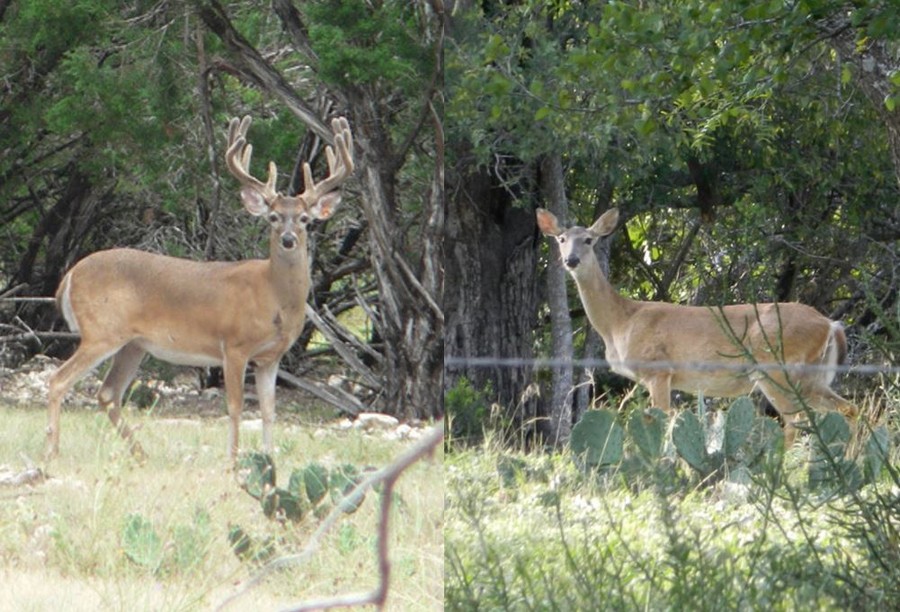
Deer Hunting with an Air Rifle, Air Gun

Time catches up with all of us though. Once we notice our hearing tapering off, it’s time to wise up and be more cognizant about how we approach some of our activities.  In my research on big-bore, pre-charged air rifles, it appears a number of them are fairly quiet.

Many shoot the large bullets used for deer hunting at subsonic velocities, so much quieter than a standard deer hunting rifle. This is attractive to me, but so is a suppressor. Both situations, however, limit maximum range to about 100 yards.

Each hunter considering a big-bore air gun will have to evaluate its utility for their hunting situation. Reduced sound and recoil are going to be quite attractive to many. Reduced range is going to be be a non-starter with other hunters, but not out of the question for those deer hunting in areas with limited visibility. It’s going to be interesting to see if air guns catch on. Would you hunt deer with one?

UPDATE 8/29/18: Air Guns, Arrow Guns Regulations

TPWD Means and Methods Definitions:

  • Arrow gun: a device that fires an arrow or bolt solely by the use of unignited compressed gas as the propellant.
  • Air gun: a device that fires a bullet solely by the use of unignited compressed gas as the propellant.
  • Pre-charged pneumatic: an air gun or arrow gun for which the propellant is supplied or introduced by means of a source that is physically separate from the air gun or arrow gun.
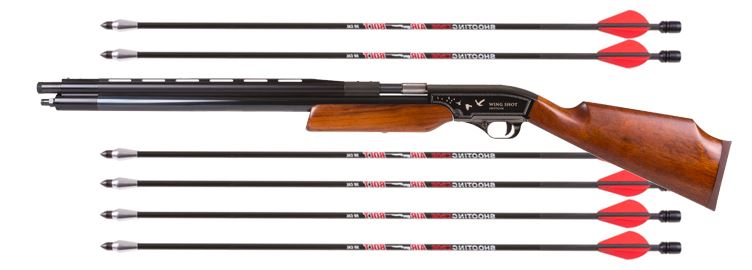
Texas Air Gun and Arrow Gun Hunting Regulations

Alligator, game animals, furbearers, squirrels, and non-migratory game birds (except Eastern Turkey) may be hunted with air guns and arrow guns provided:

  • Alligators, big horn sheep, javelina, mule deer, white-tailed deer, and turkey may be taken only with pre-charged pneumatic arrow guns, or air guns that fire a projectile of at least 30 caliber in diameter and at least 150 grains in weight with a minimum muzzle velocity of 800 feet per second or any combination of bullet weight and muzzle velocity that produces muzzle energy of at least 215 foot pounds of energy.
  • Squirrels, pheasant, quail, and chachalaca may be hunted with air guns that fire a projectile of at least .177 caliber (4.5mm) in diameter producing a muzzle velocity of at least 600 feet per second.
  • Arrows or bolts used with an arrow gun must conform to the same standards for projectiles for archery.
  • Arrow guns may not be used to hunt deer or turkey during archery season.
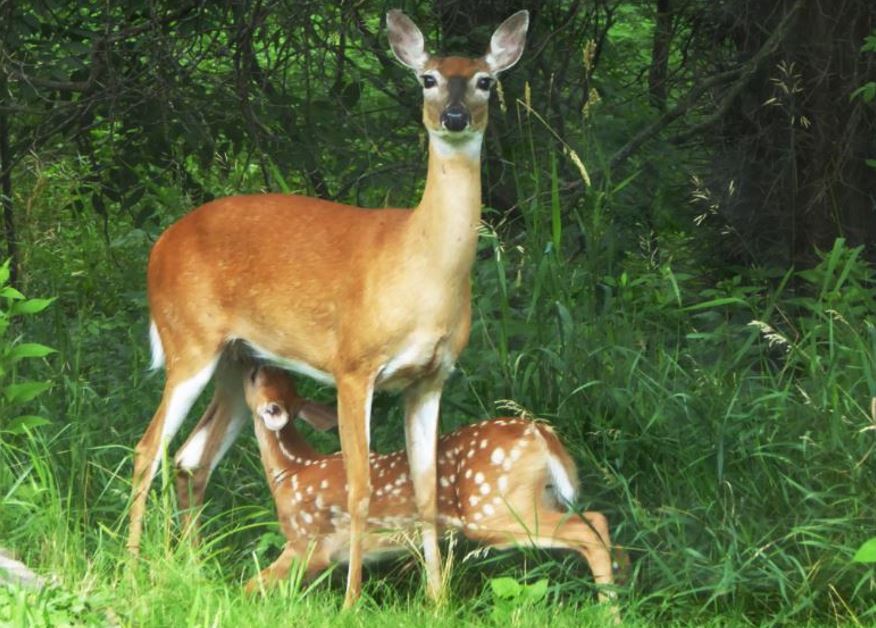
Deer with Large Udder: Can Deer Get Mastitis?

An Odd Looking Deer

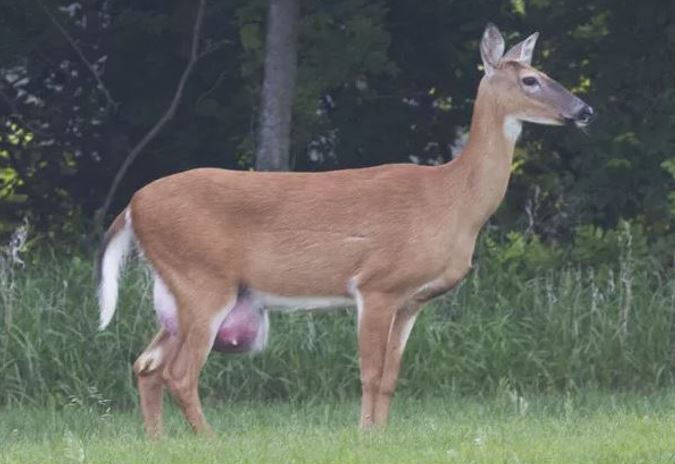
Question: “I have a whitetail doe with a milk bag the size of a milking goat. She is walking funny and stays off to herself while other deer are feeding in the area. Is this due to perhaps a snake bite or possible a disease?

We have been watching this doe daily for about 2 weeks and the bag appears to have grown larger, but seems to be stable in its current size. No fawn has been seen with this deer. Any idea why this doe has a large udder?”

Mastitis in Whitetail Deer

Response: It’s often difficult to pinpoint what’s wrong with any single deer. Whitetail live in a wild world and are subject to a variety of hazards, both natural and introduced. Although a snake bite is not necessarily a bad guess with regard to the doe in question, a doe with a particularly large udder is more than likely suffering from something else.

Reasons for a Large Udder

In this situation, the whitetail doe is likely dealing with one of four possible issues.  Since I don’t have the luxury of looking at a photo of the deer in question, I’m going to toss out four possible things that could be plaguing your deer:

  • Abscess
  • Tumor
  • Hernia
  • Mastitis

Deer with Infection or Injury?

1. Abscess – An abscess can occur anytime bacteria enter a deer’s body. When a foreign object enters the body, whether it be a stick, piece of wire, whatever, it brings with in bacteria and infection. The infected, bacteria-ridden area often gets bombarded by the deer’s immune system and confines it to the impacted area. This ares becomes a pus pocket, an abscess. An abscess can be found anywhere in a deer’s body, tissue or organ. Internal abscesses are not often visible unless they are large enough to cause some type of protrusion.

2. Tumor – Like an abscess, a tumor can occur just about anywhere on a deer. Again, the ones we see or suspect must be located just under the deer’s hide causing a protrusion or found externally. External tumors are often black in color. These masses are most often caused by a viral infection and typically range in size from that of a golf ball to a football, with smaller ones more common in size.

3. Hernia – A hernia happens when organs or even internal tissues move into places where they are not supposed to be found. A hernia is the result of a hole, tear in thin muscular wall. A hole in such muscle can occur as a birth defect possible, but is more often the result of trauma. Hernias within a deer can result from fighting, straining during the birthing process, or even from from running into a hard object, such as tree or t-post, for example.

4. Mastitis – Mastitis is caused by a bacterial infection that is specifically confined to a doe’s udder and/or mammary tissues. Mastitis that can lead to inflammation resulting in a noticeably larger udder, milk bag in female deer.

Why a Large Milk Bag?

Of the four potential reasons, the most likely reason for a doe to have a large udder at this time of year is mastitis. Not to say that the deer does not have an abscess or possibly even a hernia, but whitetail does are still actively tending to their fawns during the late summer.

Doe with Swollen Milk Bag?

Mastitis occurs when bacteria found on the skin of a deer invades mammary tissue. The most likely time for this to happen is when female deer are lactating and nursing their young of the year. For starters, a doe’s milk bag is larger than normal during this time, which makes it more prone to possible injury outside of nursing. In addition, a fawn can cause injury to a doe during the nursing process by being an aggressive feeders.

Any cut or tear in a teat or the udder creates a possible entry point for bacteria that can lead to mastitis in a deer. The primary question asked was, “Any idea why this doe has a large udder?” I can’t say for sure, but my best guess is the deer has mastitis. After reviewing the possibilities, what do you think?

Ranch Manager in Texas Busted for Under-the-Table Hunts

Selling Hunts Illegally

A ranch manager in Live Oak County, Texas, has been nailed for selling deer hunts on a property he was paid to look after. Texas Parks and Wildlife Department (TWD) game wardens recently wrapped up a six month multistate investigation of an illegal commercial hunting operation on a ranch in Live Oak County. The result: Ranch manager busted.

A landowner contacted game wardens regarding his ranch manager selling white-tailed deer hunts under the table and hunting without landowner consent. Sounds like a bad decision by the ranch manager. Furthermore, it’s a bad deal for everyone involved from the landowner to deer hunters.

Ranch Manager Busted in Texas - Illegal Deer Hunting in Live Oak County

Ranch Manger Busted

The landowner learned of the illegal deer hunting activities when contacted by a taxidermist regarding an unpaid balance for several buck mounts belonging to the ranch manager. The landowner did not give the ranch manager or his family permission to harvest any animals on the ranch.

During an extensive investigation, wardens determined the ranch manager sold trophy buck hunts to out of state clients, pocketing their money, and falsifying the ranch harvest records.

Ranch Manager Busted Over Bucks

The ranch manager was responsible for brokering illegal hunts for 14 white-tailed deer (with scores ranging from 245 B&C to under 100 B&C) and numerous exotic game animals. The ranch manager and his daughter also unlawfully appropriated $17,450 from the ranch owner. Okay, that’s just straight up taking cash out of the register.

Hunters paid for their deer hunts by check made out to the ranch manager or daughter instead of to the ranch. The wardens obtained arrest warrants for the ranch manager for hunting without consent for white-tailed deer and exotic animals. Basically, ranch manager busted. He was arrested without incident.

If you’ve got a deer hunt scheduled for this fall in Live Oak County, then you may want to touch base with the ranch to make sure you’re still good to go.

Texas Woman Charged for Interfering with Deer Trapping Program

Deer Trouble in Lakeway

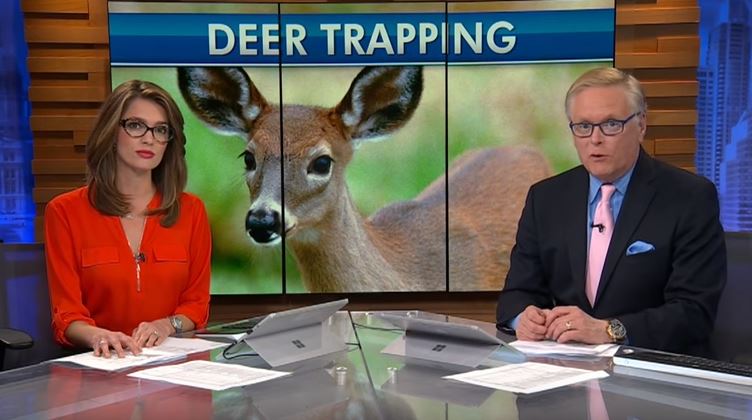
Managing overabundant deer populations is an ongoing issue in many areas across the US. Such programs are almost always controversial. Now, a Central Texas woman is facing charges for interfering with one such program in Lakeway, Texas. And it was all captured on video.

Woman Faces Charged in Deer Trapping Incident

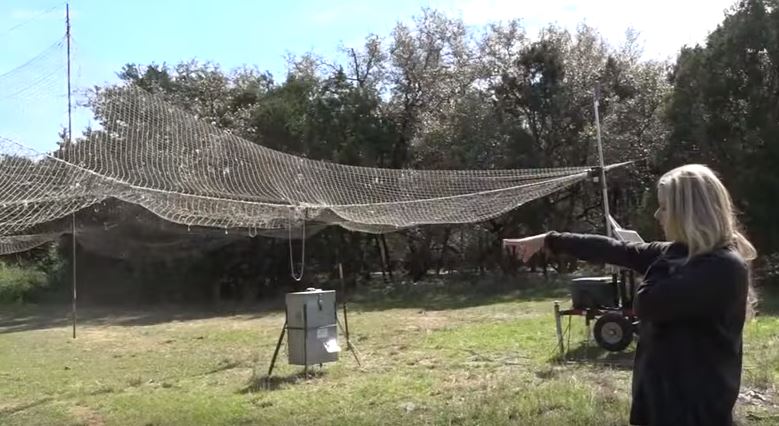
In the video, which was taken on March 8, you can see several white-tailed deer captured under a drop net, with some of them bleating. Now months later, Texas Parks and Wildlife Department (TPWD) has charged Ashlea Beck, who also took the video, with criminal mischief and harassment after she freed two of the deer by cutting the net with household scissors.

Beck’s Deer Trapping Video

How Can Deer be Trapped?

Lakeway, located just northwest of Austin, has been managing white-tailed deer for over 20 years. The City of Lakeway maintains a permit by TPWD to reduce the the number of deer living within the city.

Whitetail deer are removed annually by trappers working under the City’s Trap, Transport and Process (TTP) Permit authorized by TPWD. Entities possessing a TTP are allowed to trap and transport deer to commercial processing facility, where deer are dispatched, processed and donated to local charities — a must under permit rules.

Drop Nets for Deer Trapping in Lakeway, Texas

The permit allows the City of Lakeway to address excessive deer numbers in an area where hunting as a means of reducing the deer population is not considered feasible. According to the TPWD web site, TTP permits are available to municipalities, political subdivisions, and certain qualified individuals.

Lakeway’s Deer Trapping in the News

At one point in the video, you can hear her ask the workers, “Why are you doing this?”

Angry with what she saw, Beck cut part of the net and released two deer.

“I think they should do it away from kids, away from families,” Beck told KVUE in an interview on March 14.

Months later, Texas Parks and Wildlife has charged Beck with criminal mischief and harassment. A TPWD spokesperson sent KVUE the following statement:

“Ms. Beck interfered with lawful efforts to trap and remove white-tailed deer, causing damage to private property in the process. It is a violation of the Sportsman’s Rights Act to intentionally interfere with another person lawfully engaged in the process of hunting or catching wildlife, or intentionally harass, drive, or disturb any wildlife for the purpose of disrupting lawful hunting.”

Citizen Advocates for Animals of Lakeway president Rita Cross told KVUE she thinks Beck’s punishment is too harsh.

“She was in shock, she was trying to protect her kids and the deer, and she released two of them when she cut the net,” Cross said.

Cross thought TPWD would give Beck a warning or a fine.

Texas: Big Grayson County Bucks Poached

A Few Less Big Bucks

Grayson County, Texas, is well known for producing big whitetail bucks each and every year. In fact, the county is one of only a handful of counties in Texas where bowhunting is the only legal means of deer harvest. Bowhunting no doubt makes deer hunting more challenging for hunters, but it also allows bucks to get old, big.

As deer hunters, we will go to great lengths in pursuit of a trophy white-tailed buck. Unfortunately, poachers are willing to go even farther, breaking ethical rules and game laws designed to protect and conserve prized wildlife resources.

Investigations into the illegal take of three whitetail bucks seized by Grayson County game wardens during the 2016-2017 deer hunting season illustrate just how far some folks are willing to go to bag a trophy buck.

The cases filed against the individuals responsible for illegally taking the three seized deer, which have a combined gross Boone & Crockett score of over 535 inches, and a combined civil restitution value of $34,954.80, should serve as a warning to would be criminals.

Grayson County Monster Shot from Road

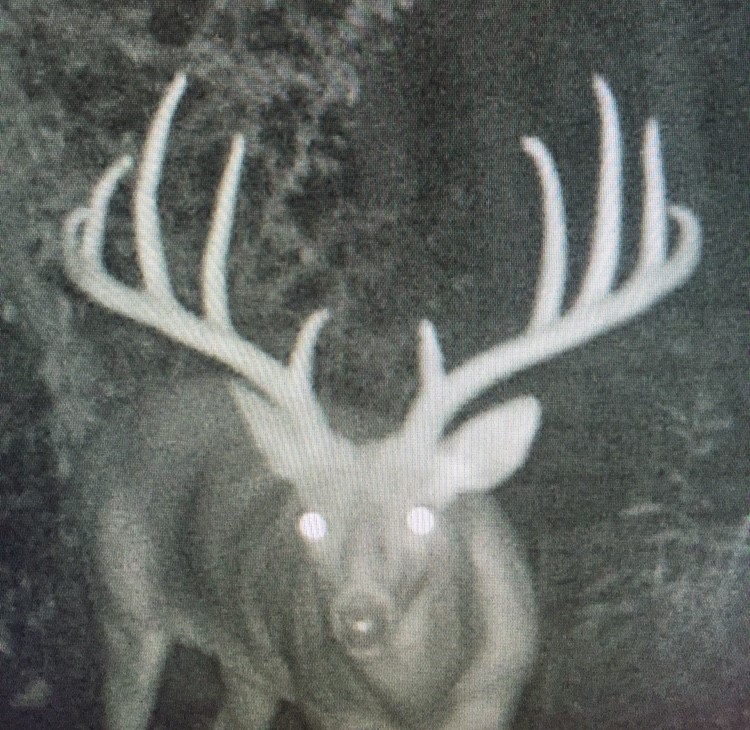
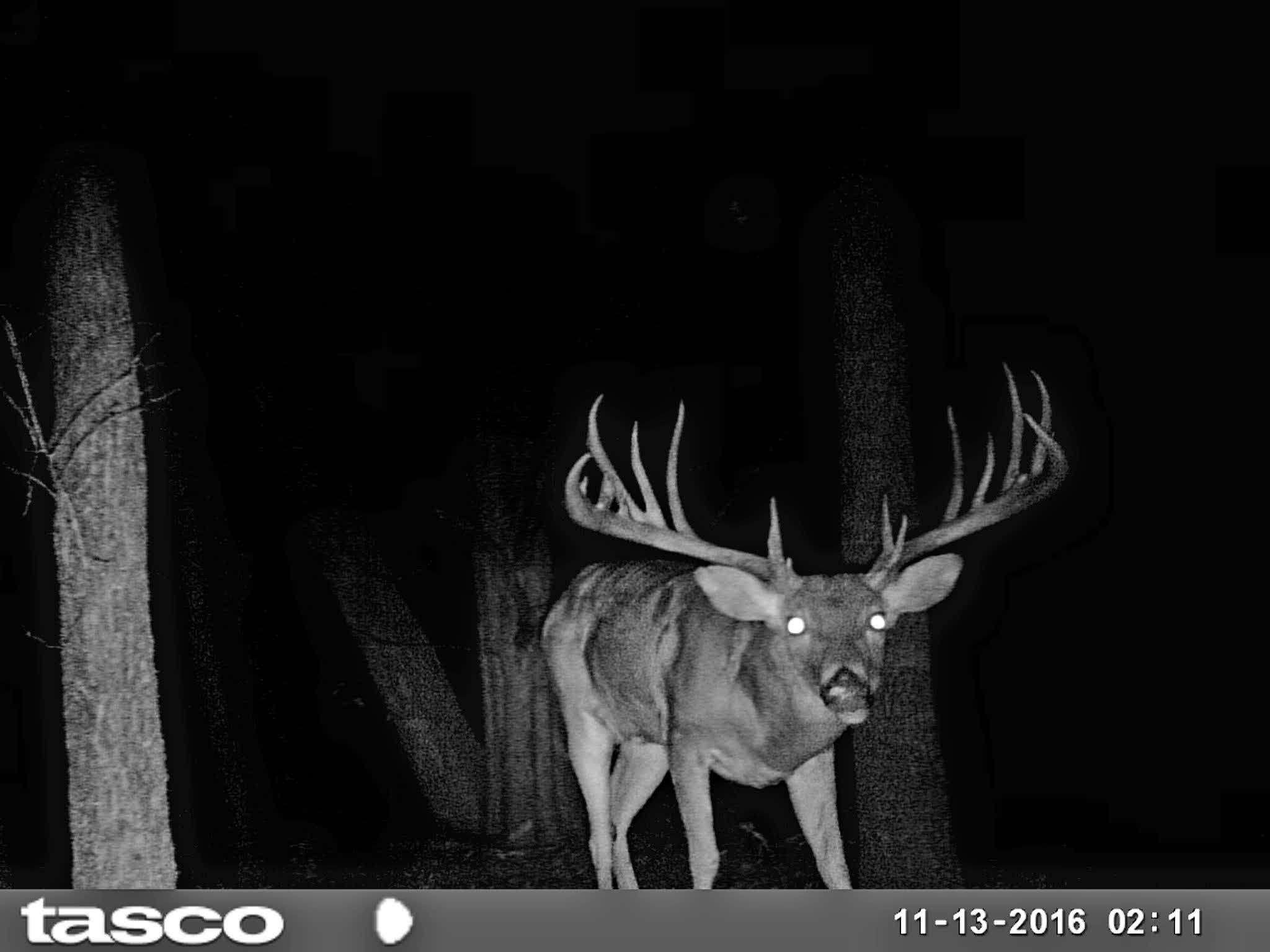
Arguably, one of the most bizarre of the three cases involved the biggest buck. Rumors spread like wildfire after photos of a huge 19-point buck surfaced. Game wardens received information suggesting the hunter’s story didn’t add up. On Dec. 16, 2016, the man who killed the big buck, John Walker Drinnon, 34, of Whitesboro, Texas, told game wardens that he killed the 19-pointer on public hunting land in Oklahoma. The wardens had obtained a game camera image of the deer in question, photographed on public hunting land on the Texas side of Lake Texoma, which contradicted Drinnon’s claim.

Grayson County Texas Bucks Poached

Working with their counterparts in Oklahoma and U.S. Fish and Wildlife Service agents to build a case, game wardens eventually obtained a confession from Drinnon that he had killed the buck in Grayson County from a public roadway with a rifle. Charges were filed against Drinnon for taking a deer without landowner consent (a state jail felony), hunting without landowner consent and hunting from a vehicle (Class A misdemeanors). Drinnon was also issued citations for no hunting license, hunting from the public roadway, no hunter education, and illegal means and methods.

On Oct. 12, Drinnon pled guilty to the felony charge of taking a whitetail deer without landowner consent in 15th District Court in Sherman, Texas. Civil restitution on the deer, which scored 202 B&C, was estimated at $18,048.10.

Advances in stealth surveillance technology have made game cameras essential gear for serious deer hunters. In Grayson County, wary old bucks present a challenge for bowhunters, but seldom escape the camera or coffee shop gossip.

Another Grayson County Buck Caught on Camera

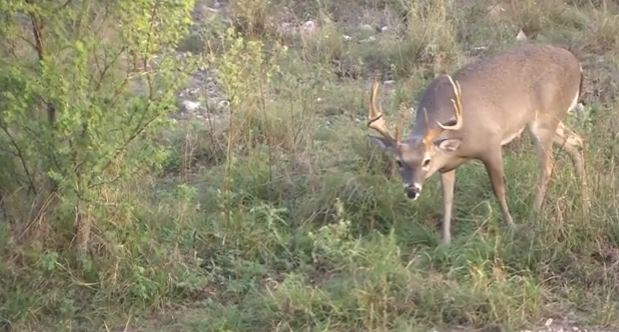
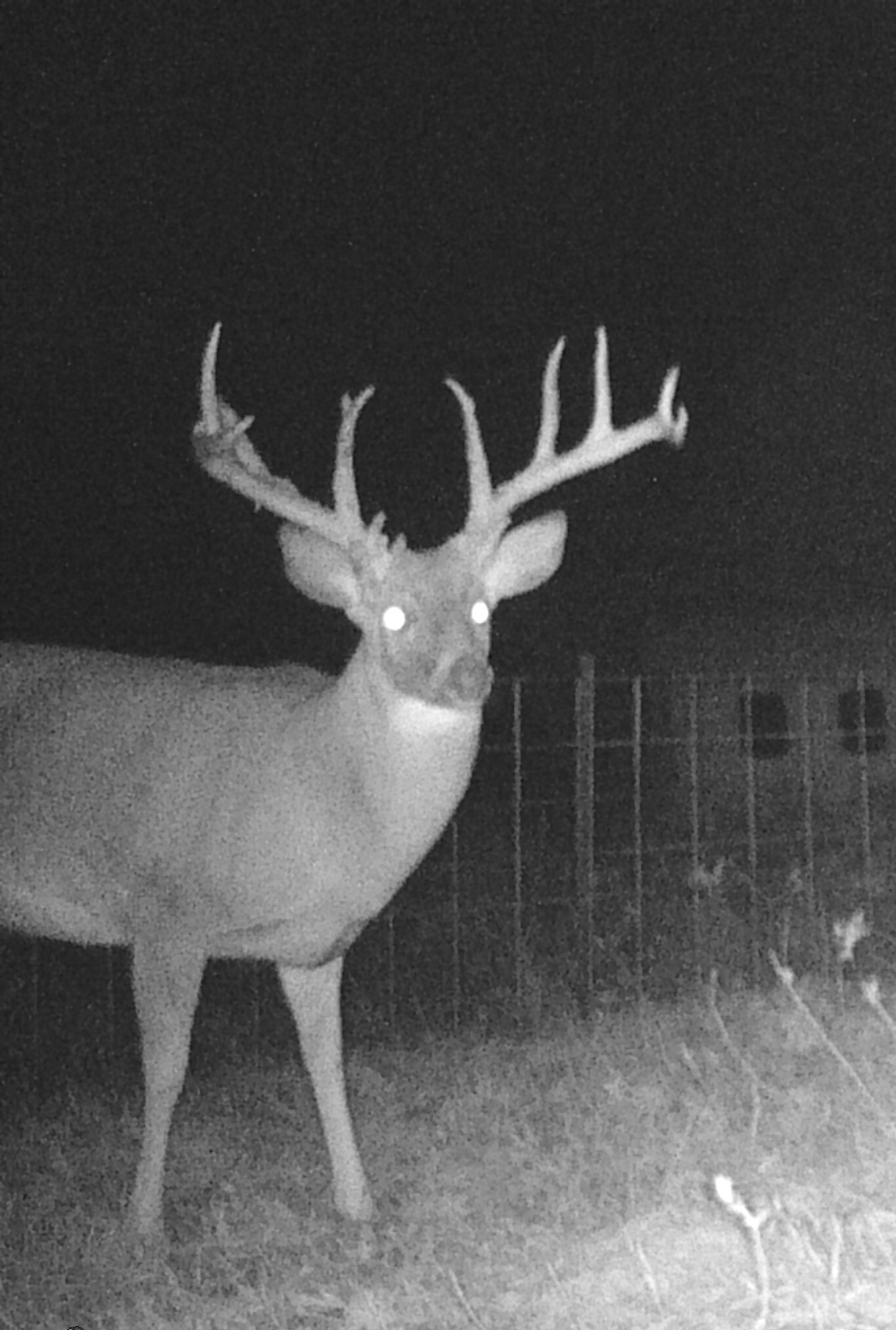
While Timothy Kane Sweet, 37, of Sherman, didn’t claim the 19-pointer he bagged originated out of state, he did attempt to hide the fact it was another Grayson County monster buck. Sweet claimed he killed the deer in neighboring Fannin County. What he failed to consider while concocting his tale was that the deer, which scored 177 B&C, exhibited a unique rack that had been captured on a game camera in Grayson County.

Sweet Poached this Monster Buck in Grayson County

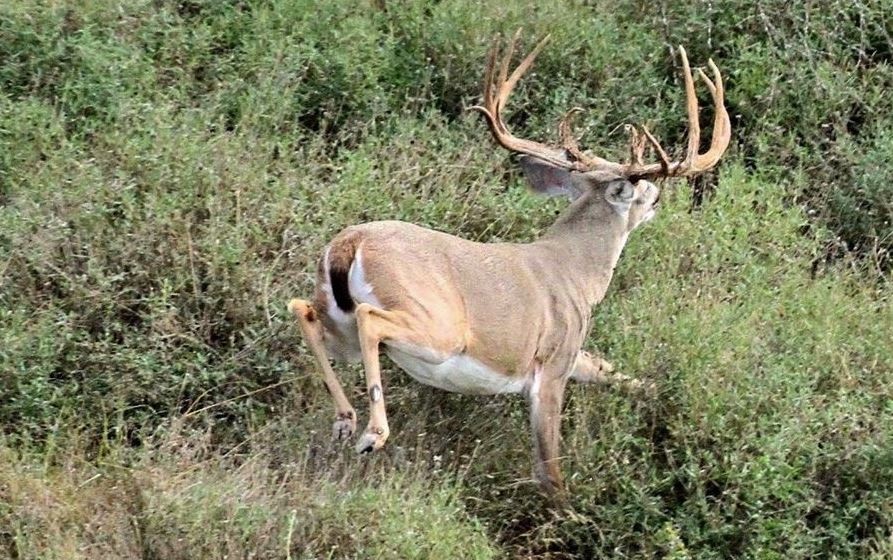
Once again, rumors flared and tips sparked a game warden investigation. During an interview with the game warden, Sweet claimed he made a poor shot on the deer that didn’t draw blood, but returned to the area later that evening to inspect. When the buck jumped up and began to run off, Sweet said he shot it five or six times illegally at night with a pistol.

On Oct. 20, Sweet pled no contest to charges of illegal means and methods, improperly tagged whitetail deer, and hunting out of season (Class C misdemeanors) in Justice of the Peace Court in Whitesboro, Texas. Civil restitution was estimated at $10,664.35.

Big Grayson County 10 Point Buck

The third case involves an individual who killed a big 10-point buck during the 2016-17 hunting season and attempted to take advantage of hunting license benefits reserved for disabled veterans. Brian Eugene Culp, 47, of Gunter, Texas, tagged the 157-inch B&C whitetail using a Super Combo hunting and fishing license (available at no cost to disabled veterans) that he did not qualify to possess.

Big Grayson County 10 Point Buck

On May 19, Culp pled no contest in Justice of the Peace Court in Whitesboro to a charge of hunting without a valid license. Civil restitution was estimated at $6,242.35.

“These cases exemplify the hard work and dedication state game wardens deliver day in and day out to enforce Texas game laws,” said Col. Grahame Jones, Texas Parks and Wildlife Department Law Enforcement Division Director. “I want to extend special recognition and gratitude to Grayson County game wardens Michael Hummert and Daron Blackerby for a job well done.”

Grayson County game wardens would like to thank the public for their assistance in these cases. Game wardens would also like to remind the public that they can report any illegal hunting activity to Texas Game Wardens using Operation Game Thief at 800-792-GAME or by contacting their local game warden.