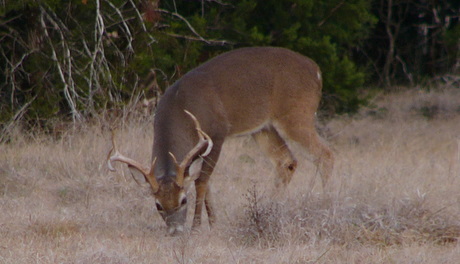
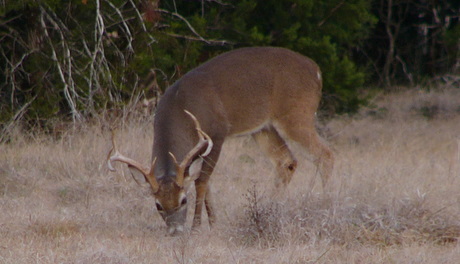
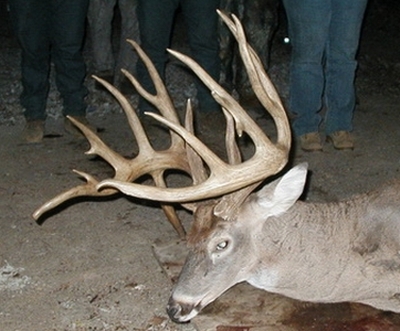
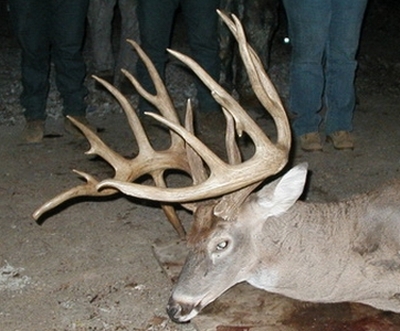
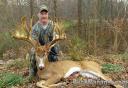
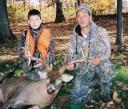
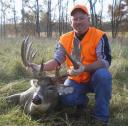
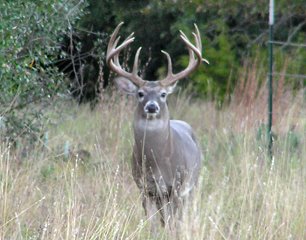
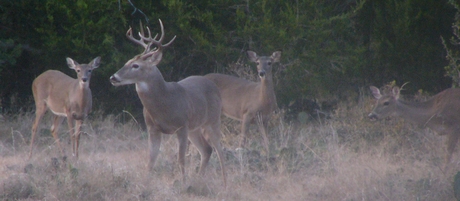
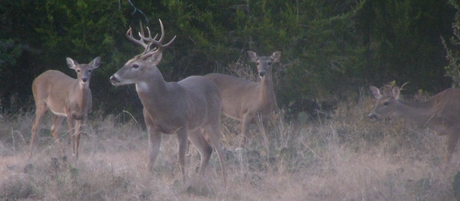
It’s time for on-the-ground deer management and that means taking advantage of hunting season. Three cheers to all who elected to use the days following Thanksgiving to be seated in their stands deer hunting rather than corralled with strangers outside retail stores to save a dime. Deer season’s busiest weekend dropped tons of meat all across Texas. You may have bagged a nice buck or a good-eating doe, but now what?
Hunting is a clean and simple exercise. It’s squeezing the trigger and making an accurate shot that adds time to the back end of any trip into the woods. First order of business is to field-dress the animal and, if temperatures are mild as they have been lately, cool the meat. In surprisingly short time, heat can manifest itself in a host of undesireable effects on fresh venison.
“If it’s 70 degrees outside,” said Michael Cruz, of Pete’s Fine Meats on Richmond, “I wouldn’t leave a deer (undressed) for more than an hour.”
Handle With Care
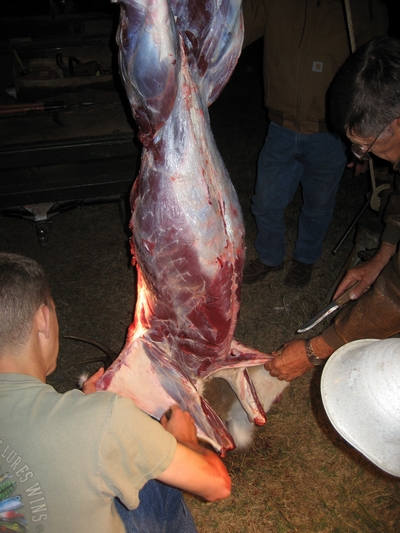
Whether you prefer to hang your deer from trees or leave them on the ground for unzipping, be careful and patient throughout the process. Elementary as it sounds, keep the fingers of the hand that isn’t holding the knife away from the hand that is. Even with an extremely sharp blade, pressure must be applied during certain aspects of the field-dressing job, and you’ll be working in a slippery environment. Move slowly and carefully avoid a painful slice.
According to Cruz, one of the most wasteful hunter mistakes is poor field-care that contaminates good meat with other things inside the animal. There’s no need to be graphic here. If you don’t understand the message or the procedure, ask someone who does to observe and instruct.
Some things within a deer are supposed to be cut in preparing it for the professional’s blade and paper, and some are not. Confusing the two taints immediately upon contact; processors have to discard everything that’s suspect, then hack away a little more, before they can package remaining venison for consumption.
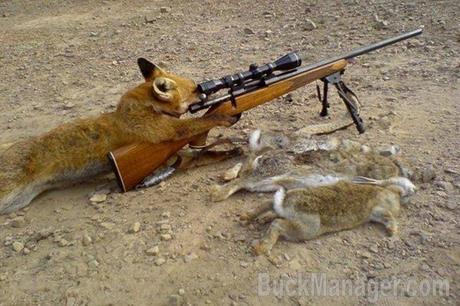
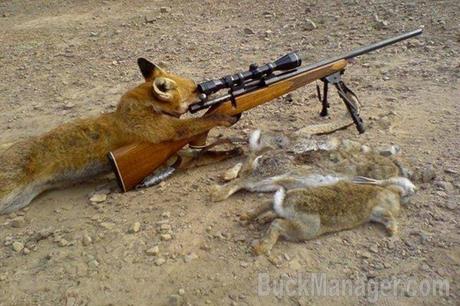
Also unnecessarily wasteful is sloppy shot placement. At a range inside 200 yards with good lighting through a properly sighted, scoped rifle, there is no reason to miss the intended mark by more than a couple of inches. I made this point in another column recently after hearing a “professional hunter” on video proclaim that we’re ready for the field when we can hit a dinner plate at 100 yards.
In addition to being woefully disrespectful to the animal, such casual marksmanship also ruins prime meat. Bullet strikes too high may rip through backstraps. Hits too far aft rupture some of those aforementioned bits and pieces that can ruin an otherwise prime piece of meat.
Incidentally, if you don’t know where to settle the crosshairs on a deer, you can learn quickly from Mike Kasberg’s Aim for Success laminated poster, just $7 plus incidentals at his Web site. I’d like to see each of his aim points lowered a couple of inches, frankly, but cannot argue with the placements so long as the bullet hits where the rifle is pointed.
Cool It Down
For the sake of argument here, we’ll presume a clean shot and prompt, careful field dressing. Next logical stop for most hunters would be the processor, but Cruz suggested otherwise.
“Once it’s gutted out, put it on ice right away and keep it there for a couple of days,” Cruz said. “Let it bleed out. That keeps the meat tender and nice and colorful.”
Hanging a deer in a cooler for the same length of time before processing, said Cruz, who has 46 years in the meat business, tends to dry it out.
Texas hunters have the option on most ranches of adding a wild hog to the meat locker. Same ranch, same temperature — but different strategy.
“With hogs, you want to do everything (in the field) in about half the time as for deer,” Cruz said. The “other white meat” apparently is that much more fragile than venison.
Larger hogs produce bigger, thicker chops, said Cruz, which some hunters prefer, but the meat of a smaller pig is more tender and a better complement to venison when mixed in sausage. Of equal size, sows make better eating than boars.
Basic cutting and wrapping for deer and hogs costs less than $50 at Pete’s, but extra services and special processing, such as smoking the meat or having some of it made into jerky, can jack up a tab in a hurry. Wherever you process your venison and wild pork, be sure to ask in advance exactly how much you’ll pay for what you want.
Texas deer hunters have much to be thankful for this time of year. A herd of nearly 4 million whitetails comes to mind, as do winters cool enough to keep venison from spoiling quickly but not so cold as to be bitterly uncomfortable while we wait for a big buck to step clear. Read about sausage making tips.
Doug Pike covers the outdoors for the Houston Chronicle and hosts Inside the Outdoors from 6-9 a.m. Saturdays on 790 AM. doug.pike@chron.com