Habitat Management Can Be About Timing

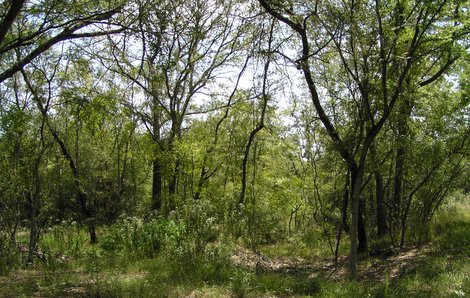
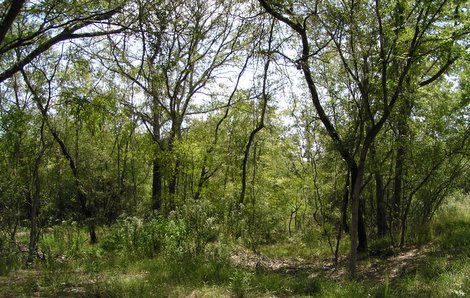
Woodland understory

Good habitat management is the cornerstone of a successful deer management program. But providing good habitat is more than just planting a couple food plots, setting up some protein feeders, and hoping it rains. In fact, none of that stuff is habitat management. Those things can help with available food resources, but they do little to address big issues for the plant communities found on your property.

Sure, food plots and free-choice feeders do provide supplemental food, but habitat management is a whole other issue. Habitat management is not as straight-forward as placing out food for deer to eat, so many people shy away from it. Habitat management is actively creating or restoring processes that impact habitat and food production at several levels – and they can have long-term benefits for deer rather than just over a single season or year.

As time consuming as habitat management can be, not all techniques are difficult to implement. Although I touch on different techniques from time to time, today I just want to talk about timing. Timing, as in life, really is everything! Continue reading “Habitat Management Can Be About Timing”
Patterning Areas with Game Cameras

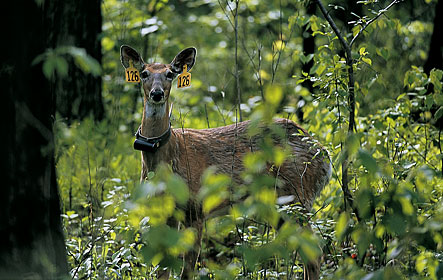
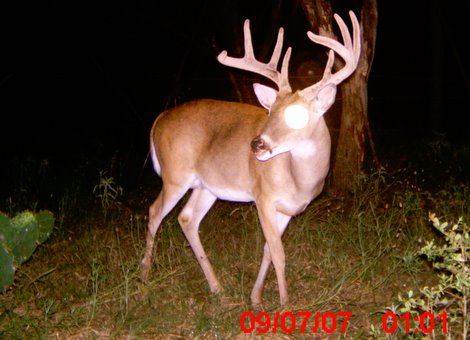
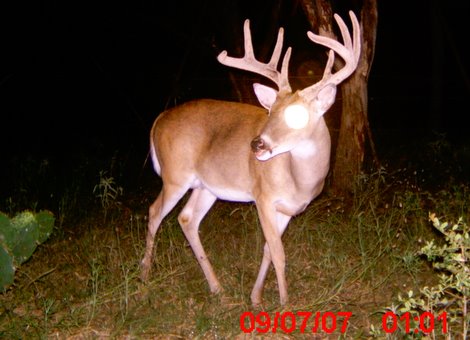
Buck caught with a game camera

Every hunter would love to pattern a big ole monster buck prior to hunting season. Knowing when and where to be set up come hunting season would be worth a mint! But what about those areas where you put up your game camera and don’t see any bucks? Is there any value in that information? Yes.

Believe it or not, many areas are rarely or never visited by white-tailed bucks. Eliminating areas where you should not be is hunting is of great importance and actually increases your chances of taking a buck on any given day — assuming you aren’t hunting “dead space.” Continue reading “Patterning Areas with Game Cameras”

A Whole Bunch of Bucks Harvested

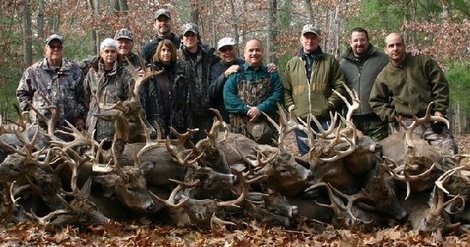
A Bunch of Bucks Harvested

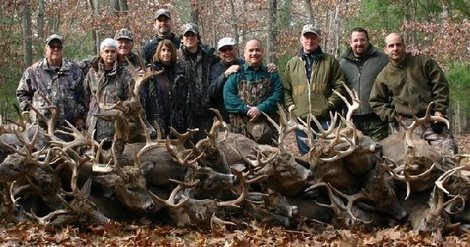
Here is a hunting photo worth a look! Now, I don’t know exactly where these white-tailed bucks were taken, but my best guess would be somewhere in the mid-west. The story, which I received via email, is that these poor hunters lost their hunting lease after 25-years of active harvest management — but this was their last hunt before they left!

As “amazing” as the story and photo are — I am more than a bit skeptical. But once again, this really is a photo worth a look!

Full Photo:

A Bunch of Bucks Harvested

Competition Between Whitetail and Exotic Deer

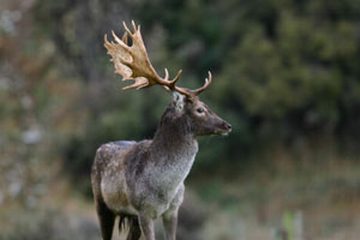
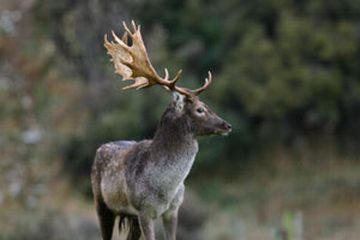
Fallow Buck

Exotic deer were first imported into North America during the 1900’s and are now found throughout most of the white-tailed deer’s range in the United States. The number of exotics increased rapidly in the 1950’s. In Texas alone, the last exotic survey was performed in 1996 — and at that time there were an estimated 190,000 animals and 76 different species. Current estimates put the statewide number of exotic ungulates at 250,000!

Research has examined food habits of axis, sika, fallow, blackbuck antelope, and aoudad sheep — and data conclusively found that most exotics directly compete with white-tailed deer. Exotic deer, like whitetail, either preferred forbs or preferred browse, but could perform well on grass, as well. Regular readers of Buck Manager know that white-tailed deer prefer forbs when they are available, but as forbs become unavailable, they shift their diet to browse. Continue reading “Competition Between Whitetail and Exotic Deer”

White-tailed Deer Research Continues in Louisiana

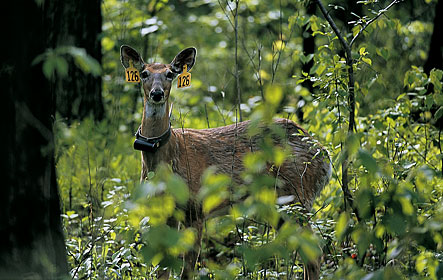
Deer research from Louisiana

The Louisiana Department of Wildlife and Fisheries (LDWF) and Louisiana State University (LSU) Agriculture Center have spearheaded the study with help from various contributors. The study is has entered its second and final year. The primary objectives of the study are to assess range and movements of male and female white-tailed deer, evaluate age and sex-specific harvest rates of white-tailed deer and evaluate survival and causes of death among male and female white-tailed deer in a Louisiana bottomland hardwood forest.

The study is being conducted on approximately 40,000 acres of bottomland hardwood forest located west of Baton Rouge and east of the Atchafalaya Basin. The study area is currently leased to more than 30 private hunting clubs, and each club belongs to a cooperative that promotes quality deer management on the property. Continue reading “White-tailed Deer Research Continues in Louisiana”