Not Quite a World Record Whitetail Buck

Big Missouri Non-Typical White-tailed Buck

This is not real new, but this big buck photo is finding its way around the white-tailed deer hunting community. This massive buck was taken by Roger Jarvis in Boone County in northern Missouri. It was originally thought to be a new world record, but it only scored 316 5/8 Boone and Crockett inches. Only. But the buck is not a wild-grown deer. The Missouri Department of Conservation said that this buck was purchased from a breeder and released in a high-fenced ranch. Of course, deer harvested within high-fenced ranches are not eligible to be recorded in Boone and Crockett record books.

In case you didn’t know, the current world record non-typical white-tailed buck was found dead in Missouri, in St. Louis County, in 1981. The big deer was entered into the Boone and Crockett record bok by the Missouri Department of Conservation on behalf of the citizens of Missouri. That buck, called the Missouri Monarch, scored 333 7/8 inches. It is pictured below on the right. And yes, I am looking for a lease in Missouri!

Big Missouri Non-Typical White-tailed BuckWorld Record Non-Typical White-tailed buck from Missouri - 333 7/8

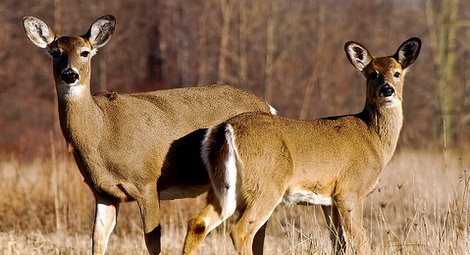
Shooting Does With Fawns

Shooting Does with Fawns 

Last week I wrote an article discussing harvesting white-tailed deer early in the season, which I strongly recommend. The article discussed why it is important to remove deer before winter, especially does, and the benefits of having a deer herd at carrying capacity. Well, one reader posed a question that many of you may be interested in:

“What about nursing fawns early in the season? Will taking lactating does hinder growth and development in these young deer?”

Yes and no. To begin, whitetail fawns are usually weaned and become functioning ruminants at eight weeks of age. Most fawns at southern latitudes are born in late May and June, meaning the majority of fawns are weaned by the end of August. And this makes sense from a biological perspective, because as late-summer food sources deplete the doe can then rely on the fawn to nourish itself. This covers the majority of whitetail fawns that hunters will encounter in the field during the fall hunting season. Continue reading “Shooting Does With Fawns”

Kansas Hunter Bags 27 Point Antlered Doe

Hunter bags a 27 point doe in Kansas 

Everything went as exacly as planned for one Kansas hunter. He was in the right place at the right time — and the deer that a neighbor had told him about showed up. After watching the buck for a short time, the deer finally worked its way through the woods and made itself availalbe for a clear shot. It was about 100 yards away and Mike Smith’s shot was true. The excited hunter thought that he had harvested the buck of a lifetime, a gnarly 27 point non-typical deer with double drops and still in velvet. But as he loaded the white-tailed deer into the truck, he realized that his “buck” was actually a 27 point antlered doe! The hunter told the press:

“When I rolled it over there was nothing male-looking on the deer. I looked at the back end and it was definitely a doe. That was a real surprise.”

Not only was the doe he shot in early December a rare antlered white-tailed doe, but it may end up being the largest antlered doe ever shot in the world. The rack was measured at about 179 inches Boone and Crockett inches as a non-typical. A retired Kansas Department of Wildlife and Parks biologist, avid hunter, and official scorer stated, “Doe deer occasionally have antlers. Doe antlers are frequently covered in velvet. Does seldom shed their antlers, like bucks do annually.” Continue reading “Kansas Hunter Bags 27 Point Antlered Doe”

Harvest Does Early In The Season

Deer hunting season takes place in the fall for one primary reason — to remove excess animals from the landscape prior to winter. When it comes to the deer carrying capacity, winter is THE limiting factor. As a result, proper harvest is essential for the deer herd found on your property, their habitat, and your overall deer management program. With the the onset of winter just around the corner, do not forget to harvest deer, especially does, as early as possible.

I mention this now because as the end of the year approaches, the time that many hunters have to head to the field decreases. The Christmas and New Year’s holidays can take away from your days in the field. It’s hard to harvest deer and reach harvest quotas if hunters can not make it out to the ranch.

With winter officially kicking off on December 21, time is running out to get the deer population on your property down to its winter carrying capacity. If you are not sure what the proper deer carrying capacity for your ranch is, then you first need to contact a wildlife biologist in your area. Carrying capacity refers to the number of deer that a property can over-winter.
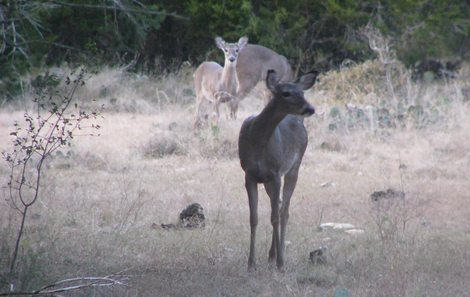
Proper Doe Harvest - Remove Does Early In The Season

It varies by ecological region, habitat type, and ranch, but it is the first piece of information you need to properly manage any deer herd. If the proper density for a ranch is 1 deer for every 10 acres, then a 1,000 acre ranch can over-winter 100 white-tailed deer. Excess animals, if they exists, must be removed annually to ensure the health of the remaining deer.

With much of the deer season already gone, why should you always aim to harvest deer as early as possible in the season? Below I have listed three good reasons why early doe harvest is important for your deer management program.

Food — This is the primary reason you need to harvest deer early. Natural food sources will decrease throughout winter. If deer surveys estimate that 20 animals need to be removed from the ranch, why let those animals consume limited food resources for an additional month or two prior to harvesting them? Removing them early leaves the natural foods those “dead deer walking” would have consumed for the remaining animals, which keeps your deer herd healthy and strong. If a supplemental feeding program is in place, the same concept applies and you save money.

Buck to Doe Ratio — Bucks will continue to rut and breed does until all does are covered. If a large number of does must be removed, it is best to remove them early. If most of the does are bred early in the season, then bucks can save valuable energy and body mass. In addition, whitetail bucks become more visible because there are fewer does available in the woods. Maintain your buck to doe ratio and the overall health of your herd.

Fawning Dates — As mentioned above, harvesting excess does early in the season allows bucks to cover the remaining does much quicker. Fewer does per buck results in more does being bred on their first cycle. This, in turn, means more fawns are born earlier in the year. These early-born fawns will be larger before the other stress period for white-tailed deer sets in, summer. Early-born fawns means more food for lactating does, resulting in increased fawn production.

Poaching Hurts Deer Hunters and Managers

A big buck that was illegally harvested in Ohio

Even as progressive as wildlife managers and hunters have become, there are other people that continue to steal your wildlife. After all, wildlife is considered a public resource. The whole concept is a bit odd because even though game animals are “owned” by the public, unless the animal is on your property (or land that you have the right to hunt on), then you do not have the legal right to harvest it. But enough about that. Wildlife theives, commonly referred to as poachers, should not be confused with true hunters. But unfortunately they often are, especially by non-hunters.

Today’s deer story comes from Ohio. Two young men made a big, and costly, mistake when they illegally shot a white-tailed deer. In fact, it ended up being a huge buck. Unfortunately for the poachers, the celebration was short-lived. In addition to fines, restitution, license suspension, and community service the deer, firearms, and all other equipment used in the illegal activities were ordered forfeit. Also, all venison was forfeited and will be donated to a local food pantry. By the way, this punishment has been standard procedure in Texas for some time now, and it can even end with a felony charge. To learn more about the story and above photo, check out the news release below:

Chillicothe, OH – Two men convicted of the illegal harvest of white-tailed deer have been ordered to pay restitution of $12,988 according to the Ohio Department of Natural Resources (ODNR) Division of Wildlife. The Honorable Judge Thomas E. Bunch presided and assistant law director Michele Route prosecuted today over the first case in the State involving white-tailed deer restitution under Ohio’s revised restitution law. The law went into effect March 2008 and allows the Ohio Division of Wildlife to seek an increased recovery value on all illegally harvested wildlife. Continue reading “Poaching Hurts Deer Hunters and Managers”