Deer Breeding, Hunting: Debated in the News

There is a gradient of acceptance when it comes to white-tailed deer hunting and the commercial deer breeding business. In many states across the US — where maintaining penned deer is legal — the whitetail hunting tradition has hybridized with deer farming to deliver a product that some hunters seem willing to buy. But it’s not for everyone. Literally on the other side of fence are hunters that do not want to accept farm-raised “wildlife.” They just do not agree with the raising or hunting of pen-raised deer.

I can see both sides. For one, the laws are law. It is completely legal to hold, breed and sell deer. In Texas alone there are approximately 1,200 permitted facilities that can help provide ranches with bucks, does and fawns that have the genetics to produce gargantuan antlers. But is deer hunting all about shooting bucks with big antlers? Traditional hunters say no, hell no. They will tell you that hunting is less about the kill and more about the experience, more about spending time with family and friends while hunting free-ranging deer.
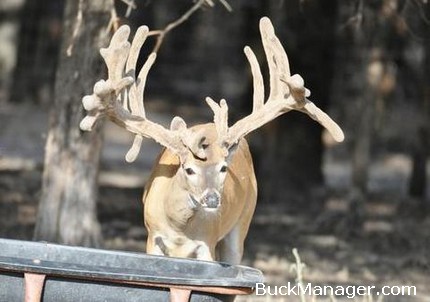
Deer Breeding and Hunting Debate Continues

There is no doubt that every hunter has an opinion on the issue. And since opinions are rooted in personal beliefs they are not often swayed by facts. Each camp can come up with supporting facts to debate their side of the issue, but where you stand on the issue of hunting line-bred, pen-raised deer likely depends on which side of the fence you sit. Either way, the topic remains in the news.

Source: “The quest for better deer — specifically bucks with antlers as freakishly big as possible — has created a rift among deer hunters.

Prize bucks are measured on a complicated scale that involves measurements between antlers, but suffice to say the more and bigger the antlers, the more valued the animal in deer hunting circles. But hunters who stalk deer through the woods and take them down the old-fashioned way are seeing their records obliterated by bucks created by deer breeders and set free in enclosed areas for weekend warriors to bring down – and mount in mancaves back home.

“They’ve now created deer that are beyond human belief in terms of their antler size,” said Brian Murphy, CEO of the Quality Deer Management Association. “[The deer] staggers around under the weight of those antlers.” Murphy said some some breeder deer are released into 10,000 acres of land, while others, in the most egregious cases, are released into three to five acres before they are shot down. “Most hunters find great disdain in a known outcome,” he told FoxNews.com. “That is not hunting. There has to be a high degree of not being successful. The deer has to have a fair chance to escape.”

People who kill deer in that fashion follow “a code of ethics that is beyond reproach,” he said.

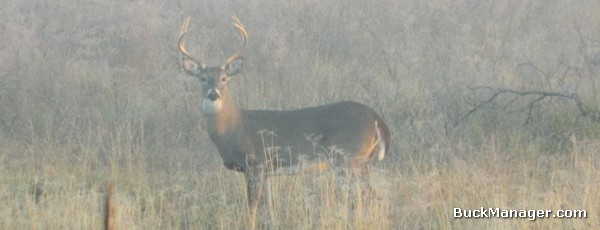
Breeder Buck Shows Off Big Antlers

The race for bigger deer has prompted some to fear that cloning methods, first pioneered at Texas A&M laboratories in order to protect the species, could soon be used to accelerate the race for bigger antlers. In an investigative article written for Outdoor Life magazine, Chris Dougherty describes what he called “Frankenstein Bucks.”

“One look at this pen-reared buck tells you there is something wrong, something terribly wrong. His obscenely disfigured antlers look more like something you would find growing on a coral reef or in a post nuclear war sci-fi thriller,” Dougherty wrote. “They twist and turn and droop and bulge and fork and then fork again.”

But other deer breeding groups, like Michigan-based Whitehouse Whitetails, said there’s no difference between killing deer in the wild and killing them in an enclosed space.

“They have the right to do that because it isn’t to hunt. They just want the head to mount on their wall,” said Laura Caroll, who, along with her husband, owns the deer breeding company. “They [critics] are saying that one way of killing them is different from another way of killing them,” she said. “But the end result is that they kill them. It’s no different than raising cattle that’s going to go on people’s tables,” Caroll said.
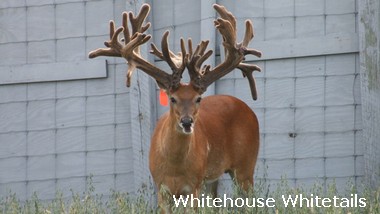
It’s true, a dead deer is dead deer. The race to grow bigger and bigger bucks is no different than anything else humans try to take to the next level: the fastest car, the highest building, the meatiest cow, the biggest ear of corn. I’m not even sure how many hunters and non-hunters are really against deer in pens, but it seems like a good percentage of people take issue with calling the shooting of released deer a “hunt.” To me, that decision is best left up to the person who decides to pull or not pull the trigger.
Deer Hunting Small Properties for Success

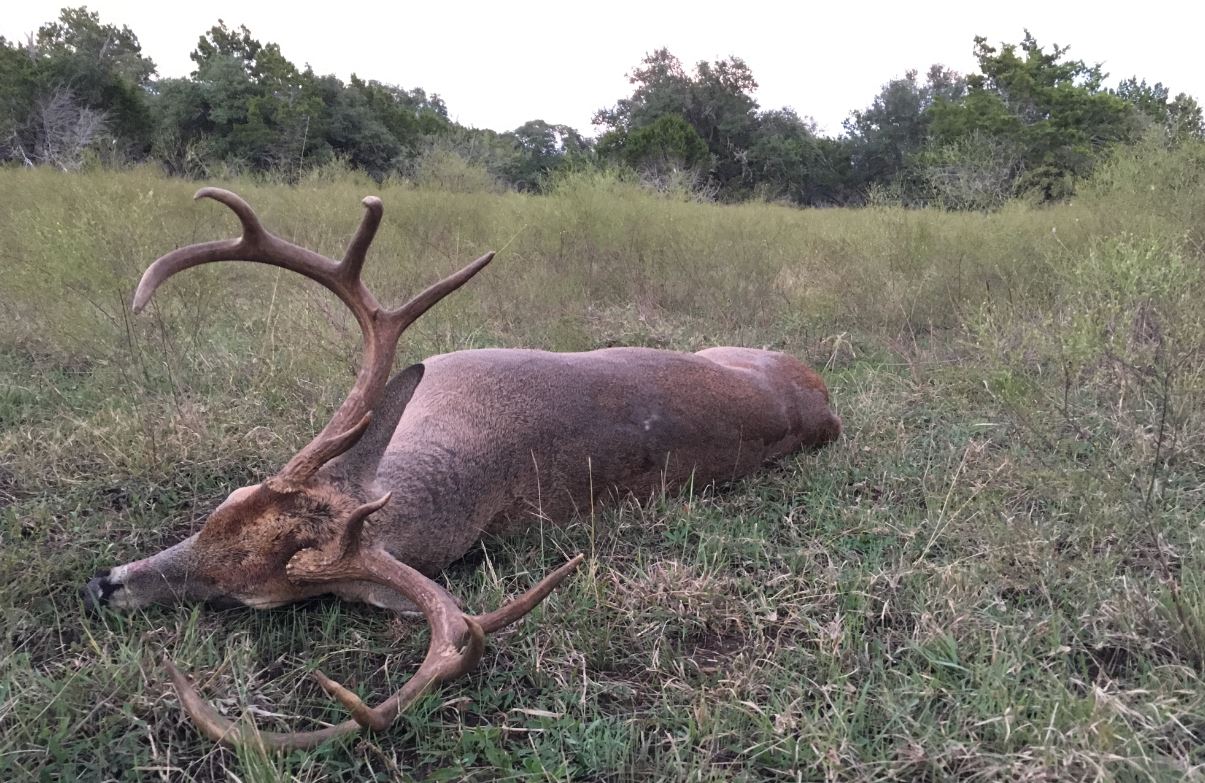
It was a perfect morning for deer hunting. It was late October, 53 degrees and a 5-7 mile per hour wind was blowing out of the northeast. Directly in front of me, standing at 10 yards, was a 10 point buck that I recognized from game camera photos. The deer was walking quartering away and stopped right on cue. The arrow rocketed through him and hit the ground before he even flinched.

I could immediately see blood. He lurched forward and hit high gear in only a few steps. A few seconds later I heard him crash. It was quiet again. Just to be safe, I waited 15 minutes before walking to the end of a 45 yard long blood trail that culminated with my bow buck.

Deer Hunting and Management on Small Property

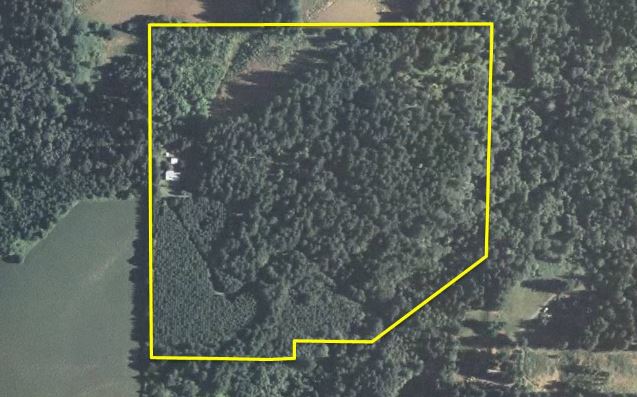
I dragged the deer back to the truck, which was parked less than 60 yards away. You see, I was deer hunting a pint-sized property in Central Texas that consisted of a mere 7 acres. It was the second time that I had hunted the small tract in 6 years. Three years earlier had resulted in a mature, heavy-bodied 9 point whitetail buck.

My latest deer, why far from a “book” buck, was the product of only one deer management practice—harvest management. Not shooting him years earlier when he was younger was the strategy, just letting him go so he could grow into something more substantial. Deer hunting small properties can work, but you have to do it right from the start.

Deer Hunting Small Property 101

Keep it quiet. There is no real secret to this one, but it does mean allowing deer to be content using and traveling through a property. Larger properties afford protection to whitetail by the shear amount of space they put between them and any disturbances. Not the case when talking about a small property.

Tips for Deer Hunting a Small Property

Small acreages do not have the kind of built in buffer that distances deer from disturband, so it’s much more important that deer are not continually pushed off of the property, especially as the hunting season approaches. As a note, whitetail can deal with regular disturbances, but it’s different come hunting season once hunters take to the woods.

Mature deer, both bucks and does, become well aware of the sounds and smells that are out of the ordinary for the places they call home.

Help Their Diet

Just like the way to man’s heart is through his stomach, the best way to put an arrow or bullet in a buck’s heart is to keep him coming back for more—keep him well fed. Dominant bucks do not look for the poorest or even the most mediocre meal on the landscape as a part of their diet. They look for the best grub and they keep it to themselves.

If a big ole buck finds high quality forage on the small property you plan to deer hunt this fall then so much the better. A deer has got to eat, right?

The largest antlered bucks in an area will typically have the biggest bodies and that’s because they eat well. Give them something good on your property that is not found anywhere else in the area. Then you have a shot at making your small acreage property part of a dominant buck’s core area.

Deer Hunting Small Properties

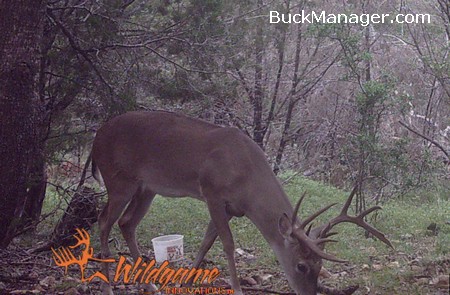
It’s always a good idea to choose something that is highly tasty or high in protein. This could be anything from pelleted protein to cottonseed to other types of manufactured foods/baits that attract deer, including well-prepared food plots. The bow buck above had a taste for the Nut ‘N More Drop Block by InSights Nutrition. It’s actually a block that I believe was developed for deer breeders but I’ve found that free-ranging deer really go for this sweet, peanut-based product. Water can also be a great attractant in arid areas.

Know Your Small Tract

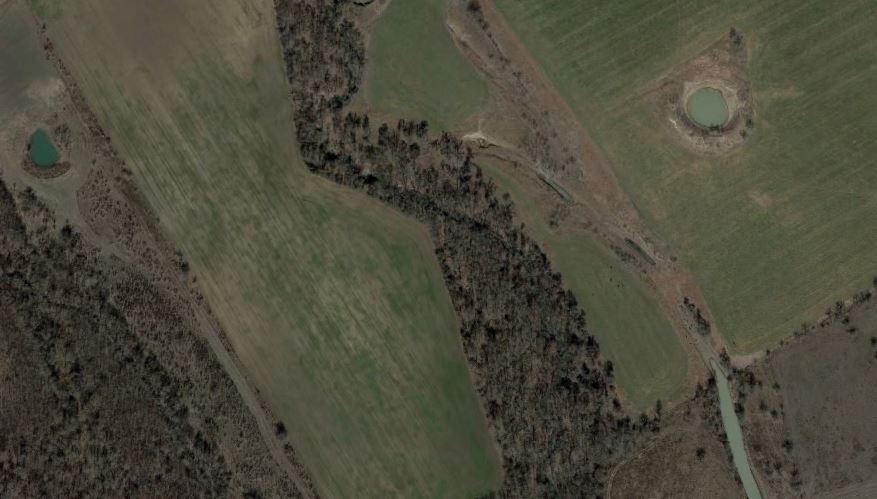
Not all small properties provide deer habitat. Smaller properties do not need an abundance of cover, but whitetail will avoid areas that do not have enough suitable screening cover to even provide for perceived safe travel. If you want whitetail deer to use a property it will at least need to have cover comprised of brush, grass, or small trees that are at least 3-4 feet in height in or near potential travel ways.

Deer Hunting Small Tracts

Some of the best small acreage deer hunting can be found on tracts of land that provide good travel corridors. In these cases, providing food or water may just be the icing of the cake for deer that are already traveling through a property. A creek, natural funnel or pinch-point can be a regular deer producer, even if it’s located on just a small tract of land. This is also something to consider when evaluating a hunting lease or when looking for property to purchase.

Timing is Everything

Like life, timing is everything when it comes to deer hunting. Time it just right. Use game cameras to keep informed of when animals are visiting your feed stations or traveling through the area. Most bucks will stick to well-defined feeding patterns before the breeding season turns them into nomads. If you don’t have the opportunity to hunt the pre-breeding season then the rut is, of course, a great time to hunt.

This is can bucks will longer distances in search of hot does. Know when the rut takes place in your hunting area, know the weather and get out there to take advantage of what’s going on. Deer will move throughout the day when the time is right.

Another option is to try rattling. Bucks will readily respond to rattling antlers a couple of weeks before the breeding season kicks into high gear. You may also have a shot a drawing them onto your small hunting tract after the rut as tapered off. A buck may cruise by to take a look if he thinks there is one last shot at breeding success.

Hunt Deer, Don’t Scare Them

Hunt only when the wind is right. This idea is so simple in theory, but it had been one of the most difficult things for me to put into practice during the hunting season. The problem had always been that I wanted to be in the field regardless of whether or not the weather was right. After years, however, I’ve learned that not only is hunting bad wind not effective, it can can run a buck out of the area for good.

Deer Hunting Tips for Small Acreage

I had one buck wind me several years ago and he never showed back up, at least not on game camera, for almost 5 weeks. Mature deer learn real quick when an area is not safe. That’s how they got old.

Hunting Small Acreage Successfully

These tips are a good place to start when deer hunting smaller tracts or any property for that matter. Whitetail are smart animals and that makes them challenging to hunt. It also makes it that much more rewarding when we’re lucky enough to bag a good one, especially on small acreage.

There is something about hunting these mini properties that makes deer hunting even more challenging. It’s good to shoot deer, but keep always remember that deer harvest management is even more important on small tracts. Do not over hunt them.

Predators and Deer Management: Bobcat Kills Fawn

Predator control can be an integral part of a white-tailed deer management. Regulating predators should be a year-round activity on properties that are serious about the task, but it’s usually right about the time fawns start hitting the ground that hunters think about doing it. Limiting predators can work well when used hand-in-hand with other practices such as habitat management and supplemental feeding. Though there are many things looking to chow down on a deer, the “whitetail killer” that gets most of the attention is the cunning coyote.

They are smart. They do get a lot of attention from hunters, and for good reason. The coyote is the most abundant predator on the landscape with the ability to take whitetail, especially when they pack hunt. Case in point: Recall the article where a group of coyotes kill a whitetail buck on game camera? But as much attention as song dogs get, they aren’t the only game in town. Bobcats can also do a number on deer, especially when it comes to fawns.

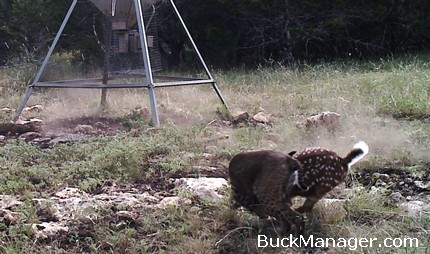
Bobcat Kills Deer Fawn on Game Camera

Bobcat Goes for the Kill

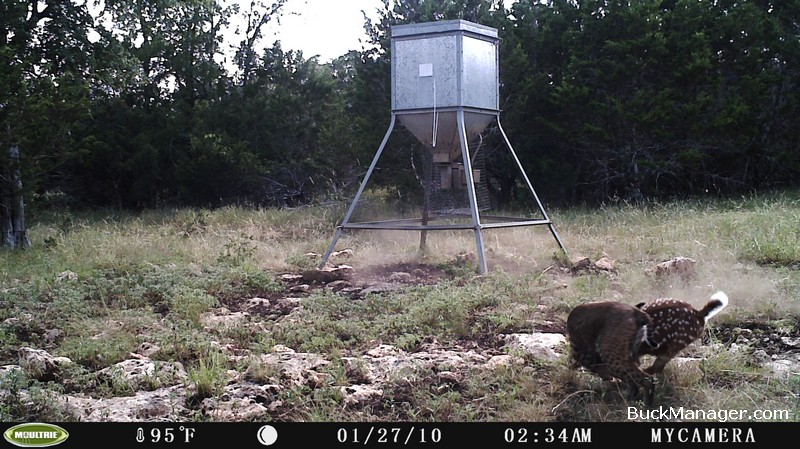
The game camera photo below shows a whitetail fawn being attacked by a bobcat while near a deer feeder. The photo was taken in Central Texas within the last month. And yes, the date and time on the camera are wrong because apparently the hunter did not set them.

That’s not uncommon — and neither are fawns in the bobcat diet when recently-born whitetail fawns are available. Research conducted in Texas found that the bobcat diet contains more deer during the month of June than any other time of the year. Coincidence? No.

It is, however, believed that bobcats have a more limited impact on adult deer than coyotes despite the fact that bobcat attacks on adult deer have also been photo-documented. I would imagine that the majority of adult deer killed by bobcats are already either sick or injured. I also suspect there are individual cats that operate as exceptions to this rule.

It’s unlikely that predator control as a component of a deer management program would have a “bobcat-only” control aspect, but rather their numbers would be reduced through general predator control tactics that target coyotes, bobcats and feral hogs. Bobcats, though shy like other felid species, are susceptible to snares, #3 leg-hold traps, and calling and shooting, with the latter being the most targeted method. Like anything, it takes experience with predator control to become proficient at it.

Predator Control and Deer Management

Should intensive predator control be a part of your deer management program? Maybe. Maybe not. It all depends on the characteristics of the deer herd in question as well as the potential for the habitat found on the property to provide the protection that deer need. Quality habitat will alleviate a lot of predator issues. On the other hand, poor deer habitat will likely compound them. An absence of grass and tall forbs makes fawns really easy to find. A lack of screening cover (trees, shrubs, tall grass) makes every deer easy to find.

Controlling predators is a management tool that must be evaluated on a property by property basis. Predators are a part of the natural system, but the impact they have on a specific property may not fit into your deer management plan. High fenced properties, specifically smaller ones, should consider predator management for the sake of the deer herd. I’ve seen several situations where coyotes in particular have drastically reduced deer populations.

Before declaring all-out-war on predator populations it is important to consider a few things. Are predators such as coyotes, bobcats or even feral hogs limiting the deer population on the property you hunt or manage? If predators are controlled, can the property support more deer without a decline in habitat quality? Are you prepared for more time spent deer hunting, increased harvest and the removal of surplus deer, and will those animals be used?

Determining Carrying Capacity for Deer Management

Deer Management Question

Question: “Hi, I’m not into deer hunting but I need to learn something about whitetail deer management. It involves the concept of carrying capacity. I live on an island in Puget Sound, human population 20, deer population 15 to 30 depending on who you talk to. The environment is lush and the deer lack nothing. They don’t even have ticks, apparently.

There are more bucks than does, and this year there were at least 3 fawns that I know of. I recently read that whitetail deer could double in population in just two years. The island is only about 200 acres total. So how does one calculate the carrying capacity of the island? At what point do the deer need to be thinned to keep everything healthy? Thanks.”

What is deer carrying capacity?

Whitetail Management: Deer Carrying Capacity

Response: First, good call in gathering information on deer management for your island. This is a good idea for anyone intending to manage deer on a property. Fortunately, it t does not sound like you have a deer overpopulation dilemma on your hands just yet. While that is good news, I will offer some pointers on managing deer and habitat in any area. Deer, like most animals, are self-limiting. However, it’s best to avoid a situation that ends in population collapse.

When deer numbers get high and food availability gets low, individual deer start to lose body mass. This leads to weak deer that ultimately die. When a bunch of individual animals die the population crashes. Wildlife management at its very essence is designed to harvest and use those excess animals . Sound management occurs well before malnutrition brings down an entire population.

White-tailed deer are widely adaptable creatures and do well in a variety of habitat types. They are classified as browsers, meaning they eat primarily plants other than grass. Grass, by the way, generally only comprises about 7 to 10 percent of the whitetail diet. Whitetail prefer certain forbs (weeds), which are extremely high in protein. However, the bulk of their diet tends to be leaves, stems and twigs of trees, shrubs and vines.  These perennial, woody plants are stable food sources and often available throughout much of the year.

Deer Management & Carrying Capacity of a Property

What is the right number of deer for a property? This question gets asked a lot by landowners, hunters and biologists managing whitetail on low-fenced properties, on high-fenced properties and apparently even by those managing deer on islands. If you think about it, an island is similar to a high-fenced ranch in that deer movement is limited. Deer will always come a go in both situations. After all, a taller-than-normal fence is not deer proof. Water does not stop deer either. However, high fences and large expanses of water do limit deer movement.

The carrying capacity of a property for whitetail deer varies. It varies throughout the year. It varies from year to year. Most don’t think about this, but non-managed wildlife populations are naturally highly variable. Population sizes boom, then they bust. Deer management aims for a type of population management that levels out fluctuations. This will help keep deer healthy from year to year. It is only through the removal of animals prior to (or even during) stress periods that the remaining deer population survives and thrives.

Population Size & Food Availability

The whitetail deer carrying capacity of a property is based on the highest number of animals a property can support when natural foods are at their lowest. In most areas, carrying capacity is based on food availability during the winter. This is a big reason why we head out deer hunting in the fall. It’s better to harvest the equivalent of the year’s production and to ensure the welfare of the remaining deer herd.

The only sure-fire way to identify that a deer herd has arrived at carrying capacity is when habitat degradation begins. When too many deer are on the landscape the foliage on most woody plants will begin to disappear. This vanishing forage happens from ground level up to about 5 feet in height. As more and more foliage is consumed an obvious “browse line” will become evident, indicating severe overpopulation. You don’t ever want to end up in this situation.

My recommendation to anyone attempting to manage a deer herd is to keep a close eye on native plants. First, make sure to contact a local biologist to get a list of the native deer plants deer consume in the area. A list of this sort will usually rank the plants in order (or classification) of preference by deer. If the least preferred deer foods  begin to be readily consumed, then it’s time to reduce the herd.

Managing a Population Using Deer Surveys

Identifying heavy use of less palatable plants by whitetail will tell you that there are too many deer. However, this will not tell you how many deer you have on a property. The only way to estimate the population is to conduct deer surveys. On a small high-fenced ranch or an island of 200 acres, the go-to method would be to conduct motion-triggered camera surveys. To get improve the survey, conduct camera surveys in conjunction with collecting incidental, daylight observations. These two deer survey methods, especially when combined, will give a very precise estimate of deer population. By the way, always perform surveys in late summer or early fall to capture annual reproduction.

Once you have an estimated deer population, then you can start to put the pieces of the puzzle together. This information will provide a picture of what is actually happening in the field. For example, let’s say in Year 1 the deer population is estimated at 15 animals and all browse plants look great. During Year 2 the deer population is estimated to be 25 deer and things are still looking good.

However, in Year 3 there are an estimated 40 animals and plants that are moderately preferred by deer are showing heavy use. Furthermore, the plants that deer do not like are starting to be eaten too. The carrying capacity of the plant community has been exceeded. In this example, the right number is more than 25 deer but less than 40.

Sound Deer Management & Carrying Capacity

Good management of both land and wildlife takes correlating what is happening to the habitat with what is going on with the population. Only then can a manager begin to determine where deer carrying capacity lands. In the above example it would probably be a good idea to manage for a deer population in the neighborhood of 30 animals. However, continued observation on an annual basis would allow the manager to tweak carrying capacity. Annual harvest recommendations would be based on data to maintain a healthy deer herd.

Once a target deer population size is established for a property then the biggest factors that influence herd management (harvest versus no harvest) are annual recruitment (fawn survival) and habitat condition. So as you see, carrying capacity is a balancing act between deer  numbers and food availability. Plant and deer surveys can provide you with critical information for managing population size.

Deer Hunting in Texas: Public Lands

The overwhelming majority of deer hunting and management that happens in Texas takes place on private lands. Although ranches and farms across the state produce the bulk of deer year-in and year-out, there is another option out there when it comes to deer hunting in Texas: draw hunts on public land. Sure, 97 percent of Texas is privately owned, but much of the other 3 percent offers some really good hunting too. This is especially true of the state owned properties that are operated by Texas Parks and Wildlife Department (TPWD) as  wildlife management areas. A wildlife management area (WMA) serves as a research and demonstration site for landowners and hunters that  manage property in the same ecoregion of Texas.

Each of the 50 or so WMAs implement a variety of habitat management practices for both game and non-game species to show private landowners what they too can do on their own properties. The product of good habitat management is healthy wildlife populations and economical hunting opportunities for folks looking to bag white-tailed deer, turkey, dove and other species, including alligator. Hunters that enter the annual public draw hunts have a shot at hunting these properties. Of course, public hunting in Texas is not just limited to WMAs.

Public Deer Hunting in Texas - TPWD Draw Hunts

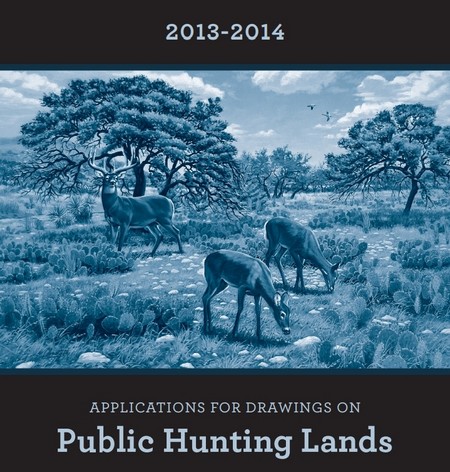
Other public lands found in the draw hunt lottery, which is administered by TPWD, includes state parks, state natural areas, state forest land, US Forest Service lands and property owned by the US Army Corps of Engineers. The application book for the 2013-14 hunting season was mailed out last week and is available online right now. My family, friends and I have entered these draw hunts for years even though we all have private lands or leases that we hunt. We enjoy the opportunity to meet up, camp and hunt different areas from time to time. And it’s real, open field deer hunting. Every hunt that we’ve gone on in the past 25 years has been great, memorable and we’ve almost always left with more in the coolers than we brought.

Texas Public Draw Hunt Applications – Do Not Mess Up!

TPWD: “A correctly completed application card must be received at the Texas Parks & Wildlife Department’s Austin Headquarters by 5:00 p.m. on the deadline day for the concerned hunt category in order to be entered in the drawing. Application deadlines may be found immediately below each Hunt Category title.

Only one application per person in a hunt category (example, Gun Deer Either Sex) will be allowed. In the event two or more applications are received for an individual within the same hunt category, all applicants on those application forms will be disqualified. It does not matter where your name appears on an application form, that is your application for that hunt category. Even if you apply for another area or on another persons application card for the SAME HUNT CATEGORY, EVERYONE on those cards WILL BE DISQUALIFIED.”

The term “public hunting” means a lot of different things to a lot of different people. All hunters have heard about the pitfalls of hunting public lands, but TPWD’s special draw hunts really offer a quality, controlled hunting experience for folks looking for a place to hunt. The book containing hunt dates and applications can be found online at Applications for Drawings on Public Hunting Lands. This booklet contains all of the program rules and regulations, hunt categories and schedules, procedures for applying, hunt area descriptions and application cards. TPWD will even mail you a printed copy if you request one by calling 1-800-792-1112.