Going Big on Small Acreage
Question: “I just purchased a 100 acre tract of land in Menard County, Texas. I put out a single corn feeder that is feeding twice a day and after two weeks I’m seeing about 12 deer (4 doe and 8 bucks). The majority of the bucks are young probably, 1 1/2 – 2 1/2 with one being maybe 3 1/2. This property was hunted for 15 years by 4 lease members with no management practice in place.
My goal is to harvest mature deer, both bucks and does. My question is, do I need to harvest a few of the young bucks now to get the sex ratio closer to 1:1 or not take any for a few years and monitor their growth and ratio. Neighboring properties are also management minded and range in size from 200-1200 acres. Thank you, Ron.”
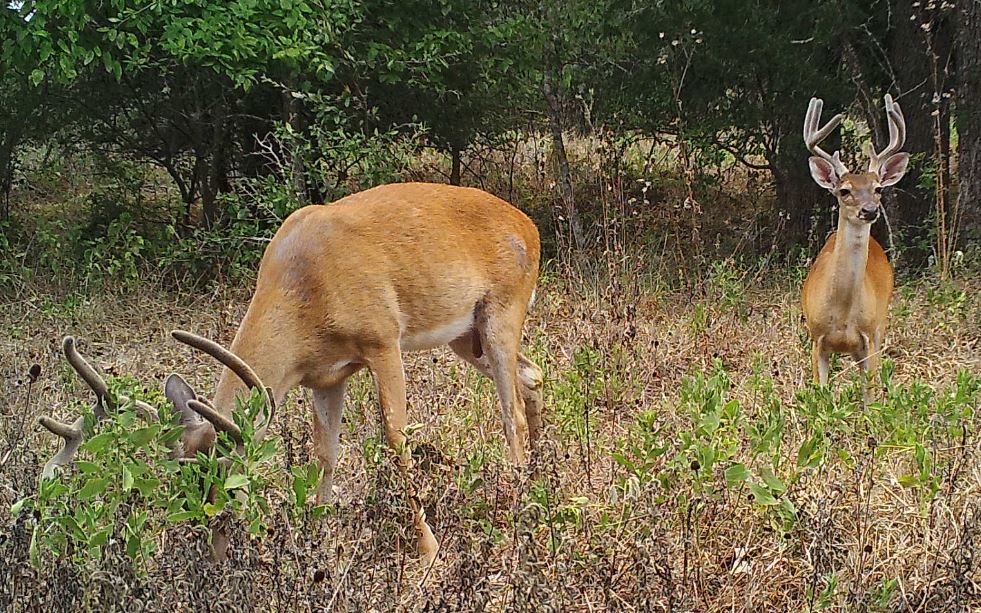
Small Acreage Management
Response: This is a great question because it points out the fact that a number of variables are in play when managing whitetail, especially when managing small acreage for deer. Most properties where deer are managed and hunted would be considered small acreage ( less than several hundred acres in size).
When trying to manage a deer herd some variables can be controlled and some simply can’t. It’s important to identify what you can and can not control prior to implementing management practices on a piece of land. Otherwise, it leads to wasted time and disappointment. Let’s break this question down into a few sections.
New Hunting Property, New Management
The property was “hunted” by four hunters for over a decade. It’s difficult to measure what this statement means because no one knows the mentality of the hunters involved. Were at least some of them managed minded or did they live by “if it’s brown it’s down?”
A new property owner can only guess about what happened in the past. In reality though, it really does not matter. The past is the past, the purchase has been made and you can only change things moving forward. You’ve got to start with what you’ve got.
New ground means a hunter and manager has a lot to learn. Start by taking inventory of what is on the property in terms of both plants and animals. Take a look at both topography and soils since these features dictate how deer move across a property. They will also help a manager identify habitat management potential or limitations.
It’s impossible to make management decisions without knowing what you have to work with. Putting out some game cameras is a good place to start, but don’t stop there.
Evaluating Camera Photos
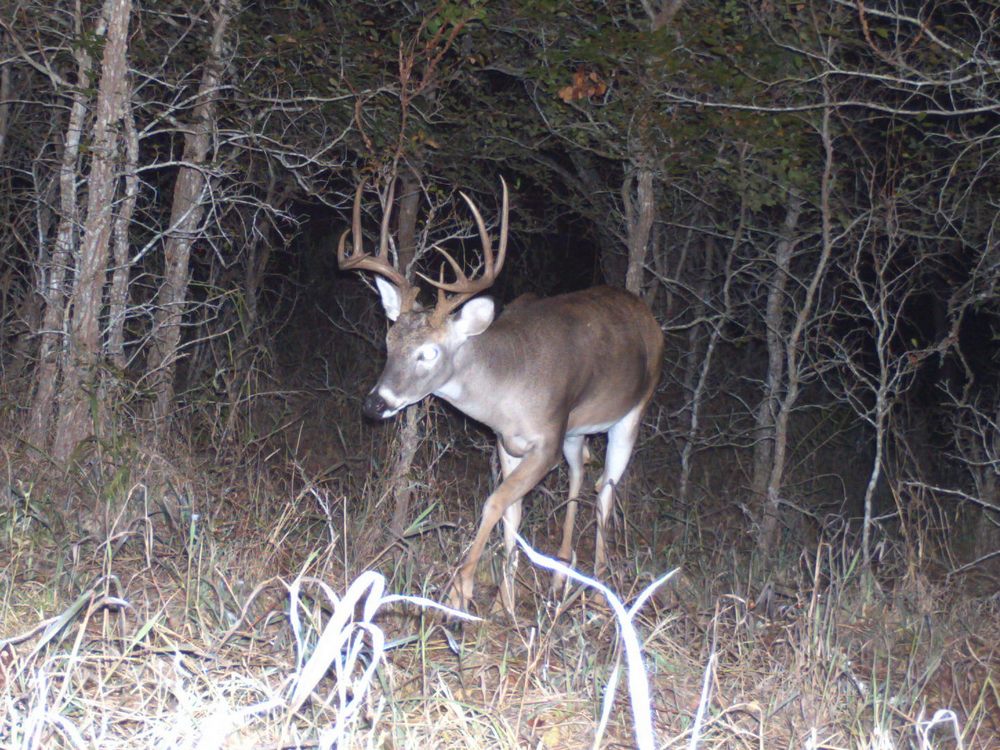
Game cameras are awesome for monitoring the deer in an area and can contribute greatly to managing small acreage for white-tailed deer. However, exercise caution when interpreting camera photos. When and where a camera is used has an impact on the results.
A camera placed on a feed station often results in buck photos outnumbering doe and fawn photos. This is especially true when food resources are most limited. Hunters are often “covered up in bucks” in late summer but many of them evaporate as the hunting season approaches.
Smaller animals, which includes does, fawns and even young bucks, are not often represented in feeder-placed “camera surveys.” The reason is because feed stations are often dominated by larger, more aggressive bucks. This is most likely the case in the situation/question submitted.
It’s just about impossible for the sex ratio of a deer herd to be skewed towards bucks without purposeful management trying to make that happen. Whitetail bucks have a higher natural mortality rate AND hunters prefer to shoot bucks over does. The odds favor the survival of female deer.
The reality is that bucks are simply over-represented in photos when cameras are placed on feed during the heat of summer and early fall. Some of those “summer bucks” will disperse from a property or use a particular area less come fall, but they are not gone; food is less important to them as the breeding season gets underway.
A better way to gauge the composition of a deer herd is to deploy cameras along pinch-points and travel corridors, but not those that are in close proximity or leading directly to and from feed stations or the same bias will exists. Cameras on the edges of agricultural crops and food plots provide good data because the food is not easily monopolized. A good, annual estimate of the whitetail using a property is a big part of managing small acreage for deer. I would recommend using least 1 camera for every 50-75 acres with a several minute delay between photos.
Buck Age Structure
Cameras are very good at capturing the whitetail bucks using a property. As mentioned prior, putting cameras on feed stations will obviously provide a manager with information on bucks. Will cameras capture every buck?
No, but camera research suggests that cameras place on food sources during late summer at a lower density (1 camera/75-100 acres) than mentioned above will record over 95 percent of the bucks using a property in just two weeks. Cameras can be left out longer, but the law of diminishing returns kicks in as the same bucks keep returning for photo sessions.
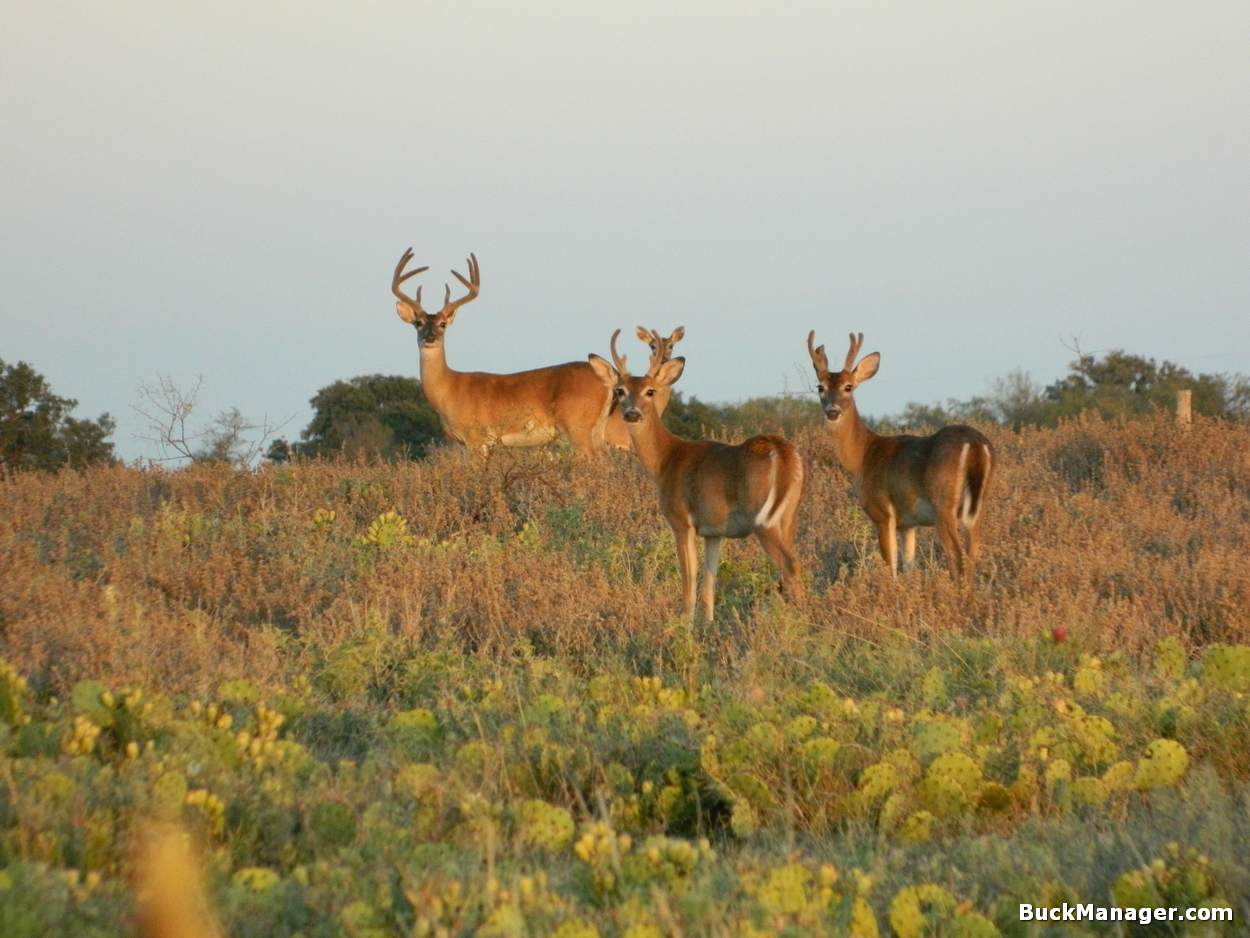
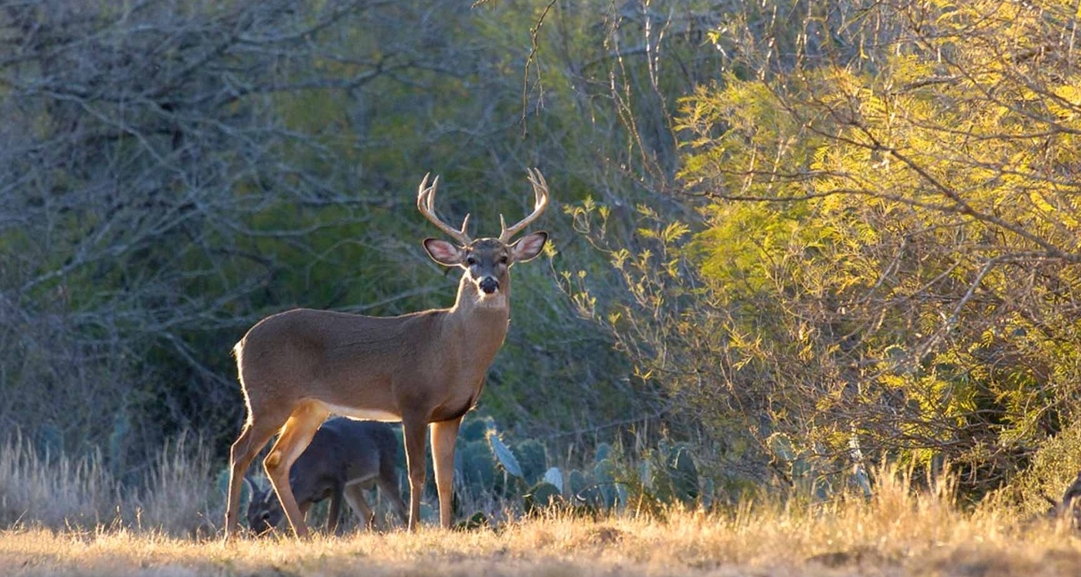
Not only are game cameras good at identifying unique bucks, but cameras document the age structure of bucks using a property. If older bucks are not showing up on camera then mature bucks are rare in the area. If all of the photos are of young bucks, then it’s recommended that no more than 10-15 percent of the available bucks be harvested in a season, regardless of buck to doe ratio, if the goal is produce mature bucks.
Once the age structure is more “balanced” throughout buck part of the herd then annual buck harvest can approach 20-25 percent of available bucks each season (depending on specific objectives of the manager). A balanced buck herd would consist of approximately equal numbers of bucks at all age classes.
Consider the animals harvested on neighboring lands as well since managing small acreage for deer means other properties in the area are a factor. Deer shot on those properties are coming out of the same herd, if those properties are hunted. It’s a tremendous help when neighbors can form cooperatives or associations and work together on deer management goals. Otherwise, someone managing a piece land can only control what they do on their land, which is still a lot.
Deer Sex Ratio
Managing deer is a numbers game. Those that aim to manage whitetail must estimate several key metrics, with density and sex ratio being the most important ones. So, what’s best for sex ratio when managing small acreage for white-tailed deer?
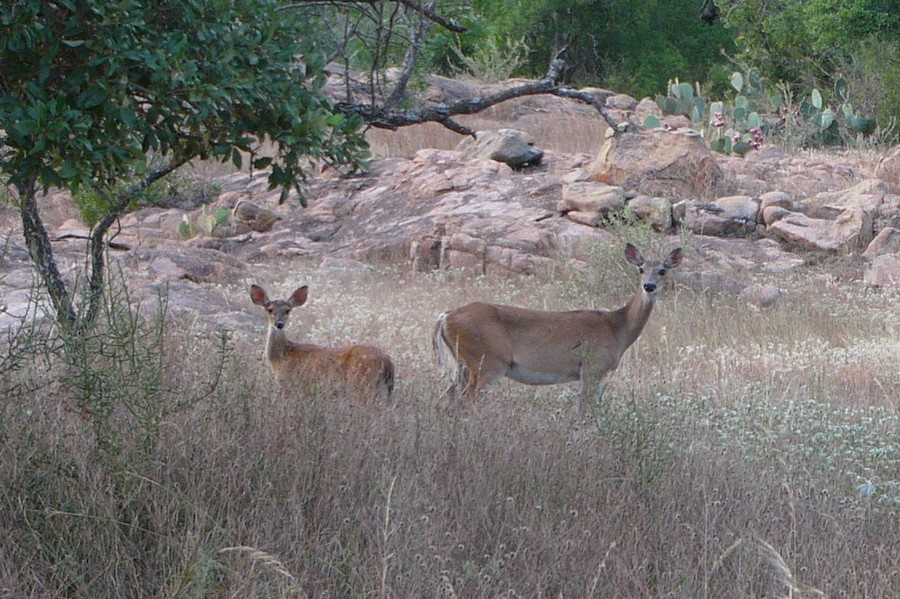
The ideal ratio will be somewhere around 1 buck per 2 does, plus or minus. A 1:2 buck to doe ratio is a good place to start. This number can be adjusted as a management program progresses, but too few does, such as 1:1, can result in inadequate fawn production and ultimately a shortage of deer for harvest in later years.
A sex ratio skewed towards does, such as 1:5, will lead to a decline in antler quality. Bucks expend a ton of energy during the breeding season. If they expend too much of it by attempting to breed numerous does then 1) bucks may not ultimately survive due to a lengthened breeding season (related to skewed ratio), and/or 2) post-rut bucks will not recover physically and antler quality will suffer.
There are some other negatives when the sex ratio of a deer herd is skewed heavily towards does. The take-home here is to initially aim for a 1 buck:2 doe ratio when managing small acreage for deer, then adapt as needed. Buck to doe ratio can be estimated using randomly-placed cameras or by recording the deer observed from stands prior-to and during the hunting season.
Harvest Strategies for Managing Small Acreage
Managing white-tailed deer on small acreage is challenging, but managing deer on large acreage is not easy either. Managing at scale can make proper deer harvest very difficult. Additionally, meaningful habitat work is expensive and time consuming when large acreage is involved.
The management that takes place on small acreage can be more focused, more precise. Habitat ultimately affects how (or if) deer use a property. The habitat found on a small property can be greatly improved for white-tailed deer with little more than time and hand tools. Much of this article has focused on population-side strategies for managing deer, but habitat is the other half of the equation.
In fact, habitat enhancement is even more important on small acreage as deer instantly respond to high quality habitat within their home range. If you build it they will come! The habitat management practices in this article will help make a difference on any property.
It’s important a deer manager determine early in the game what can and cannot be controlled. Neighbors play a role for anyone attempting to manage small acreage for deer. This may include the over-harvest or under-harvest of deer. It helps when adjacent properties are on the same page. Fortunately, the number of property owners and hunters interested in white-tailed deer management is at an all-time high. Talk to your neighbors and continue to do so on a regular basis.
Also, make sure to check out these tips for hunting small properties. The article focuses on attracting and holding deer on land throughout the year an offers a few pointers to close the deal during the hunting season. Successfully shooting mature bucks is a little different than simply producing them. But you have got to let them get older first, right?
Managing small acreage for deer can be challenging, but focus on the things you can control. The positive things that we do, whether through habitat or harvest management, will result in positives within the deer herd using the property. Harvesting big, healthy deer on small acreage will make your efforts that much more rewarding.