Roasted Soybeans and Deer
The benefits of supplemental feeding for white-tailed deer have been well-documented by researchers and land managers in recent years. In white-tailed deer management today, the combination of habitat management and supplemental feeding go hand-in-hand on most properties interested in providing optimal, year-round nutrition.
Though some land managers choose to supplement through food plots, others prefer to use protein pellets for ease and reliability. Regardless of the product used to supplement deer, the primary reason for providing supplemental feed is to improve the overall health of each individual animal in the herd.
Deer Nutrition
The health of a white-tailed herd is readily measured through the individual body condition of deer, the antler quality of bucks, and annual fawn production. Although the presumed outcome of providing additional food is better and healthier deer, land managers often look for different inputs — or different food options. For managers, it always comes down to ease of access to the produce they are feeding, deer performance while consuming the feed, and costs.
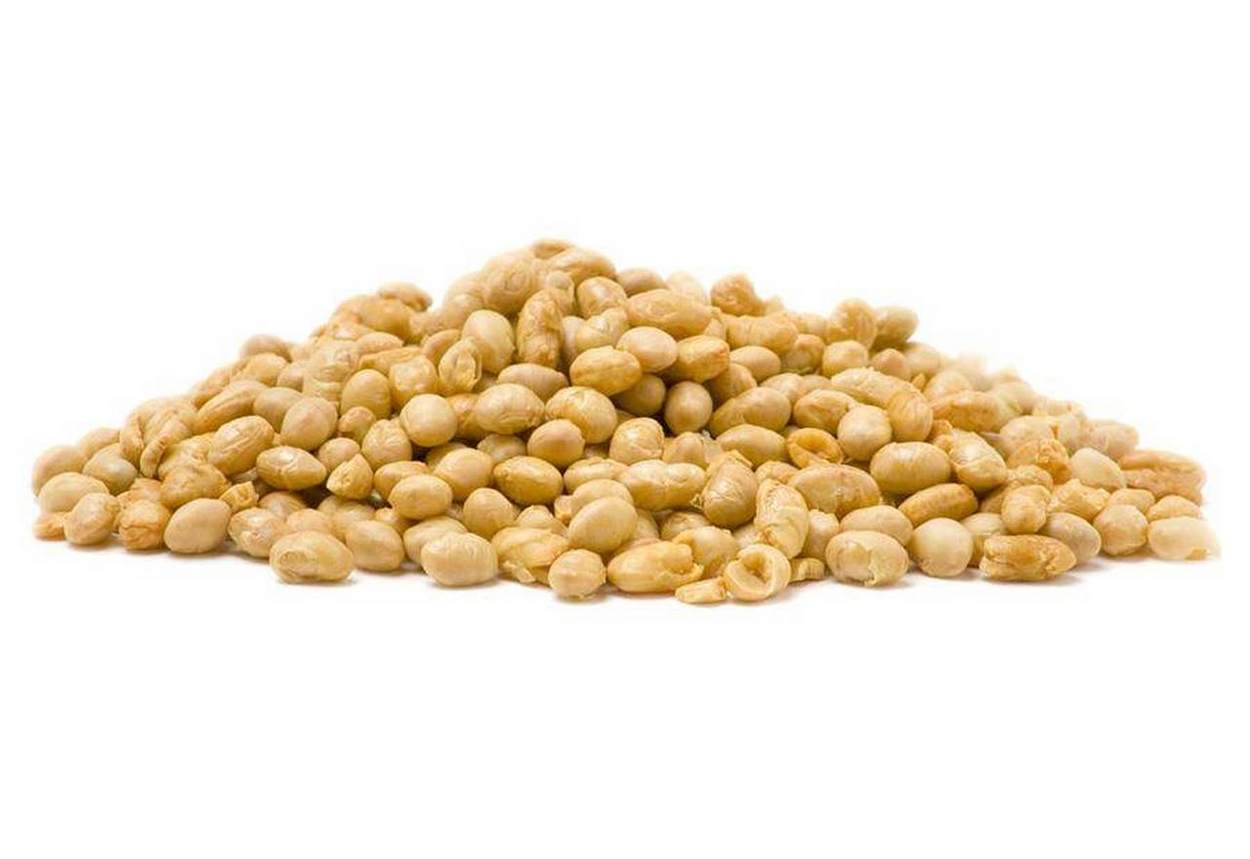
I’ve been asked time and time again over the years about feeding whole, roasted soybeans as a supplement for whitetail. Roasted soybeans are a good supplement for deer, but not a silver bullet for a deer management program. Feeding roasted beans can be done, and it can be done successfully, but it’s always good to look at the pros and cons.

Feeding Roasted Soybeans to Deer
First, let’s not confuse baiting deer with supplementing deer. Baiting deer with corn or other agricultural products can be great for attracting deer for the purpose of harvest, but corn is not a supplement. A true supplement adds nutritional value to an individual deer’s diet. Sounds simple enough, but why would a deer manager consider different options for supplementing deer? Well, the biggest concern is typically costs.
The dollar does not go as far as it once did, so hunters and deer managers are constantly looking for less expensive options. Currently, corn is $7, roasted soybeans are $12, and protein pellets are $11 per 50 pound bag (depending on where you buy them). Corn only offers 6 to 7% protein, soybeans average about 40% protein, and the pellets I quoted above are 20% protein.
All of these products get cheaper at bulk prices, but let’s look at the value. In other words, what do the deer on your property get for each dollar that you invest?
Comparing Soybeans to Other Supplements
Corn is an attractant so the value is that it will draw deer into your area. However, the money you spend on a bag of corn does nothing to actually help the deer other than making their belly feel a little more full. The addition of protein, however, really can improve the diet and body condition of individual deer. Roasted soybeans and protein pellets are both more expensive than corn by weight, but the value (what the deer gets versus what you pay) is much better!
Soybeans, at 1.7 times the price of corn, deliver over 5 times the amount of protein when compared to corn. Protein pellets, at 1.6 times the price of corn, deliver over 3 times the protein. Roasted soybeans also have 3 times the fat content of corn.
The value of roasted soybeans and pellets over corn is obvious, but there is more to consider when it comes to supplementing a deer’s diet. In addition to macronutrients (protein, carbs, fats), what about the essential micronutrients required by by white-tailed deer?
Soybeans and Protein Considerations
Protein is great, but deer can not survive on protein alone. Important micronutrients for whitetail include calcium, phosphorous, potassium, copper, selenium, zinc, and vitamins A and E. This is where protein pellets pull away, so to speak, from whole or roasted soybeans. Soybeans can have good levels of micronutrients, but not always.
The nutritional value of the bean will depend on the conditions under which it was grown and this affects the macro- and micronutrient levels. This will ultimately impact the amount of nutrients that are digestible by deer. In addition, roasted soybeans have more (bypass) protein than raw soybeans. This means roasted soybeans provide more available, usable protein than raw soybeans.
Roasted Soybeans for Whitetail
Where they are readily available, roasted soybeans are a practical way to supplement the nutrition of white-tailed deer. Of course, any food added to a deer’s natural environment should only be considered a supplement. Supplemental food is not habitat in a sack and can not be substituted for good deer habitat management. However, roasted soybeans can be used effectively to supplement animals where good deer habitat exists, but micronutrient levels can vary.
I have joined a new group of deer hunters who are very management minded. We have 2,200 acres in Llano and the property is stocked with cattle. We have 5 protein feeders and everybody either feeds protein or corn year round in their own fenced feeders.
The cattle now consider our feeders as food plots. They jump the feeder pens to eat protein and corn. I watch them pick corn off the ground, which they are not suppose to do. I was always told to never put spin feeders near protein feeders. And why should we feed corn out of season when it has little protein benefit, especially when we are feeding 15,000 lbs of protein in our protein feeders?
I think that nothing should be fed out of our personal spin feeders until September, when we shut down the protein feeders. What do you think?
Bob, it sounds like you guys are feeding protein pellets from late winter to early fall. That is a good management practice that is great for supplementing deer body condition, helping lactating does, and improving antler quality. I understand your concern with feeding corn in addition to protein during this time of year, and you are correct, it is not necessary.
Corn is best used as a bait for harvesting deer. However, many whitetail hunters do like to keep their corn feeders running year-round to condition deer to coming through the area. Deer may make going by the feeder routine, but it’s not really supplementing.
It sounds like the bigger issue on your hunting property may be the hungry cows. My suggestion would be to stop corn feeders during the off season, build stronger fences, or go with cattle panels. Good luck either way!
I live in rural North Carolina. I’m not a hunter, but more of a watcher. I have a corn feeder set up for several groups of whitetail deer that live near my property. It has become costly to keep the deer content. I would like to know when I can start backing off on the corn and when they will find there own feed?
I don’t want to quit and have these deer go hungry. Also what are some other problems that I created by “by opening a can of corn?”
I am involved in a small self management plan on a 90 acre farm in Pennsylvania. Our deer are free range and are very low pressured. We do a buffet of food plots, about 7 acres of turnips, radishes, oats and clovers. We are also involved in the creeps program. We have established a great heard and do not harvest buck until they have reached 130 class. What we seem to be lacking is antler mass. We have been told by local deer farmers to add protein to their diet. We were thinking of mixing roasted soybeans with corn for our winter feeders. We have also been told to be very careful on the ratio of the mix and could make the deer “sick.” My question is what is true what is false whats right whats wrong? Is there something else we can do to add antler mass?
Mike, check out this article for you on increasing antler growth.
Mike P, the feed store where I do business at here in Texas sells a product they make at the mill of Roasted Soybean and Corn mixture.. called -“Buck Rations.” They mix a 70/30 ratio… 70% corn and 30% RSB.. With RSB around 35-40% protein, they say it is too much protein for a whitetail to pallet, so this is why the ratio.. The mixture brings corn (6-7%) up to around a 16-17% protein. Yes, it does add value too increase the mass and weight of a whitetail, both body and rack! This past year corn was $8 per 50# and the Buck Ration was $10.50 per 50# bag. Conclusion: for a 30% increase in cost, you get 2.5X more in protein.
I am interested in the supply company that makes the soybean ration. I am interested in finding roasted soybeans. Thanks
I work for a company in Ohio that manufactures roasters for soybeans and other grains. Feel free to contact us!
Which feed company, making roasted soybeans, could someone recommend? I am in New England.
Struttys Feed in Texas ( San Antonio) sells the corn soy mixture at 10.50 for 50 lb bag.
I supplement my deer with this mixture and have been looking into eliminating the corn portion. My deer are pets in that they have been landlocked in the city for 20 years and our neighborhood has been made into a wildlife neighborhood with a large acre park just for them. More and more development has impacted their natural foliage so a number of us try to help.
Looking for roasted soybeans to feed whitetail deer in New hampshire.
Michael, good luck with your search. I would bet whitetail in that area would go crazy for soybeans since they are both a high quality food and not commonly found there.
Hello,
I read the post by KC Waters and wanted to know how the community was convinced to protect the wildlife? I live in a landlocked community. Our HOA did a count of 188 deer and then used what they called a Texas Model and determined there are 1001 and have gotten a TTP permit to cull 400. I’d like to be sure the count is legitimate. They say there isn’t enough habitat for this number. No resident I speak with believes we even have a couple of hundred. Anyone have any suggestions on how to save them? Anyone know a conservation group who might help?
Terri, surveying deer is rather easy. You count deer in the areas you can see and then assume that an equal density of animals exist in the areas you can not see. If the HOA counted 188 deer, then you have the couple hundred deer they actually observed + a whole lot more, assuming they only observed a portion of the property, which is usually the case. It’s not a conspiracy or magical math, it’s extrapolation. Conservation is about the wise use of resources. I think you are interested in preservation, which means doing nothing at all. That’s never a good option when it comes to deer, even though many homeowners choose to move into deer habitat, increase deer numbers through supplemental feeding, and then protect them as if they are some type of endangered resource.