Deer Antler Growth
Antler growth in deer really is phenomenal! In fact, deer antlers are among the fastest growing tissues in the animal kingdom. They grow as much as 1/2-inch per day during peak antler growth! Of course, the amount of antler material a buck grows depends upon nutrition, genetics, and age. Let’s look at some factors that effect deer antler growth.
Actively growing antlers are covered with a living tissue called velvet; because it really looks and feels like velvet fabric. A buck’s antlers are both extremely delicate and sensitive to the touch during antler development. Bucks are not aggressive towards each other during the antler growing period. However, this is still the time when most deer antler damage occurs.
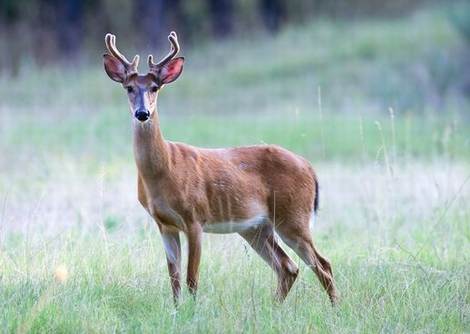
Growing antlers are sensitive. As a result, disputes between bucks at this time are handled by bucks standing on their hind legs and swinging their front legs in the same manner than doe deer use to fight and establish dominance. This technique allows groups of bachelor bucks to sort things out, so to speak. More importantly, it keeps their all-important headgear intact.
Key factors of annual buck antler growth in whitetail include:
- Age of buck
- Nutrition available to the buck
- Stress (physical) from prior breeding season
- Genetic potential for antler growth
- Older bucks typically shed & start growth first
Video: Whitetail Buck Antler Growth
Antler Growth in Bucks
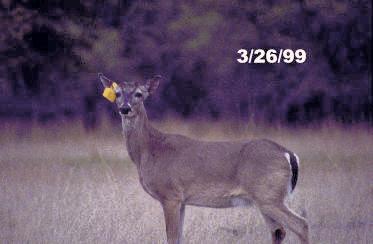
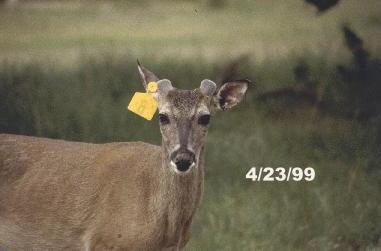
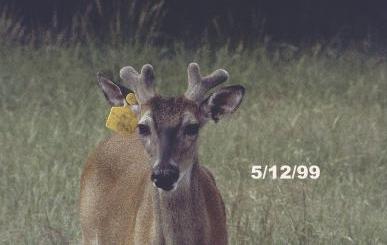
White-tailed deer antler growth usually begins during the month of March or April. Buck antler development ceases by August or early September. In most cases, typical deer antlers begin growing out a buck’s head in a backward motion then quickly change direction and sweep forward as we commonly know.
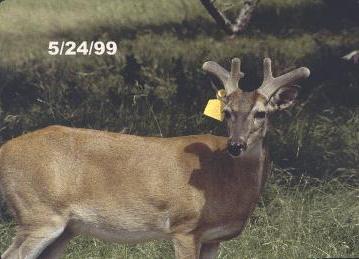
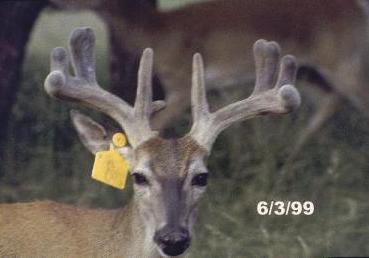
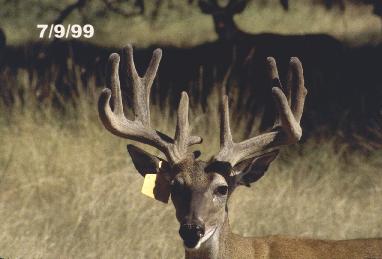
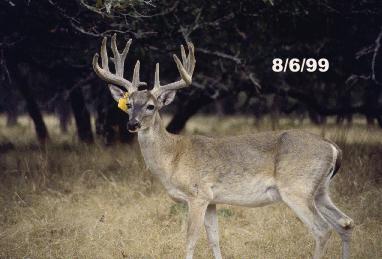
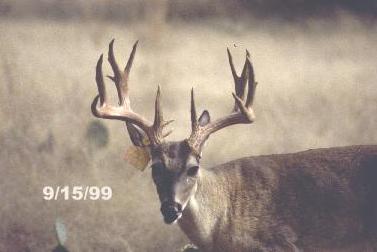
So how long does it take for a buck to form hardened antlers? The following photos illustrate antler growth for a single white-tailed buck in Texas (in a research facility) from March through September. Take a look at these stages of antler growth. It all happens relatively fast!
Antler Growth Photos by Month
Antler Growth Increases with Age
Whitetail bucks drop or shed their antlers during the late winter and early spring. Fortunately, they grow them back annually. Antler growth in bucks generally increases annually as a buck ages, gets older. Substantial increases in antler size (and score) can be observed as a buck goes from 1 to 5 or 6 years of age.
White-tailed deer do not complete skeletal growth until about 3 years of age. During this time, bucks put a lot of the same materials that are used for the growth of antlers into long bones and other parts of their skeletal system. This one of the primary reasons that a buck’s antlers often make a noticeable jump from 3 to 4 years old — skeletal growth is complete and many of the antler growing supplies are now stored in those bigger bones.
Environmental Effects on Deer Antler Growth
The annual cycle of antler growth is amazing. I and hunters like myself enjoy watching particular bucks from year to year. Often times, antler configuration makes it possible to ID most bucks in subsequent years. A whitetail buck will typically show an increase in antler growth until at least age 6, possibly older. Most of the potential will be realized by 5 years of age.
Nutrition plays a role in a buck’s antler size. Bucks that have good, stable food sources provided by high quality habitat will produce better antlers than those of the same age that lack adequate nutrition. To take it further, precipitation plays a role in annual antler growth, especially as you go West in the whitetail’s range. High quality habitat can turn into mediocre habitat when it’s dry and protein-rich foods are not available.
Steven Ross, I have a 5 year-old 14 pointt buck who just developed a huge drop tine this year. He has been a south Texas typical until now. I would wait one more year to get his full potential. You never know!
We have seen an 8 point buck near the house but one whole side of the rack is missing. He is living in prime nutrition territory – Southwest Wisconsin with corn, trees, acorns… you name it and we have it. Will this buck grow back the missing antler next year?
What are all the little tips around the base of a 4 year old 11 point? Looks kinda like more points tried to develop but didn’t. Can you help with an answer? I see lots of bucks over the past 4 years on my land but none bigger than an 8 point and all have basket size racks, except for the 11 point taken 3 years ago. Why so many basket size and no big racks?
We are in the Southern Tier of New York state. Very close to the Pennsylvania border. A friend of mine just shot an 8 point yesterday. Really nice rack a 23 1/2″ spread. The deer looks like an older buck. Another guy here says he had the same buck on his trail cam last year. The reason he said was that it has to be the same one because of the width. He believes no 2 buck could have that wide of a spread and if it was that wide last year, it will be the same width every year. Is that true? The rack on this buck is heavier than the one on the trail cam.
Melanie B, it could be the same buck or it could be different. Antlers generally get heavier as a buck ages, so this would explain the heavier antlers on this wide buck. Of course, it could be a completely different deer. Compare the photos from each year. It will look very, very similar if it’s the same deer.
I have a buck that i got at 1 or 2 days old. I got him May 15 2014. So he is not quite 1 1/2 yet and his sixth point is branching off to its eighth point. Do you have an estate on how big they will be?
A long time ago I was given a set of antlers and each tine had like an `S’ shape bend in it. Could this condition have been caused by a vitamin deficiency? Thanks.
Gary, I supposed the odd antler growth could have been the result of lack of vitamins, but I suspect it was probably from something else. May have been caused by some type of disease such as EHD or could even be genetic. Difficult to say, so your guess is as good as mine!
Thanks for letting me know.
I had a small four pointer on my trail cam two weeks ago, but haven’t seen him in the pictures as of today. Now a decent eight pointer showed up. Could this be the same buck?
It’s not the same deer. At this point there is not enough time for bucks to grow additional antlers. Different buck!
I bet the antlers are about the same size as those for a average wild 2 year old whitetail buck. Not big.
How many points can a deer have to still be considered “typical”?
Virginia, there is no limit to the number of points that a buck scored as a typical can have. When bucks are scored, whether typical or otherwise, the symmetry of the antlers is taken into account. This is why there is a gross (total antler measurements) and a net score (total antler measurements minus all the differences in matched antler measurements).
So, a buck can have an unlimited number of points and be scored typical, as long as the points are matched on each side. It’s only when they start having kickers and stickers and antler growth that is not normal that being scored as a nontypical is the way to go.
I live in west Tennessee. When should I put my trail cameras out to start looking for growing bucks? I’ve got my mineral stations out and corn they are tearing the ground up to get the mineral. I’ve been spreading 160 lbs of corn out every 3 weeks when I go refresh my mineral stations. The land owner has been telling me that within 3 days the corn out it is all gone. What should I do or not do?
Jerry84, get your cameras going by the first of August to start taking inventory of the bucks in the area. If you’ve got deer tearing up mineral then that sounds like a good place to put up a camera. If you can feed in your area, then think about getting a timed feeder to dispense your corn. It will save you time and probably mean less of it goes to non-target animals. But as far as scouting, get your cameras out and check them only every 2 weeks or so. Best of luck!
Thank you. This is so informational and clear. And your picks really enhance what you shared. I found a pair of antlers in the woods near me and thought I’d recalled that bucks shed their antlers like an exoskeleton. Aha!
Elizabeth, glad you found the information you were looking for. Enjoy your found treasure!