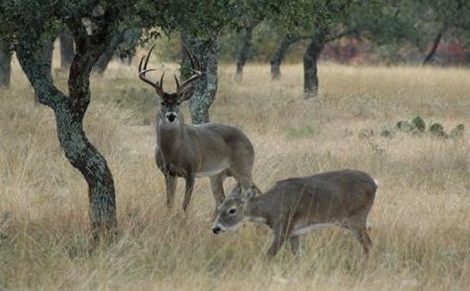

For those that work close-hand to better manage deer and deer habitat, we are always learning how we can improve the conditions of both. To better understand how we can enhance available deer habitat, deer nutrition, and the health of a deer herd, any information we can gather about deer help the cause. Here are some additonal facts you may not know:
1. White-tailed deer establish a home-range territory and will not leave it! It has been documented that deer will starve rather than leave their territory. Moral of the story — maintain adequate nutrition!
2. Wild white-tailed have been known to live at least to 11-years in the wild, but I suspect a very small percentage live even longer. Now those are mature deer!
3. With optimal habitat conditions, deer populations can double in size annually! Without regulated hunting and proper harvest management, deer will destroy wildlife habitat and suffer tremendous population die-offs.
4. If you took 2 white-tailed deer in the absence of predators, in just 7-years those two animals alone can produce a herd of up to 35 animals! I wish my savings increased at that rate.
5. In areas of overpopulation, deer cause an over-browsing affect we call a “browse line.” You do not want a browse line on your ranch! After a browse line is created, it takes years under a low deer density for browse plants to re-establish and recover.
I wish you had 10 interesting facts about all animals on here!!!
I was on the lease yesterday 9/7/09. I saw two bucks they were about a mile apart both deer had three does with them already. Every thing I have read says the bucks will stay together untill around the rut. Can you explain?
Bachelor groups of whitetail bucks will break up a short time before the rut. However, many yearling bucks (1 1/2 years old) will not run in bachelor groups with middle-aged and more mature bucks. Instead, these young bucks will stay with mamma and run with his sibling/s and or her new fawns. If the bucks you observed were young, this could be the case. If the bucks were older, I would strike it up to coincidence. Bucks may be “running” with does this time of year, but they are not breeding.
This is a great website. Please add more articles!
I noticed that cows will move out of the immediate area where I field dress a deer. Does this reciprocate with deer? If there is a dead/decaying cow nearby, will the deer avoid this area?
This is a great website. Add more interesting facts.
Hi, I am doing a science fair project on what white-tailed deer like to eat more; grass, corn, or apples? Which one do you think?
Ed, of the 3 items that you list, deer likely prefer apples the most. Whitetail will starve to death if all they have to eat is grass, because they can not digest it well. Corn is often used as a bait and deer will also eat corn plants, but apples and the leaves of apple trees are highly preferred.
Last night, my knowledge of the whitetail deer was challenged when I was informed by two well-meaning whitetail novices that whitetail and axis deer interbreed. It made no sense to me. However, I can find nothing online disputing it. I assume that it’s because it’s such a preposterous idea.
I have yet to see the two species running together. They do not compete for food. I believe they probably rut at different times of the year. Please correct me if I’m wrong. I’m not a hunter or a deer aficionado, although I love and grew up on venison.
My grandfather was the late, Tom Hayes, author of “Hunting the Whitetail Deer.” He was amazing. I only wish I could call and put this question to him. Thank you so much for your help.
Glad-
White-tailed deer and axis do not interbreed, but they do compete for food. The bulk of the whitetail’s diet is made up of browse plants, which axis deer also prefer to consume when it is available. However, axis also readily eat grass when the browse runs out, but whitetail can not survive on such low quality food.
I just bought a house on a 300 acre ranch. I have already put out salt blocks. Was wanting to know when to put corn out? I cant afford to plant this year, but are there any alternatives to feed that can be broadcasted for deer. Thanks, Jason
If you are in Texas, I would say anytime is a good time. You usually can find some sort of seed to broadcast when the weather permits for planting. Remember though, that broadcast seed does not usually germinate as well as planted or drilled seed.
Once they have tasted dry raw peanuts, they will walk past what you have mentioned with possible exception of apples sometimes.
Do deer like apples better then grass and corn?
Dakota, I’d have to say, yes, whitetail deer do like apples more than grass or corn. For one, grass makes up less than 10% of the whitetail’s diet. Corn is not as tasty as apples and would be more difficult for them to digest. Although corn has quite a few carbs, I suspect the sugar in apples trumps that of corn. Grass would be no contest.
I put out corn and apples when in season and now I have as many as 15 deer in the yard at the same time. Had as many as 8 bucks at once plus 12 turkeys, 3 groundhogs, rabbits, chipmonks and bears, Some of the deer will eat bread out of my hand. Want to know if I’m doing any harm?
Tom, it’s best not to feed deer table food. Like any feeding, when deer congregate it makes them more susceptible to diseases, predators, etc. Probably not a major factor overall, especially considering it sounds like you have a high deer density in your neck of the woods already. It’s always neat to see wildlife up close and personal, but it’s not good when wild deer lose their fear of humans. This opens up potential issues between you, visitors to your home, grandkids and others should these deer get tempermental. I wouldn’t worry about it too much but understand you never know what a wild animal is thinking or will do. Bucks can get ornery during the breeding season and does can be quite protective when they have fawns.
I just observed a yearling in my driveway. I live around woods and have seen deer in pairs, and threes. But this little doe/buck (too far at dusk to determine) appeared lost. My son, who hunted a few years back, said that yearlings are often alone. That mother doe pushes them out to make way for the new fawns. Is this true?
Margot, yes, this is true. A whitetail doe will push her yearlings (1+ years old) away from her new fawns.