Trophy Score

When Do White-tailed Bucks Shed Their Antlers

When Do White-tailed Bucks Shed Their Antlers

White-tailed deer shed their antlers every year prior to the re-growth of new ones. It may surprise you to find out that the entire shedding process takes only two to three weeks to complete, and of course the re-growth phase takes place over the summer up into very early fall. Bucks have antlers throughout spring, summer, and most of the winter, but shed them sometime between January and April (depending upon the animal and latitude), after the rutting season comes to an end. A buck can carry-on without antlers at this time of year because they do not need to fight-off other bucks for territory and does.
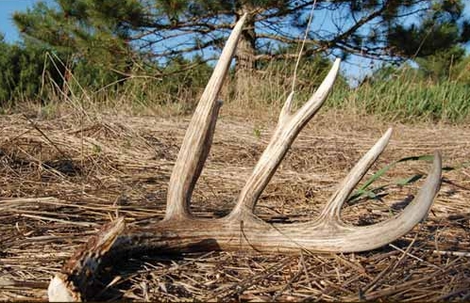
Deer antlers differ from the hollow horns of cattle in that they comprise solid bone tissue with a honeycombed structure. Pedicles, the skin-covered nubs protruding from a buck’s skull, serve as a base for antler growth and support the deer’s antlers. However, keep in mind that the pedicles are permanent fixtures on the deer’s forehead, and are the point at which antlers separate from the deer each year.

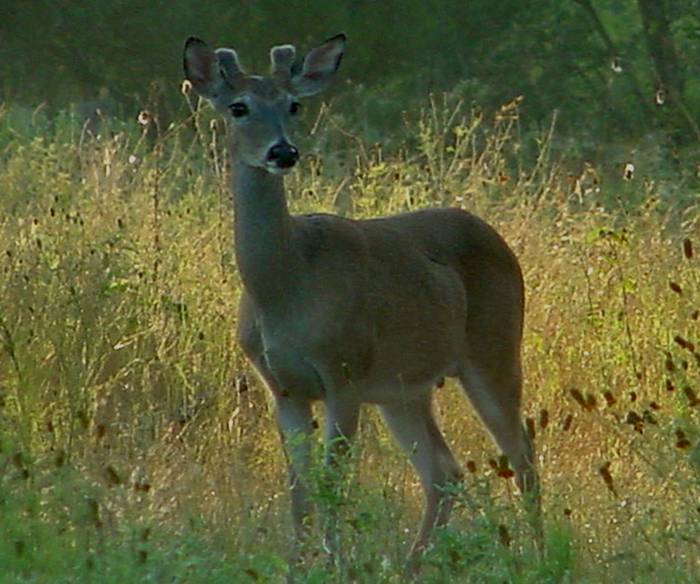
During the first 8 to 9-months, the pedicles grow and begin to appear on a buck fawn‘s forehead (nubbin buck). Then, the buck actually begins antler growth as a yearling buck (first set of antlers). Each year the buck will go through the antler growing process and shed its antlers. As the deer matures, the antlers typically increase in mass, beam length, and point length. They also will add points in many cases, but not always.
When Do White-tailed Bucks Shed Their Antlers

During growth, antlers are covered with a sensitive skin commonly referred to as “velvet.” This velvet is filled with blood vessels that constantly feed the antlers the vitamins and the minerals necessary for bone building. Antler growth demands a lot of vitamins, minerals, protein, and energy, so adequate native forage or supplemental feed must be available to meet these requirements for maximum antler growth.

Antler growth can range from two to four months depending upon the individual buck. After this time, a hardened ring forms at the base of the antlers (burr) that shuts off blood flow to the velvet-covered antlers. As a result, the velvet deteriorates, dries up, and falls off, often assisted by the white-tailed buck, which rubs his antlers against tree bark.
When Do White-tailed Bucks Shed Their AntlersWhen Do White-tailed Bucks Shed Their Antlers

At this point, the antler growing cycle is complete, the buck will prepare for the rut, and the shedding cycle will resume after the fall and winter breeding season.


Related Posts:

30 Comment(s)

  1. Those pictures of the deer and you were really cool.The deers antlers were the biggest I have ever seen.

    gail | Jul 15, 2008 | Reply

  2. It is early December and I came across a whitetail buck with no antlers. Not broken off, but they actually look like they never developed. He looks like he is about 3 years old. What is up with that?

    Lonnie | Dec 9, 2008 | Reply

  3. Where do the antlers go when they fall off the buck? I never see any laying on the ground.

    Steve Billings | Dec 16, 2008 | Reply

  4. From what I understand, if a buck gets castrated or injures himself while it has no horns he will never grow any more antlers. On the other hand, if a buck gets castrated or injured while he has his horns, he will not loose them. I am not 100% sure of this, only a good friend of mine told me this. Anyone know anything about this?

    Lee | Mar 11, 2009 | Reply

  5. I though I saw a whitetail buck in a field that was growing its antlers back. It’s March and is that possible.

    Martin | Mar 16, 2009 | Reply

  6. It is definitely possible to see white-tailed bucks growing antlers. Most bucks grow antlers about the same time, but there are also outliers—those that start very early or very late. Where are you located?

    Buck Manager | Mar 16, 2009 | Reply

  7. I live in salem co. nj.

    martin | Mar 24, 2009 | Reply

  8. I had no idea that white-tailed bucks shed their antlers annually. I thought the size of a bucks antlers was a great indicator of how old a buck is. To my suprise, I learned I was wrong. It is amazing that a buck sheds their antlers annually. They are amazing animals.

    TLag | Sep 26, 2009 | Reply

  9. Well see, squrriels can eat one shed antler in under ethier a day or a week, I can’t remember exactly. Thats why you don’t always see them, but alsoIi want to know the exact times that they lose them because other wise the varmets get to them first.

    Jake | Dec 8, 2009 | Reply

  10. I harvested a four point buck that was still in velvet. I was told it was called a stag. How common is it harvesting a buck like this?

    Mike | Dec 12, 2009 | Reply

  11. I read an article about moose that said if a moose is casterated his antlers would fall off and the next set he grew would be very irregular and would never fall off. I assume this would apply to deer too since they are in the same family. I’ve never seen evidence of this myself.

    Ian | Dec 19, 2009 | Reply

  12. Yes, this is correct. If a deer is castrated while he has his antlers he will not shed them, but if he is castrated while he has none he will not grow them either.

    Brian | Dec 20, 2009 | Reply

  13. I live in Vermont and I’m wondering if it is possible to get a better time frame on when bucks shed their antlers around here? I have looked all over my property from December to mid-February and have found nothing, but I know the deer bed here and live here. We see them all winter long

    Brian | Dec 20, 2009 | Reply

  14. When antlers hit the ground they don’t disappear. You just have to put in the time and have a sharp eye to find them. But knowing where to look can increase your odds.

    deer slayer | Jan 28, 2010 | Reply

  15. Lonnie, the buck could of grown his antlers a lot earlier, before every other buck, or he could have lost them earily, or he could of lost them in a fight. And how do you know it was a buck? If the deer was smart he would have ran right when he saw you? I think deer in suburban areas shed their antlers earlier than country deer.

    deer slayer | Jan 28, 2010 | Reply

  16. Nutrition is a HUGE factor in when bucks drop their antlers. Our neighbor (both of us have large high-fenced ranches) that does not provide protein and mineral supplements had his bucks dropping antlers in January and February. We feed supplements and our bucks drop their antlers around Easter and grow much bigger antlers. The deer on the other ranch drop their antlers sooner probably because the extra weight of the antlers requires more calories burned for the bucks. In non-optimal conditions the buck needs all stored calories available to him.

    Hunter D | Jan 31, 2010 | Reply

  17. Deer sheds are commonly eaten by small rodents and other animals because of the calcium they contain. It’s often a race to get to the sheds before the critters do!

    ZRR | Mar 3, 2010 | Reply

  18. I just found a fresh little buck shed antler in Pennsylvania on October 13. It was very symmetrical looking and had 3 points. The pedicle area was not damaged, from the looks of it. Any ideas on why this happened so early?

    Jerry | Oct 14, 2010 | Reply

  19. Jerry, my guess would be that is has something to do with the health of the buck, which perhaps has effected its testosterone levels. Poor deer health, which can be caused by poor diet, injury, or otherwise, impacts many of a deer’s bodily functions.

    Deer antlers are typically shed after testosterone levels fall off after the breeding season. Something has already caused your buck to do just that.

    Buck Manager | Oct 14, 2010 | Reply

  20. Usually you will not see shed antlers unless you go right after they fall. In the north both squirrels and and chipmunks will chew them to nothing, so if you want to find them you will need to go about a month after the post rut when everything dies down. It varies by location though.

    Brandon | Jan 3, 2011 | Reply

  21. Anyone know when is the best time in Kentucky to look for sheds?

    Adam | Mar 12, 2011 | Reply

  22. I think that hunting is a good thing for both hunters and the deer, and I think that hunters should have a limit on both buck and doe killings to help manage the deer population. If there are too many deer there will not be enough food for the deer and soon they will die off because there are not much food to go around. Any deer killed should be used for eating and NOT for just for sport or only for their heads.

    April Leblanc | Mar 12, 2011 | Reply

  23. I have observed a buck for three years in a row that has not shed his antlers. I’ve witnessed it in June, March, and May… all different years… it is now March and the deer’s rack is still in velvet. The antlers are nowhere near symmetrical and they are still the same size as they were in November of last year? It is a whitetail I’m sure, and I just snapped some pictures today.

    Some friends of mine have suggested it was a female? It has a large four point on one side and a stub on the other about 5″ long and as thick as the other side about 2″. Healthy looking. If you want to see holler at me. Located in Michigan.

    David | Mar 14, 2011 | Reply

  24. We have a buck in the area that I know about. We have been keeping an eye on him since November and it is now April and he has not shed his antlers yet. Is this unusual? We never saw the buck in velvet either. We see him every night. The buck is not that big, but nice.

    Hommy | Apr 16, 2011 | Reply

  25. Last night in northern Ohio I saw an 8 point that had not shed its antlers yet. And no, it wasn’t in velvet either. That’s pretty uncommon isn’t it? I have never seen a deer so late into April that hadn’t shed yet.

    Carl | Apr 19, 2011 | Reply

  26. I know that in New Jersey you are limited on bucks. I think, and don’t quote me, for bow and extended bow season you have to show a doe before you can shoot a buck, and same with rifle. Muzzle loader I’m not sure, but the problem with this is you can get a permit for each section of the hunting season and I feel that if you by one of the sections you can not purchase any other. But that is how New Jersey deals with their deer population. New Jersey is a VERY backwards state. There are also zones that can not be hunted on as for sake of the lower population.

    Laura Everitt | Aug 28, 2011 | Reply

  27. I find antlers all the time. But animals like porcupine, and every other type of rodent out there, likes to chew on them to get the calcium out of the bones. Wolves, coyotes and domesticated dogs like to chew them, as well, so they don’t last too long unless they’re in an inconspicuous place.

    Luka | Dec 4, 2011 | Reply

  28. But no one has answered the question as to “why” exactly does the buck lose his horns each year? It seems to be a tremendous use of body energy to create a new set of antlers each year. Why not just save them for next year?

    Joe Marman | Dec 6, 2011 | Reply

  29. I’m from Meigs, Ohio, and on December 19 I found a huge shed. It kinda threw me off because it’s so early, but I went to a deer ranch today and all but three of his bucks has lost their horns. I’m lost lol. I shed hunt every year, but why did they fall off so early? Is it the weather? The rut came in early to this year?

    Christine Neal | Jan 5, 2012 | Reply

  30. Christine, there are many factors that can impact the annual antler cycle. Habitat conditions combined with an individual deer’s body condition can play a big role in antler growth. Also, food availability can cause deer to enter the rut earlier than normal or start later usual. I suspect environmental conditions and habitat in your area were better than normal this year. Did your area get a lot of rain in late summer or have an especially large, early acorn crop?

    Buck Manager | Jan 7, 2012 | Reply

Talk Deer Management & Hunting - Post a Comment