Habitat is the cornerstone of white-tailed deer management. Plant communities are an important component of habitat and are composed of forbs, grasses, and woody plants (browse). Healthy, diverse habitat sustains native wildlife populations and almost always represent healthy deer herds.
However, browsing of woody plants by overabundant white-tailed deer and domestic livestock may have negative impacts on perinnial shrubs, trees and the overall habitat.
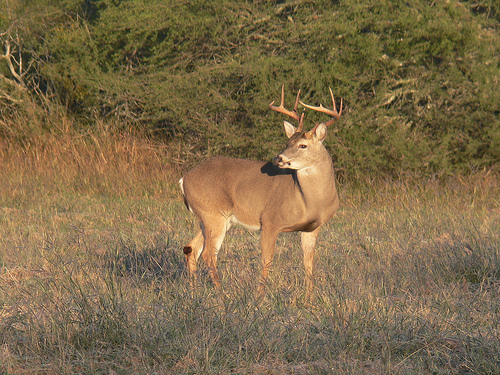
White-tailed deer are browsing animals, not grazing animals like cattle. As a results, browse plants serve as important food sources for white-tailed deer and grass is of little to no value. Browse plants consists of the twigs, fruits, and nuts of trees, shrubs, and vines.
Excessive browsing may lead to decreased plant vigor, increased susceptibility to disease, or decreased reproduction and seeding establishment. Stresses such as these could potentially cause the disappearance of some plant species important for quality deer habitat. Consequently, deer biologist typically quantify the most palatable browse plants in an area in an attempt to monitor browsing pressure by the local deer herd. Sound deer management decisions can be made by recording browse plant use by white-tailed deer.
In any area, three classes of browse plants exist: first choice, second choice, and third choice. As you would expect, first choice plants are those that deer relish — the ones they look to consume first. Third choice are plants deer really do not care to eat. These third choice plants are foods deer can eat, but they choose not to unless first and second choice plants are unavailable.
Second choice browse plants offer the most information about the local whitetail herd. First choice plants almost always show heavy browsing, unless there are very few deer in an area. On the other hand, third choice plants are often used very little, unless the number of the deer in an area has greatly exceeded the carrying capacity of the property.
Monitoring the consumption of second choice browse plants by white-tailed deer gives landowners interested in deer habitat management the best information. Here are browse plant preferences for South Texas by preference:
First Choice – Coma, Cedar Elm, Southwest Bernardia, Four-wing Saltbush, Guayacan, Granjeno, Manzanita, Sugar Hackberry, Texas Kidneywood, Vine Ephedra
Second Choice – Anaqua, Anacahuita. Blackbrush, Brasil, Catclaw Acacia, Cenizo, Colima, Guajillo, Hog Plum, Huisache, Little Leaf Sumac, Live Oak, Lotebush, Palo Verde, Ratany, Retama, Texas Ebony, Twisted Acacia, Woolly Bucket Bumelia, Wright Acacia
Thrid Choice – Agarito, Allthorn, Amargosa, Coyotillo, Creosotebush, Desert Yaupon, Green Condalia, Honey Mesquite, Knifeleaf Condalia, Mountain Laurel, Narrowleaf Forestiera, Shrubby Blue Sage, Texas Persimmon, Whitebrush, Wolfberry
This list of important woody plants for white-tailed deer in South Texas should be used as an example of the information available to those interested in producing high-quality deer and habitat. Find this information for your area in publications or by contacting a biologist at your local department of natural resources.