Deer Management on Small Acreage: Part 1

Managing Deer on Small Acreage

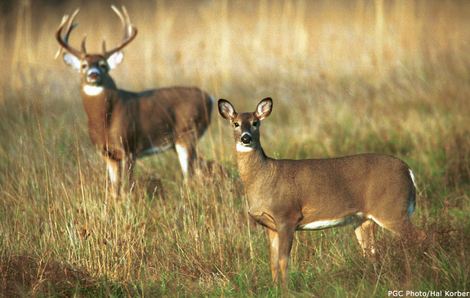
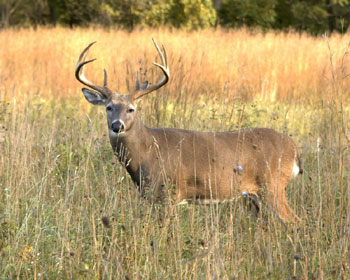
Deer management is challenging. Attempting to manage deer on small acreage can be down right frustrating. When I say small acreage, I am referring to properties from 500 acres on down. Simply said, it is very difficult to manage white-tailed deer on small ranches because neighboring properties can influence an area’s deer population. Game-fenced ranches are a different story.

Don’t give up just yet if you own or hunt small acreage. There are still a few things you can do to manage and improve deer in your area. Favorable results can result from a focus on deer habitat improvement and harvest management.

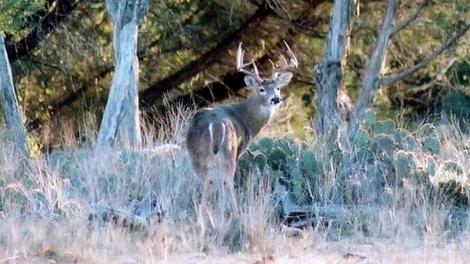
Question: “I am a new hunter who has access to a small (85 acre) piece of property in Edwards County, Texas. I want to improve the quality of deer on the land that I hunt. Due to the very rocky terrain, food plots are out. I also need information on estrus cycles and need to know if the second and third cycle can degrade the quality of offspring. This land has a large number of 2-3 year old spikes and the buck to doe ratio is about 1 to 10. I am seeking any and all information to improve quality of deer.”
Small Acreage Deer Management

Small Acreage Takes Focus

First of all, food plots are fine if the land will support them. However, food plots are not necessary for the management of deer. They are not a cure-all for poor habitat either. Food plots are most important for managers attempting to support deer populations just at or slightly above the carrying capacity of the habitat found on a property. Small food plots are good places to attract deer for harvest., but small plots are not providing supplementation.

Providing supplemental foods will help deer on a ranch, but the first goal of any deer management program is good habitat management. Here is one thing to remember about food plots, especially spring food plots: When deer really need them, they will not grow. When they do grow, the deer do not need them. Small acreage tracts really can not afford to give up space to annual food plots.

Small acreage land managers must focus on good habitat. Manage the plant communities found on the property correctly and then you’ve got native vegetation that produces forage year-round for deer. A white-tailed deer eats about 2,000 pounds of forage annually. Consider managing existing vegetation to improve the growth and quality of foods. This can include brush management, forest thinning, prescribed fire, overseeding of pastures, and the addition of fertilzer. Prescribed harvest will keep deer numbers in line with the habitat, but first you need to know how many deer use the property.

Deer Surveys on Small Acreage

The next objective of a manager is to estimate the current deer population. Deer surveys can estimate the number of acres of habitat available for each deer. After the deer density is estimated, the manager can determine herd composition and harvest objectives. Now, this is where you need to think outside the box, outside property’s boundaries. Habitat management and deer surveys will only get you so far. The next component of a small acreage deer management program is harvest management.

I mentioned earlier that it is very difficult to manage deer on less than 500 acres because of the influence of neighboring properties. Deer have annual home ranges that average about 600 acres or more in size. More often than not, the number one reason management programs fall short is because of heavy harvest pressure on young and middle-aged bucks. The premature harvest of good, young bucks by neighbors is a morale killer of any property’s management program. Just the thought prevents most landowners or lessee from even attempting any type of deer management.

Multiply Deer Management Efforts

We generally discussed what a small ranch can do to benefit white-tailed deer in-house. But what about when deer are not on your property? Another important step outside of providing good habitat and estimating deer numbers is to contact neighboring land managers. This is good for many reasons and may determine if a small acreage property will attempt to manage deer.

First, let surrounding property owners that you are interested in improving the quality of deer. Most landowners are not opposed to better deer. Secondly, ask if they lease out their land or hunt it themselves. If the landowner hunts the property themselves, ask if they would be interested in forming a wildlife cooperative.  Multiple properties could be managed under a single management program.

If the landowner leases out the hunting rights, ask for information so that you can contact the lease coordinator. Most hunters that lease land for deer hunting already have some type of deer harvest rules in place. Simple modifications of harvest strategies may be all that is needed to improve the quality of the area’s deer herd.

Managing More than Deer

Some hunters blame “the neighbors” for shooting everything that walks. In turn, they themselves shoot young bucks believing that if they do not—their neighbors will. This often is not the case, but it likely comes from a place of fear or it’s merely a way to justify their own actions. It’s rarely as bad as one thinks although there are some horror stories out there. Communication can provide you the information you need to make an informed decision. Communication between neighboring properties can get everyone on the same page.

Most landowners want better quality deer and are open to forming a wildlife management cooperative. However, some will have no interest in deer management or simply will not want to be restricted in any way on their property. If this is the case, there is nothing you can do except to continue to contact the owners of the other properties surrounding your property. It only takes one neighbor with similar goals to increase the area under management by 2 to 20 times.

Small Acreage, Huge Potential

Many of the issues facing deer management on small acreage ranches have been addressed above. Although the list of issues and solutions is not all-encompassing, the biggest issue is overcoming the lack of land size. Ideally, the best way to manage deer on small properties is to join with neighboring ranches to form wildlife management cooperatives, also known as wildlife management associations. This groups smaller properties into a larger unit and allows for a single, comprehensive management program.

Although not a perfect system for overall deer herd management, wildlife cooperatives do provide the best avenue for harvest management on small acreage ranches. The remainder of the readers question is addressed in this second article, part two of managing deer on small acreage.
Buck Harvest Strategy and its Impact on Your Deer Herd

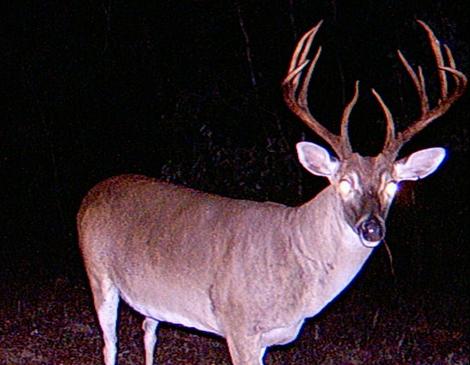
Harvest is a critical component of any white-tailed deer management program. Not only does hunter harvest play an important role in keeping deer numbers in check with the available habitat on your lease or ranch, but the harvest rate and types of animals removed determines what deer will remain on your property. Although this is important for all segments of your deer population, this is especially important for bucks.

A reader asked over the weekend: “Which is the best way to manage a deer herd? Shoot the does and nothing less than an 8-point buck, or shoot spikes and 4-point bucks to allow the larger bucks to mature, while also thinning does?”

Which Bucks to Shoot?

Well, the question is good one. The quick answer would be shoot all bucks with 4 or fewer antler points, older does, and keep your deer herd at carrying capacity for the habitat. And although this harvest strategy would work for the reader, it does not explain why this action would work.

Buck Harvest Strategy and its Impact on Your Deer Herd

First, I will assume that the carrying capacity of the property is known and that density, herd composition, and fawning success have been estimated through proper deer survey methods. Without this information it would be difficult to tell if any harvest strategy would work, because a high deer density or low buck to doe ratio either would mask or compound issues.

But, assuming that the property provides adequate habitat for the deer found on the ranch and the buck to doe ratio is healthy, then shooting bucks with 4 or less antler points and keeping the doe herd at its target level would improve your deer herd.

Managing Whitetail Bucks

With that said, let’s talk about why the 8+ point or better buck harvest strategy does not work. Simply said, the best yearling bucks (1 1/2 years old) can have 6, 7, 8 or even more points on their first set of antlers! Under and 8+ point strategy you subject your best bucks to be harvested right off the bat. This would cause severe high-grading of the yearling and 2 1/2 year old age classes and leave the genetically worst bucks.

Not only would this strategy allow these bucks to survive, but the hunter would be leaving them year after year to breed available does. This does not make sense.

Managing for Big Whitetail Bucks

On the other hand, it is better to put pressure on inferior young bucks if a good buck to doe ratio exists on the ranch. The level of pressure is up to the property owner, but without drastic measures you will not see drastic changes. Harvesting bucks with 4 points or less is a solid strategy for improving the buck segment of a deer herd. It may not help the short-term buck to doe ratio, but it will help in successive years because antler quality is high heritable. If it were not it would be impossible to manage for better bucks.

Lastly, an important component of this entire harvest scheme is to keep does at proper levels. In addition to continuing to keep does at the target number for the ranch, concentrate on removing older does when given the choice. Does provide half of a buck’s genetics. Removing older does that were sired by potentially genetically-poorer bucks leaves younger does that were sired by genetically-better bucks. Those does will then be bred by your better bucks. Of course, culling bucks at all age classes is still recommended.

Impact of Pre-Rut Buck Harvest on Genetics

Impact of Pre-Rut Buck Harvest on Genetics 

Early season deer hunting can be very effective because white-tailed bucks are more easily patterned prior to the rut. Novice deer managers may think that removing a high quality buck prior to the rut is a bad idea because it limits the buck’s ability to pass on his genes. Yes, harvesting a buck prior to the rut does limit his ability to pass on his genes, but it does not limit the ability of his offspring. When it comes to deer management we must manage the deer herd, not individual animals. If you manage the herd as a whole then good things will happen.

The most important aspect of managing the buck segment of the deer population on your property should be maintaing good quality bucks in each age class. If you are interested in improving antler quality of bucks then inferior bucks in each age class should be removed. Bucks that are deemed inferior (by your standards) in the yearling, 2 1/2, 3 1/2, 4 1/2 year old age classes should be removed each year. By doing this you ensure that only the best quality bucks remain each year, pass on their genes, and once mature are ready for harvest. Continue reading “Impact of Pre-Rut Buck Harvest on Genetics”

The Fundamentals of Deer Management

Deer management. You have heard the words before, but what does it mean to you? To different people it means different things. To pure hunters, deer management revolves around harvest management. You either shoot to get the deer population down or you lay off the herd to let the numbers grow. Sure, harvest management should be an important part of any comprehensive deer management plan, but keep in mind that it’s not the only thing.

It’s real easy to talk about deer management, but there is talking the talk and walking the walk. White-tailed deer, like all animals, have three primary needs: food, cover, and water. This seems easy enough, but there really is a big misconception among lots of folks about what deer actually eat. If you don’t already know that deer eat primarily forbs and browse, then you have some homework to do because the words “browse” and “forb” mean absolutely nothing to you. But it’s not a big deal because it’s relatively easy to learn about and research the important deer browse and forbs in your area. Once you know what deer eat, the next step is to figure out how to provide more of those foods through proper habitat management.

White-tailed Deer Management

Habitat management is important not only for the food that it provides, but also to satisfy the cover requirements that white-tailed deer need. Deer can live in a variety of habitats, but landscapes that range from 40 to 60% brushy and woody cover and interspersed with open areas provide ideal deer habitat. This is because, once again, deer eat both browse, the leaves and stems of woody plants, and certain forbs, which are commonly referred to as weeds or wildflowers by the majority of people.

A key factor to deer management is knowing that deer drastically impact the quality of their habitat. A lot of people to not realize this. Here is where it gets a bit tricky, but I will spare the more important details that are available elsewhere on this site. If your deer population is at the proper carrying capacity (winter density) for the habitat, then habitat conditions will be good. If habitat conditions are good, then reproduction of deer (fawning rate) will be high. If reproduction is high, then a large number of animals must be removed (harvested) each fall because so many animals will be recruited into the existing deer population.

Now, if one fails to remove these animals then over time habitat conditions decline. Once vegetative conditions deteriorate, the number of fawns produced each year declines. Eventually, you end up with a bunch of deer that exhibit poor body conditions and have very poor reproduction. However, if you strive to create good deer habitat through sound habitat management practices and work to keep the population in check, then each year you will have a healthy doe population, a high fawning rate, and a buck segment with excellent body condition and antler quality.

Of course, this is an overly-simplified article discussing the basics of deer management. If you desire to properly manage the white-tailed deer and habitat found on your property, then I encourage you to check out the rest of this site and subscribe via email above to get the latest articles sent directly to your inbox.

Selective Whitetail Breeding Works in Texas

 Selective breeding works for genetic improvement of bucks

Texas allows the owners of high-fenced (game fenced) properties to operate under a Deer Management Permit (DMP) after meeting specific requirements. This permit allows DMP property owners to place 1 white-tailed buck and up to 20 white-tailed does in a breeding enclosure ranging between 5 to 100 acres for genetic “improvement” with the ultimate goal of increasing antler quality in bucks. After breeding, the deer must then be released onto the property and are considered “wild,” meaning they can not be recaptured.

A recent study at the King Ranch attempted to assess the effectiveness of the DMP by comparing antler scores of between pastures including DMP offspring and pastures without DMP offspring. To collect antler measurements by age class, white-tailed bucks were captured using helicopters and nets guns. Continue reading “Selective Whitetail Breeding Works in Texas”