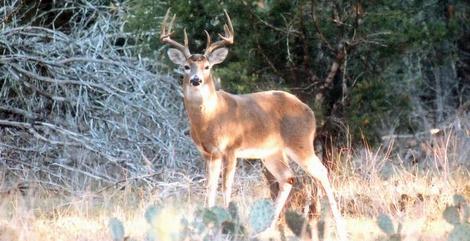
How to Manage Whitetail Deer: Don’t Count Natives Out

Want to know how to manage white-tailed deer? Deer management is about herd improvement coupled with habitat enhancement. Although many hunters doubt the antler potential for native whitetail bucks in their area, in every area where white-tailed deer exists bucks exceeding 170 Boone and Crockett inches can be grown.

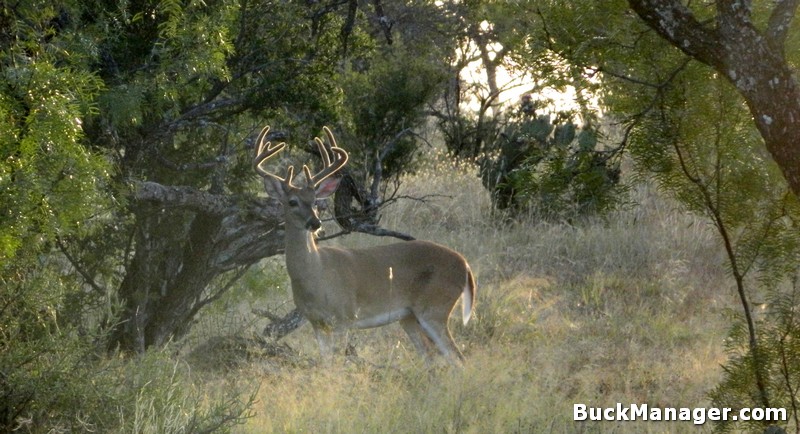
In fact, I have seen native 190+ inch bucks come from every region in Texas. And Texas is not alone. Of course, in free-ranging, native deer populations the majority of bucks will have their antlers max-out anywhere from 120 to 150 inches at maturity (5 1/2+ years old). These are good bucks. At maturity, most bucks will be good deer.

How to Manage Whitetail Deer

With that said, most deer hunters have never harvested a whitetail buck exceeding 130 inches. Why? For starters, most hunters are hard-pressed to find well-nourished bucks. Often times, habitat is in poor condition from livestock operations or there is simply a lack of deer food/habitat. This is often the case in farming communities where the only available habitat is low-lying land, untillable areas where woodlots have developed, or along creeks and rivers.
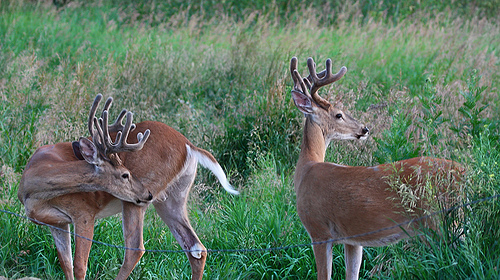
 Deer Management: Managing Native Whitetail Bucks

Deer can forage on most row crops, but only during certain stages of growth or at maturity. The remainder of the time the crops are not consumed or the alleged “habitat” is plowed dirt. Well-nourished bucks need good habitat throughout the year.

Manage Whitetail Bucks for Maturity

Maturity. Show me a mature buck and I’ll show you a deer that more than one hunter is willing to put on a wall. Age, nutrition, and genetics combine to determine the potential for any whitetail buck’s antlers. Without a little age, a buck will never reach his true potential. The short answer for this maturity phenomenon is that it takes 3 years for a buck to complete his long bone growth. After this time, valuable minerals can be put toward antler growth, not skeletal growth. Bones also help store minerals prior to and during antler growth.

Mature bucks are easy to talk about, but few hunters will let a potentially great deer walk. And it’s not because deer hunters do not have patience, it’s simply because most of us do not have enough land to ensure that the buck we pass this hunting season survives into the next season or the hunting season after that. It’s difficult for anyone hunting on 30 acres, 100 acres or even a few hundred acres of land to let a young 140 inch deer walk through.

Sure, that buck may end up being over 200 inches at maturity, but what are the odds that your neighbor let’s him walk, too? And your neighbor’s neighbor? This is why the best thing small landowners can do is form deer management cooperatives with their neighbors, form some bylaws so that everyone is one the same page, and stick to them.

Managing Whitetail Deer Nutrition

So proper deer nutrition and age are very important, but genes, of course, play a part. I mentioned earlier that most native bucks will likely never exceed 120 to 150 inches, even at maturity. However, habitat that provides proper nutrition with or without supplemental feeding can add another 10 to 20 inches, but genetics still determine how big a whitetail buck can get.

A buck with “superior” genes for antler growth will outperform bucks with “normal” genes for antler growth under the same conditions. Exceptional bucks are just that, exceptions to the rule. This is where the management part must take place for the whole deer management concept to work.

Whitetail Management: How to Implement

Take any group of bucks on any property in any part of the country and some deer will have larger antlers than the others. Regardless of the bucks a property owner has to start with, the best whitetail bucks on the property are the very deer that a hunter should be managing to increase the quality of the bucks found in the deer herd. And in this case, management involves NOT shooting them young, rather providing them and their offspring with good habitat to survive and thrive in.

The other bucks should be culled, harvested, and removed, if possible. Culling is not a must. A property can still produce good bucks in the absence of culling. How to manage whitetail deer on your property is up to you. As mentioned earlier, most mature bucks are good deer. Culling is best applied to deer herds when excess deer need to be removed to keep the population in check with the habitat that is available.

In short, if a bunch of deer need to be removed from a property during a given year or over a series of years do not shoot all of the best deer or all of the mature deer, but focus on taking some trophies and then cleaning up some of the “lesser” bucks found throughout the age classes.

Managing Deer Takes Time

Repeating this process methodically year after year while keeping the herd size at an appropriate level for the habitat will SLOWLY improve a deer herd. It’s difficult to change the genetic composition of a deer herd but culling will allow the native bucks that reach maturity to be the best bucks that the property can produce.

It’s a mistake to over-focus on the culling of bucks as THE way to manage a deer herd. Managing for good deer herd nutrition and allowing bucks to reach maturity will go further towards reaching your goals. Research has shown that fawns that start off in good shape end up being bigger, more healthy deer. For that, you need healthy does with plenty of food. And as for bucks, with proper nutrition and a little bit of age, most hunters would be quite surprised at what a native white-tailed buck can do. And more than happy to put it on their wall!
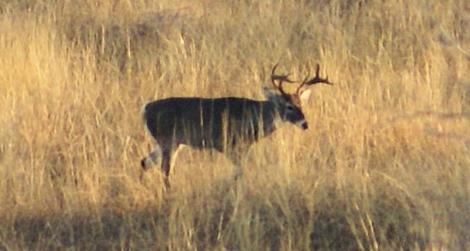
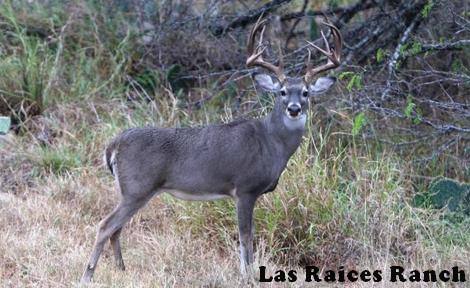
Are White-tailed Deer Getting Smaller?

Small Deer in Your Area?

Have years of heavy hunting pressure impacted deer body condition and antler quality in your area? It may be difficult to say with any certainty, but it seems plausible that deer hunters, which serve as predators, could alter the gene pool of certain game species. Last month, an article presented research that found hunting had a profound impact on wildlife, driving an evolutionary process that makes animals become smaller and reproduce earlier.

The study, which looked at both hunting and fishing, examined 29 different species and found, that under human pressure, creatures on average become 20% smaller. Do deer use more energy trying to evade predators, hunters?

Are White-tailed Deer Getting Smaller?

Feeling the Pressure

Article: “The human tendency to seek large ‘trophies’ appears to drive evolution much faster than hunting by other predators, which pick off the small and the weak.

Researchers reported, ‘It’s an ideal recipe for rapid trait change.’ In virtually all cases, human-targeted species got smaller and smaller and started reproducing at younger ages — making populations more vulnerable.

Hunters are instructed not to take smaller animals or those with smaller horns. This is counter to patterns of natural predation, and now we’re seeing the consequences of this management.”

Small Deer Study in Focus

This study makes some very good points with regards to hunters in general being trophy-oriented, but hunters and landowners partaking in intensive deer management programs are doing exactly the opposite. I have often believed that under certain conditions, such as extreme hunting pressure, particularly with regards to the overharvest of young bucks, that gene pools could be negatively impacted.

For example, some properties consider themselves “managed” by having an 8 point or better rule on harvested bucks. However, regular readers of this site know that the best yearling (1 1/2 years old) bucks can have 8+ points. This can result in decades of hunters high-grading their buck herd.

So by looking at common hunting practices this way, it becomes quite apparent that humans, particularly hunters, can impact gene pools. This is especially true in wildlife species that, like deer, are relatively short-lived. Common sense would conclude that just several years (which for deer would be several generations) of extreme pressure could alter whitetail genes in a given area. And if you are a management-minded hunter, that is exactly what you want.

Just as improper harvest can impact a deer herd negatively, proper deer harvest centered around a well-thought-out deer management program can continually change the gene pool for the better. In fact, this is exactly what the culling of inferior bucks is intended to do. Bigger-bodied whitetail bucks, much more often than not, grow larger antlers than their smaller-bodied counterparts. These bigger deer are also able to cope better with harsh winters, summer droughts, and better fight off would-be predators. In summary, help mother nature do her job and improve your white-tailed deer herd by harvesting those deer that are small for their age class.

The Culling of White-tailed Bucks is Not a Myth

There has been an ongoing debate in deer management over the culling young white-tailed bucks based on antler characteristics ever since the first research on the subject concluded. The subject at the very heart of this debate still remains the harvest of spike antlered bucks. Though many deer managers cull bucks in an attempt to improve the antler quality of their deer herd, does it really work?

DADH: “Conflicting penned deer research findings have fueled the age-old culling controversy. Study results on captive deer have produced recommendations ranging from removing all spike-antlered (presumably genetically inferior) yearlings, to complete protection of all yearling bucks regardless of their antler traits. Those favoring selective removal of small-antlered young bucks claim such a practice will remove small-antlered genes from the herd and improve antler quality.”

Texas has lead the way in terms of antler research. Research conducted by Texas Parks and Wildlife Department suggests that breeding better-antlered white-tailed bucks improved the antler quality of bucks sired, but then researchers at Texas A&M University concluded that a doe’s “nurturing ability” was the most important factor. The latter study suggests that the genetics of individual deer are not important at all?

The Culling of White-tailed Bucks is Not a Myth

In an attempt to end the culling debate, researchers from Stephen F. Austin State University set out to determine if a white-tailed buck’s first set of antlers were good predictors of future antler growth. Would yearling bucks in a wild population and varying in antler quality really be significantly different as they aged? To answer this question, wild bucks were captured in South Texas and yearling bucks were permanently marked. This allowed bucks to be tracked from yearling to maturity.

What did they find? Well, at 4 1/2 years old they observed no significant difference in Boone and Crockett antler scores between marked 2, 3, 4, 5, 6, 7, and 8 point yearling bucks. Researchers found that smaller antlered yearling bucks attained a mean antler size equal in width, mass, length and number of points to those starting with larger antlers at yearling age. They were also not significantly different at 5½ years of age and older. Earlier I said that culling works, but this research suggests that removing small-antlered yearling bucks would not improve mature buck antler size. So what gives?

Well, first let’s look at how the yearling bucks were grouped. In the study, yearling bucks were divided into two antler-point categories, those with three or fewer antler points and those with four or more antler points. Although their objectives were to determine if 2 and 3 point bucks were inferior to 4+ point bucks, the implications to deer managers are muddy. If one were to just read through the study it would seem meaningless to cull at all, but it’s not and here’s why.

In my opinion, instead of comparing 2 and 3 point yearling bucks with 4+ point yearling bucks, the data should be re-worked to compare 2 and 3 point yearling bucks with 7 and 8 point yearling bucks. Since most yearlings have either 2, 3, 4, 5, 6, 7, or 8 total points, I think all the mediocre yearlings (4, 5, and 6 points) bring down the average from the top-end deer (7 and 8 points). Since yearling antler points, like everything else, fall along a bell curve, I can only assume that there were many more 4, 5, and 6 point bucks in their sample than 7 and 8 point yearlings. Let’s see the data from 2 and 3 point deer versus only 7 and 8 point yearlings.

Buck Management:  Culling bucks is not simply shooting every 2 and 3 point buck we see. If you are even remotely interested in improving the buck segment of a deer herd then I recommend shooting yearling bucks with 4 or fewer antler points. If you have a higher threshold for pain (especially fewer bucks in the short-term), then I suggest shooting yearling bucks with 5 or fewer antler points. This may sound insane at first, but because top-end bucks make up only 20% or less of the buck herd, the competition has to be removed! By doing this, a land owner can ensure that all future deer (bucks and does) are sired by the best bucks. If you are going to make drastic genetic changes within a population, it takes drastic action. Ranchers do not put a crappy bull, a mediocre bull, and a good bull in with their cows and hope all the calves end up being grand champions.

Buck management is not a one-size-fits-all for every ranch. Culling must occur at the yearling level as well as each age class thereafter. Bucks at each age must be compared on a relative basis to other bucks in the age class and inferior bucks should be harvested. As a property progresses in a deer management program the quality of cull, management, and trophy bucks should increase if the age, genetics, and nutrition are in place. And remember this, if genetics were not heritable why would deer breeders (whether you like them or not) consistently produce monster buck after monster buck. I think there is something to it!

Buck Management: What’s Up with Missing Brow Tines?

The hunting season has just ended for the majority of white-tailed deer hunters.  Now, it’s time to reflect, look back over the past season while it’s all fresh in your mind. If you had the opportunity to spend many days in the field hunting, then you should have a good picture of the overall deer herd using the property you hunt.

Better yet, if you recorded deer observations while hunting, then you have the hard data to support what is happening under your property’s current deer management program. These field observations, in addition to game camera photos, will allow a deer manager to track individual bucks from one year to the next. I strongly recommend keeping both photo and stand observations since some bucks always seem to avoid getting caught on camera.

Are missing brow tines caused by genetics?

Missing Brow Tines

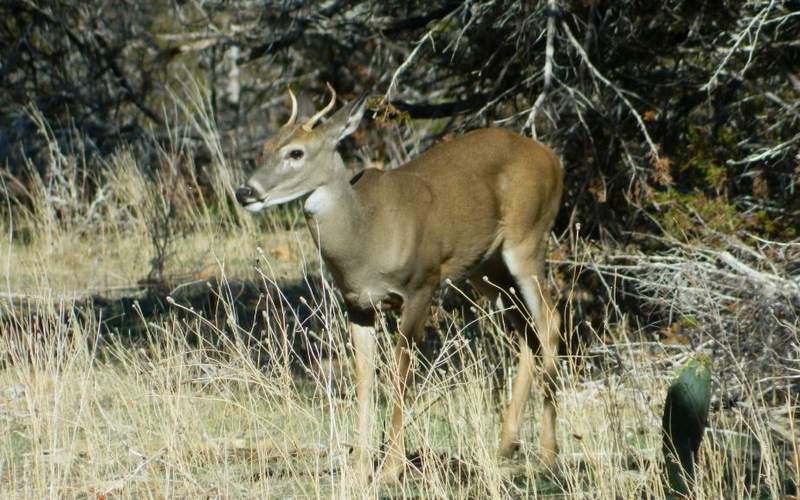
With regards to antlered deer, one issue that always seems to arise is the lack of brow tines (G1) on some whitetail bucks. Hunters have often questioned why some middle-aged and mature bucks simply lack brow tines. Is something going on in the deer herd?

Well, yes. Antler characteristics are genetically linked and highly heritable This means a young buck will likely look a whole lot like his daddy. To back up this claim, I will cite some long-term data collected from Kerr Wildlife Management Area (WMA), located in Texas.

From 1974 to 1997, the research facility at the Kerr WMA was involved in a number of studies designed to determine the role of nutrition and genetics in white-tailed deer antler development. During each of various studies that took place over that time, researchers recorded antler information for individual whitetail bucks throughout a 23 year period.

Deer Hunting and Management

Brow Tines on a Buck?

This wealth of antler data allowed wildlife biologists to back-test 217 whitetail bucks from yearlings (1 1/2) to 3 1/2 years of age and 168 bucks until they were 4 1/2 years old. That’s a lot of deer, and from what I can find, represents one of the largest sets of antler data available. So what did they find?

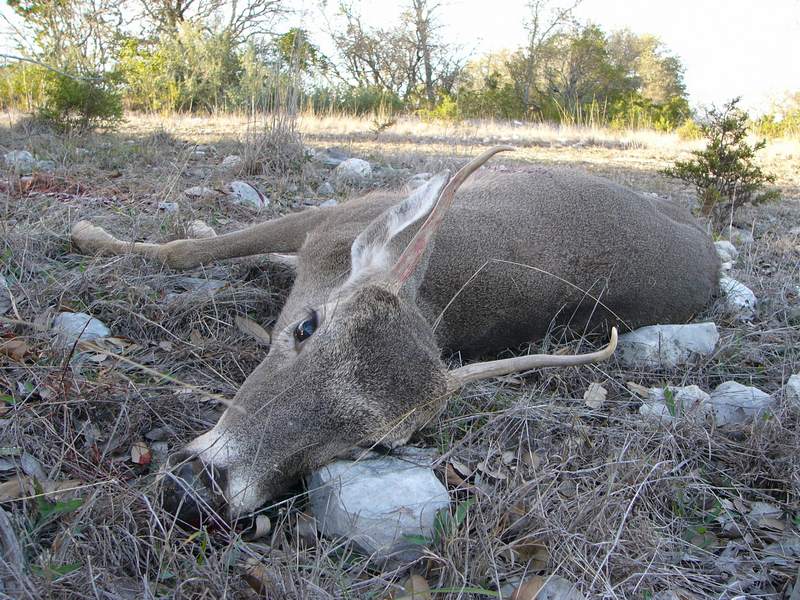
In short, data from 385 bucks found that 90 percent of the bucks without brow tines at 3 1/2 and 4 1/2 years of age were spikes at 1 1/2 years old! All bucks without brow tines at 1 1/2 years old lacked brow tines at 4 1/2 years old. On the other hand, all bucks with 5 or more points as yearlings had both brow tines at maturity. Bucks that had both brow tines as yearlings had both brow tines at 3 1/2 and 4 1/2 years of age.

Missing Brow Tines Starts with Spike Bucks

Incredible Antler Data

The numbers above speak for themselves. In addition, deer researchers know that antler characteristics in white-tailed deer are highly heritable, so the probability of passing on genes for specific antler characteristics (larger or smaller antlers) is a given. The future of the deer herd on a property depends a good amount on the quality of the bucks doing the breeding.

To sum up, a whitetail buck that has spikes as his first set of antlers has a 90 percent chance of developing into a buck with missing brow tines later in life. A buck that has 5 or more points as his first set of antlers is much more likely to have brow tines later in life, at least according to this data set out of Texas.

Deer Management Implications

How does knowing this information affect you and the deer you manage moving forward? It likely depends on the goals you have for the deer that use your property. If one of the goals is to harvest the maximum number of mature bucks on the property annually then you want to allow all bucks to reach maturity.

However, if you are looking to improve buck antler quality, then at least one of the factors you should consider is the quality of the young bucks on your land. Antlers are the result of genetics, but they are also influenced by the environment. Nutrition plays a role in how genes are expressed, how a buck looks.

This phenomenon can be seen is deer herds with suboptimal nutrition as spike bucks tend to comprise a higher percentage of the young bucks, those 1 1/2 years of age with their very first set of hardened antlers. In these types of situations, increasing the available food by reducing the size of the total deer herd or the addition of supplemental foods/forages may be an appropriate step to increase overall deer health, buck quality.

If a property provides ample food and a manager is seeing a high percentage of 1 1/2 year old bucks without brow tines on the property, then you now know it’s all in the genes. The only way to improve antler quality and reverse missing brow tines in older bucks is to put pressure on spikes and bucks without brow tines, regardless of age.

Deer Management for Brow Tines, Better Antlers

In this situation, deer management practices should also include rolling over the doe herd to reduce the number of old does sired by bucks lacking brow tines. This is not a management strategy that plays out overnight, but a practice that must be integrated into the long-term management of a deer herd using a property.

Small Acreage Deer Management: Part 2

Small Acreage Management Continued

Part one of this two part series on small acreage deer management discussed how selective harvest on properties less than 500 acres in size is difficult to control. Most deer in an area have home ranges that encompass neighboring ranches. The best remedy for combating the small acreage dilemma is to create cooperative, working with adjacent ranches to increase the quantity, and ideally quality, of land under a common white-tailed deer management program.

Increasing the reach of a small acreage management program is the first priority of any small landowner, or even large landowner for that matter. I also want to touch on the other important deer herd issues that were asked about in the first part of this series—estrus cycles, spikes, and buck to doe ratio.

Deer Management & Herd Parameters

First, with regard to the estrus cycles of deer, whitetail does cycle every 28 days. Late-born fawns result from does that cycle later than normal, or does bred on their second or third estrus cycle into the breeding season. Although born later than usual, late-born whitetail fawns are not genetically inferior to fawns born earlier in the fawning season.

In addition, research has shown that fawning date is not a factor in the antler production of yearling (1 1/2 year old) white-tailed bucks. Genes are genes and can not be changed, but antler production is influenced by environmental conditions. This circles back to the importance of managing for and maintaining high quality white-tailed deer habitat.

Small Acreage Deer Management

Buck Harvest on Small Tracts?

This brings us to the long-debated discussion about spike bucks. Some hunters believe spike must be harvested. Some are adamant that the protection of spike bucks is a necessity. There is no single, correct answer to this debate. The harvest approach depends on a specific deer population and the goals of the small acreage land manager. The thoughtful harvest of deer is important to be successful at managing deer and their habitat.

I mentioned that environmental conditions influence buck antler quality. This is true for all age classes, but some bucks in each age class will be better or poorer than average. Research has found that some yearling (1 1/2 year old) bucks on poor diets (simulating poor habitat conditions) still developed into 5, 6, 7, and 8-point deer. This is interesting from a research perspective. However, harvesting spikes will not change the genetic composition of a deer herd on a large or small property. Why? Females contribute at least on-half of the genes found in every fawn.

Furthermore, bucks must be allowed to age if the land manager’s goal is to grow and produce mature, quality bucks. That means not shooting bucks when they are young during the deer hunting season. There are situations when the harvest of spikes is warranted, however.

Deer Harvest is Essential

There is a time when shooting spikes is a good idea. It’s not a situation that all properties face. Reducing the overall deer population is important when the deer density of an area is extremely high, even on small acreages. Too few acres per deer leads to low quality habitat, smaller deer, smaller antlers and fewer fawns. Too many deer creates a nutritional stress in deer which leads to more 1 1/2 year old bucks showing up as spikes.

It’s a feedback loop that has to be broken. Too many total deer for the habitat means more (higher percentage) yearling spike bucks. In this situation, the selective harvest of bucks throughout the ag classes is recommended. This means shooting spikes on the yearling end so that those bucks with 5, 6, 7 and 8 points get to pass go. A high deer situation also means the selective harvest of does throughout the ag classes. Deer management is not just shooting bucks!

While we are on the topic, the study found  that 95% of spike bucks are yearlings (1 1/2 years old). There is an occasional 2-year old spike out there, but old spikes are very, very rare.

More than Shooting Deer

I understand why managers tend to focus on buck harvest. Love it or hate it, let’s use the commercial deer breeding world as an example. Again, this is just an example. There is not a single deer breeder out there lining up to buy spike-antlered yearling bucks. Why? Because they, like you, know that antler characteristics are highly heritable. The difference is that deer breeding and movement is controlled within a pen.

White-tailed deer management on small acreage is different from management on large acreage. Wild deer move around a lot during the breeding season. There is a good chance that bucks spending a lot of time on your property do not breed the does that spend a lot of time on your property. Furthermore, does can get bred multiple times during an estrus cycle. They can have twin fawns with different sires.

Avoid High Grading Bucks

The standard operating procedure outside of a deer management program is for hunters to shoot the bucks with the most antler points. Under this scenario, these good bucks get harvested early and are not allowed to pass on their much-desired genetics. Under a managed scenario, high-quality young bucks should be protected for later harvest.

Only in high deer density situations should bucks with lower quality antlers be harvested. Again, the objective is not to change the genetics of the deer herd, only to reduce the deer herd and save some young bucks for later harvest. Most small acreage deer management programs will want to protect all young bucks.

Deer Management & Buck:Doe Ratio

I’ve covered t the importance of buck to doe ratio in the past, so review the article for more in-depth information. Buck to doe ratio is very important in determining fawning dates and small acreage managers should shoot for about a 1:2  buck to doe ratio. Larger and/or game-fenced properties can shoot for a more equal buck to doe ratio (1:1), but smaller ranches should carry a few more does than bucks.

In the case of a 1:10 buck to doe ratio, the number of bucks compared to the number of does is not likely not that bad. It’s difficult and rare to have a ratio that skewed. However, do collect deer survey data in late-summer and early-fall. Develop harvest recommendations based on those estimates based on the goals and objectives of the small acreage deer management program. Since it does sound like the land manager has many more does than bucks, it’s high time to trim down the female segment of the deer herd.

Removing excess does (and bucks) will improve fawning dates. The remaining female deer will get bred earlier, during the first estrus cycle. As a result, this will increase fawn survival by providing less competition and more summer food for nursing does. This works perfectly if the property is providing high quality deer habitat. Better fawn survival means more bucks in the future. Better habitat means bigger bucks and a healthy deer herd.