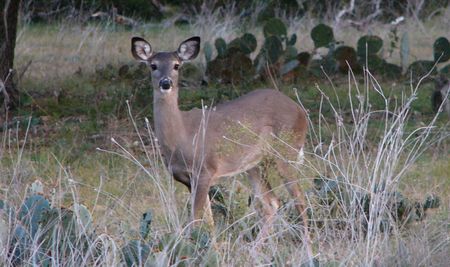
Managing White-tailed Bucks by Age Class

Selective harvest is an important part of white-tailed deer management. This is equally true for both the buck and doe segments of a deer population, but many hunters become obsessed with trying to determine which bucks to shoot or not shoot. Buck harvest is part of the equation, but how should the deer on your property be managed, hunted?

For regular visitors to this site, you know that I have covered shooting deer and harvest management in the past, but this time I really want to stress the importance of not stressing out over the harvest aspect of a deer management program. Selective harvest is not something that can be perfectly implemented on a property, but rather a strategy to remove less desirable animals in an attempt improve the deer herd, whether that simply be nutritionally or possibly even genetically.

Whitetail Buck Management

The most controversial issue on any hunting property typically involves around what is and is not a cull or management buck. There is no stock answer to this debate because the quality of a cull buck will vary from property to another. It could be said that one deer hunter’s “trash” is another hunters treasure.

We have all seen bucks with obviously inferior antlers that have been shot as culls, but I bet you have also seen some really good looking bucks on the web, in magazines, and on television that were harvested by someone and referred to as cull deer. So what’s the deal?
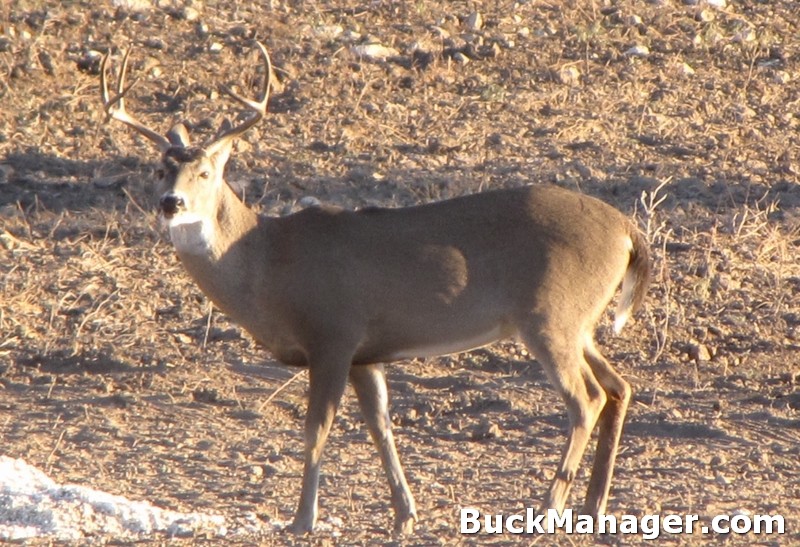
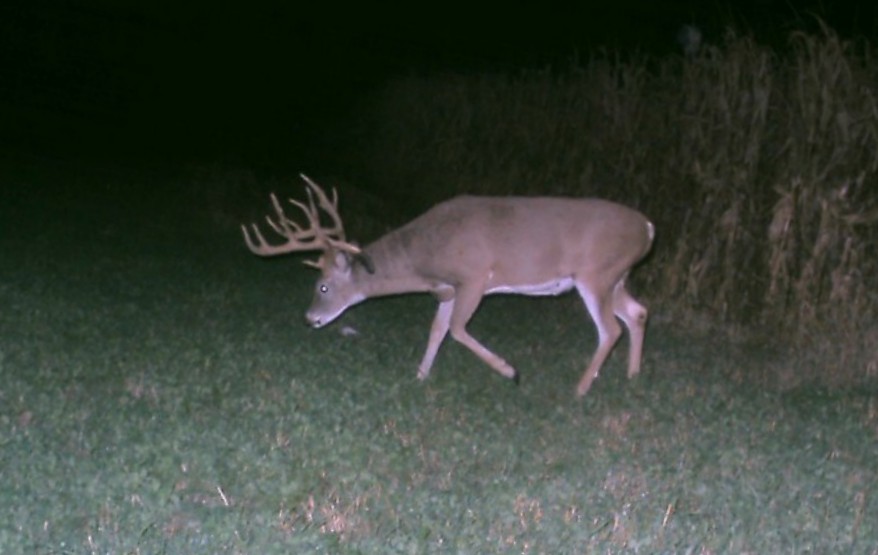
Whitetail Deer Management: An Old Cull Buck

Managing Bucks by Age

I mentioned earlier that the quality of “cull deer” will vary from property to property, but the most important consideration to keep in mind when thinking about cull deer is that the quality of bucks will vary within each age class (cohort) on a particular property.

Grade bucks of the same age on a comparative basis and the manager/hunter will be comparing apples to apples. This is the easiest way to determine what may or may not be a cull buck on a piece of property — bucks of the same age must be judged head-to-head against one another to determine which has desired (or at least more desired) antler characteristics and which one will end up in the sausage. Hey, we all gotta eat!

An Example of Whitetail Buck Management

Believe it or not, there are some properties under intensive deer management that consider a yearling (1 1/2 years old) buck with 5 or less antler points a cull buck. This does not mean every property owner or guy trying to manage his deer hunting lease should hammer every deer with less than 5 points.

It would be grossly oversimplified (and a bad idea) to say everyone should do the same thing on their hunting property. This just would not be the case. There are just too many variables for a one-size-fits-all deer management approach for every property.
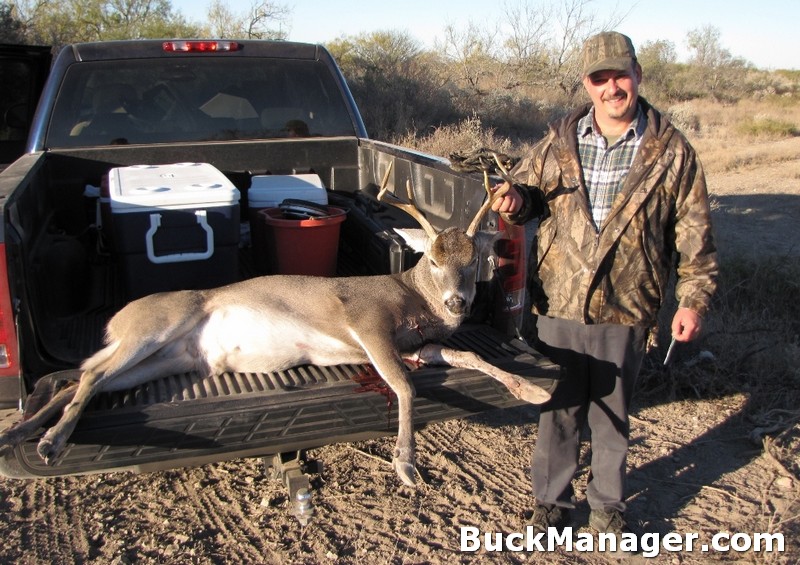
Deer Hunter with Management Buck

Spike Buck Management

Let’s discuss spike bucks for a minute. Now, this is a can of worms that hunters and even researchers have been actively discussing for decades, so I am not going to try to change anyone’s thoughts on the subject in this article. But, using the spike buck as an example, I just want to throw out an example of culling bucks by age class.

Let’s first assume that we need to harvest some number of bucks and that I am trying to improve the overall end-quality of bucks on a property. If two yearling spikes walk out and one has 3 inch antlers and the other has 10 inch antlers, I will shoot the one with shorter tines and leave the better buck of the same age every time. Why?

Because my goal when culling is to remove the most undesirable bucks. The 10 inch spike grew over 3 times as much antler as his same-aged friend.

Selective Harvest for Better, Mature Bucks

Although selective genetic manipulation through buck harvest is an important component of any whitetail deer management program, it is not the only component. Keep in mind that better deer habitat means better bucks at every age class. Overall, providing quality deer habitat is the best type of whitetail buck management.

A key to producing good deer on your hunting property may be  to remove the very low-end bucks and then allow the rest to get some age on them. This strategy is best applied in areas where deer are at or have exceeded the carrying capacity of the property. If the deer density is low, below the carrying capacity, then it probably does not make sense to cull bucks since there are not many deer to spare. In this case, you will likely want to let each and every buck walk in hopes that it can grow older and eventually become a target for harvest.

The final key to buck management is to manage harvest. Harvest mature bucks and then cull by age class (if warranted) so that you remove no more than 20% of the total number of bucks in the area each year, and then provide the best deer habitat that you can so that all deer on your property remain healthy and bucks reach their full genetic potential.
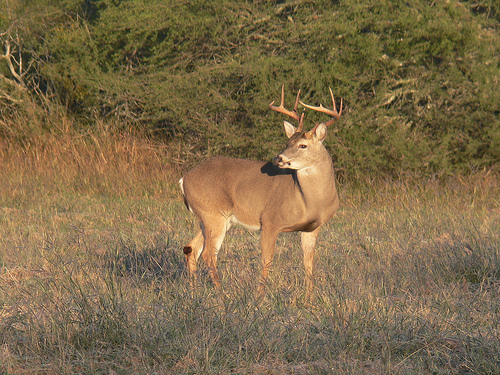
Deer Management Through Browse Use

Browse consumption can be used for better whitetail deer management

Habitat is the cornerstone of white-tailed deer management. Plant communities, an important component of habitat, are composed of forbs, grasses, and woody plants (browse). Healthy, diverse habitat sustains native wildlife populations and almost always represent healthy deer herds. However, browsing of woody plants by white-tailed deer and domestic livestock may have negative impacts on perinneal shrubs, trees and the overall habitat.

Excessive browsing may lead to decreased plant vigor, increased susceptibility to disease, or decreased reproduction and seeding establishment. Stresses such as these could potentially cause the disappearance of some plant species important for quality deer habitat. Consequently, deer biologist typically quantify the most palatable browse plants in an area in an attempt to monitor browsing pressure by the local deer herd. Sound deer management decisions can be made by recording browse plant use by white-tailed deer. Continue reading “Deer Management Through Browse Use”

Doe Management: Shoot the Smallest?

The proper harvest of animals is a critical component of white-tailed deer management. Although most conversations concerning the harvest of deer are centered around bucks, the harvest of does is just as important. After all, thinning the doe population, when warranted, will improve the buck to doe ratio, slow population growth, and keep white-tailed deer numbers at the proper carrying capacity for the habitat. The management benefits of necessary doe harvest are well documented.

But when it comes to shooting does, which ones do you shoot first? With bucks, hunters typically use antler characteristics combined with the age of the deer to identify potential cull bucks and other shooter deer. Hunters have varying opinions when it comes to buck harvest, but it’s even less straight forward when it comes to shooting does. Interestingly enough, I recently had a fellow tell me that he spares the largest does and shoots the smallest. At first I thought he was just taking a stab at becoming an “armchair” biologist, but then I started to think his theory may have some merit.

Whitetail Deer Management and Doe Harvest

The general rule of thumb in deer management has always been to shoot the oldest does first, the thought being that younger does have been sired by better bucks because of culling practices that take place year after year. The result should be younger does that are genetically better than older does because of gene recombination between better bucks and better does. If this repeatedly occurs on an annual basis, then the last fawn crop should always be genetically superior (even by a small amount) to the year prior.

So, would it make sense to shoot the smallest bodied does? Well, that’s exactly what most deer managers do when it comes to removing cull bucks. White-tailed bucks are judged not only based on their age, but also against other bucks of the same age. Almost without fail, the largest bodied bucks have the largest antlers. On the flip side, bucks that have inferior racks tend to be smaller bodied than other bucks of the same age. Could the same hold true with does?

White-tailed bucks store much of the necessary minerals used for antler formation in their bones. Although they also get a good amount of the material for antler growth from their diet, additional bone bass means the ability to store more antler-growing minerals than the next buck. This explains why larger bodied bucks have better antlers. It would also give some credibility to the “shoot smaller does” theory. A manager should want to pass on the traits for deer with large-framed bodies.

Does also play a large role in the development and initial growth of fawns through rearing, particularly milk production. It would stand to reason that larger bodied does would likely be better “providers” than smaller bodied does, with fawn numbers being equal (both with single or both with twin fawns). From a reproductive standpoint, it becomes beneficial to landowners and fawns to have does with large frames.

When it comes to whitetail deer management, it’s easier to identify potential bucks for harvest than it is does. A hunter can gauge a buck’s genes by the antlers on his head, but does lack these physical yardsticks. However, a hunter can compare does of similar age by body size. Will it really help a deer herd to have a harvest strategy that targets the smallest does? I can’t say for sure, but it makes good sense, especially if you compare does based on age.

7 Reasons to Cull Whitetail Bucks

White-tailed deer management and the culling of bucks often go hand-in-hand. To attempt to improve the buck segment of any deer herd, some type of culling must take place on an annual basis. Each fall, hunters email me photos and ask, “Is this deer a cull buck?” It’s a simple enough question, but the answer depends on the quality of the whitetail bucks found on the ranch. After all, culling is relative to the buck population in question. In addition, the reasons for culling bucks are also closely tied to the manager’s objectives.

A cull buck on one ranch may be a trophy on another. Property objectives, habitat condition, food availability, and the genes found in the local deer population (for antler growth) all determine what a cull buck on a particular property will look like. Bucks found on a property must be judged against other bucks on the ranch. It would be unfair to compare deer from South Texas with a deer from East Texas or Alabama or Indiana for that matter.

Culling is best prescribed when there are too many deer for the habitat, otherwise there is no need to remove anything.  It takes a long time to skew the genetic composition of a free-ranging deer herd and, depending on the size of the property, may not be possible. Although the reasons for culling bucks may vary from hunter to hunter and between ranches, there are some physical features by which all bucks are measured. Below are 7 potential reasons to cull healthy whitetail bucks.

Deer Management: Reasons to Cull Whitetail Bucks

Missing Brow Points

Brow points (G1s) are important. Plain and simple, whitetail bucks should have brow points once they reach 2 years of age. Not only are bucks expected to have brow points, but the presence of these tines is genetically dominant over deer with one or no brow points. If bucks are missing one or both brow points, then these animals should be considered for removal from the herd. I have been on several ranches where many of the bucks were missing brow points. It happens. The only way to ensure that whitetail bucks have  brow points on a property is to remove what you can see, bucks without them.

Short Points

Bucks with short antler points are undesirable to most hunters and deer managers. When we think of great whitetail bucks, we immediately think of deer with longer points, particularly from the G2 on up. Short-tined bucks not only look inferior, they could be, possibly. I like to think that Mother Nature would want bucks to have long tines so that they could use them more effectively to defend themselves. In reality, body size is much more important when it comes to dominance, but short points in your deer herd means hunters get the short end of the stick.

Short Beams

Whitetail bucks with short main beams make for odd deer. We all know what a typical buck’s beams look like and that is what most hunters want to manage for in their deer herds. Long points and main beams add inches and inches to a buck’s Boone and Crockett score. In addition, bucks with short main beams leave no room for point placement. A manager can’t expect to have 12 point bucks when all of the bucks on the property have 15 inch main beams. It can happen, but we could all be living on the moon one day, too. And even if it did, is that what you want? Bucks with short main beams make for short-lived bucks.

No Mass

Mass is the most highly heritable antler trait for whitetail bucks. Bucks that have heavy mass are sired by bucks with heavy mass. On the other hand, deer with pencil horns come from bucks that were thin-horned. Of course, buck nutrition and age both play a role when it comes to antler mass. A buck’s antler mass will increase with age, so judge an individual buck’s mass measurements relative to other bucks of the same age class. If your property provides good deer habitat, then well-fed whitetail bucks should have good mass. If they lack antler mass, then think about culling those bucks if you need to remove deer and are concerned about maintaining good age structure within bucks (ie. shooting all of the young or old bucks on the property).

Narrow Spread

This is a matter of opinion, but most deer managers and hunters like wider spread bucks as opposed to more narrow spread bucks. In my opinion, inside antler spread is the least important measurement when it comes to a buck’s numerical score. I like ’em old. Most mature bucks only achieve an inside antler spread of about 20 inches, so even a very narrow-horned buck with a 12 inch spread just gives up 8 inches of B&C score if that is important to you . Because of this, whitetail bucks with a narrow antler spread can still score very high if they have long antler points and heavy mass. You can cull based on spread, but point length and antler mass are more important in the end.

Lack of Points

Every person interested in whitetail deer management wants to produce better bucks with more points. Antler points, like beam mass, are highly heritable traits in whitetail deer. If a buck has a low number of antler points, then the deer could be on the chopping block. The number of points a buck has must be judged against the deer’s age. The number of points a buck has as a yearling is indicative of the deer’s future. A high number of points at a young age typically means more points at an older age. Most want yearling bucks (1 1/2 years old) with 6+ points. Spikes, three, four, and five point yearlings may be potential culls depending on your objectives and where you stand with regards to the deer carrying cap.

Most hunters have heard of the infamous “management buck.” This term became popularized about 15 years ago as a way to market 3 1/2 to 4 1/2 year old 8 point bucks that were deemed culls. As a general rule of thumb, if a whitetail buck has only 8 points at 3 1/2 years of age, then the potential that he is going to “blow up” into something amazing decline drastically. Sure, the buck may throw on some stickers and kickers, but more often than not the deer has maxed out on main antler points. This may not a desirable buck if the hunter or manager is managing for 10+ point bucks. By using a selective deer harvest strategy, a manager can reduce main-frame 8 point bucks and promote whitetail bucks with more points to older age classses.

Maturity

This is kind of a no-brainer. If a whitetail buck is mature, regardless of antler quality, it should be considered available for harvest. The buck may or may not be a true cull, but once a buck reaches maturity it has played its role. The problem with old-aged culls is that they have been on the property for years breeding and producing both buck and doe fawns that carry their same genes. It’s easy to identify an old cull buck, but you will do yourself and your deer management program a favor by learning how to identify undesirable, cull bucks at an earlier age. Not only will culling bucks at a young age ensure your best quality whitetail bucks do most of the breeding, but it will mean more food and better habitat for your best deer!

How Many Deer are Too Many?

Let’s face it, most landowners want to see plentiful groups of white-tailed deer running around on their property. However, those interested in improving their herd through deer management practices should want to see healthy individual animals. Why is this, you ask? That is because healthy animals are an indicator of good deer habitat and animals in good condition make for healthy white-tailed deer herds. If individuals within a population are in poor condition, then the overall population itself is in poor shape. So although we may want to sustain as many deer as possible on a ranch, what is the ideal number or the target number? The quick answer is that carrying capacity is based on habitat and environmental conditions.

In short, it’s all related to soils and precipitation, which in turn determines the plant species that grow in a particular area. But even with that said, we all know that the quality of deer habitat can vary based on a variety of factors, even within a single county or even just a mile or two down the road. The previous few sentences probably did not help anyone develop a population goal for their property, but hopefully it did help in understanding that the carrying capacity for a particular piece of property can vary widely between regions, counties, and individual ranches. To help you get a handle on how many deer you should or could have, I have outlined three measurable factors that landowners and hunters can use to monitor the health of a deer herd.

Deer Management: How Many Deer are Too Many?

Deer Body Weights

From experience, I can always determine if a property has too many deer for the available habitat based strictly on deer body weights. Deer are kind of like people in the fact that if food is available, they will usually eat it. Removing protein pellets, food plots, or any other type of forage supplement, there is only a limited amount of forage that deer can use on a particular ranch. If the ideal population size for a ranch is 100 white-tailed deer, then the property will support a population of 100 (or fewer) healthy deer. However, if more than this number of deer are on the ranch, say 130, then all of the deer on the property will be less healthy.

This phenomenon is most easily measured and assessed by collecting the field-dressed body weights of hunter-harvested deer off the property. The health of individual animals can be determined by comparing its body weight to that of healthy deer in the same age class. For example, mature (5 1/2+) and healthy white-tailed bucks anywhere in Texas should field-dress at least 125 pounds. Mature does should weigh around 80 pounds. Both sexes can easily weigh more than these quoted minimums, but they should at least reach these targets. Minimum field-dressed weights for healthy deer will vary depending on where in the country you are located, so contact your local wildlife department to get optimal field-dressed body weights (by age class) for your area.

Reproduction Measured Through Fawn Production

Fawn production is a good measure of habitat and herd health because nature does not lie. Healthy animal populations, regardless of species, will have high reproduction, high survival, and good recruitment in environments that provide everything they need. Animals need food, cover, and water, and white-tailed deer on no different. If your property provides high-quality deer habitat, then the cover and resulting food are in place.

The availability of food, as it relates to habitat condition, really impacts fawn survival. This is why fawn crops are poor during drought and high during years with high amounts of precipitation. Habitat that is being over-used by too many deer will be in poor condition, even during a “good” year. In addition to field-dressed body weights, fawn survival is generally a good measure of herd health. High fawn survival means healthy habitat. To estimate the fawn survival of the whitetail herd found on your property you will need to conduct daylight deer surveys annually. A fawn survival rate of at least 75% (75 fawns per 100 does) is indicative of a healthy deer herd and healthy habitat.

Habitat Use and Condition

Biologist often use habitat condition, as measured through browse utilization by deer, as an indicator of habitat health. This is because trained individuals know exactly which plants deer prefer to eat, those that they will eat readily, and then those that are at the bottom of the list. As mentioned above, the availability of food is important for the health of individual deer as well as the herd as a whole. Although you do not have to become an expert in plant identification to successfully manage the deer herd found on your property, it would be a good idea to become familiar with the common browse plants on your property. This will allow you to identify browse consumption by deer throughout the year and from year to year.

Once you are able to recognize a few plants from each browse category (preferred, moderately preferred, not preferred), you will understand where on the buffet line the deer on your property are eating. However, there is a trick. Highly preferred browse plants will always be consumed at high levels. The real measure of habitat health will be determined by whether or not deer are eating plants they really do not want to eat.

Developing a Target Number for the Deer Herd

Each ranch manager should determine the whitetail carrying capactiy for their ranch. This number may vary over time, but without a goal there is no need for deer management. How can one manage for something if they can not measure or detect changes? As you can tell, record keeping becomes very important if you expect to monitor the progress of the deer found on your ranch. In short, there are two ways to determine the ideal deer population size for your property. You can work from the top down or from the bottom up.

A top-down approach would be to contact a state biologist, have them come look at the habitat on your property, and then them give you a ball park number on how many animals your habitat will carry. A bottom- up approach would be for you to monitor individual deer body weights and estimate fawn production annually. In either case, you can use the same information to make the appropriate changes. If the body weights of field-dressed deer are less than optimal for the area and fawn production is low, then there are too many deer for the habitat. Adjust the population carrying capactiy downward and shoot more animals. If, however, deer are in good condition and there are plenty of fawns, then it may be possible to increase the population incrementally as long as negative changes are not measured.

Of course, the above data will be of most benefit if you are also conducting annual camera surveys or spotlight surveys. And if you are at all serious about deer management, yearly deer surveys are a must for your ranch. Deer surveys are designed to help you estimate the number of white-tailed deer on your property, but then, using body weight and fawn production data, you can determine if that is the right target for you. Once you have identified the carrying capacity for your ranch, then it’s just a matter of conducting annual surveys and harvesting the excess population. Of course, if you keep the herd at carrying capacity, then that fawn production data will give you a pretty good idea of how many animals will need to be removed each year!