Determining Carrying Capacity for Deer Management

Deer Management Question

Question: “Hi, I’m not into deer hunting but I need to learn something about whitetail deer management. It involves the concept of carrying capacity. I live on an island in Puget Sound, human population 20, deer population 15 to 30 depending on who you talk to. The environment is lush and the deer lack nothing. They don’t even have ticks, apparently.

There are more bucks than does, and this year there were at least 3 fawns that I know of. I recently read that whitetail deer could double in population in just two years. The island is only about 200 acres total. So how does one calculate the carrying capacity of the island? At what point do the deer need to be thinned to keep everything healthy? Thanks.”
What is deer carrying capacity?

Whitetail Management: Deer Carrying Capacity

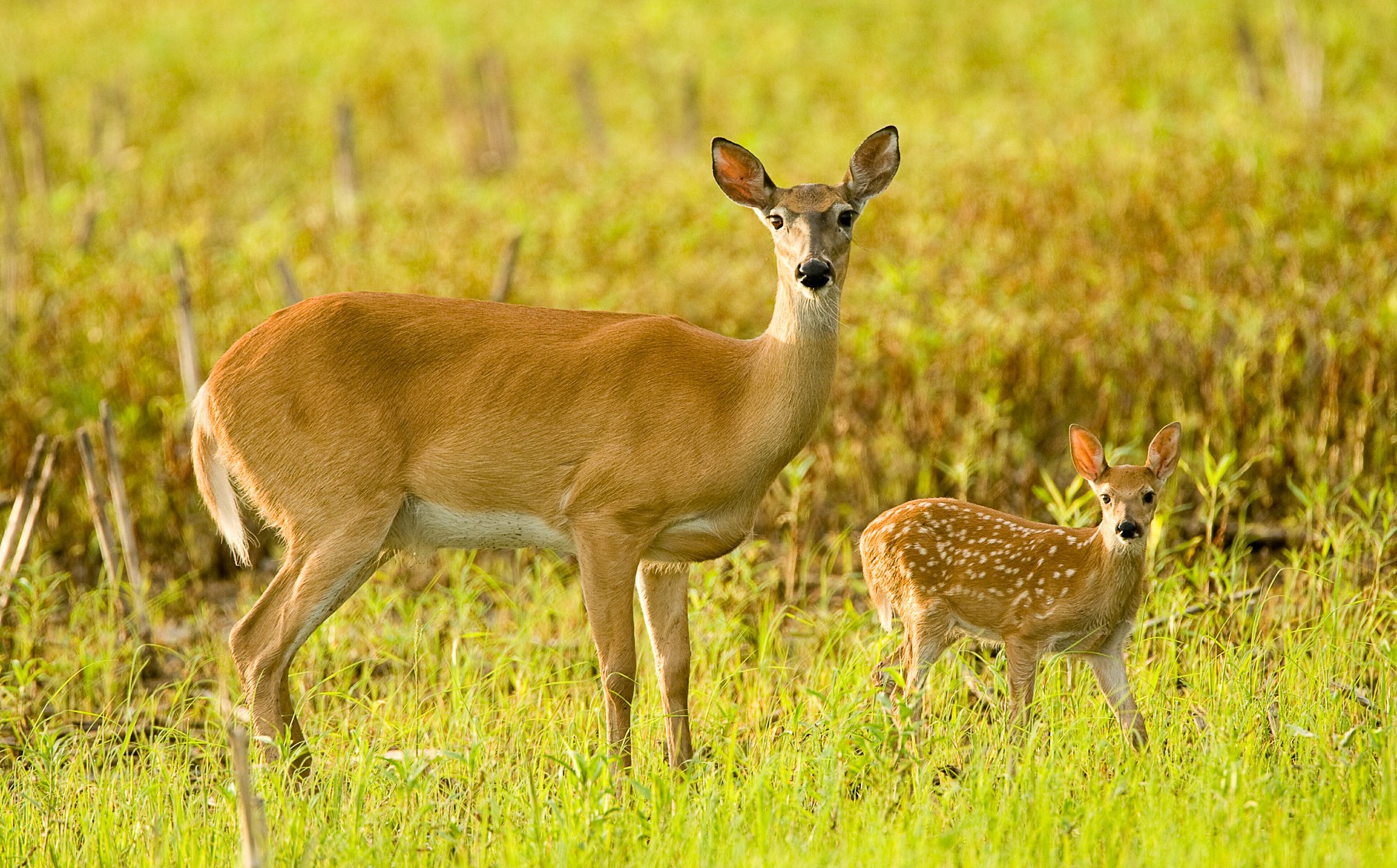
Response: First, good call in gathering information on deer management for your island. This is a good idea for anyone intending to manage deer on a property. Fortunately, it t does not sound like you have a deer overpopulation dilemma on your hands just yet. While that is good news, I will offer some pointers on managing deer and habitat in any area. Deer, like most animals, are self-limiting. However, it’s best to avoid a situation that ends in population collapse.

When deer numbers get high and food availability gets low, individual deer start to lose body mass. This leads to weak deer that ultimately die. When a bunch of individual animals die the population crashes. Wildlife management at its very essence is designed to harvest and use those excess animals . Sound management occurs well before malnutrition brings down an entire population.

White-tailed deer are widely adaptable creatures and do well in a variety of habitat types. They are classified as browsers, meaning they eat primarily plants other than grass. Grass, by the way, generally only comprises about 7 to 10 percent of the whitetail diet. Whitetail prefer certain forbs (weeds), which are extremely high in protein. However, the bulk of their diet tends to be leaves, stems and twigs of trees, shrubs and vines.  These perennial, woody plants are stable food sources and often available throughout much of the year.

Deer Management & Carrying Capacity of a Property

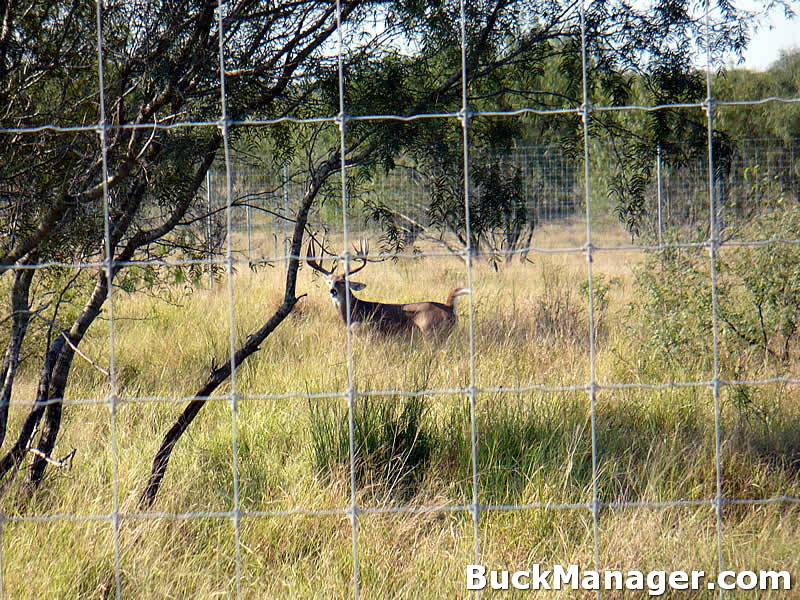
What is the right number of deer for a property? This question gets asked a lot by landowners, hunters and biologists managing whitetail on low-fenced properties, on high-fenced properties and apparently even by those managing deer on islands. If you think about it, an island is similar to a high-fenced ranch in that deer movement is limited. Deer will always come a go in both situations. After all, a taller-than-normal fence is not deer proof. Water does not stop deer either. However, high fences and large expanses of water do limit deer movement.

The carrying capacity of a property for whitetail deer varies. It varies throughout the year. It varies from year to year. Most don’t think about this, but non-managed wildlife populations are naturally highly variable. Population sizes boom, then they bust. Deer management aims for a type of population management that levels out fluctuations. This will help keep deer healthy from year to year. It is only through the removal of animals prior to (or even during) stress periods that the remaining deer population survives and thrives.

Population Size & Food Availability

The whitetail deer carrying capacity of a property is based on the highest number of animals a property can support when natural foods are at their lowest. In most areas, carrying capacity is based on food availability during the winter. This is a big reason why we head out deer hunting in the fall. It’s better to harvest the equivalent of the year’s production and to ensure the welfare of the remaining deer herd.

The only sure-fire way to identify that a deer herd has arrived at carrying capacity is when habitat degradation begins. When too many deer are on the landscape the foliage on most woody plants will begin to disappear. This vanishing forage happens from ground level up to about 5 feet in height. As more and more foliage is consumed an obvious “browse line” will become evident, indicating severe overpopulation. You don’t ever want to end up in this situation.

My recommendation to anyone attempting to manage a deer herd is to keep a close eye on native plants. First, make sure to contact a local biologist to get a list of the native deer plants deer consume in the area. A list of this sort will usually rank the plants in order (or classification) of preference by deer. If the least preferred deer foods  begin to be readily consumed, then it’s time to reduce the herd.

Managing a Population Using Deer Surveys

Identifying heavy use of less palatable plants by whitetail will tell you that there are too many deer. However, this will not tell you how many deer you have on a property. The only way to estimate the population is to conduct deer surveys. On a small high-fenced ranch or an island of 200 acres, the go-to method would be to conduct motion-triggered camera surveys. To get improve the survey, conduct camera surveys in conjunction with collecting incidental, daylight observations. These two deer survey methods, especially when combined, will give a very precise estimate of deer population. By the way, always perform surveys in late summer or early fall to capture annual reproduction.

Once you have an estimated deer population, then you can start to put the pieces of the puzzle together. This information will provide a picture of what is actually happening in the field. For example, let’s say in Year 1 the deer population is estimated at 15 animals and all browse plants look great. During Year 2 the deer population is estimated to be 25 deer and things are still looking good.

However, in Year 3 there are an estimated 40 animals and plants that are moderately preferred by deer are showing heavy use. Furthermore, the plants that deer do not like are starting to be eaten too. The carrying capacity of the plant community has been exceeded. In this example, the right number is more than 25 deer but less than 40.

Sound Deer Management & Carrying Capacity

Good management of both land and wildlife takes correlating what is happening to the habitat with what is going on with the population. Only then can a manager begin to determine where deer carrying capacity lands. In the above example it would probably be a good idea to manage for a deer population in the neighborhood of 30 animals. However, continued observation on an annual basis would allow the manager to tweak carrying capacity. Annual harvest recommendations would be based on data to maintain a healthy deer herd.

Once a target deer population size is established for a property then the biggest factors that influence herd management (harvest versus no harvest) are annual recruitment (fawn survival) and habitat condition. So as you see, carrying capacity is a balancing act between deer  numbers and food availability. Plant and deer surveys can provide you with critical information for managing population size.

Deer Population Control: Management Options

Question: “I recently moved into an older, established gated golf community just outside of Trinity, Texas. There are so many deer here and they take over the yards, gardens and golf course. You can not have a garden unless you install and electric fence. There are a few people who do feed them and have received notices to stop feeding the deer. This spring you can see fawns all over the place with their mothers.

We had a POA meeting last night and was told there is nothing we can do about the deer overpopulation. I refuse to believe that. My sister was diagnosed with Lyme’s Disease a year ago and it is in the advanced stages. Too many deer are a danger in many ways. They have taken over this community and I am desperate to find help and deer management option. Please, if you can provide information I would greatly appreciate it. I contacted the Parks and Wildlife today and left a message for someone to call. Thank you.”

White-tailed Deer Management

Response: Most of the people typically interested in white-tailed deer management are hunters and farm and ranch owners with rural acreage. Their goals are improve habitat and manage deer populations, but typically to enhance body condition, antler quality and improve deer hunting. However, landowners (homeowners) in suburban areas where whitetail populations become overabundant also come to the realization that deer population management is also important on small acreage, very small acreage.

I’m talking in terms of lots — as in residential lots ranging from 1/4 acre up to a couple of acres. All those tiny lots add up to a substantial amount of acreage, often situated adjacent to greenbelts and other undeveloped areas that can potentially serve as deer habitat. It’s impractical to manage a deer population on an area the size of a lot, but property owner associations (POAs) and neighborhoods can work as management cooperatives to put deer in the crosshairs, so to speak. When it comes to urban deer management, there is something you can do.

Deer Population Control and Management in Urban Areas

Controlling a Deer Population

First off, it’s a good idea to contact Texas Parks and Wildlife Department (TPWD), so you are headed in the right direction. They have wildlife biologist that can help explain the deer control methods that will work best in a given area. They will also need to be involved if your POA decides to get involved with active control practices, which most likely will require a permit of some sort.

The options available to manage a suburban deer population are limited, but one of the methods will work for your area if you and your neighbors are ready to do something. But like most things in life, managing deer is never easy, especially when in comes to suburban areas.

Have you ever noticed that the more people you get involved in making a decision the more difficult that decisions becomes? Well, there have been some high profile deer control examples that have made the news from Austin and San Antonio in recent years. It’s rare that a sizeable group of people agree on anything, but it seems that neighbors can get quite argumentative with one another when it comes to cute, Bambi-like, vegetation-eating deer.

Management of a deer population takes into account the good of the population, but debate over the issue of deer population control in residential areas heats up when the neighbors treat the deer as individuals. As you will find out, some do. Many of your neighbors likely have names for the various deer that frequent their yards. From what I know about suburban deer issues, determining how to proceed is much easier than having everyone agree on whether to proceed.

Deer Management within Suburban Areas

Source: “When addressing suburban deer problems, the advantages and disadvantages of all available deer management techniques must be evaluated. Differing circumstances among suburban communities will result in varied approaches to solving the problem. Furthermore, it is likely that a combination of management techniques will be necessary to achieve desired results. Involved stakeholders should be made aware that suburban deer management objectives are achievable, but they are often difficult and costly. Deer control measures require community input, as well as considerable long-term planning and commitment. The costs of suburban deer management should always be compared to potential benefits such as reduced deer/vehicle accidents, improved human safety, and decreased landscape/garden damage.

It is important for communities to develop measurable long-term goals and objectives as part of a comprehensive deer management plan before implementing deer control measures. Objectives based on deer abundance could be evaluated with standard deer survey techniques such as survey transects or time/area counts. Indicators such as frequency of deer/vehicle collisions, number of reported deer complaints, or predetermined reductions in landscape damage, could be used to measure cultural objectives. Stakeholders should understand that the total elimination of the problem (or the deer herd) is neither practical nor achievable in most cases. Rather, the goal should be related to the reduction of deer-human conflicts to an acceptable level.

Managing an overabundant deer population should be accomplished in two phases. First, the Initial reduction phase is implemented to remove large numbers of deer from an overabundant herd during a short period of time to achieve desired deer densities. Deer managers have learned that deer herd reduction measures that remove less than 50% of the estimated population typically do not provide significant relief from density-related problems. After completion of the initial phase, a maintenance phase includes long-term efforts to maintain deer densities at target levels. Many protected areas include deer-proof fencing projects in their long-term maintenance program in order to restrict the ingress of additional deer and gain more control over their deer herd. Most importantly, deer managers should have long-term deer management plans in place before initiating deer herd reduction operations.

Deer management costs can be highly variable depending on available labor, deer densities, management objectives, and other site-specific factors. Additionally, it has been shown that the cost of removing, treating, or otherwise managing deer increases as deer management programs progress. As deer numbers decrease, it takes increased effort and resources to affect the remaining population. The high costs associated with diminishing returns may prevent achieving population goals with some techniques.

Of course, deer managers must comply with applicable state wildlife regulations, city ordinances, and community policies while conducting deer control measures. Lethal control measures commonly require the approval of city government and special authorization from Texas Parks and Wildlife Department.”

The control of a deer population within an organized subdivision will be limited to regulated hunting, sharpshooting, trap and remove, trap and kill, and fencing for improved deer management and population control within the POA. All of these techniques can work, but it will be up to your POA to decide which one/s will work best. Costs will vary by management practice and will likely be a deciding factor. Other control ideas that have been suggested in the past, such as “birth control” for does and predator reintroduction, have either not been effective or well received within communities. It is typically recommended that all deer feeding stop immediately.

Lease Management to Improve Whitetail Hunting

Submitted Question: “I have some deer hunting questions. I hunt in Mississippi right off the Mississippi river. We have been on a deer management program for several years. The rules are, you must shoot a doe before taking a buck. If you shoot two doe then you can take two bucks. For a buck to meet the regulations, it must have 21 inch main beams and be 4 1/2 years of age or older. Our deer manager says we have too many doe, but a lot of the members are getting concerned. We see way more bucks that doe when we sit in our stands. Our trail cameras pics have also captured way more bucks on them as well, but our lactation rate is only 50 percent. Why is this and how can we get an accurate head count of our deer herd?”

Buck Manager: The answers to the questions that you have asked are critical pieces of information for any deer management initiative. In many cases, if a property manager can identify the both the buck to doe ratio as well as the reproductive (fawning) rate, then that gives the manager a real good picture of what is happening out on the ground. That being said, I’ll be the first to tell you that it’s virtually impossible to be spot-on with exact numbers when talking about a population of wild animals. However, there are various techniques available that can help you reliably estimate those all-important numbers.

Whitetail Management for Improved Deer Hunting

Deer Leases and Whitetail Management

Most lands that are leased for deer hunting will have some ability to be managed. Not all properties are created equal though — that is for sure. Larger tracts of land offer better management potential, especially when it comes to controlled harvest. Regardless of the amount of land you lease, the activities (grazing, forest cutting, farming, etc.) of the landowner will, at least at some point, have an impact on the deer herd. Surrounding lands and the management, non-management or mis-management of them will also impact the place that you hunt.

The impact of neighboring lands increases as lease size decreases, another reason size matters. When it comes to whitetail management on lands leased for deer hunting, properties less than a few hundred acres in size must focus even more on habitat management and providing high quality food sources. Habitat quality, in terms of food availability, will impact the body condition of breeding does as well as fawn survival once they hit the ground. A low lactation rate (number of lactating does harvested divided by the total number of does harvested) is typically caused by poor food availability as a result of habitat condition. An increase in deer harvest, habitat enhancement and/or supplemental feeding can help in this situation.

High predator numbers, particularly when combined with low quality fawning habitat, can also result in the appearance of a low lactation rate within doe population if fawns are consumed earlier in the year. Predators, specifically coyotes, are not generally a problem in areas that offer good deer habitat. If the fawning rate is extremely low then targeted predator control should be implemented to reduce added mortality.

Deer Survey Methods – Using Game Cameras

Deer surveys are a must when it comes to managing whitetail. There are several ways to estimate deer population numbers. Unfortunately, a single survey method can not address all of the unknowns. Game cameras were mentioned in the initial question above and, yes, they can be one of the techniques used to survey deer. However, cameras placed on feeders provide little useful information when it comes to estimating overall population parameters. Cameras placed at feeders or at feed stations will do an outstanding job of identifying bucks.

Game cameras are probably the best deer hunting and management tool to come along in recent years. Motion-activated game cameras can gather tons of deer sightings 24 hours a day, 7 days a week, and do it all remotely. Because of this, managers can get survey information on the deer herd without having to be out at the ranch or lease as much. They are real time savers. But like a lot of things, the results that one gets depends on how the work is done.

If game-camera-collected data is to be used to estimate the buck to doe ratio and/or fawning rate of a property the cameras must be placed away from feeders, either on trails or roadways or near water sources. Feeders are great places to see bucks. This is why hunters put them there. But competition (for food) at a feed station changes individual deer behavior. Many deer will avoid feeders because the larger, more dominant animals get the lion’s share of the feed. In most cases, the dominant deer will be bucks. Feeder photos can be used to assess antler quality in bucks, but should not be used solely for complete harvest management or population estimates.

In fact, hunters and managers will see even more bucks, at least on a percentage basis, during years in which habitat conditions are horrible. It’s not that there are more bucks out there, it’s just that more animals are searching for food. When the bucks move in, the does, and especially those with fawns, will shy away.

Camera surveys should be conducted starting four to six weeks before deer hunting season. Set cameras away from feeders to be triggered no less than 5 minutes apart then use these sightings to estimate the buck to doe ratio and fawn production on your land.

Buck Management by Age and Antler Quality

There are a lot of ideas floating around out there when it comes to managing buck harvest. Some are better than others. Many harvest buck harvest management strategies are just plain wrong. The way in which a property should address buck harvest will depend on the manager’s or hunters’ overall deer management goals. Shooting bucks that are at least 4 1/2 years old with at least 21 inch main beams is a good idea, but I would recommend simply shooting bucks that are at least 4 1/2 years old. If the goal is to get bucks to age 4 1/2 or older, then mission accomplished.

Placing the 21 inch main beam restriction on bucks 4 1/2 and older will ultimately end up protecting bucks that are lower quality (4 1/2 years old but less than 21 inch beams) than the deer you ultimately end up shooting, allowing smaller-antlered bucks to continue to sire and produce fawns in to the future. In addition, many hunters have a difficult enough time accurately aging deer on the hoof, so eliminating the beam length requirement would maintain buck age structure and eliminate the high-grading bucks that are 4 1/2 years old and older. Think about limiting hunters to one buck 4 1/2 years of age and older each year, but allowing them to use their second buck tag on another buck for management purposes (2 year old with 6 or less antler points, 3 year old with 7 or less antler points). Your camera photos will help you identify these deer, too.

Whitetail Deer Water Requirements

Whitetail Water Needs

How much water do white-tailed deer drink? How much do they need on a daily basis? The high temperatures experienced during the “dog days” of summer are brutal. We have to drink more water. Also, it makes hunters ponder white-tailed deer water requirements. Can deer find enough water on your property to survive? It’s a simple question, but an important one to consider when it comes to deer management and future deer hunting on a property.

Water requirements generally vary with available food sources, climactic conditions and a whitetail’s physiological state. For example, deer that are lactating or growing need more water than deer that are not.

Deer Water Requirements for Better Deer Management

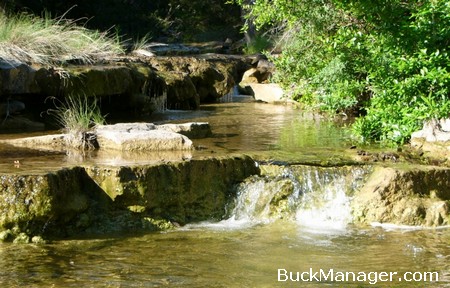
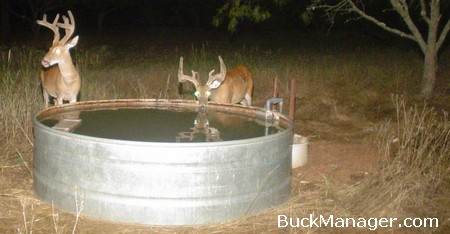
Whitetail are not picky when it comes to water sources. They will readily use troughs, ponds, creeks, rivers springs, dew, snow and even mud puddles. In fact, secluded depressions that hold water for any period of time will be used heavily by deer. These tucked-away surface sites allow does with fawns and weary bucks to go about their business in seclusion. This may decrease their chances of being detected by predators and hunters.

Next time you stumble across one of these mud holes pay attention. Take a look at the number of deer tracks around them. Deer have no problem using water from where they can get it. And they can get it in many ways.

Daily Deer Water Requirements

White-tailed deer require water but can go for relatively long periods of time without it. Deer use water daily. They can ingest it directly or they can extract it from their diet if succulent plants are available to them. In areas where water-rich foods are lacking, the rule of thumb is that at least one source of permanent water per square mile is needed. This will ensure use of the available area, assuming the area is deer habitat.

The home range of a whitetail deer generally ranges from 400 to 800 acres. So,  it’s a good idea to have at least one water source per square mile. This offers at least one watering site and will meet deer water requirements for the animals living in the area. Lack of free water on dry ridges may deter deer from using these areas.

Water Distribution for Deer

Many factors affecting how much water a whitetail deer drinks each day.  These factors also impact seasonal consumption. It’s difficult to say that “Rancho Perfecto” needs exactly 5 ponds or exactly 6 troughs scattered across it. However, I recommend developing watering sites no less than one mile apart. Doing this means no deer is ever more than a half mile from water at any time. This also falls in line with the “at least one water source per square mile” philosophy mentioned earlier. It ensures the whitetail deer in your area have access to surface water even if they do not necessarily need it.

Meeting Deer Water Requirements

Deer use water in several forms. In addition to the liquid found on the earth’s surface, whitetail deer can use preformed water and metabolic water. Preformed water is the stuff that is found in the foods that they eat. Metabolic water is produced internally as a result of hydrogen oxidation during an animal’s metabolic processes. Much of the water that whitetail deer need can be found in the food that they eat. Most of these foods are between 50 and 90 percent water. No need to go hunting for water when high quality, natural food sources are abundant. In essence, deer only drink water to supplement the water they extract from their diet.

One study in the Southeastern U.S. suggested that whitetail do not require surface water on a daily basis because of high rainfall, humidity, and the availability of succulent plants. Researchers said this applied for at least most of the year. Additionally, the study mentioned that surface water may be important during the summer when rainfall is scarce. This is also when the water requirements of lactating does are high.

Improve Available Deer Habitat - Water Required for Deer Use

A white-tailed deer needs about 1 1/2 quarts of water for every 100 pounds of body weight per day during the winter. This requirement doubles for deer during the summer. When temperatures rise, deer need about 3 quarts for every 100 pounds of body weight. How many deer are in your area? How much do the deer using your property weigh?

The volume of water is even greater for does that are supporting fawns or deer found in more arid regions, such as West or South Texas. Again, this does not mean that a deer will necessarily drink this amount of water, but that they will supplement the preformed and metabolic water taken from their diet with surface water.

Water is Life

It’s thought that during times of drought or pregnancy that surface water is a definite necessity. It’s believed that whitetail actually ingest between 2-3 times as much water as food. Is this the case always? Don’t know. There can be other factors that increase water intake, too. The supplemental feeding of deer with protein pellets is also believed to elevate whitetail deer water requirements.

Deer that do not have access to adequate amounts of water will not forage. This would put a damper on any deer management efforts in a hurry. In addition, this would hurt the deer hunting, or lack thereof, on a property as well. Deer that do not eat will not maintain good body condition, raise fawns, grow large antlers, or live.

As mentioned, habitat conditions do come into play. Moisture-rich plants can provide much of the water that deer may need. However, this is not the case in areas experiencing drought conditions or for whitetail deer living in semi-desert conditions. Although surface water is not as important to whitetails as food or habitat with suitable cover, a lack of available water can prevent animals from using an area in drier climates.

Got Water?

Whitetail are like all living things in that they require water in order to survive. Deer water requirements will vary based on whether they are growing body mass or simply in maintenance mode. The amount required daily varies seasonally. Deer require much more water during the summer. This is especially true for does which need more liquid for milk production.

Tale a closer look at your property if you even think water may be a limiting factor. The deer and other wildlife found in the area will appreciate it. The installation of additional tanks or water troughs will more than likely help your population management efforts. This potentially leads to improved deer hunting in the area. A study that took place in Texas reported that watering sites are frequently the centers of whitetail home ranges. Makes sense.

White-tailed Deer Range and High Fences

They have become a part of the Texas landscape. Landowners that have them claim that they are critical for white-tailed deer management. Those that don’t either dislike them or simply can not afford them. Some people, hunters included, hate them. Hard working men make a living building them. “They” are high fences, often referred to as game fences. Like it or not, it seems high fences are here to stay, but a question that has undoubtedly crossed the minds of many deer hunters is, “What impact does a high fence have on the movement of white-tailed deer?”

Game fences are typically 8 or 10 feet in height, so there are high fences and then really high fences. Ask just about anyone and they will tell you that high fences are deer proof—deer inside the fence can’t get out and deer outside the fence can’t get in. This belief is disturbing to hunters and landowners bordering high fenced properties because it seems more and more ranches are turning to boundary fence that consist of high fence. I can see both the pros and cons of high game fences, but neither of them is so compelling that I want to drink to the proverbial Kool-Aid. That being said, high fences make it much easier to manage a deer herd. Continue reading “White-tailed Deer Range and High Fences”