Cold Weather Means Deer are Moving!

The life of a white-tailed deer is highly impacted by the weather. Hunters know that high rainfall years are better than dry ones when it comes to antler growth and the number of fawns produced. Mild weather during the spring and fall  is also conducive for plant growth, which in turn is good for deer growth. Everything struggles when it gets really hot or really cold. However, if you’re looking to harvest a deer this season then colder temperatures are exactly what you need. And that’s because whitetail deer move around a heck of a lot more when temperatures drop.

I know what you’re thinking. The rut, right? Cooler temperatures must mean that bucks will be chasing does with reckless abandon. Well, that could be one exciting scenario, but I’m targeting the fact that when the temperatures outside get really, really cold, deer get extremely hungry. This means that they have got to eat something, and soon. It takes a lot of energy to maintain a 104 degree (F) internal body temperature when the mercury starts to plummet. Deer will be looking for fuel, but will you be there?
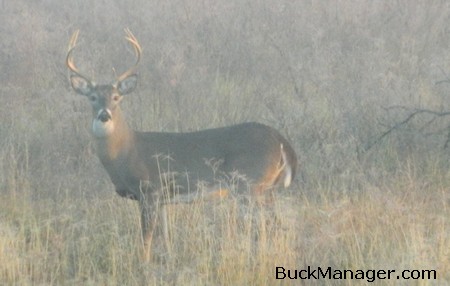
Deer Hunting and Management - Best Deer Movement Times for Hunting

Deer Hunting Good on Cold, Wet Days

Cold weather is good for getting whitetail deer up and moving. Cold, wet weather is even better! Think of it in terms of a hypothetical “deer misery index.” The more miserable it is out there on the landscape then the tougher it is for deer. It makes it very hard for whitetail (and other animals) to bed up and hold tight all day when their energy needs are spiking through the roof. If your heater is running all day at home then you can bet the caloric needs of a whitetail deer are humming right along.

The one caveat to hunting cold, wet and just plain ole nasty weather is that it’s also going to be tough on the hunter, too. These are the days that separate the men from the boys, those that talk the talk from those that walk the walk. If you want to fill the freezer and the wall then it’s going to take more than a big buck sticker on the back glass of your truck.

Deer Movement and Energy Requirements

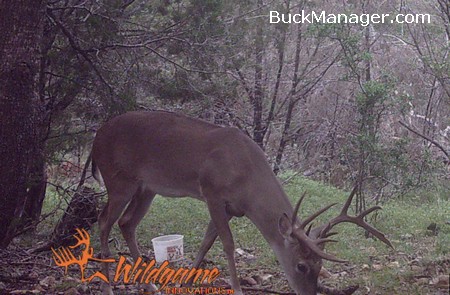
The movement of whitetail deer increases as food sources decrease, energy demands increase. Deer hunting extreme cold often means that food sources are limited AND whitetail deer have elevated energy requirements. This puts a lot in favor of the hunter. Find the right place, hold tight and you’re in business. Will it be a well-established winter food plot, a feeder or a travel corridor of woods that connects a bedding area to a feeding area?

It’s important to realize that the term “cold” is relative to the area that you are hunting. There are a variety of subspecies (20+) of whitetail deer in the US. Some can attain the body mass required to endure snow-covered hills and bone-chilling temperatures for weeks. Smaller-bodied whitetail at southern latitudes get hit hard if temperatures simply stay in the 20’s and 30’s for a couple of days. What is considered a cold winter day in one area may just be an average fall day in another place. Hunt when deer are moving, when temps are well below average for your area.

Like Buck Manager Deer Hunting and Management on Facebook

Dark of the Moon Deer Hunts

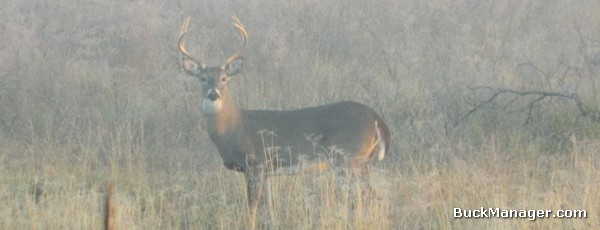
When colder than normal weather settles into an area for a few days to a week or more, expect the morning and evening movement of deer to increase substantially. And in my experience, the quantity of movement during the morning will be even greater if there is a new moon (i.e. dark of the moon/no moon). Morning hunts are great because dark skies keep deer bedded up all night so that they are more than ready to go chow down when the sun finally breaks the horizon.

With a need for feed, you can also expect the mid-day movement of deer to increase when temperatures plummet, regardless of moon phase. In fact, I’ve seen extended cold weather keep deer out on food plots all day long. On those clear and cold days, exposed feeding areas such as food plots allow deer exposure to the sun as well as an abundance of forage. Feeding areas that allow protection from the wind get another thumbs up as well.

Hunt Hard or Stay Home

There is no doubt that extreme cold gets deer up and moving. It’s especially hard on animals when temps are just above freezing and precipitation is involved or there are periods of prolonged periods of frigid weather, particularly later in the season in areas where the deer are accustomed to mild falls and winters. One of my favorite times to be out deer hunting is when it’s been much, much colder than average for several days running. It all but guarantees that animals will be up and at ’em.

A successful hunt is a big part of whitetail deer management because the end result is always a reduced population. Harsh environmental conditions means that the limited, available foods must be divided up among all of the deer that live in a given area. Less over-wintering deer means more food for the remainder of the herd and better nutrition for each individual animal. This is paramount for growing and producing big, healthy deer. There has been volumes written about hunting the rut to take advantage of increased deer movement, but a strong cold spell that last for several days or more should never be overlooked.
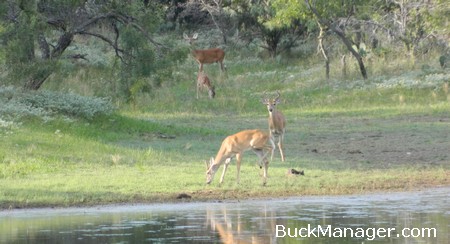
Whitetail Hunting Season in Good Shape

Many bow-carrying deer hunters have already headed to the field, but it’s darn tough out there right now for those than plan on whitetail hunting around a feeder. Much like the rain, food plots seem to be hit or miss depending on which part of Texas your located. Those that have been in the woods lately have no doubt discovered that the acorns have fallen. Last check of the game cameras have demonstrated that deer visitation at the feeders has slowed way, way down. But I’m not worried. They are there. Somewhere.

All in all, things are looking really good for Texas deer hunters this year. I’ve corresponded with quite a few property owners within the past couple of months and the overwhelming majority of them say things are looking pretty darn good. Habitat is decent for the time of year, antler quality is there and good numbers of fawns mean good deer hunting seasons to come. State wildlife officials are echoing what landowners have been saying for some time. This season is going to be a good one.

2013-14 Texas Deer Hunting Season

Source: “Statewide population trends remain stable and hunters should expect good numbers of deer year in and year out,” says Alan Cain, TPWD whitetail deer program leader. “I would predict the statewide deer population to be close to or slightly above the long-term average and hover around that 3.6 million deer mark for 2013.”

“One factor hunters should also keep in mind is the good carryover of deer from the 2012 season as harvest was down resulting from heavy acorn and mast crops in several regions of the state,” Cain notes. “For hunters this translates into plenty of opportunities to harvest a deer.” Though the deer population numbers are expected to be good this year, Cain predicts the recent September rains that resulted in a flush of green vegetation may cause bow hunters to rethink their early season hunting strategies as deer may spend less time visiting feeders. A well-traveled game trail may be more productive than hunting at the deer feeder.

Dry conditions in 2011 resulted in a significant decline in fawn production, down to 29 percent for the statewide estimate, a 24 percent departure from the long term average. Fawn crops bounced back in 2012 at 47 percent and Cain anticipates survey results will show a higher fawn crop this year. In fact, Cain is hearing reports from landowners as well as TPWD biologists of fawn production in the 60 to 80 percent range in the Hill Country and similar reports of good fawn production in other areas of the state.

For hunters fawn crops may not be as meaningful since harvest is generally focused on older age class deer, but remember those fawns this year translate into your adult deer several years into the future.

Environmental conditions can play big part in determining hunting season success on yearly basis, but if the hunting outlook in your area does not seem quite as rosy as you’d like then there may be some other factors at play. Never underestimate habitat when it comes to holding and producing whitetail deer. Deer need it because it provides plants to eat and they need it for screening cover. Fawns need it for thermoregulation as well as for concealment from predators. Of course, hunting pressure both on your property and neighboring properties can play a large role too. Consider active deer management to find out more about what’s happening with the deer population in your area, as well improving the deer hunting on your property.

Deer Hunting Small Properties for Success

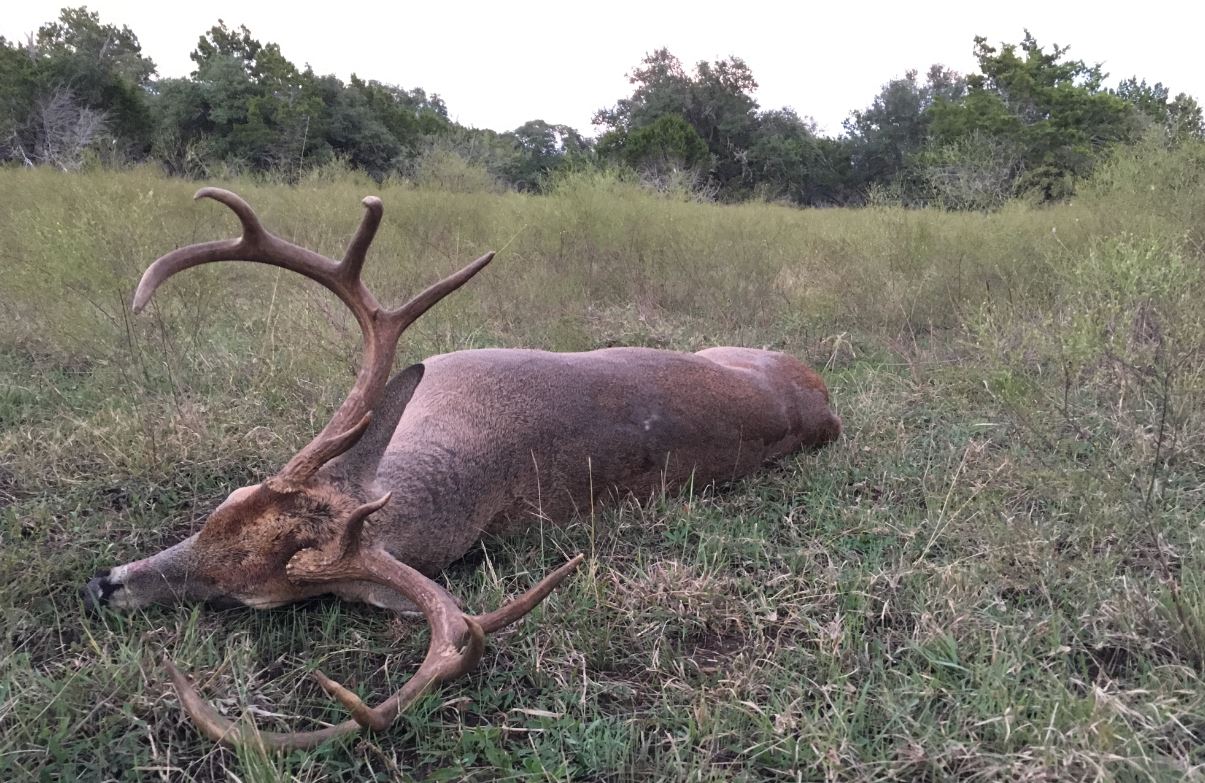
It was a perfect morning for deer hunting. It was late October, 53 degrees and a 5-7 mile per hour wind was blowing out of the northeast. Directly in front of me, standing at 10 yards, was a 10 point buck that I recognized from game camera photos. The deer was walking quartering away and stopped right on cue. The arrow rocketed through him and hit the ground before he even flinched.

I could immediately see blood. He lurched forward and hit high gear in only a few steps. A few seconds later I heard him crash. It was quiet again. Just to be safe, I waited 15 minutes before walking to the end of a 45 yard long blood trail that culminated with my bow buck.

Deer Hunting and Management on Small Property

I dragged the deer back to the truck, which was parked less than 60 yards away. You see, I was deer hunting a pint-sized property in Central Texas that consisted of a mere 7 acres. It was the second time that I had hunted the small tract in 6 years. Three years earlier had resulted in a mature, heavy-bodied 9 point whitetail buck.

My latest deer, why far from a “book” buck, was the product of only one deer management practice—harvest management. Not shooting him years earlier when he was younger was the strategy, just letting him go so he could grow into something more substantial. Deer hunting small properties can work, but you have to do it right from the start.

Deer Hunting Small Property 101

Keep it quiet. There is no real secret to this one, but it does mean allowing deer to be content using and traveling through a property. Larger properties afford protection to whitetail by the shear amount of space they put between them and any disturbances. Not the case when talking about a small property.

Tips for Deer Hunting a Small Property

Small acreages do not have the kind of built in buffer that distances deer from disturband, so it’s much more important that deer are not continually pushed off of the property, especially as the hunting season approaches. As a note, whitetail can deal with regular disturbances, but it’s different come hunting season once hunters take to the woods.

Mature deer, both bucks and does, become well aware of the sounds and smells that are out of the ordinary for the places they call home.

Help Their Diet

Just like the way to man’s heart is through his stomach, the best way to put an arrow or bullet in a buck’s heart is to keep him coming back for more—keep him well fed. Dominant bucks do not look for the poorest or even the most mediocre meal on the landscape as a part of their diet. They look for the best grub and they keep it to themselves.

If a big ole buck finds high quality forage on the small property you plan to deer hunt this fall then so much the better. A deer has got to eat, right?

The largest antlered bucks in an area will typically have the biggest bodies and that’s because they eat well. Give them something good on your property that is not found anywhere else in the area. Then you have a shot at making your small acreage property part of a dominant buck’s core area.

Deer Hunting Small Properties

It’s always a good idea to choose something that is highly tasty or high in protein. This could be anything from pelleted protein to cottonseed to other types of manufactured foods/baits that attract deer, including well-prepared food plots. The bow buck above had a taste for the Nut ‘N More Drop Block by InSights Nutrition. It’s actually a block that I believe was developed for deer breeders but I’ve found that free-ranging deer really go for this sweet, peanut-based product. Water can also be a great attractant in arid areas.

Know Your Small Tract

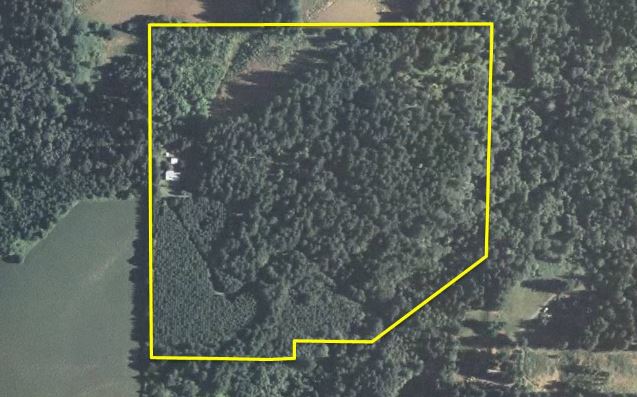
Not all small properties provide deer habitat. Smaller properties do not need an abundance of cover, but whitetail will avoid areas that do not have enough suitable screening cover to even provide for perceived safe travel. If you want whitetail deer to use a property it will at least need to have cover comprised of brush, grass, or small trees that are at least 3-4 feet in height in or near potential travel ways.

Deer Hunting Small Tracts

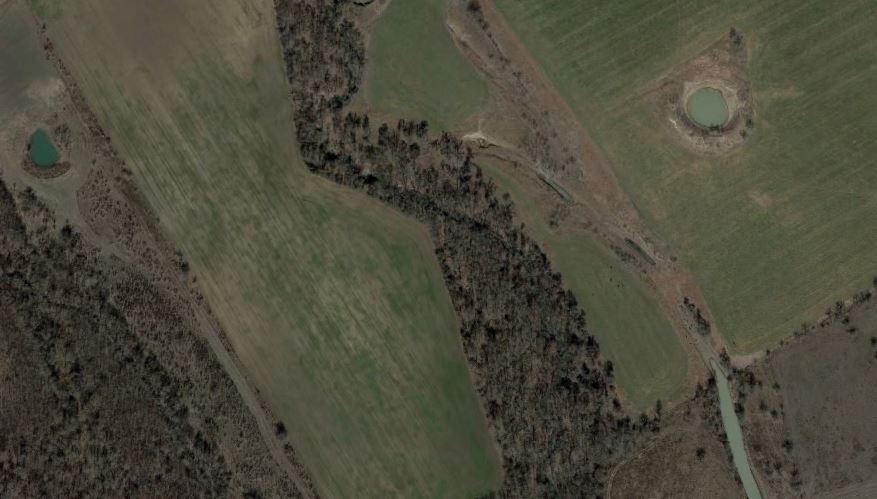
Some of the best small acreage deer hunting can be found on tracts of land that provide good travel corridors. In these cases, providing food or water may just be the icing of the cake for deer that are already traveling through a property. A creek, natural funnel or pinch-point can be a regular deer producer, even if it’s located on just a small tract of land. This is also something to consider when evaluating a hunting lease or when looking for property to purchase.

Timing is Everything

Like life, timing is everything when it comes to deer hunting. Time it just right. Use game cameras to keep informed of when animals are visiting your feed stations or traveling through the area. Most bucks will stick to well-defined feeding patterns before the breeding season turns them into nomads. If you don’t have the opportunity to hunt the pre-breeding season then the rut is, of course, a great time to hunt.

This is can bucks will longer distances in search of hot does. Know when the rut takes place in your hunting area, know the weather and get out there to take advantage of what’s going on. Deer will move throughout the day when the time is right.

Another option is to try rattling. Bucks will readily respond to rattling antlers a couple of weeks before the breeding season kicks into high gear. You may also have a shot a drawing them onto your small hunting tract after the rut as tapered off. A buck may cruise by to take a look if he thinks there is one last shot at breeding success.

Hunt Deer, Don’t Scare Them

Hunt only when the wind is right. This idea is so simple in theory, but it had been one of the most difficult things for me to put into practice during the hunting season. The problem had always been that I wanted to be in the field regardless of whether or not the weather was right. After years, however, I’ve learned that not only is hunting bad wind not effective, it can can run a buck out of the area for good.

Deer Hunting Tips for Small Acreage

I had one buck wind me several years ago and he never showed back up, at least not on game camera, for almost 5 weeks. Mature deer learn real quick when an area is not safe. That’s how they got old.

Hunting Small Acreage Successfully

These tips are a good place to start when deer hunting smaller tracts or any property for that matter. Whitetail are smart animals and that makes them challenging to hunt. It also makes it that much more rewarding when we’re lucky enough to bag a good one, especially on small acreage.

There is something about hunting these mini properties that makes deer hunting even more challenging. It’s good to shoot deer, but keep always remember that deer harvest management is even more important on small tracts. Do not over hunt them.

Deer Hunting in Texas: Public Lands

The overwhelming majority of deer hunting and management that happens in Texas takes place on private lands. Although ranches and farms across the state produce the bulk of deer year-in and year-out, there is another option out there when it comes to deer hunting in Texas: draw hunts on public land. Sure, 97 percent of Texas is privately owned, but much of the other 3 percent offers some really good hunting too. This is especially true of the state owned properties that are operated by Texas Parks and Wildlife Department (TPWD) as  wildlife management areas. A wildlife management area (WMA) serves as a research and demonstration site for landowners and hunters that  manage property in the same ecoregion of Texas.

Each of the 50 or so WMAs implement a variety of habitat management practices for both game and non-game species to show private landowners what they too can do on their own properties. The product of good habitat management is healthy wildlife populations and economical hunting opportunities for folks looking to bag white-tailed deer, turkey, dove and other species, including alligator. Hunters that enter the annual public draw hunts have a shot at hunting these properties. Of course, public hunting in Texas is not just limited to WMAs.

Public Deer Hunting in Texas - TPWD Draw Hunts

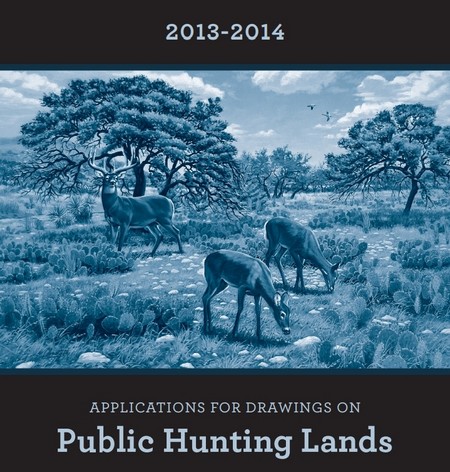
Other public lands found in the draw hunt lottery, which is administered by TPWD, includes state parks, state natural areas, state forest land, US Forest Service lands and property owned by the US Army Corps of Engineers. The application book for the 2013-14 hunting season was mailed out last week and is available online right now. My family, friends and I have entered these draw hunts for years even though we all have private lands or leases that we hunt. We enjoy the opportunity to meet up, camp and hunt different areas from time to time. And it’s real, open field deer hunting. Every hunt that we’ve gone on in the past 25 years has been great, memorable and we’ve almost always left with more in the coolers than we brought.

Texas Public Draw Hunt Applications – Do Not Mess Up!

TPWD: “A correctly completed application card must be received at the Texas Parks & Wildlife Department’s Austin Headquarters by 5:00 p.m. on the deadline day for the concerned hunt category in order to be entered in the drawing. Application deadlines may be found immediately below each Hunt Category title.

Only one application per person in a hunt category (example, Gun Deer Either Sex) will be allowed. In the event two or more applications are received for an individual within the same hunt category, all applicants on those application forms will be disqualified. It does not matter where your name appears on an application form, that is your application for that hunt category. Even if you apply for another area or on another persons application card for the SAME HUNT CATEGORY, EVERYONE on those cards WILL BE DISQUALIFIED.”

The term “public hunting” means a lot of different things to a lot of different people. All hunters have heard about the pitfalls of hunting public lands, but TPWD’s special draw hunts really offer a quality, controlled hunting experience for folks looking for a place to hunt. The book containing hunt dates and applications can be found online at Applications for Drawings on Public Hunting Lands. This booklet contains all of the program rules and regulations, hunt categories and schedules, procedures for applying, hunt area descriptions and application cards. TPWD will even mail you a printed copy if you request one by calling 1-800-792-1112.

Texas Deer Hunting: Holding Steady?

A Look at Deer Hunting in Texas

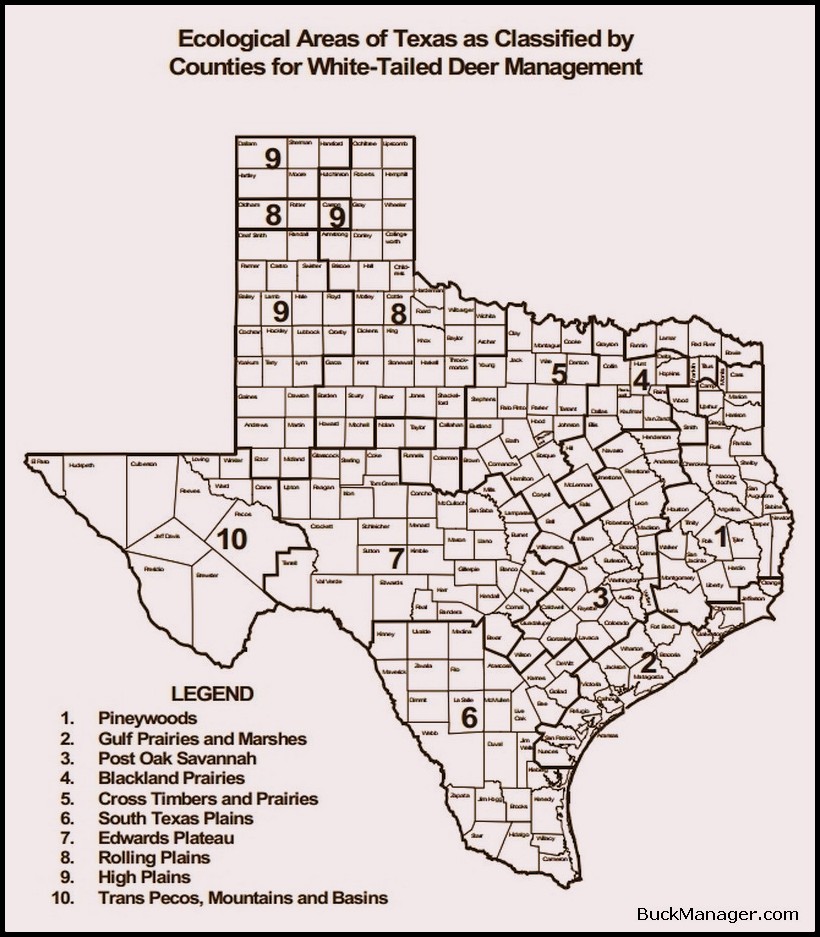
Texas Deer Hunting Ecoregions

It’s never too early to start talking about the upcoming white-tailed deer hunting season in Texas, especially now that we are halfway through the annual antler growth cycle. All of that velvety growth is starting to take shape, giving hunters a glimpse what to expect even though there are still a couple of months left before “hard-horned” bucks start filling trail camera photos. I love this time of year! The last few months leading up to deer season are almost as much fun as hunting season itself. Almost.

Texas is well known as one of the best places for hunting deer. After all, the state is home to the largest whitetail population in the US with an estimated 4 million animals. That’s a whole lot of hooves on the ground, but really a testament to the good deer management that is taking place on properties all across the state.

Number of Hunters, Deer Harvested

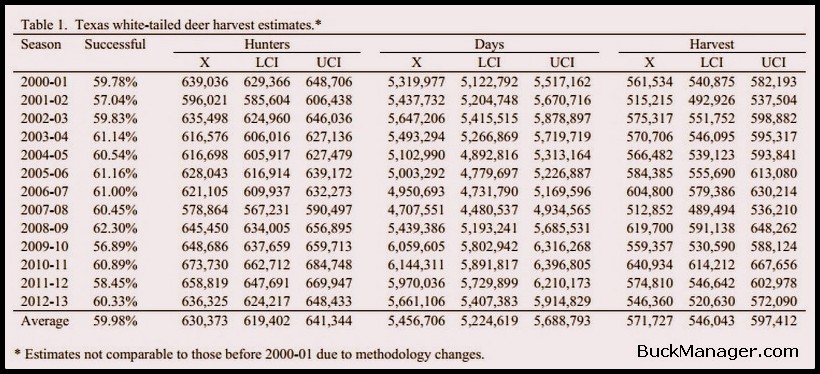
According to Texas Parks and Wildlife Department (TPWD), the 2012-13 deer hunting season saw over 636,000 deer hunters head into the field for about 5.6 million days of hunting. All that time in the stand produced an approximated harvest of just over 546,000 whitetail deer.

That is a lot of deer, but still less than 15 percent of Texas’ total whitetail population.

Source: “The big game harvest survey in its current format was first done after the 1972-73 hunting season. Immediately following the conclusion of the deer hunting season, a random sample of approximately 2.5% of all licensed hunters was selected and a big game harvest survey questionnaire was mailed to the selected hunters. After approximately 4 weeks, non-respondents were mailed a second questionnaire….

The survey asked if the recipient hunted the targeted species, county/counties hunted in, number of days spent hunting in each county, and sex and date of harvest of each individual harvested.”

Texas Whitetail Deer Hunting Harvest Estimates 2012-13

Deer Harvest Highest in Edwards Plateau

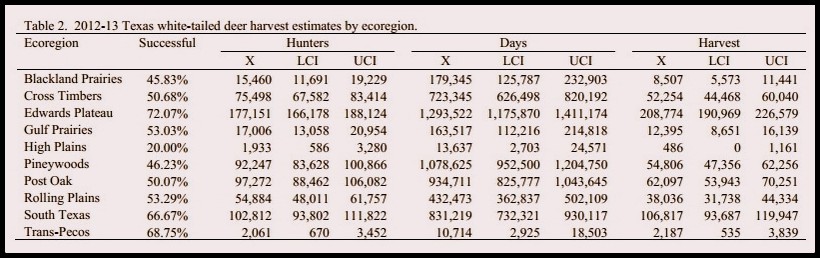
TPWD estimates annual deer harvest in each of the 10 ecoregions that comprise the state. Once again, the top whitetail producer last season was the Edward’s Plateau, affectionately know as the Texas Hill Country by those that hunt there. Hunters decreased the deer herd found in the Edward’s Plateau by an estimated 177,000 whitetail last season. The second and third place finishers were South Texas with almost 103,000 deer harvested and the Post Oak region with just over 97,000 deer harvested, although the Pineywoods was not far behind.

Texas Whitetail Deer Hunting Season Harvest Estimates 2000-2012

The annual whitetail deer harvest for the 2012-13 season estimated well over a half-million deer, but the reported number is one of the lower statewide harvests in the last 13 years. In fact, the downward trend in total harvest is quite obvious over the past few years. This decline no doubt stems from the drought that has plagued all of Texas the last few years. Habitat conditions have decreased, herd recruitment has suffered and there have been fewer deer on the landscape in recent seasons.

From a deer management standpoint, fewer hooves on the ground is a good thing when environmental conditions are bad. This helps the standing population survive, allowing them to repopulate when habitat conditions improve. Let’s just hope that turn comes sooner rather than later. Deer harvest is about more than just shooting inferior bucks. Sometimes management means reducing deer herds to maintain the condition of wildlife habitat.