December Deer Hunting Tips

December Deer Hunting Tips that Really Work

December is an especially exciting time for white-tailed deer hunting, offering a very different experience from the peak rut of November. This is true everywhere except in South Texas, where rut activity is just beginning. As temperatures fall and food sources dwindle, deer adjust their behavior dramatically. They will settle into new, predictable patterns that hunters can take advantage of. The December deer hunting tips offered in this article will help you capitalize on these late-season opportunities.

Bucks that were unpredictable and constantly on the move during the rut become more deliberate and focused on survival. They will often concentrate around reliable food sources such as standing corn, winter wheat, mast, or late-season food plots. The winter landscape also changes the hunt itself—bare trees, crisp air, and the possibility of snow. These environmental changes create both challenges and opportunities for hunters willing to adapt.

Late-season hunting demands patience, preparation, and a willingness to brave the cold, but the rewards can be exceptional. With fewer hunters in the woods, deer feel less pressure and may move earlier in the day. This is especially true during major cold fronts. The quiet of a December morning, combined with the heightened visibility of the winter woods, offers hunters a better chance to observe subtle deer movement and track fresh sign. Whether you’re targeting a weary old buck recovering from the rut or simply savoring the solitude of winter hunting, December provides a strategic and rewarding chapter in the whitetail season. Use it wisely!
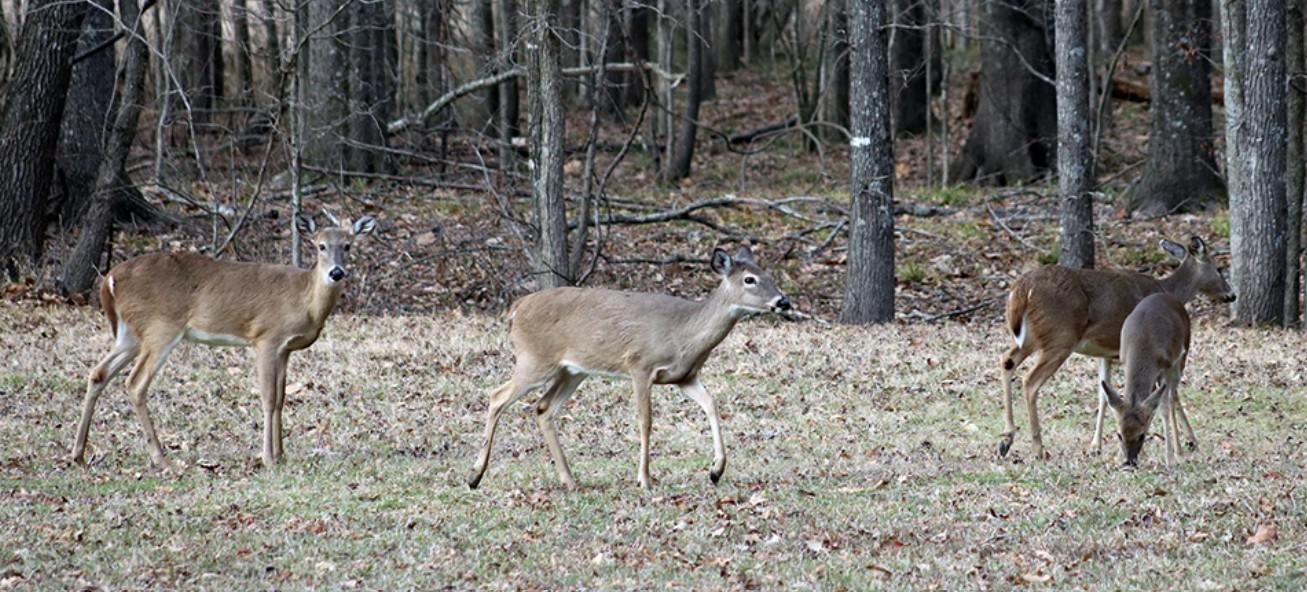
December Deer Hunting Tips

December Deer Hunting: Find Food

In December, food becomes the driving force behind nearly all deer movement. This fact makes high-quality food sources the best places for hunters to focus their efforts. Agricultural fields with leftover crops such as corn, soybeans, or winter wheat draw deer consistently during the late season. Again, this is especially true in the evenings as temperatures drop.

If you hunt in more wooded or hill country regions, seek out natural food sources. This includes any remaining acorns, browse near thickets, or edges of clear-cuts where fresh growth is available. These areas often become reliable hotspots once most fall food sources have been exhausted. Because deer are conserving energy in cold weather, they prioritize short, efficient travel routes between bedding and feeding areas. Knowing this information makes these travel corridors excellent stand locations.

Bedding areas themselves also become more predictable in December. Deer prefer the warmest, most sheltered cover they can find, including south-facing slopes, evergreen  thickets, cedar patches, or dense swamp edges. Hunters who can slip close to these bedding areas without being detected can catch deer moving during daylight, especially after cold fronts.

Public-land hunters should pay special attention to overlooked pockets of thick cover far from pressure. Late-season deer often relocate to avoid human activity at all costs. By targeting the right combination of food, cover, and low-pressure terrain, hunters can put themselves in the best possible position for December deer hunting success.

Weather Advice: Deer in December

December weather can make or break a deer hunt. Understanding how conditions affect deer movement is key to late-season success. Cold fronts are among the most reliable triggers for daylight activity. Sharp temperature drops push deer to feed earlier and more aggressively to maintain energy.

The first evening after a major front—and the following morning—are often some of the best times to be in the stand. Wind direction also becomes even more important in the open winter woods, where cover is thin and sound travels farther. Position yourself with the wind in your favor and use natural terrain to stay concealed. Avoid overhunting spots where your scent may linger in cold, dense air.

Snow can also dramatically improve December hunting opportunities at higher latitudes. A fresh snowfall makes it easier to identify active trails, bedding areas, and feeding patterns. This allows hunters to adjust their setups based on real-time sign. Light to moderate snow often encourages deer to move earlier. However, heavy storms may suppress movement until conditions stabilize—after which deer typically surge toward food sources.

Cloud cover, barometric pressure changes, and prolonged cold spells can all influence deer movement as well. So, staying flexible and monitoring weather patterns can give you a major edge in December deer hunting. By aligning your hunts with key weather events, you can significantly increase your chances of encountering late-season deer during shooting hours.

Deer Hunting in December: Get Up & Get Down!

Tree stands and ground blinds each offer distinct advantages in December. Choosing between them often depends on the terrain, weather, and deer hunting pressure. Tree stands provide excellent visibility in the late season, especially after the leaves have fallen and the woods open up. Elevated positions help hunters stay above a deer’s line of sight and reduce the chance of being detected by sound or movement.

In December, when deer are cautious and daylight movement is limited, a tree stand overlooking a prime food source or a well-used travel corridor can be incredibly effective. However, cold temperatures and wind exposure can make long sits in a tree stand challenging. These situations require extra clothing layers and careful attention to staying still and warm.

Ground blinds, on the other hand, can be a tremendous asset in December. Ground blinds offer both concealment and protection from the elements. A well-brushed-in ground blind blends naturally into the winter landscape and allows hunters to stay warmer. This is critical for maintaining patience during long late-season sits. Ground blinds are especially effective near food plots, standing crops, or edges of thick bedding cover where deer may approach cautiously. They’re also ideal for bowhunters who need to draw without being detected in open winter woods. The downside is reduced visibility and the possibility of scent pooling in a blind if the wind is not properly managed.

Ultimately, both setups can produce great results. The best setup will depend on your particular situation. Successful December hunters often use a mix of elevated stands and ground blinds depending on wind, weather, and deer movement patterns. Don’t overthink this decision. Go with your gut and use the temperature and wind to your advantage when deer hunting during the December late season.
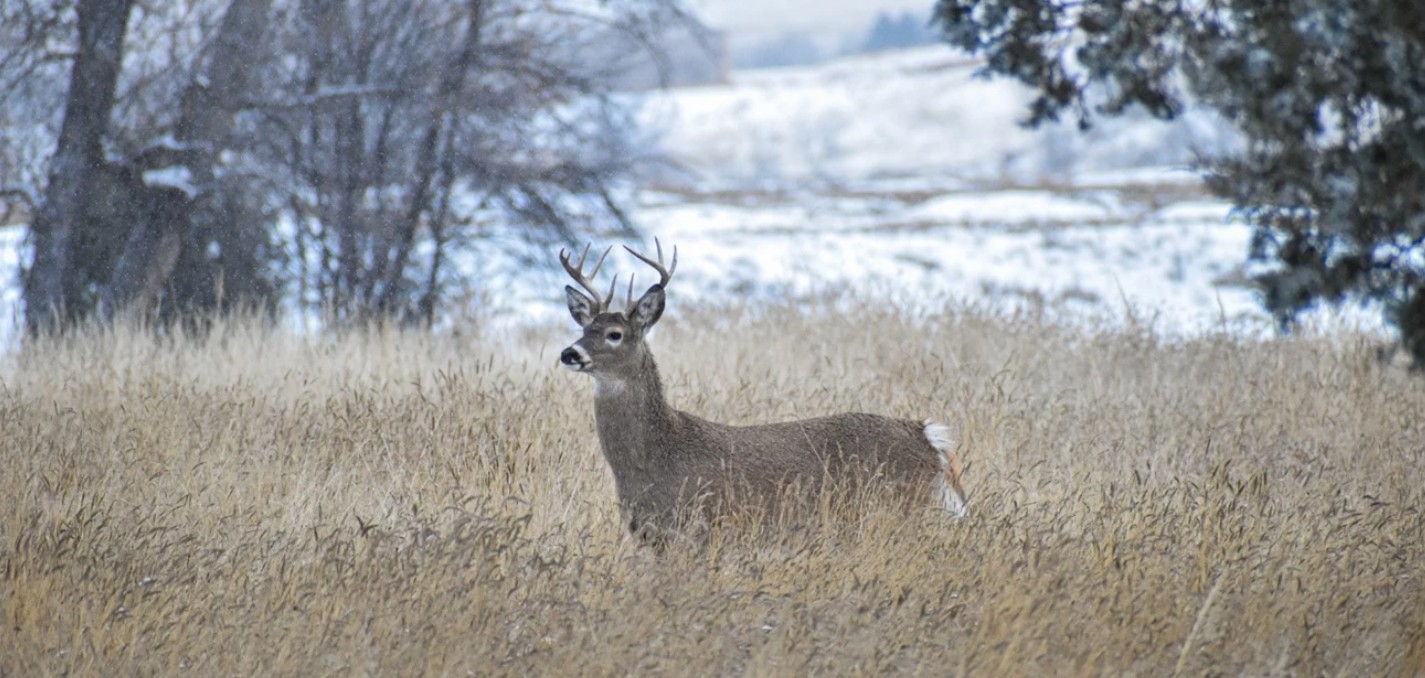
Late Season Deer Hunting in December

December Deer Hunting: Under Pressure

Hunting pressure throughout the fall significantly shapes deer behavior by the time December arrives. After months of encountering hunters, hearing vehicles, and sensing human scent, deer—especially mature bucks—tend to shift toward thicker, more remote cover. They generally avoid open areas during daylight. In addition, they often rely on secondary trails, side hills, and overlooked pockets that see little to no human intrusion.

Food sources close to heavy pressure may go cold. However, hidden food like isolated oak flats, abandoned fields, and small, tucked-away plots become prime locations for December deer hunting. In heavily hunted areas, deer become extremely cautious. This limits movement primarily to the edges of daylight, unless weather forces them out earlier.

Hunters who understand these pressure-driven changes can use them to their advantage. Target low-pressure zones far from access points, hunting on weekdays. Slip into areas other hunters overlook—such as steep terrain, swamps, cedar thickets, and small pockets of cover. These deer hunting tips can put deer back into play when hunting the late season. Setting up closer to bedding areas becomes more effective in December. The reason: Deer minimize their travel distances to conserve energy and avoid disturbance.

Hunters who carefully monitor wind, reduce noise, and keep their entry and exit routes clean can turn pressured deer behavior into predictable movement patterns. Allow other hunters to push deer. By focusing on quiet, strategic setups, late-season hunters can encounter deer that have all but vanished from more heavily pressured areas.
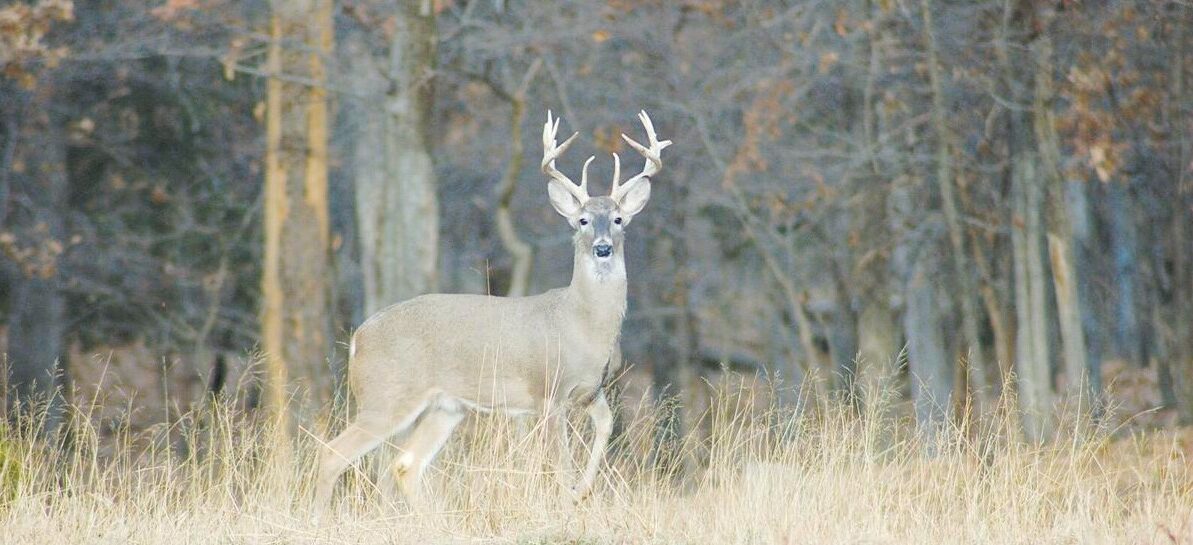
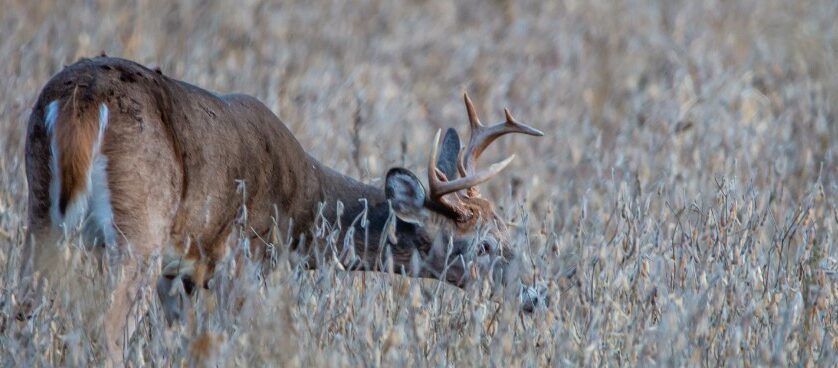
Texas Deer Hunting in January

A Good Time: Texas Deer Hunting in January

Texas’ deer hunting seasons are well underway. Most of the harvest for this year is already in the freezer. However, the season is not over. In fact, plenty of deer remain on the landscape and available for harvest. You’re wrong if you think otherwise. Now, let’s discuss why Texas deer hunting in January is a good time to be in the field.

Late winter deer hunting can be advantageous for several reasons. First, conditions and deer behavior during this time present unique opportunities. Deer change behavior as hunter activity and temperatures continue to decrease. Those changes can work to a hunter’s advantage. Let’s take an objective look at Texas deer hunting in January, and why it’s a good idea to be out hunting.

Texas Deer Hunting January

1. Post-Rut Behavior

After the peak of the rut (mating season), bucks are often fatigued and focused on rebuilding their energy reserves. This can make them more predictable as they prioritize feeding over other activities. Second rut activity may occur in late December or early January in some regions. This is especially the case if unbred does or yearling females come into estrus.

After the rut, white-tailed bucks exhibit behavior aimed at recovering from the energy demands of breeding season. During the rut, bucks often neglect food, lose significant body weight, and experience physical exhaustion. In the post-rut period, their focus shifts back to feeding and resting to replenish fat reserves and regain strength. They have to do this before the worst winter conditions set in.

Bucks typically reduce their movement, spending more time near reliable food sources and secluded bedding areas to conserve energy. They are less likely to exhibit the aggressive and wide-ranging behaviors seen during the rut. Bucks become more cautious and less visible, but also more predictable. This makes late-season hunting challenging but rewarding, as bucks can still be active during daylight hours. The key is to focus in areas with concentrated food sources or minimal hunting pressure.

2. Fewer Hunters When Deer Hunting in January

Many hunters wrap up their season by late fall or early winter. This leads to less competition in the woods. The reduced hunting pressure often makes deer feel more comfortable moving during daylight hours. This factor alone makes Texas deer hunting in January a worthwhile effort. Fewer hunters in the field and less pressure allows deer to settle down.

3. Cold Weather Patterns

Colder temperatures force deer to move more during the day in search of food. They need energy to maintain their body heat and energy levels. Frost or snow (most likely west Texas or the panhandle) makes it easier to track deer movements and locate bedding and feeding areas. Deer require more calories to maintain body heat. As a result, this forces them to move more frequently and during daylight hours to find food.

This makes their movements more predictable, especially near concentrated food sources such as agricultural fields, food plots, or feeders. Cold weather also reduces human scent dispersion, making it harder for deer to detect hunters. Additionally, frosty or snowy conditions, which again are not common to all of Texas, improve deer movement. Cooler temperatures are also more comfortable for hunters. I’d rather hunt in January than when it’s hot or even mild.  Cooler temps allows hunters to remain in the field longer without the distraction of heat or insects. These factors create ideal conditions for locating and harvesting deer.

4. Limited Food Sources

By late winter, natural food supplies like acorns, fruits, and lush vegetation are scarce. Acorns, which serve as an important food source for deer in many regions, may be depleted by this time. This makes deer more predictable as they concentrate around remaining food sources. Pay attention to agricultural fields, food plots, and feeders.

Texas Deer Hunting the Late Season

As a result, deer often turn to evergreen shrubs, woody plants, and any remaining forbs. Agricultural fields can be key late season resources, with deer foraging on leftover crops such as corn, oats, and wheat. Supplemental foods, like corn or protein pellets, can all of a sudden appear more attractive.

In addition, food plots planted specifically for whitetail can provide critical nourishment and be an great attractant. Stable and available resources are crucial for deer to maintain their energy levels and survive the colder months. Remember, bucks must still recover from the physical stress of the rut.

5. Easier to Spot Deer When Deer Hunting in January

Deciduous trees have shed their leaves, providing better visibility in the woods. This makes it easier to spot deer from a distance. After the leaves have fallen in late autumn and early winter, the landscape opens up, significantly improving a hunter’s ability to spot deer. Without dense foliage to obscure views, hunters can see farther through the woods. This makes it easier to detect movement and identify deer trails, bedding areas, and feeding sites.

The absence of leaves also highlights the silhouettes of deer against the bare trees and open terrain. This is especially important during early morning or late afternoon light. This increased visibility is particularly useful when hunting in wooded areas or along ridgelines where deer often travel. Additionally, with fewer places to hide, deer become more exposed, giving hunters a clear advantage in locating and tracking their prey. This openness enhances situational awareness, allowing for better decision-making and more successful hunts.

6. Management Opportunities

Late-season hunts often focus on herd management. This means taking antlerless deer (does) or culling specific bucks to maintain a healthy population balance. This is a good time to close in on those deer  management goals and prepare for better hunting next year.

Deer harvest is a vital tool for wildlife management and ecological balance. By regulating deer populations, harvest helps prevent the overuse of native plants. Maintaining too many deer in an area can damage habitat for all wildlife. When deer populations exceed the carrying capacity of their environment, they cause significant harm to the ecosystem. This impacts the regeneration of native trees and has a negative real-time or following-year effect on agricultural crops.

Harvesting deer also helps maintain a healthy age structure in the population. This is important which is essential for the overall body condition of the herd. Furthermore, let’s not forget that deer hunting generates revenue for conservation programs and provides funding for habitat management and wildlife research. Responsible deer harvest practices ensure that whitetail populations remain sustainable. Sound harvest supports both the animals and the habitat.

7. Better Weather for Deer Hunting in January

Cooler weather is more comfortable for extended hunts and reduces issues like insect activity, which can be a nuisance earlier in the season. Deer hunting in cold weather is beneficial because it changes deer behavior in ways that increase the chances of success for hunters.

8. New Patterns

Deer establish new patterns after the heavy hunting pressure of the general season. In response, deer often reverting to lesser-used trails or secluded areas. Deer may revert from these “secret ways” later in the season if pressure has eased. Savvy hunters who can adjust their strategy may find success. Late winter deer movement is heavily influenced by the need to find food and conserve energy during colder months.

As natural food sources like acorns, grasses, and fruits become scarce, deer focus their activity around remaining resources. This can include agricultural fields, food plots, and feeders. This predictable behavior makes it easier for hunters to anticipate their patterns.

Bucks, especially those recovering from the energy-intensive rut, move strategically to balance feeding with conserving energy. As a result, buck often stick to well-established trails and bedding areas near food sources. Does and younger deer follow similar patterns, creating high-traffic zones that are ideal for late season hunting. The colder temperatures also encourage deer to move during daylight hours. All of these factors combined means better opportunities for observation and harvest.

Review: Texas Deer Hunting in January

Late winter deer hunting offers unique advantages that can lead to a a successful hunt. After the peak of the breeding season, deer focus on recovering energy and finding limited food sources. Fortunately, this makes deer movements more predictable. In addition, cold weather encourages daytime activity. With fewer hunters in the field, deer feel less pressured and more comfortable.

Furthermore, more open landscapes improve visibility, and the scarcity of food concentrates deer in specific areas. This increases the chances of spotting them. Additionally, late season hunts often provide opportunities for herd management, such as harvesting antlerless deer or removing specific bucks. For all of these reasons, Texas deer hunting during January is one of my favorite times to be in the field. Give it a shot!

Hunter Shoots Bucks Locked Up!

Hunter Shoots Deer After Bucks Locked Up

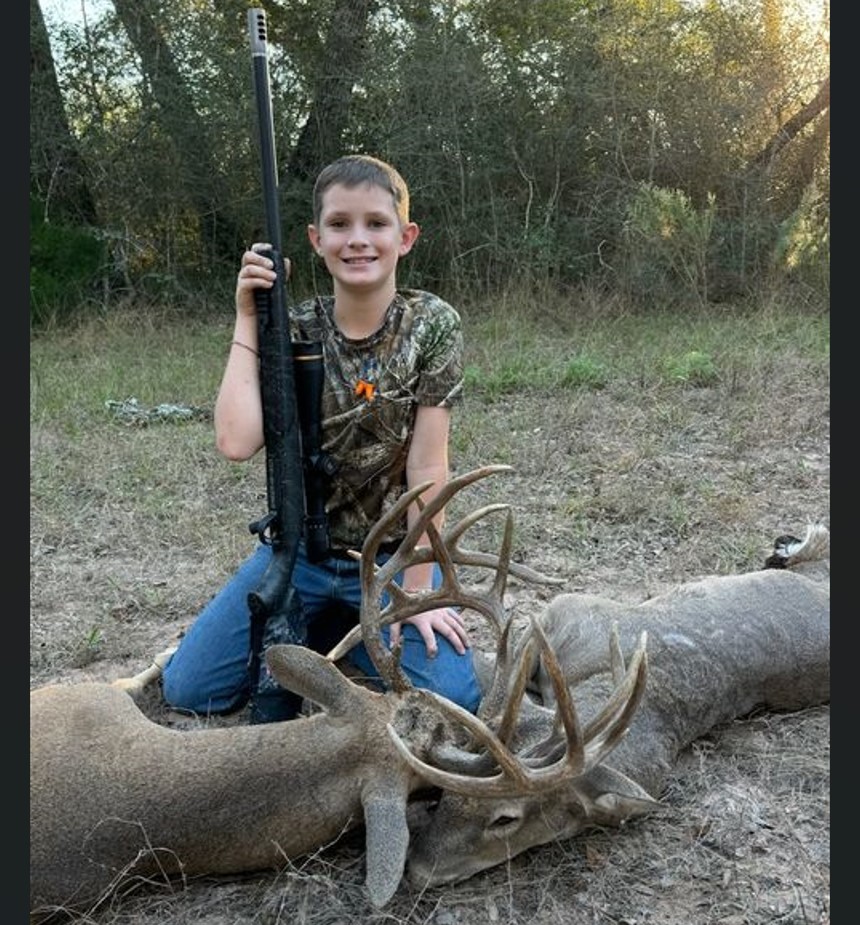
Shooting a buck that is locked up with another buck is quite rare but not unheard of. In fact, a Lavaca County, Texas, youth hunter had the opportunity to shoot bucks locked up earlier this week. Although both bucks ultimately died, the hunter technically only shot one of the deer.

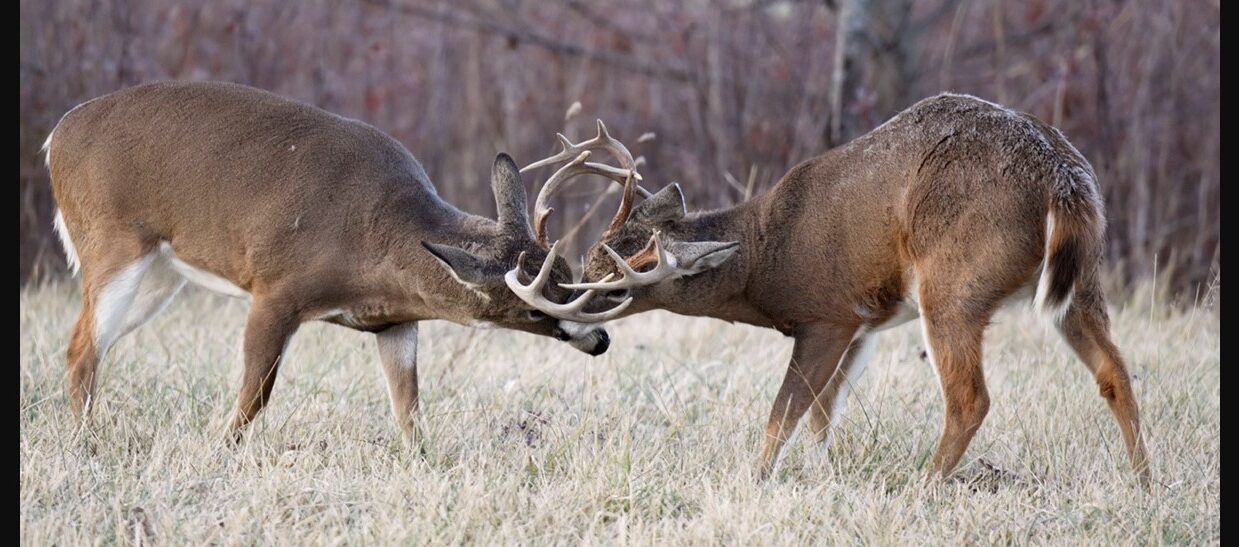
Bucks locking antlers during fights is a natural occurrence, but it doesn’t happen frequently because most fights end before the antlers become intertwined. When it does happen, the bucks can remain locked until they separate themselves or succumb to exhaustion, predation, or other threats.

Hunters occasionally encounter bucks locked up, often in areas with higher deer populations and intense competition during the rut. Such situations are unusual enough to be noteworthy. Hunters faced with this scenario typically prioritize the ethical treatment of the animals, sometimes freeing the bucks if possible or deciding to harvest one or both if circumstances demand. These encounters highlight the intense and sometimes perilous behaviors of whitetail deer during the breeding season.

Hunter Shoots Locked Up Bucks in Lavaca County, Texas.

Source: “We had something a bit unique come in this weekend. Tryce Migl was on a Lavaca County hunt when his buck came out dragging a second already dead buck. Their antlers were locked together from fighting. Tryce killed the buck which scored 129 6/8.

The second buck was around a 125 inches. Tryce is planning a skull mount of the two bucks locked together. Congratulations Tryce! Looking forward to seeing this skull mount on display at the annual Wild Game Supper.”

It really is a survival of the fittest, but sometimes the fittest do not survive either.

Buck Brawls: Sometimes Bucks Lock Up

Whitetail bucks fight primarily to establish dominance and secure mating opportunities during the their annual breeding period. These battles are driven by instinct and competition, as stronger, more dominant bucks typically earn the right to mate with does. This ensures their genes are passed on to the next generation.

Fighting also helps establish a social hierarchy and territorial boundaries among bucks in the area. Using their antlers as weapons, bucks engage in displays of strength and stamina. They often locking antlers and push against one another until one buck concedes or is killed. While these fights can lead to injuries or exhaustion, they play a critical role in natural selection. This epic battles promote the survival of the fittest and maintain ecological balance within the population.

Bucks Locked Up Antlers and Fight for Breeding Rights

Bucks Locked Up Antlers: How?

Whitetail bucks fight over territory to some extent, but mostly for mating rights. During the breeding season, a buck has only one thing on its mind. Get in his way and you get the antlers. When two bucks go at it, here’s how it locked antlers happen:

  1. Antler Engagement: Bucks lower their heads and push their antlers against each other, trying to assert dominance. This exercise is violent, war.
  2. Interlocking Points: The antlers, which have multiple points and branches, can become intertwined when the bucks push, twist, or thrash.
  3. No Release: If the antlers twist together in a certain way, they can become stuck. In some cases, the harder the bucks struggle to free themselves, the tighter the lock can become.

Unfortunately, it’s rarely a happy ending when the result is two bucks locked up. This situation can lead to exhaustion, injury, or even death if the bucks cannot separate themselves, especially if they’re unable to feed or defend against predators. In more rare cases, some hunters have found three bucks with antlers locked antlers. This phenomenon underscores the risks of competition in the wild.

Get Youth Out Hunting

Youth hunters play a vital role in preserving the traditions, ethics, and conservation efforts of hunting. Introducing young people to hunting fosters an appreciation for wildlife and the ecosystems they inhabit, teaching them the importance of sustainable practices and responsible stewardship. Youth hunting programs also ensure the continuation of these time-honored skills, bridging the gap between generations and promoting family bonding.

Moreover, involving young hunters helps secure ongoing funding for conservation through license fees and excise taxes on hunting equipment. This directly benefits hunters and wildlife management programs into their future. By nurturing a passion for the outdoors, youth hunters become advocates for conservation and the future of natural resource management.

Furthermore, getting kids outdoors leads to amazing things. For example, the young hunter in this article would have never have even seen bucks locked up if he had not been in the field. Kudos to whoever gave him the chance for a once in a lifetime opportunity.

Report Doe Harvest – Antlerless Deer Management

Report Doe Harvest

With deer hunting season underway in Texas, it’s time for some hunters to report doe harvest in certain counties. As the four-day antlerless deer season approaches, taking place from November 28 to December 1, Texas hunters are reminded by the Texas Parks and Wildlife Department (TPWD) to report their harvests in a timely manner.

The short season, commonly referred to by hunters as doe days, will run in 21 counties. Hunters who harvest antlerless deer during this period, as well as those who hunt during the youth-only and muzzleloader seasons, are required to report their take within 24 hours. Submit harvest reports through the free Texas Hunt & Fish mobile app  or through the TPWD’s Texas Hunt & Fish website.

Report Doe Harvest in Texas

Who Needs to Report Doe Harvest?

Mandatory harvest reporting is a critical tool for wildlife management. In fact, reports provide biologists with valuable data on hunting activity and its impact on local deer populations. In addition, by tracking harvest numbers, the agency can monitor the health of deer herds and make informed decisions about hunting regulations, which may lead to more opportunities for hunters in the future.

Hunters in the following Texas counties are required to report doe harvests during the four-day antlerless season:

  • Austin
  • Bastrop
  • Caldwell
  • Colorado
  • Comal (East of I-35)
  • DeWitt
  • Fayette
  • Goliad (North of US 59)
  • Gonzales
  • Guadalupe
  • Hays (East of I-35)
  • Jackson (North of US 59)
  • Karnes
  • Lavaca
  • Lee
  • Travis (East of I-35)
  • Victoria (North of US 59)
  • Waller
  • Washington
  • Wharton (North of US 59)
  • Wilson

Report Doe Harvest & Bucks

Additionally, hunters in the four counties that have been designated for archery-only hunting—Dallas, Grayson, Rockwall, and Collin—are also required to report all white-tailed deer harvests through the Texas Hunt & Fish app. In these counties, this includes any deer harvested throughout all white-tailed deer seasons, not just during the antlerless season. Again, reporting must also be completed within 24 hours of the deer harvest. So, make sure to report doe harvest and buck harvest ASAP if you hunt one of these four counties.

State officials emphasizes that accurate and timely harvest reporting is essential for the effective management of deer populations. By collecting this information, wildlife biologists can analyze trends in deer populations, adjust management strategies, and make data-driven recommendations for future hunting seasons. Furthermore, this helps ensure that hunting opportunities remain sustainable and beneficial to both wildlife and hunters.

Some Hunters Must Report Doe Harvest in Texas

Doe Harvest is Deer Management

The harvest of antlerless deer is an important part of managing a deer population at any level. Proper doe harvests contributes to sustainable hunting practices, as white-tailed deer are a renewable resource. Additionally, landowners and wildlife managers can provide more hunting opportunities by keeping deer populations in check. Proper management of doe herds helps maintain healthy deer populations that are sustainable for both wildlife and hunters, ensuring that hunting remains a viable activity for future generations.

Removing does and decreasing the overall deer population generally improve native plant communities. Deer hunting is important for habitat management, whether managing for deer or other wildlife species. When deer populations exceed the carrying capacity of their environment, they over-browse plants, leading to habitat degradation. In fact, this can affect not only important deer plants, but also deer and wildlife species that rely on the habitat.

Surveying deer populations annually and reporting deer harvest each hunting season allows managers to track population changes from year to year. Commonly, bucks are generally the preferred target for whitetail hunters. However, proper doe harvest is more important for population and habitat management. Keeping records is also a good practice, so record and report doe harvest as well as buck harvest this season and for seasons to come. These data can provide real insights into what’s happening on your property over time.

Doe Days Harvest Results 2019-20

Deer Harvest Key

Harvest is a key component of managing white-tailed deer populations and their habitat. The underharvest of deer means habitat will be overused by the remaining deer, which negatively impacts the condition and quality of deer remaining in the herd.

The overharvest of deer causes its own set of problems. If too many deer get shot over a period of time then annual fawn production and age structure in the deer herd declines.

Is doe harvest important?

This reduces deer hunting opportunity down the road because fewer animals are produced and available for harvest in subsequent years. It’s a balancing act between deer, habitat and hunter opportunity.

In short, the number of deer harvested each year is critical for the long-term management of whitetail populations; sustainable use is an important part of natural resource management.

Doe Harvest Expanded

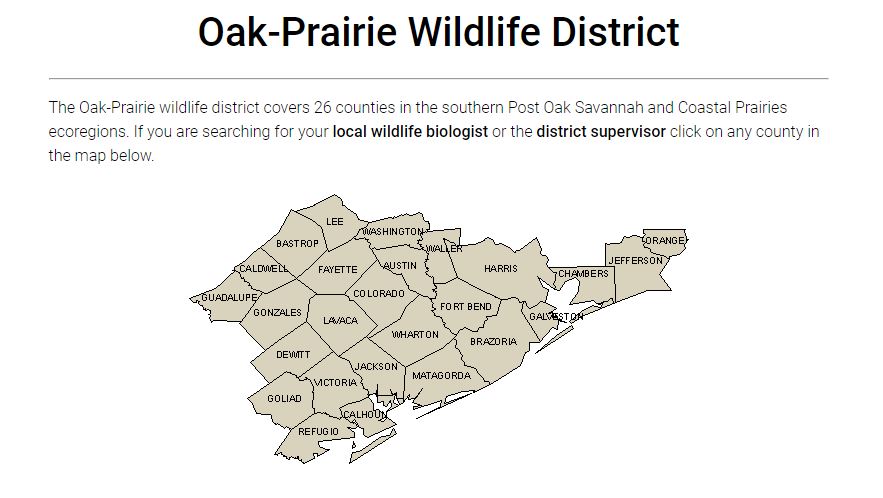
Some white-tailed deer hunters across the Oaks and Prairies region of Texas had the opportunity to harvest antlerless deer during the new 4-day “doe days” during the Thanksgiving holidays.

TPWD District 7 Reports Preliminary Doe Harvest

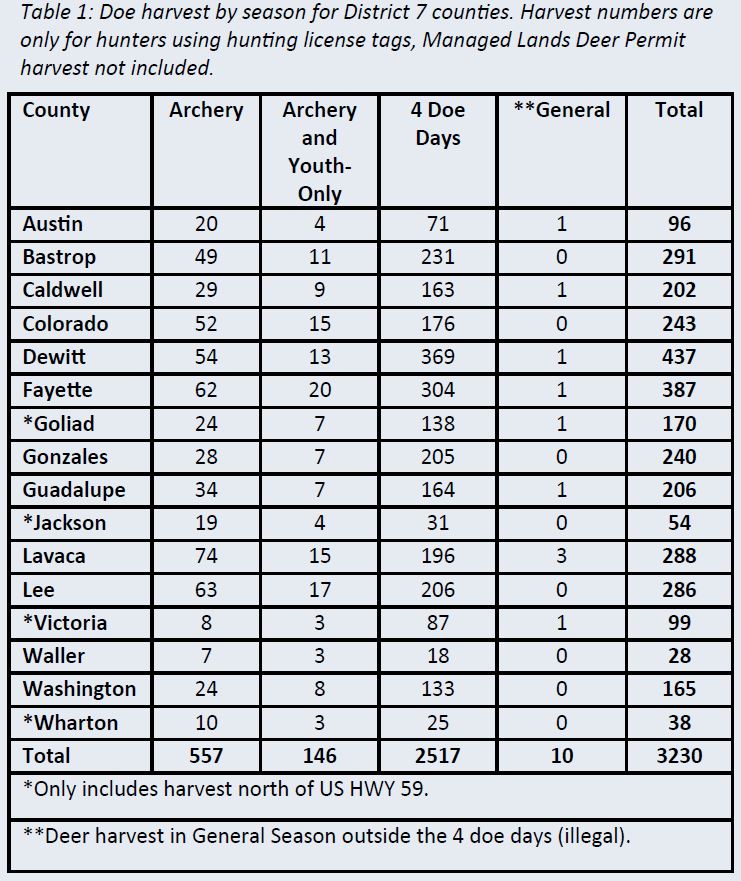
Due to mandatory reporting, Texas Parks and Wildlife Department (TPWD) biologists now have a good idea of the number of antlerless deer harvested during the archery season, October youth-only season, and the 4-day Thanksgiving period.

While harvest reporting likely was not 100%, the hunter-submitted data is valuable information that was not available to TPWD in past years. This no doubt provides the state with a better perspective on how new hunting regulations/doe days directly impacts antlerless harvest, deer populations.

Harvest In for Doe Days

For decades, the harvest of antlerless deer in these counties has been very limited. The harvest of does was limited to archery season and to those properties managing deer populations through TPWD’s Managed Lands Deer Program (MLDP), so the addition of doe days during the General Season is kind of a big deal. So how many antlerless deer were shot during the doe days?

Season totals by county have been summarized in Table 1 with data through December 5th, 2019. January muzzleloader season and youth-only season harvest will be added later. Also, Table 1 does not include antlerless harvest for properties using MLDP tags; this data will be compiled and summarized after the program’s April 1 reporting deadline.

Preliminary Antlerless Harvest, Including 4 Doe Days

Overall, TPWD biologists in the Oaks and Prairies District believe that the additional harvest (to date) by the newly implemented doe days regulations and seasons is an annual harvest rate the whitetail population can withstand.

TPWD says it will continue to monitor white-tailed deer densities through annual surveys, which are conducted from late July through September on a landscape basis throughout the region. Annual deer surveys are recommended for all landowners interested in managing local deer populations.