Controlling Whitetail Populations
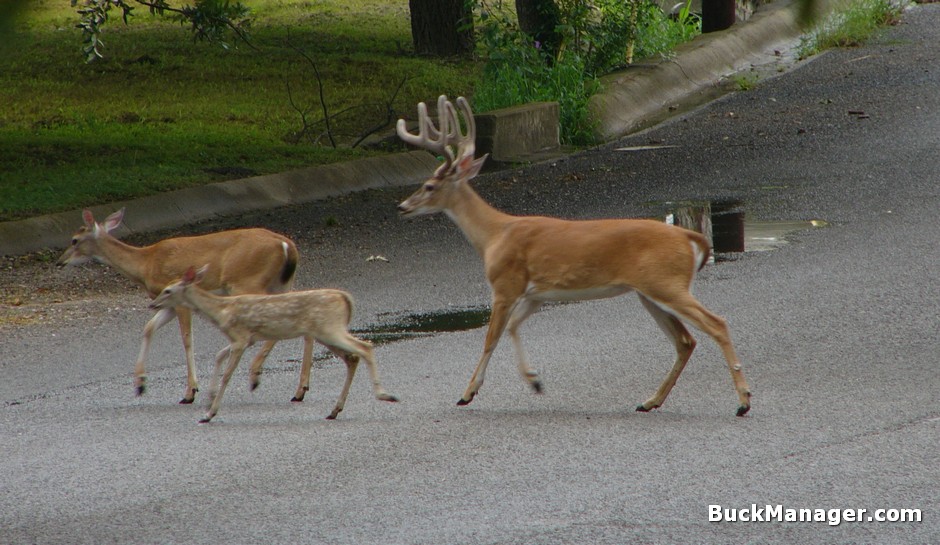
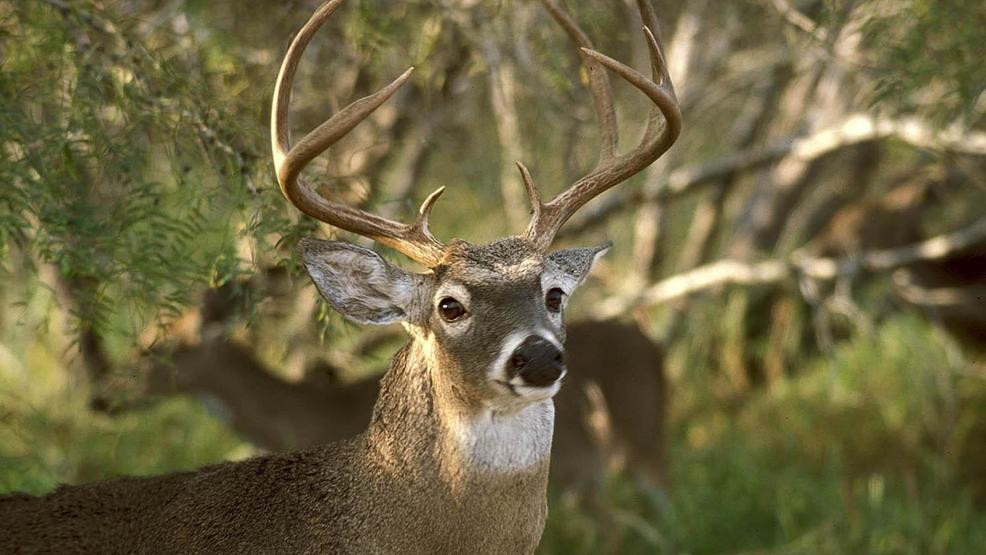
White-tailed deer populations in metropolitan areas of Texas are increasing significantly. The same thing is happening across the US. Deer populations have been increasing due to both conservation efforts and deer herd and habitat management, but in many areas a low mortality rates is the number one reason for rising population. To compound the issue,the human population of most cities in the United States is also rising.
In order to make room for the expanding human population, deer habitat is being destroyed as development of residential areas is increased. Each year these residential areas grow, spreading farther out into rural areas. Simply go for a drive in the “country” or rural, low-human population areas, on the edge of any metropolitan-urban setting and you will discover that the “country” getting further and further away!

The Adaptable Whitetail
The good news is that deer, especially whitetail, have a strong survival instinct as well as the ability to adapt to their changing environment. When their previously-forest or farmland habitat is cleared out and developed, they are pushed out temporarily. After homes are built-out and neighborhoods are completed, white-tailed deer will often return to live on the edges of these areas, in whatever suitable habitat they can find. Their previous food sources are replaced with new ones. Deer are also regularly fed by well-meaning humans.
Prior to the development of their habitat, deer would feed in the woods and fields and develop diets based on the natural foods found in their environment. After the development is complete, the whitetail will use new food sources including gardens, trees and other plants which have been planted in the new residential areas. Often, these deer stay out of sight, sleeping, eating and breeding until their population overtakes the “carrying capacity” of their new, reduced habitat.
Carrying Capacity in Suburban Areas
Carrying capacity is the quantity of animals that a given area can support, based on cover and food limitations. When the overall habitat available in an area is reduced, the carrying capacity of that area will also be reduced. It takes a very short time for an existing population of deer to exceed this carrying capacity within these new developments.
This causes problems due to the increased occurrence of deer-car accidents and other conflicts between the respective deer and human populations. These deer can become “nuisances” to the human population around them, due to limited space. That’s the time when the deer population control options start getting discussed. In these cases, cultural carrying capacity is more important than actual environmental carrying capacity.
Methods for Controlling Deer
There are several methods for controlling overabundant deer populations. Options which are considered, when deer population control becomes necessary are as follows: 1) Deer contraception, 2) Trapping and relocation of deer, 3) Removal of deer from the population by hiring sharp-shooters to shoot the deer, and 4) Removal of deer through bowhunting.
Contraception has never been shown to work in a free-ranging deer herd. It’s also expensive to try. Trapping and sharpshooting are also relatively expensive because the methods involve contractors for hire. In all the above situations, the costs of control is directly related to the amount of time ($/hour) someone has to spend carrying out the operation, plus the costs of supplies.
Trapping and relocation can be effective but is also high cost and very time consuming. Most metro city councils, parks departments and home owners associations have very small, if any, budgets for deer population control efforts. The use of sharp-shooters can be effective but, again, the cost will be high and the idea of high-powered firearms being used near residential areas is not popular with residents.
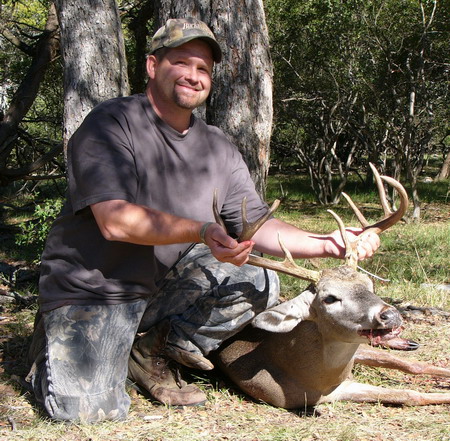
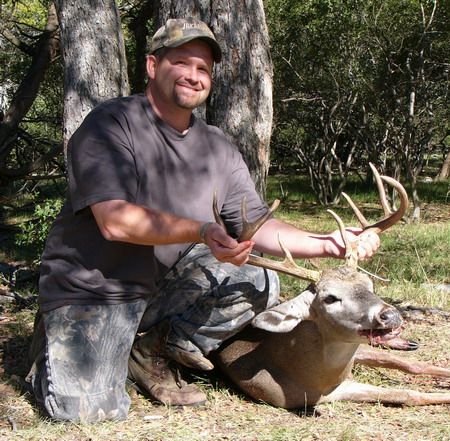
It has been shown through various studies that hunting is a cost-effective means for reducing suburban deer populations when compared with other tactics. In most cases, bowhunting is the method of choice for reducing the herd. The real cost savings come from not having to pay someone to remove or handle deer. Insteads hunting is merely allowed, promoted.
Birth Control in Deer
Deer contraception is conducted by trapping female deer (most of the time), sedating them and placing a contraceptive implant under their skin. These deer won’t become pregnant for a fixed amount of time until the implant becomes ineffective. This tactic has been proven to be high-cost and low effect because the majority of the female deer in an area need to be trapped and the cost of the drugs and the cost of trapping the deer are both high.
Others have tried to sterilize male deer through castration. Whether males or females have been treated, no contraception or sterilization project has succeeded in reducing a free-ranging deer population. Due to the survival instincts of the deer, it is difficult to trap a large enough portion of the deer population to make brith control an effective population control tactic.
Controlling Deer and Mitigating Risk
Managing deer numbers means having a goal and mitigating risk. The potential for accidents is not a risk that most city councils and parks departments, not to mention the local residents, are willing to take, regardless of the chosen control method. Again, bowhunting has been proven to be a safe and effective way for the deer population to be reduced. Also, the cost to the city councils and parks departments is minimal.
The deer which are harvested are either taken home by the hunters themselves or donated to local food banks, providing much needed, inexpensive protein for those in need. The hunters involved in these highly organized hunts are volunteers who donate their time. The opportunity to be in the woods is payment enough for them.
Organization of such take of deer (hunting) becomes increasingly important as non-traditional deer habitat increases and deer-population control measures become necessary. Management of deer herds involves removing some of the deer from areas where deer numbers exceed the overall carrying capacity. This reduction increases the health of the remaining deer population and reduce the occurrence of deer herd disease and winter-kill. Hunting is the safest and most economical way to reduce the overall deer population in a given area, but it must first be accepted and then implemented wisely.