How Many Deer Should My Property Hold?

How Many Deer Should My Property Hold?

One of the most important—and most misunderstood—questions in white-tailed deer management is how many deer a property should hold. The answer is not a fixed number. In addition, it has little to do with the total acreage of the property. Instead, the ideal deer population is determined by the land’s ability to provide adequate food, cover, and space throughout the entire year. This includes the time of year when resources are most limited, during late winter.

When deer numbers exceed what the habitat can support, body condition declines, habitat quality suffers, and long-term herd health is reduced. Proper management focuses on balancing deer numbers with habitat capacity. This balance ensures healthy animals, sustainable plants, and consistent deer hunting opportunities through healthy fawn survival.

Density: How many deer should my property hold?

Carrying Capacity: How Many Deer?

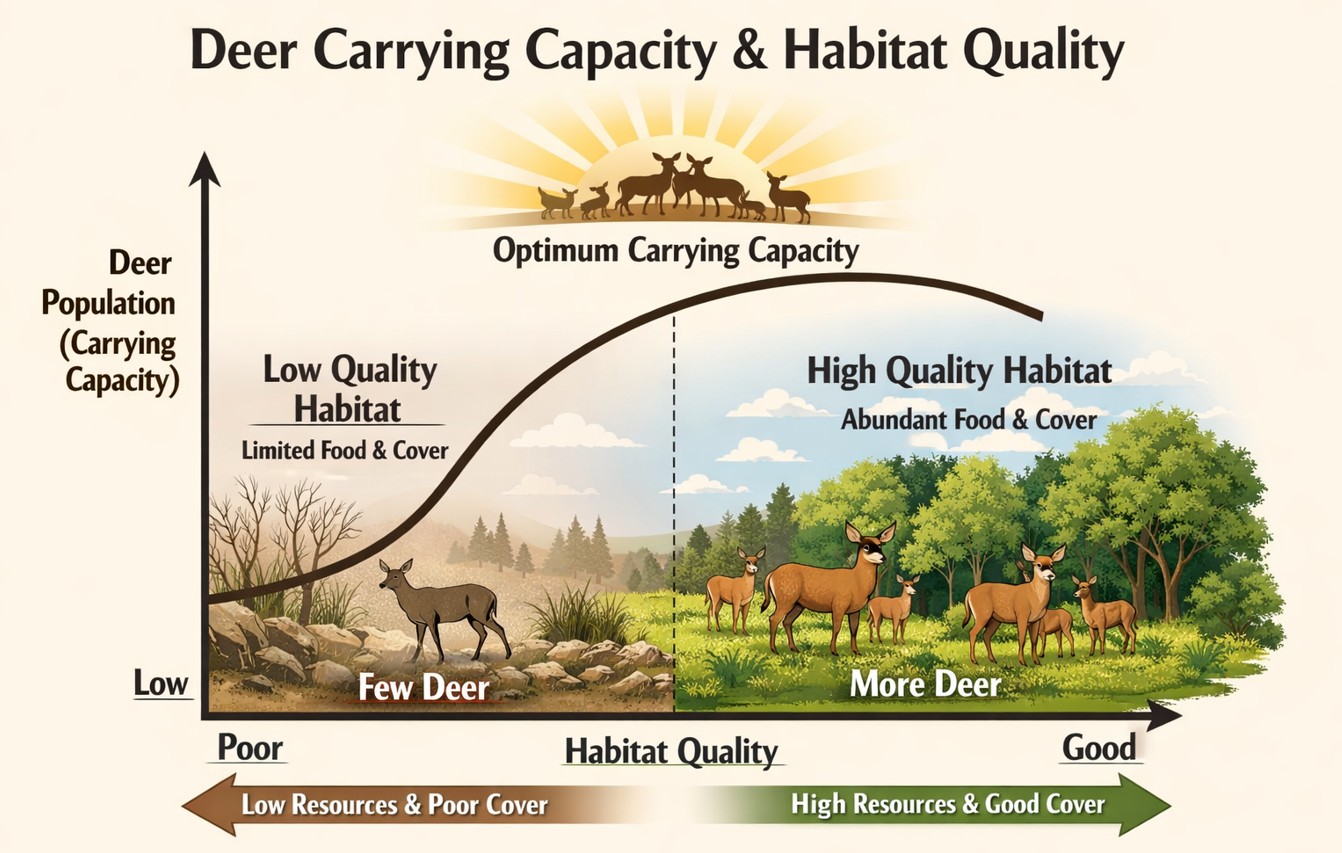
Carrying capacity is a foundational concept in deer management and refers to the number of deer a property can support without degrading habitat or herd health over time. It is not determined simply by acreage, but by the quantity and quality of available food, cover, and water—particularly during the most limiting period of the year, which is typically late winter.

When deer numbers exceed carrying capacity, the effects show up quickly in the form of overbrowsed woody plants. This results in declining body weights, reduced fawn survival, and poorer antler development. Effective deer management aims to keep populations at or below the land’s carrying capacity through habitat improvement and appropriate harvest. Proper deer numbers ensures both the habitat and the deer herd remain healthy and productive long term.

Habitat Quality & Deer Carrying Capacity

White-tailed deer carrying capacity and habitat quality are directly linked. So much so, that understanding that relationship between the two is essential when trying to answer the question of how many deer should my property hold. As stated prior, carrying capacity is not a fixed number. Carrying capacity rises or falls based on the land’s ability to provide high-quality food, adequate cover, and minimal stress throughout the year.

Conducting surveys is essential for keeping deer numbers in balance with the habitat. Annual deer survey estimates provide objective information about population trends, herd structure, and habitat pressure. There are a several standardized deer survey methods that can be used to track deer populations from year to year.

Without survey data, management decisions and harvest are often based on assumptions. A lack of information generally leads to overharvest or overpopulation. Surveys help managers detect changes in deer numbers early, evaluate whether habitat improvements or harvest strategies are working, and adjust management before habitat quality or herd health declines.

Habitat Quality Determines How Many Deer

Properties with diverse native forage, early successional habitat, secure bedding cover, and access to seasonal food sources can support more deer without negative impacts. Conversely, land dominated by mature timber, overgrazed understories, or limited winter cover may have a much lower carrying capacity, even if the acreage appears large.

How Many Deer Should My Property Hold?

When deer numbers exceed what the habitat can support, habitat quality begins to decline, creating a negative feedback loop. Overbrowsing reduces plant diversity and prevents regeneration of preferred forage species, which further lowers the land’s carrying capacity over time. As habitat quality drops, deer body condition, fawn recruitment, and overall herd health also decline.

Effective deer management recognizes that improving habitat can increase carrying capacity, but only if deer numbers are managed accordingly. The goal is balance—maintaining a deer population that the habitat can sustain long term while preserving the quality of the land itself.

The Best White-tailed Deer Habitat

Ideal white-tailed deer habitat is built around plant diversity and structure rather than any single “perfect” species mix. The most productive properties are dominated by early successional vegetation—such as native forbs, shrubs, and young regenerating trees—which should make up roughly half or more of the landscape.

These plants provide the bulk of a deer’s year-round nutrition, including high-protein forage during spring and summer, while also offering critical bedding and fawning cover. Woody browse like blackberry, dogwood, sumac, and greenbrier, along with regenerating hardwood sprouts, are especially valuable because they are both nutritious and resilient to browsing pressure.

Mature forest and mast-producing trees remain an important component of quality deer habitat, typically making up about a quarter of the plant composition. Oaks and other hard-mast species supply energy-rich food during fall and early winter, while conifers and closed-canopy areas contribute thermal protection and secure travel corridors. Open areas, soft mast species, and food plots play a supporting role by providing concentrated seasonal nutrition and diversity, but they should not dominate the landscape.

Ultimately, the goal is a layered, regenerating plant community with abundant native species and continuous growth across seasons. Habitat that is structurally diverse, slightly “messy,” and always renewing itself will support healthier deer and higher carrying capacity over the long term.

So, How Many Deer Should My Property Hold?

As you can see, there is no easily defined answer to the age old question of, “How many deer should my property hold?” The answer is directly tied to habitat composition and overall habitat quality rather than acreage alone. Landscapes dominated by diverse native plants, abundant early successional cover, and year-round food sources can support more deer without sacrificing body condition or long-term sustainability, while poor or overbrowsed habitats quickly limit healthy deer numbers.

When habitat quality declines, deer health follows—resulting in lower body weights, reduced fawn survival, and increased stress during winter. The best way to evaluate the plants that deer use on a property is to conduct a browse survey each year. The results can determine whether a property has too few, just right, or too many deer.

The encouraging reality is that habitat management can improve both habitat and herd health by increasing carrying capacity, but only when deer numbers are balanced with what the land can support. Healthy deer numbers are ultimately a reflection of healthy habitat.

December Deer Hunting Tips

December Deer Hunting Tips that Really Work

December is an especially exciting time for white-tailed deer hunting, offering a very different experience from the peak rut of November. This is true everywhere except in South Texas, where rut activity is just beginning. As temperatures fall and food sources dwindle, deer adjust their behavior dramatically. They will settle into new, predictable patterns that hunters can take advantage of. The December deer hunting tips offered in this article will help you capitalize on these late-season opportunities.

Bucks that were unpredictable and constantly on the move during the rut become more deliberate and focused on survival. They will often concentrate around reliable food sources such as standing corn, winter wheat, mast, or late-season food plots. The winter landscape also changes the hunt itself—bare trees, crisp air, and the possibility of snow. These environmental changes create both challenges and opportunities for hunters willing to adapt.

Late-season hunting demands patience, preparation, and a willingness to brave the cold, but the rewards can be exceptional. With fewer hunters in the woods, deer feel less pressure and may move earlier in the day. This is especially true during major cold fronts. The quiet of a December morning, combined with the heightened visibility of the winter woods, offers hunters a better chance to observe subtle deer movement and track fresh sign. Whether you’re targeting a weary old buck recovering from the rut or simply savoring the solitude of winter hunting, December provides a strategic and rewarding chapter in the whitetail season. Use it wisely!

December Deer Hunting Tips

December Deer Hunting: Find Food

In December, food becomes the driving force behind nearly all deer movement. This fact makes high-quality food sources the best places for hunters to focus their efforts. Agricultural fields with leftover crops such as corn, soybeans, or winter wheat draw deer consistently during the late season. Again, this is especially true in the evenings as temperatures drop.

If you hunt in more wooded or hill country regions, seek out natural food sources. This includes any remaining acorns, browse near thickets, or edges of clear-cuts where fresh growth is available. These areas often become reliable hotspots once most fall food sources have been exhausted. Because deer are conserving energy in cold weather, they prioritize short, efficient travel routes between bedding and feeding areas. Knowing this information makes these travel corridors excellent stand locations.

Bedding areas themselves also become more predictable in December. Deer prefer the warmest, most sheltered cover they can find, including south-facing slopes, evergreen  thickets, cedar patches, or dense swamp edges. Hunters who can slip close to these bedding areas without being detected can catch deer moving during daylight, especially after cold fronts.

Public-land hunters should pay special attention to overlooked pockets of thick cover far from pressure. Late-season deer often relocate to avoid human activity at all costs. By targeting the right combination of food, cover, and low-pressure terrain, hunters can put themselves in the best possible position for December deer hunting success.

Weather Advice: Deer in December

December weather can make or break a deer hunt. Understanding how conditions affect deer movement is key to late-season success. Cold fronts are among the most reliable triggers for daylight activity. Sharp temperature drops push deer to feed earlier and more aggressively to maintain energy.

The first evening after a major front—and the following morning—are often some of the best times to be in the stand. Wind direction also becomes even more important in the open winter woods, where cover is thin and sound travels farther. Position yourself with the wind in your favor and use natural terrain to stay concealed. Avoid overhunting spots where your scent may linger in cold, dense air.

Snow can also dramatically improve December hunting opportunities at higher latitudes. A fresh snowfall makes it easier to identify active trails, bedding areas, and feeding patterns. This allows hunters to adjust their setups based on real-time sign. Light to moderate snow often encourages deer to move earlier. However, heavy storms may suppress movement until conditions stabilize—after which deer typically surge toward food sources.

Cloud cover, barometric pressure changes, and prolonged cold spells can all influence deer movement as well. So, staying flexible and monitoring weather patterns can give you a major edge in December deer hunting. By aligning your hunts with key weather events, you can significantly increase your chances of encountering late-season deer during shooting hours.

Deer Hunting in December: Get Up & Get Down!

Tree stands and ground blinds each offer distinct advantages in December. Choosing between them often depends on the terrain, weather, and deer hunting pressure. Tree stands provide excellent visibility in the late season, especially after the leaves have fallen and the woods open up. Elevated positions help hunters stay above a deer’s line of sight and reduce the chance of being detected by sound or movement.

In December, when deer are cautious and daylight movement is limited, a tree stand overlooking a prime food source or a well-used travel corridor can be incredibly effective. However, cold temperatures and wind exposure can make long sits in a tree stand challenging. These situations require extra clothing layers and careful attention to staying still and warm.

Ground blinds, on the other hand, can be a tremendous asset in December. Ground blinds offer both concealment and protection from the elements. A well-brushed-in ground blind blends naturally into the winter landscape and allows hunters to stay warmer. This is critical for maintaining patience during long late-season sits. Ground blinds are especially effective near food plots, standing crops, or edges of thick bedding cover where deer may approach cautiously. They’re also ideal for bowhunters who need to draw without being detected in open winter woods. The downside is reduced visibility and the possibility of scent pooling in a blind if the wind is not properly managed.

Ultimately, both setups can produce great results. The best setup will depend on your particular situation. Successful December hunters often use a mix of elevated stands and ground blinds depending on wind, weather, and deer movement patterns. Don’t overthink this decision. Go with your gut and use the temperature and wind to your advantage when deer hunting during the December late season.

Late Season Deer Hunting in December

December Deer Hunting: Under Pressure

Hunting pressure throughout the fall significantly shapes deer behavior by the time December arrives. After months of encountering hunters, hearing vehicles, and sensing human scent, deer—especially mature bucks—tend to shift toward thicker, more remote cover. They generally avoid open areas during daylight. In addition, they often rely on secondary trails, side hills, and overlooked pockets that see little to no human intrusion.

Food sources close to heavy pressure may go cold. However, hidden food like isolated oak flats, abandoned fields, and small, tucked-away plots become prime locations for December deer hunting. In heavily hunted areas, deer become extremely cautious. This limits movement primarily to the edges of daylight, unless weather forces them out earlier.

Hunters who understand these pressure-driven changes can use them to their advantage. Target low-pressure zones far from access points, hunting on weekdays. Slip into areas other hunters overlook—such as steep terrain, swamps, cedar thickets, and small pockets of cover. These deer hunting tips can put deer back into play when hunting the late season. Setting up closer to bedding areas becomes more effective in December. The reason: Deer minimize their travel distances to conserve energy and avoid disturbance.

Hunters who carefully monitor wind, reduce noise, and keep their entry and exit routes clean can turn pressured deer behavior into predictable movement patterns. Allow other hunters to push deer. By focusing on quiet, strategic setups, late-season hunters can encounter deer that have all but vanished from more heavily pressured areas.

Texas Deer Hunting Forecast 2025

It’s that time of year, so what does the Texas deer hunting forecast look like for the upcoming 2025-26 season? This deer hunting season in Texas, you can expect a dynamic and rewarding experience while chasing white-tailed deer, especially given the state’s diverse ecological regions, strong deer population, and the generally good habitat conditions experienced this growing season.

“Historically good fawn recruitment over the last several years will provide deer hunters plenty of opportunities to bag a quality buck,” said Blaise Korzekwa, White-tailed Deer Program Leader for Texas Parks & Wildlife Department (TPWD). He’s right. It takes annual reproduction to support annual harvest.

Texas Deer Hunting Season 2025

Weather Impact on the Texas Deer Hunting Forecast

Texas began the growing season under drought conditions in March, but much of the state received abundant rainfall later in the spring. The vegetation growth from these rains boosted antler development in bucks and allowed does to pack on reserves for fawning and lactation, and those regions should expect an excellent hunting season.

Forbs, a.k.a weeds and flowering plants, are a critical component of a whitetail deer’s diet. They became abundant during late spring and offered essential nutrients to boost antler development in much of the state. However, hunters in portions of the Edwards Plateau and South Texas ecoregions may see average to below-average antlers on bucks this season, as rainfall wasn’t received in these regions until the summer months.

This is too late in the antler growth cycle to have played a role. However, the late-summer rains will help lactating does and should boost fawn recruitment.

Timing the Seasons

Bucks during this time of year gather in bachelor groups and provide plenty of hunting opportunities before the rut kicks off. Early season hunters can take advantage of this opportunity, but it’s generally no fun to “sweat it out” while deer hunting. Let’s hope some cooler weather moves in as the archery and general opener approach. Temperatures generally ebb and flow in Texas during the fall season, so plan to pick your times and pick your shots.

The deer hunting seasons are once again structured very similar to prior years. While the archery-only and Managed Lands Deer Program seasons begin Sept. 27, the general season opens more than a month later, on Nov. 1. The general season runs through Jan. 4, 2026, in the North Zone and Jan. 18, 2026, in the South Zone. A youth-only deer season is set in both zones for Oct. 24-26 and Jan. 5-18. For additional late season deer hunting opportunities, county specific regulations and information on how to properly tag and report a harvest, consult the 2025-26 Outdoor Annual.

Deer Hunting, TPWD, & CWD

Landowners and hunters also play a critical role in managing Chronic Wasting Disease (CWD). We all know that CWD has been a hot topic in the deer world for many years now, and nobody wants it. TPWD suggests the most effective way to help manage CWD is by reporting sick deer, properly disposing of unused carcass parts and voluntarily testing harvests.

More information about carcass disposal requirements and voluntary CWD check station dates and hours of operations can be found on TPWD’s CWD website. As the saying goes, an ounce of prevention is worth a pound of cure.

A New Wrinkle This Hunting Season

It seems there is seldom a dull moment in the white-tailed deer world. And just in time to spice things up this year, let me introduce you to the the New World Screwworm (NWS) saga. Wait, what… screwworms in deer? The formally-eradicated NWS is making a comeback, trekking north through Central America from South America. This little insect threatens not only white-tailed deer and other wildlife, but also domestic livestock production.

TPWD is asking hunters to assist with surveillance for New World screwworm. If hunters or landowners observe a live animal infested with live maggots, they should quickly report the observation to a local TPWD biologist. It’s said that through active surveillance hunters can help protect the state from a pest that could have devastating impacts.

Texas Deer Hunting Forecast

Final Look at the Texas Deer Hunting Forecast 2025

We know that good habitat is the foundation of successful deer hunting because it directly supports healthy, abundant white-tailed deer populations. Quality habitat provides everything deer need to thrive—nutritious food sources like native grasses, forbs, acorns, and agricultural crops; reliable water; and diverse cover for bedding, protection from predators, and shelter from harsh weather.

When these elements are present and well-balanced, deer are more likely to stay in an area, grow larger, and follow predictable movement patterns—making them easier to locate and hunt. Fortunately, much of Texas has just had a couple of really good rainfall years. This should translate into above average antler quality across most of the whitetail’s range in Texas.

In contrast, poor habitat can lead to lower deer numbers, smaller body and antler size, and inconsistent activity. This is the camp you can generally find the Hill Country and South Texas regions in for 2025. According to Korzekwa, “Texas leads the nation in terms of the number of deer hunters, annual harvest, and deer population. Even an average year in Texas is worth hunting. Those landowners who properly manage the state’s natural resources have shown year after year that their management can pay off.”

With all that said, deer management practices and age structure can overcome some deficiencies in decreased habitat conditions. This means you play a role in your Texas deer hunting forecast each year. Hunters who understand and develop areas with balanced deer herds and good habitat—whether it’s dense brush in South Texas or mixed hardwoods in East Texas—are far more likely to enjoy success this deer hunting season.

Deer Habitat Management: Mowing to Improve Deer Habitat

Mowing to Improve Deer Habitat

Mowing is a valuable tool in wildlife habitat management when used strategically to maintain and enhance early successional habitats. In fact, mowing to improve deer habitat may be one of the easiest practices available to hunters and wildlife managers. By mowing old fields, overgrown food plots, or grassy areas at the right time, land managers can improve plant diversity and wildlife habitat. In addition, periodic mowing for deer habitat management prevents the establishment of invasive woody plants in open fields.

The timing and frequency of mowing are essential to avoid disrupting nesting birds and young mammals, especially deer fawns. Timing is also important for maximizing the nutritional value and structure of regrown vegetation. Mowing is a simple practice, but the details are important! Today, let’s look at some of the most important aspects of mowing to improve deer habitat and herd health.
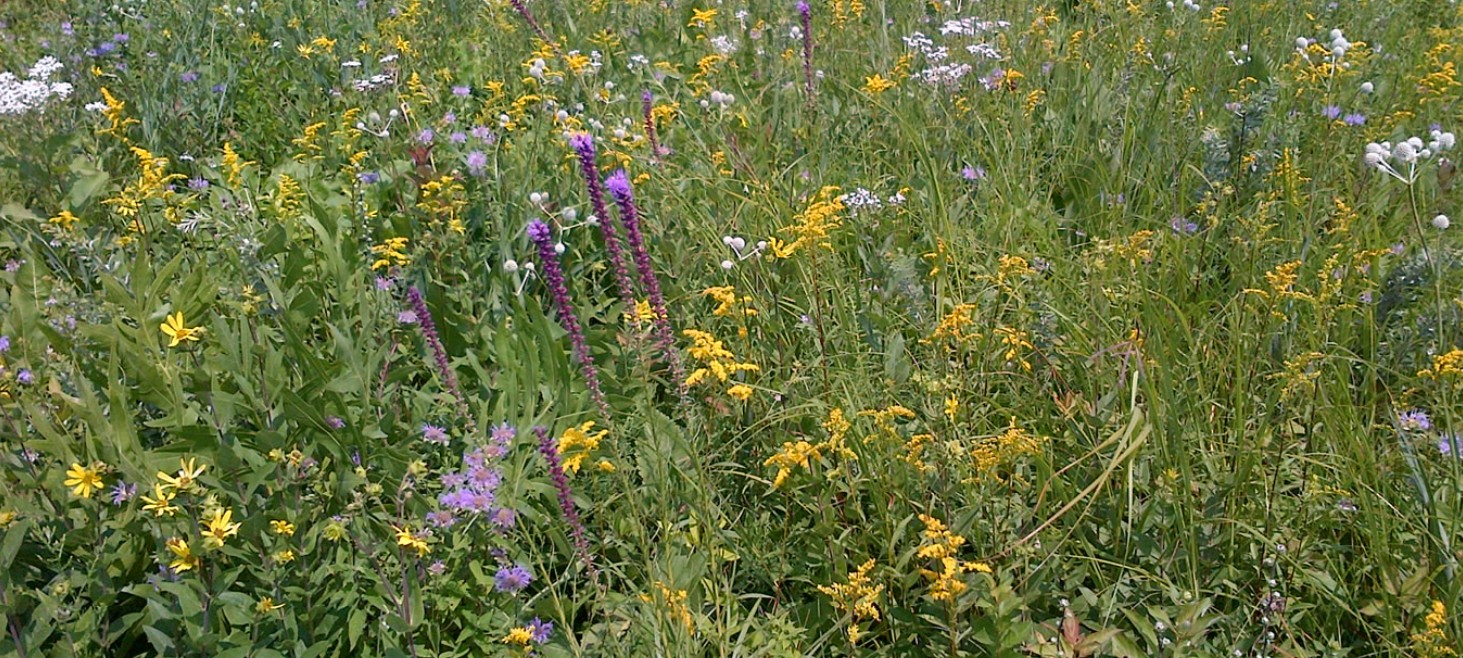
Mowing to Improve Deer Habitat

Understanding Early Successional Habitat

White-tailed deer rely heavily on early successional habitat. These are areas where forbs dominate the landscape, although there may also be some grasses and young woody plants. These habitats provide abundant food in the form of native browse and forbs, as well as cover for fawning and bedding.

Without management, however, these fields gradually convert to less productive mid- and late-successional stages. Fields become dominated by old, rank grasses and encroaching woody plants. Mowing helps reset the successional clock, encouraging regrowth of high-value forage plants. This keeps the habitat favorable for deer in terms of both food and structure.

Mowing to Improve Deer Habitat: Grow Forbs!

Ok, so what exactly are forbs? Forbs are broad-leaved, herbaceous (non-woody) flowering plants that are neither grasses nor shrubs. They include a wide variety of wildflowers, legumes, and weeds commonly found in open fields, forest openings, and early successional habitats. Forbs are critically important to white-tailed deer because they are highly nutritious, particularly rich in protein, vitamins, and minerals. These are all nutrients essential for antler development in bucks, milk production in does, and overall body condition in all age classes.
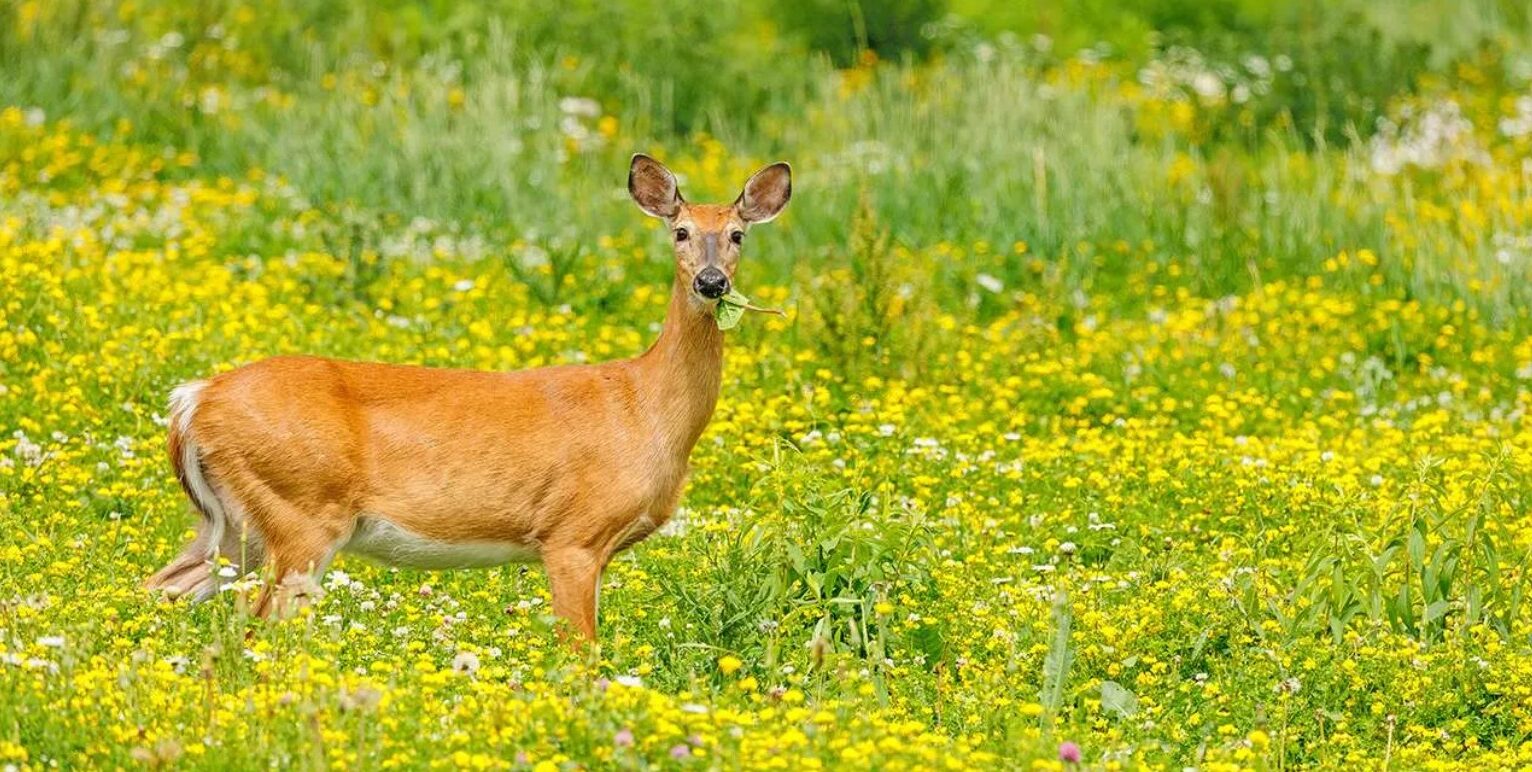
White-tailed Deer Habitat Management Through Mowing

Deer selectively browse forbs throughout the year, when they are available. Promoting diverse and abundant forb growth through habitat management practices like mowing, prescribed fire, or light disking can significantly enhance forage availability. Abundant food sources on a property helps support a healthy, productive deer herd.

Timing is Critical for Deer Habitat Management

One of the most important considerations when mowing for wildlife, especially white-tailed deer, is timing. Mowing during the wrong season can disrupt critical life stages of both whitetail and other wildlife. The goal of most deer habitat practices is to improve the quantity and quality of desirable native plants, not harm them.

For deer, fawning season typically occurs from late spring through mid-summer, depending on the region. During this time, does seek habitat comprised of dense grass and forb cover to hide their newborn fawns. Generally, they will remain bedded for most of the day. Mowing during this period can inadvertently kill fawns. Removing taller structure may also leave them vulnerable to predators by removing concealment cover. In addition, mowing too late in the spring and too early in the summer does not benefit plants preferred by whitetail.

To minimize negative impacts to deer and their habitat, late summer to early fall is often the best time to mow. By this point, most fawns are mobile and capable of escaping equipment. Furthermore, mowing to improve deer habitat during this period can stimulate the regrowth of nutrient-rich plants that benefit deer going into the fall and winter months. With old, rank vegetation removed, sunlight and fall rains can lead to forb-rich fields for whitetail, turkey and other wildlife.

Mowing Frequency & Rotation

Rather than mowing an entire field each year, a rotational mowing schedule should be considered. Dividing fields into sections and mowing one-third to one-half of the area each year promotes a diversity of plants and habitat structure. This retains some areas to remain undisturbed for deer bedding and fawning, but others areas are reset for improved whitetail forage.

This patchwork approach provides a mix of habitat stages across the landscape. Deer benefit from having access to new growth for feeding and older, unmowed areas for cover. Over time, rotational mowing supports a more stable and resilient plant community that meets the year-round needs of white-tailed deer on a property.

Mowing to Improve Deer Habitat: Patterns?

Land managers can simply mow one-third to one-half of a field, or can choose to insert more complexity. Strip mowing is beneficial pattern, where long, narrow strips are mowed in alternating sequences across a field. This creates a mosaic of vegetation heights and successional stages, allowing deer to easily move between feeding and bedding areas with minimal exposure to predators.

Edge-focused mowing, where mowing begins near forest or brush lines and progresses inward in stages over years, can also enhance “edge habitat,” which deer strongly prefer.

These patterns not only support white-tailed deer but also help a variety of other wildlife by promoting plant diversity and reducing the risk of disturbing fawns or ground-nesting birds. Again, the key is to avoid mowing the entire field at once and to vary mowing patterns over time to maintain habitat complexity.

Consider Mowing Height

Mowing height is a critical factor in wildlife management because it directly affects the structure, quality, and regrowth potential of vegetation in managed habitats. For white-tailed deer and many other species, maintaining a mowing height of 8 to 12 inches is generally recommended. This height protects the root systems of beneficial plants, promotes quicker regrowth of nutritious forbs and grasses, and preserves low-lying cover for fawns, ground-nesting birds, and small mammals.

Mowing too short can damage some desirable vegetation and eliminate essential wildlife cover. Conversely, mowing too high may not sufficiently control woody encroachment or stimulate new plant growth. By adjusting mowing height appropriately, land managers can strike a balance between encouraging high-quality forage and maintaining sufficient cover. In turn, the enhances the habitat’s value for deer and other wildlife.

Wildlife Beyond White-tailed Deer

While the focus of mowing might be white-tailed deer, these practices also affect many other wildlife species. Wild turkeys, bobwhite quail, rabbits, and songbirds all rely on early successional fields for nesting, foraging, and brooding. Mowing with a broader ecological view in mind helps support greater plant and animal diversity, which in turn contributes to a healthier, more balanced area for wildlife.

To reduce impacts on ground-nesting birds, avoid mowing from April through mid-July, which overlaps with most nesting periods. This coincides with the whitetail fawning season. If mowing must occur during this time, consider mowing only the field edges or narrow strips and leaving the bulk of the field undisturbed.

Review: Mowing to Improve Deer Habitat

Managing land for white-tailed deer requires more than simply offering food and cover—it demands thoughtful stewardship of habitat throughout the year. One of the most practical and impactful management tools for landowners is mowing. When timed and implemented correctly, mowing grasslands and old fields can enhance forage quality, maintain critical cover, and promote biodiversity. Mowing is a deer habitat management practice that benefits whitetail, in addition to a wide range of other wildlife species. However, mowing without consideration of ecological timing and habitat needs will do more harm than good.

When mowing grasslands and old fields for the benefit of white-tailed deer, several key considerations help ensure the practice supports rather than harms the habitat. Timing is crucial—mowing should generally be done in late summer or early fall, after the peak fawning season, to avoid disturbing or killing young fawns that use tall vegetation for cover. This timing also promotes regrowth of tender, high-quality forbs and grasses that deer prefer as browse.

Mowing patterns also matter. Instead of mowing the entire area at once, it’s beneficial to use rotational or patch mowing to maintain habitat diversity and ensure continuous availability of both cover and forage. Leaving some areas unmowed provides bedding and escape cover, which is especially important in open landscapes. Mowing height should be adjusted to avoid scalping the ground, which can harm desirable vegetation and soil health.

By mowing with these factors in mind, land managers can significantly enhance the value of grasslands and old fields for white-tailed deer and other wildlife. Mowing to improve deer habitat is not a silver bullet for deer habitat management, but can be part of an integrated approach on just about every property.
Can Fawns Breed? Understanding Whitetail Maturity & Breeding

Do Fawns Breed? Do Fawns Get Bred?

White-tailed deer are prolific animals. For this reason, people often ask,  “Can fawns breed?” It’s a reasonable question, too. Many have witnessed rapid reproduction in deer with populations expanding quickly over short periods. In fact, deer populations often exceed the carrying capacity of habitat in many areas. Too many deer results in degradation of the habitat.

Whitetail populations have the ability to grow rapidly because most adult does give birth twin fawns each year. However, do fawns contribute with more fawns? Do fawns get bred during the breeding season? Okay, so the answers to these questions really depends on a few things that can impact individual deer as well as deer populations.

The primary factors impacting reproduction in deer are age and nutrition. A straightforward answer to these questions is also a little tricky; both yes and no are correct. So, let’s discuss breeding in white-tailed deer and the variables that contribute to whether or not fawns can breed.

Can Fawns Breed? Maturity in White-tailed Deer.

Can Fawns Breed in the Fall?

No, fawns generally do not breed in the calendar year in which they are born. However, this does not mean that fawns do not breed. Fawns are defined as young deer, typically less than a year old, and generally are not sexually mature. However, the age at which a white-tailed deer reaches sexual maturity depends a deer’s individual nutrition and body condition.

Fawns are generally still dependent on their mothers and focused on growth and development rather than reproduction. For reference, bucks usually reach sexual maturity at about 1.5 years. However, young bucks are often not dominant enough to mate until they are older and stronger. However, does can become sexually mature around 7 to 8 months if they have good nutrition. So, can fawns breed? Yes. However, they typically breed for the first time in their second year, at about 1 1/2 years of age.

Most white-tailed deer fawns are conceived during the species’ breeding season. The exact timing varies depending on the geographic region but generally occurs in the fall. In most parts of North America, this is generally between October and December. During this time, adult does (female deer) are in estrus (heat) and are receptive to breeding.

Adult and Fawn Breeding Specifics

The peak whitetail breeding season in most of North America, Canada and the United States, tends to peak in November in adult deer. The peak of the breeding season is often referred to by hunters as the rut. In far southern regions, like parts of Texas and Florida, the timing can vary more widely, occurring as early as September or as late as February in adult deer.

Do fawns get bred during the rut? No, fawns generally are not available to be bred during the fall. This has to do with the age and size of fawns. However, doe fawns mature over time and as they increase in size.

Can Whitetail Fawns Breed?
A white-tailed buck chases a doe fawn in a field, attempting to breed in the winter.

Can Fawns Breed: Timing of First Estrus 

The gestation period for white-tailed deer is approximately 210 days, or about 6.5 months. This means that most fawns are born in the late spring or early summer,  typically May through July. This timing generally enhances the availability of abundant food resources for the mother and the fawn.

If a doe fawn (female fawn) reaches a sufficient body weight (about 70-80 pounds) before the end of the breeding season, she may enter her first estrus and breed when less than one year of age, but this is less common and depends on good nutrition and environmental conditions.

In most cases, first estrus in doe fawns will not occur until very early the following year (January-February). At this point, fawns born in late-May and June will be 7-8 months of age. So, can fawns breed? Yes, but it’s not the norm. In general, fawns born from adult does are conceived during the main rut of their region. However, the fawns of healthy, bred fawns are actually are born a couple months later than peak fawning dates.

Unfortunately, environmental conditions are generally less favorable for both mother and baby in mid- to late-summer, so this reproduction is is likely not additive to the population. So can fawns breed? Yes and no. Doe fawns can breed, but it’s not the norm for all doe fawns to breed, and they are unlikely to contribute additional fawns into the population.