Land Management for Deer: First, Do No Harm
If you’re interested in land management for deer, here’s a truth that might surprise you: the best thing you can do at first is nothing at all. Deer are habitat generalists, capable of thriving in a wide range of plant communities. This means improving their habitat is often easier than we think. The mistake many land managers make is acting too quickly. Before chainsaws, seed mixes, or heavy equipment come into play, there’s value in stepping back and letting the land tell its story. Let’s talk about why “doing nothing” is often the most powerful first move.
The best habitat management step to take first is to do a careful baseline assessment of your land and stop the biggest sources of harm before investing valuable time or money in improvements. Walk the property and make notes or a simple map of what already exists.
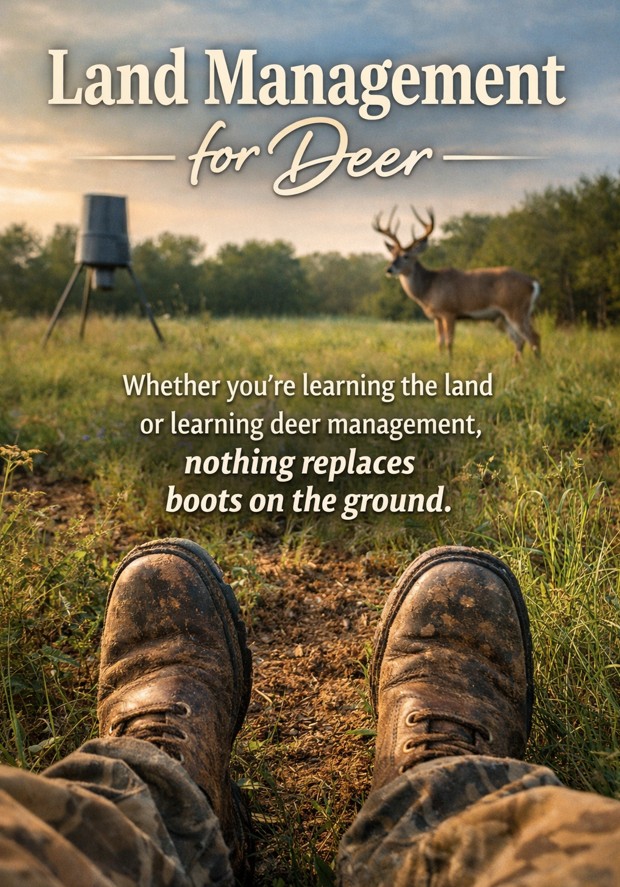
Take Inventory: Land Management for Deer
Whether the property is new to you or you’re new to deer management, getting boots on the ground is essential. Pay attention to water features like creeks, ponds, wet areas, and erosion. Note vegetation patterns including native plants, invasive species, canopy gaps, and brushy cover. Generate a free soil map and document conditions such as bare ground, compaction, or erosion scars.
Obviously, make notes of signs of wildlife, including tracks, trails, or nesting trees. In addition, map the areas with negative human impacts, such as those damage by overgrazing with livestock, ATV damage, or dumping. This initial assessment of the land helps you avoid unintentionally damaging areas that are already functioning well.
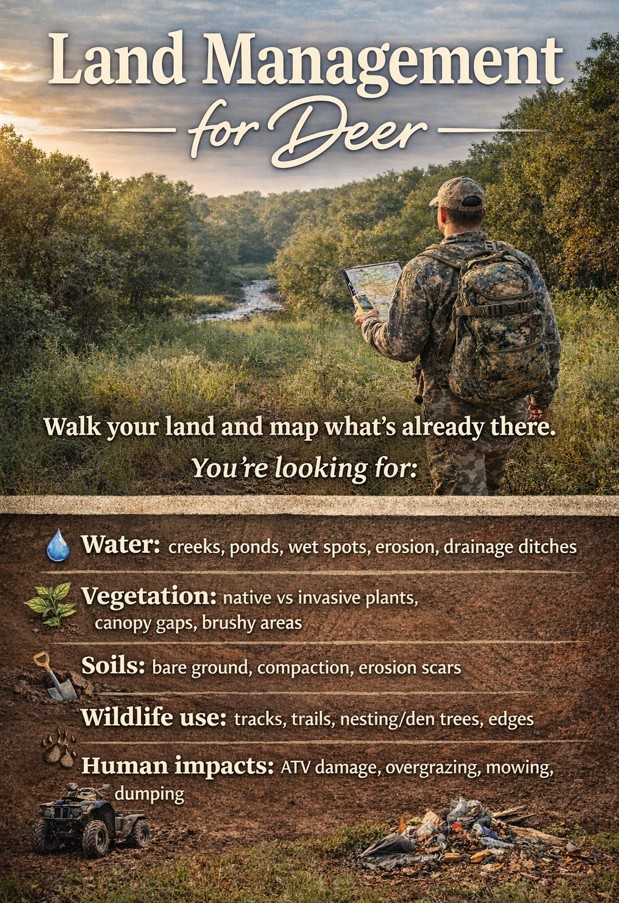
Land Management: First, Stop the Hurt
Once you understand the land, the most effective first actions usually involve protecting and stabilizing what is already there. Prevent further degradation by fencing livestock out of streams or sensitive areas. Reduce unnecessary mowing or bush-hogging, and leave downed wood and standing dead trees unless they pose a safety risk.
Next, focus on controlling the most harmful invasive species. Prioritize one or two problem plants rather than trying to tackle everything at once. Early control of invasive plants is often more beneficial than planting new vegetation. Land management for deer means habitat improvement that increases the availability of food. There is no better way to do that than to eliminate or reduce plants that deer do not use.
Water & Land Management for Deer
Like land, water is a valuable resource. Addressing water issues is another high-impact step. This may include stabilizing eroding banks, covering bare soil, and slowing runoff instead of draining water away. Ideally, landowners want to catch rainfall and hold soil on their land. Your soil is your land after all!
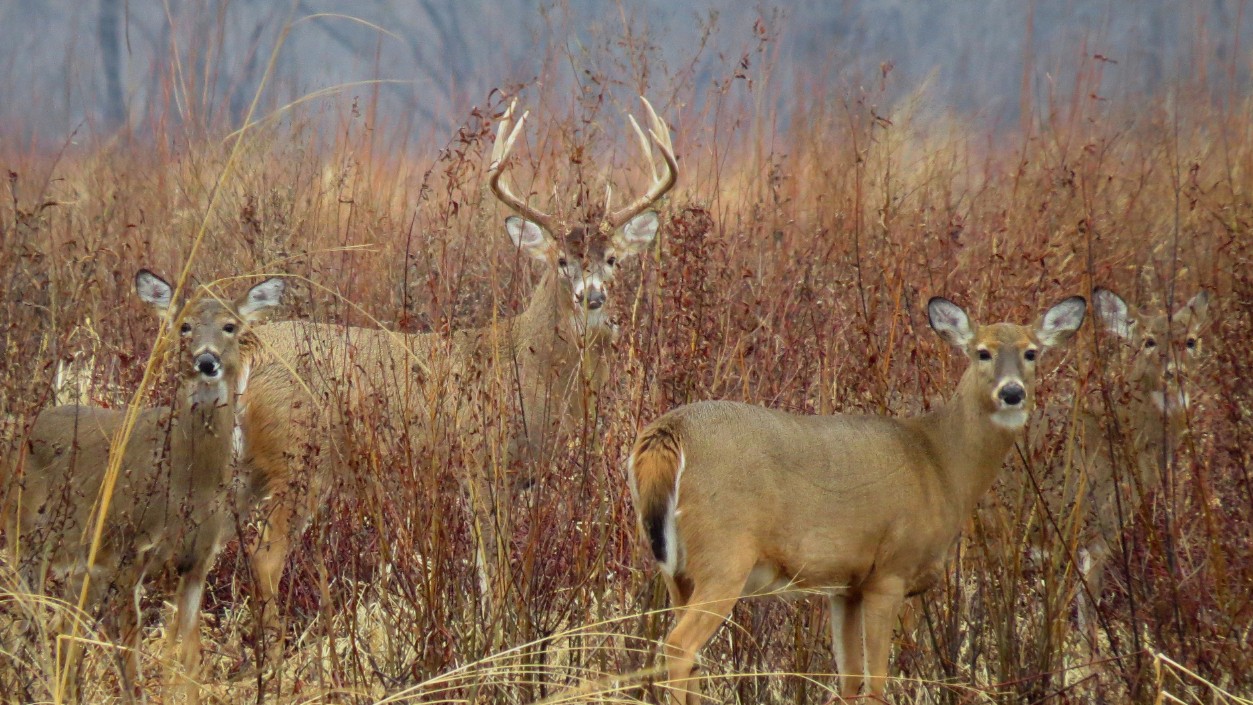
Finally, aim to increase structural diversity by allowing some areas to remain “messy,” with tall grasses, shrubs, fallen trees, and gradual transitions between forests and open areas. Wildlife, especially whitetail, love these food-rich areas.
As a general rule, habitat management works best when you prioritize protection first. Afterward, follow up by removing harmful elements, then restoration, and only later planting. While planting trees for deer may be a great idea, avoid rushing into planting trees and food plots. Ensure basic deer habitat functions are in good shape before getting sidetracked with a purely pet project.
Land & Deer Management
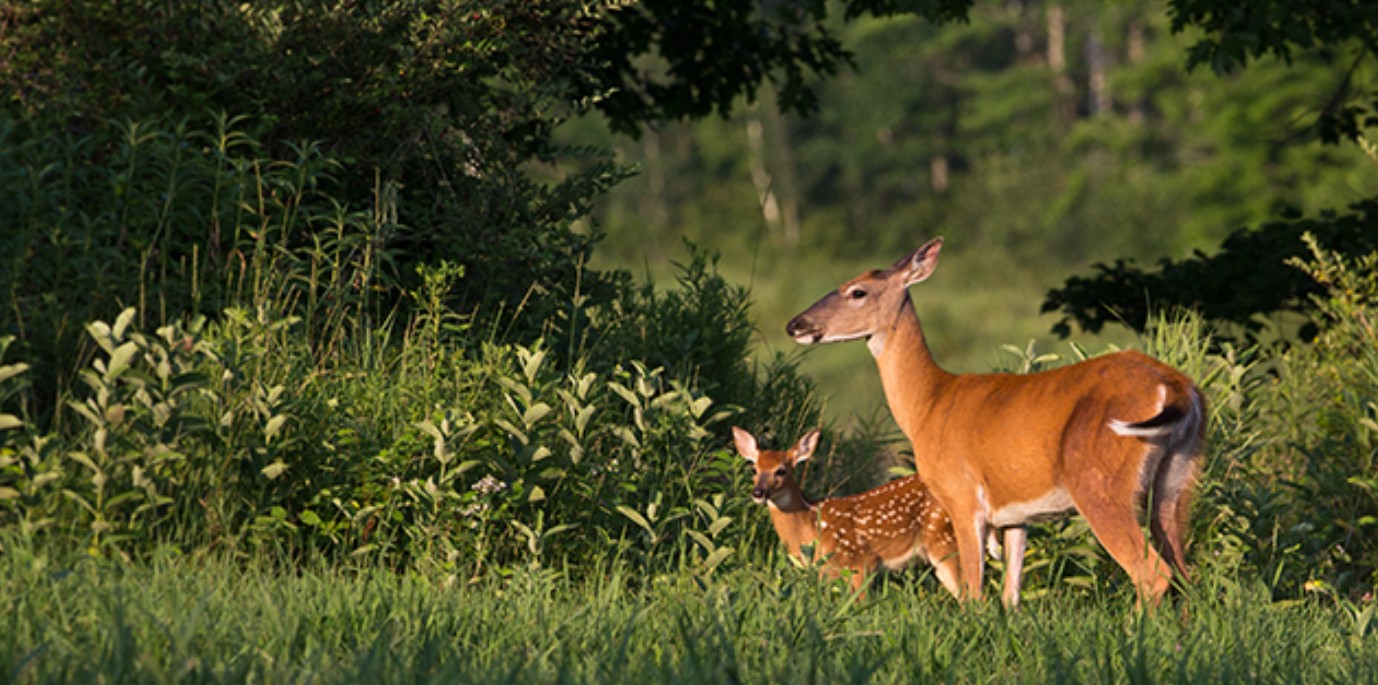
Habitat management is the foundation for holding deer on a property. Whitetail spend the majority of their lives where their daily needs are met with the least amount of risk and energy. When a property consistently provides high-quality food, secure bedding cover, water, and travel corridors, deer have little reason to leave.
Well-managed habitat creates predictable movement patterns and increases deer comfort. Additionally, quality deer habitat reduces pressure by offering escape cover and multiple options for feeding and bedding. Over time, this not only increases deer use of the property but also improves herd health, age structure, and overall hunting or viewing opportunities. Purposeful land management for deer turns a property into a place deer choose to live rather than simply pass through.