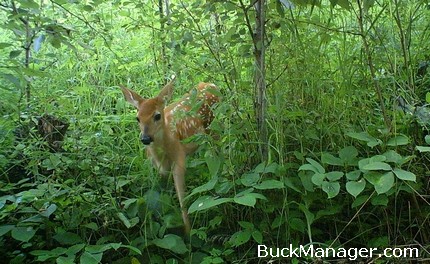
Deer Management Question
Question: “Hi, I’m not into deer hunting but I need to learn something about whitetail deer management. It involves the concept of carrying capacity. I live on an island in Puget Sound, human population 20, deer population 15 to 30 depending on who you talk to. The environment is lush and the deer lack nothing. They don’t even have ticks, apparently.
There are more bucks than does, and this year there were at least 3 fawns that I know of. I recently read that whitetail deer could double in population in just two years. The island is only about 200 acres total. So how does one calculate the carrying capacity of the island? At what point do the deer need to be thinned to keep everything healthy? Thanks.”
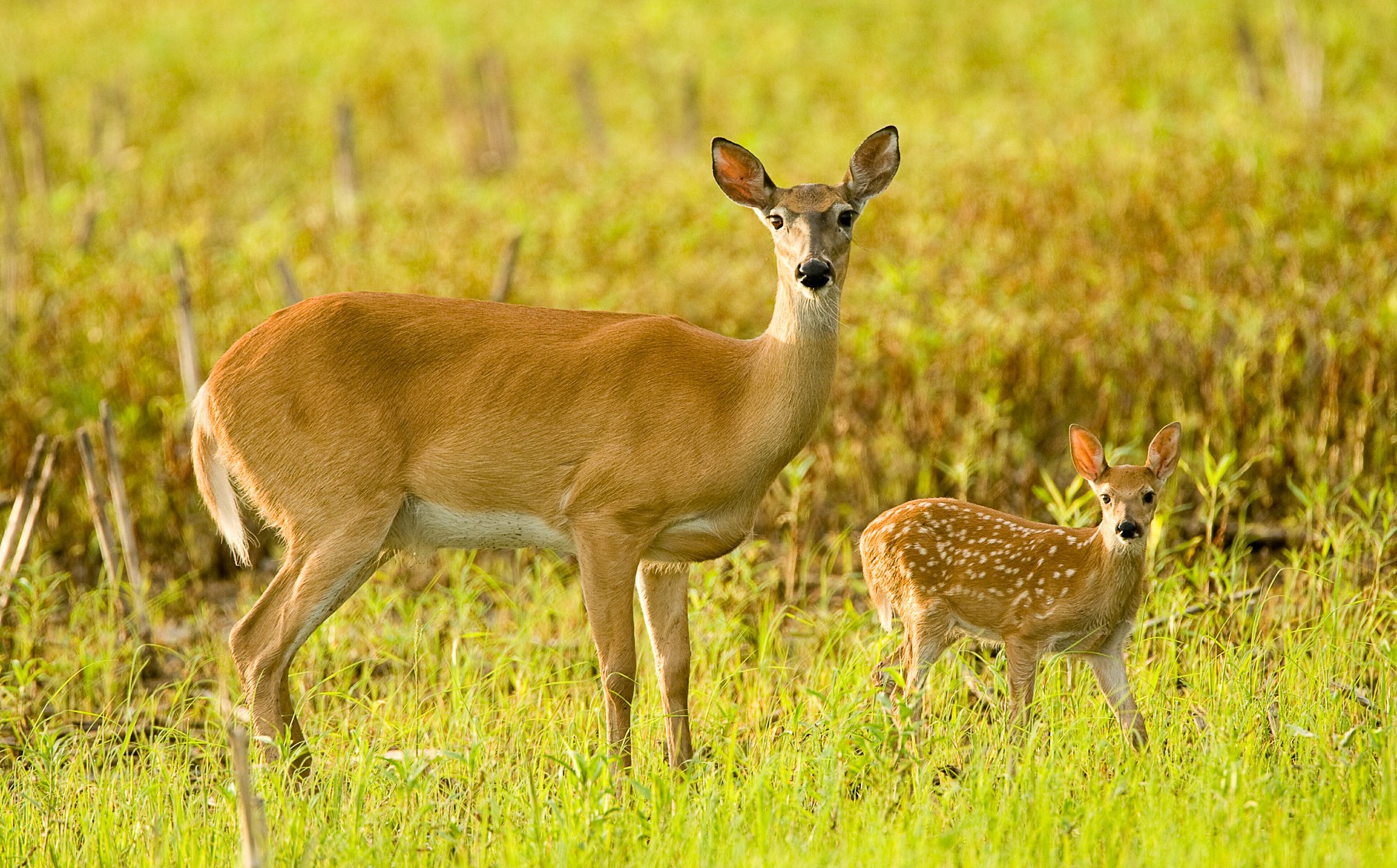
Whitetail Management: Deer Carrying Capacity
Response: First, good call in gathering information on deer management for your island. This is a good idea for anyone intending to manage deer on a property. Fortunately, it t does not sound like you have a deer overpopulation dilemma on your hands just yet. While that is good news, I will offer some pointers on managing deer and habitat in any area. Deer, like most animals, are self-limiting. However, it’s best to avoid a situation that ends in population collapse.
When deer numbers get high and food availability gets low, individual deer start to lose body mass. This leads to weak deer that ultimately die. When a bunch of individual animals die the population crashes. Wildlife management at its very essence is designed to harvest and use those excess animals . Sound management occurs well before malnutrition brings down an entire population.
White-tailed deer are widely adaptable creatures and do well in a variety of habitat types. They are classified as browsers, meaning they eat primarily plants other than grass. Grass, by the way, generally only comprises about 7 to 10 percent of the whitetail diet. Whitetail prefer certain forbs (weeds), which are extremely high in protein. However, the bulk of their diet tends to be leaves, stems and twigs of trees, shrubs and vines. These perennial, woody plants are stable food sources and often available throughout much of the year.
Deer Management & Carrying Capacity of a Property
What is the right number of deer for a property? This question gets asked a lot by landowners, hunters and biologists managing whitetail on low-fenced properties, on high-fenced properties and apparently even by those managing deer on islands. If you think about it, an island is similar to a high-fenced ranch in that deer movement is limited. Deer will always come a go in both situations. After all, a taller-than-normal fence is not deer proof. Water does not stop deer either. However, high fences and large expanses of water do limit deer movement.
The carrying capacity of a property for whitetail deer varies. It varies throughout the year. It varies from year to year. Most don’t think about this, but non-managed wildlife populations are naturally highly variable. Population sizes boom, then they bust. Deer management aims for a type of population management that levels out fluctuations. This will help keep deer healthy from year to year. It is only through the removal of animals prior to (or even during) stress periods that the remaining deer population survives and thrives.
Population Size & Food Availability
The whitetail deer carrying capacity of a property is based on the highest number of animals a property can support when natural foods are at their lowest. In most areas, carrying capacity is based on food availability during the winter. This is a big reason why we head out deer hunting in the fall. It’s better to harvest the equivalent of the year’s production and to ensure the welfare of the remaining deer herd.
The only sure-fire way to identify that a deer herd has arrived at carrying capacity is when habitat degradation begins. When too many deer are on the landscape the foliage on most woody plants will begin to disappear. This vanishing forage happens from ground level up to about 5 feet in height. As more and more foliage is consumed an obvious “browse line” will become evident, indicating severe overpopulation. You don’t ever want to end up in this situation.
My recommendation to anyone attempting to manage a deer herd is to keep a close eye on native plants. First, make sure to contact a local biologist to get a list of the native deer plants deer consume in the area. A list of this sort will usually rank the plants in order (or classification) of preference by deer. If the least preferred deer foods begin to be readily consumed, then it’s time to reduce the herd.
Managing a Population Using Deer Surveys
Identifying heavy use of less palatable plants by whitetail will tell you that there are too many deer. However, this will not tell you how many deer you have on a property. The only way to estimate the population is to conduct deer surveys. On a small high-fenced ranch or an island of 200 acres, the go-to method would be to conduct motion-triggered camera surveys. To get improve the survey, conduct camera surveys in conjunction with collecting incidental, daylight observations. These two deer survey methods, especially when combined, will give a very precise estimate of deer population. By the way, always perform surveys in late summer or early fall to capture annual reproduction.
Once you have an estimated deer population, then you can start to put the pieces of the puzzle together. This information will provide a picture of what is actually happening in the field. For example, let’s say in Year 1 the deer population is estimated at 15 animals and all browse plants look great. During Year 2 the deer population is estimated to be 25 deer and things are still looking good.
However, in Year 3 there are an estimated 40 animals and plants that are moderately preferred by deer are showing heavy use. Furthermore, the plants that deer do not like are starting to be eaten too. The carrying capacity of the plant community has been exceeded. In this example, the right number is more than 25 deer but less than 40.
Sound Deer Management & Carrying Capacity
Good management of both land and wildlife takes correlating what is happening to the habitat with what is going on with the population. Only then can a manager begin to determine where deer carrying capacity lands. In the above example it would probably be a good idea to manage for a deer population in the neighborhood of 30 animals. However, continued observation on an annual basis would allow the manager to tweak carrying capacity. Annual harvest recommendations would be based on data to maintain a healthy deer herd.
Once a target deer population size is established for a property then the biggest factors that influence herd management (harvest versus no harvest) are annual recruitment (fawn survival) and habitat condition. So as you see, carrying capacity is a balancing act between deer numbers and food availability. Plant and deer surveys can provide you with critical information for managing population size.
I’m retired looking for a deer management job on a hunting lease near San Antonio, Texas. Any ideas where to look to find this type of job?