How Many Deer Should My Property Hold?
One of the most important—and most misunderstood—questions in white-tailed deer management is how many deer a property should hold. The answer is not a fixed number. In addition, it has little to do with the total acreage of the property. Instead, the ideal deer population is determined by the land’s ability to provide adequate food, cover, and space throughout the entire year. This includes the time of year when resources are most limited, during late winter.
When deer numbers exceed what the habitat can support, body condition declines, habitat quality suffers, and long-term herd health is reduced. Proper management focuses on balancing deer numbers with habitat capacity. This balance ensures healthy animals, sustainable plants, and consistent deer hunting opportunities through healthy fawn survival.
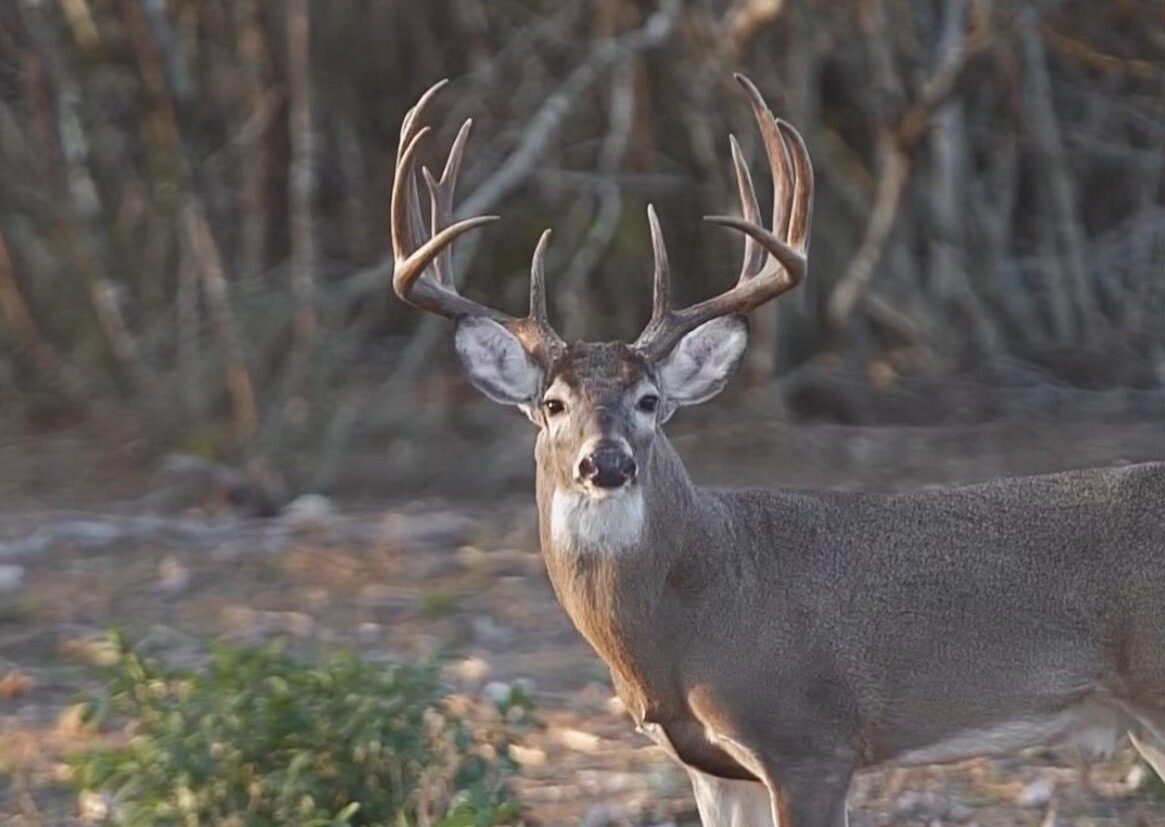
Carrying Capacity: How Many Deer?
Carrying capacity is a foundational concept in deer management and refers to the number of deer a property can support without degrading habitat or herd health over time. It is not determined simply by acreage, but by the quantity and quality of available food, cover, and water—particularly during the most limiting period of the year, which is typically late winter.
When deer numbers exceed carrying capacity, the effects show up quickly in the form of overbrowsed woody plants. This results in declining body weights, reduced fawn survival, and poorer antler development. Effective deer management aims to keep populations at or below the land’s carrying capacity through habitat improvement and appropriate harvest. Proper deer numbers ensures both the habitat and the deer herd remain healthy and productive long term.
Habitat Quality & Deer Carrying Capacity
White-tailed deer carrying capacity and habitat quality are directly linked. So much so, that understanding that relationship between the two is essential when trying to answer the question of how many deer should my property hold. As stated prior, carrying capacity is not a fixed number. Carrying capacity rises or falls based on the land’s ability to provide high-quality food, adequate cover, and minimal stress throughout the year.
Conducting surveys is essential for keeping deer numbers in balance with the habitat. Annual deer survey estimates provide objective information about population trends, herd structure, and habitat pressure. There are a several standardized deer survey methods that can be used to track deer populations from year to year.
Without survey data, management decisions and harvest are often based on assumptions. A lack of information generally leads to overharvest or overpopulation. Surveys help managers detect changes in deer numbers early, evaluate whether habitat improvements or harvest strategies are working, and adjust management before habitat quality or herd health declines.
Habitat Quality Determines How Many Deer
Properties with diverse native forage, early successional habitat, secure bedding cover, and access to seasonal food sources can support more deer without negative impacts. Conversely, land dominated by mature timber, overgrazed understories, or limited winter cover may have a much lower carrying capacity, even if the acreage appears large.
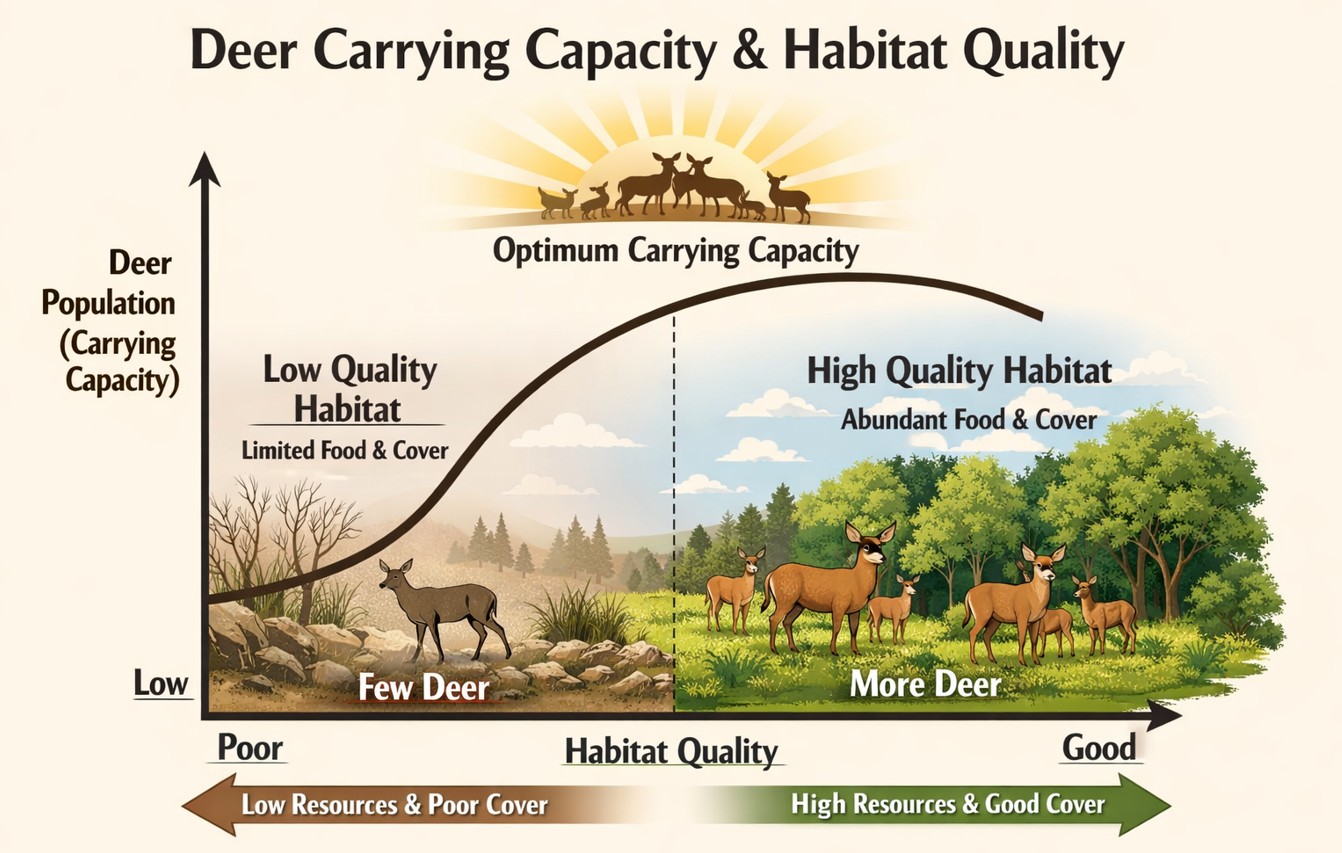
When deer numbers exceed what the habitat can support, habitat quality begins to decline, creating a negative feedback loop. Overbrowsing reduces plant diversity and prevents regeneration of preferred forage species, which further lowers the land’s carrying capacity over time. As habitat quality drops, deer body condition, fawn recruitment, and overall herd health also decline.
Effective deer management recognizes that improving habitat can increase carrying capacity, but only if deer numbers are managed accordingly. The goal is balance—maintaining a deer population that the habitat can sustain long term while preserving the quality of the land itself.