Cull Bucks
You’ve heard the term before, but what exactly is a cull buck? Sure, white-tailed deer managers and hunters often talk about “cull” bucks. The topic always spurs lively debate among a group of hunters, but which bucks are cull bucks and which ones are not? There is an important factor to keep in mind: A cull to one person is not a cull to another, whether it be related to whitetail bucks or something else.
A cull, by definition, is something that is considered inferior or inadequate — not as good as the rest. As such, the topic of cull bucks comes about when property managers and hunters want to make a determination on which bucks should be culled or removed in an attempt to improve the quality of the local deer herd. After all, deer antlers are highly heritable. Otherwise, no one would ever be able to select for antler quality through buck harvest.
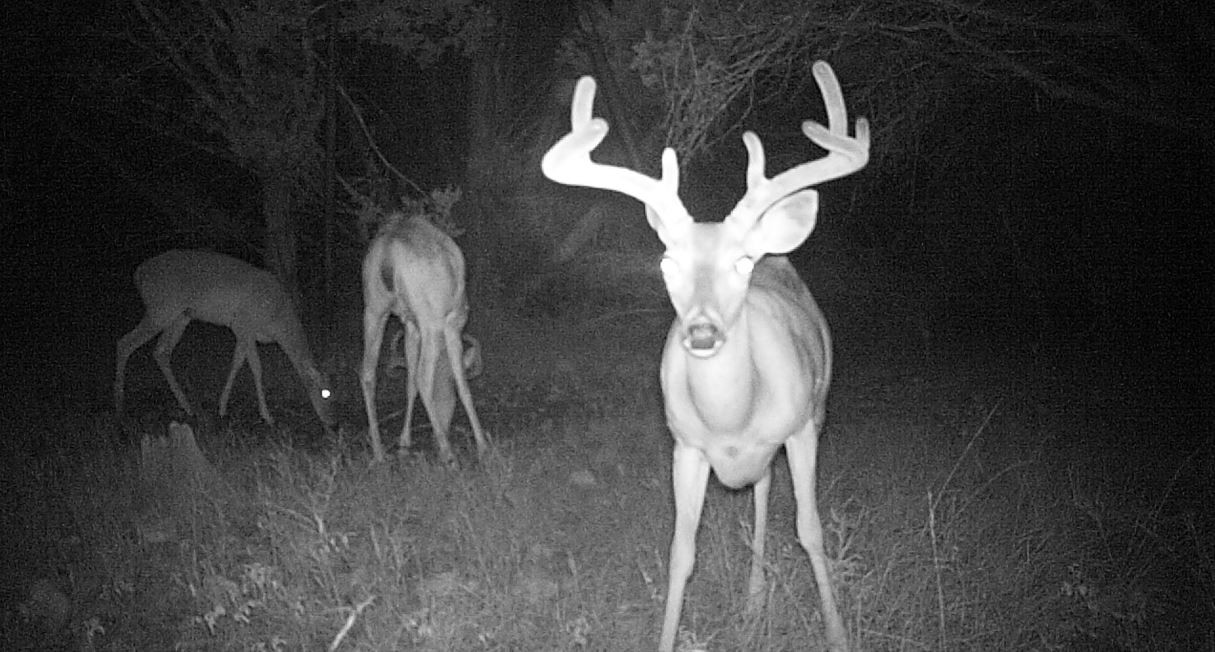
Cull Buck: A Relative Term
Cull bucks are bucks that are deemed genetically inferior in antler quality to other bucks in the area. With that said, a cull buck on one property may not be a cull buck on another property based on measurable or non-measurable attributes. Culling is best described as shooting older bucks with less impressive antlers first rather than younger-aged bucks with more impressive antlers. A buck could also be culled because of an injury.
So, what is a cull buck on your hunting property? Cull bucks are deer that are removed for management reasons. Some refer to them as management bucks. So which bucks get culled, or managed, this season? The answer depends on several factors — and those factors vary by property as well as on past management objectives and future management goals.
If you don’t have a management plan for the property you are hunting then arbitrarily shooting bucks that you don’t consider “trophies” is not really going to get you anywhere. Whenever a cull buck is removed from a herd, it should be based on some predefined management parameters, which often includes a combination of age and antler quality.
Culls Vs. Keepers
When considering annual harvest, whitetail bucks can be judged relative to other bucks of the same age that are using the property. This is how culls, keepers and “good shooters” are ultimately sorted out for potential harvest. After all, there is no guarantee those deer will be shot or even seen.
Ideally, all bucks should be evaluated on an apples to apples basis. For example, if most of the bucks at 3 1/2 years of age on a property have 8+ antler points, then a 3 1/2 year old buck with 6 or fewer antler points would probably be considered a cull buck.
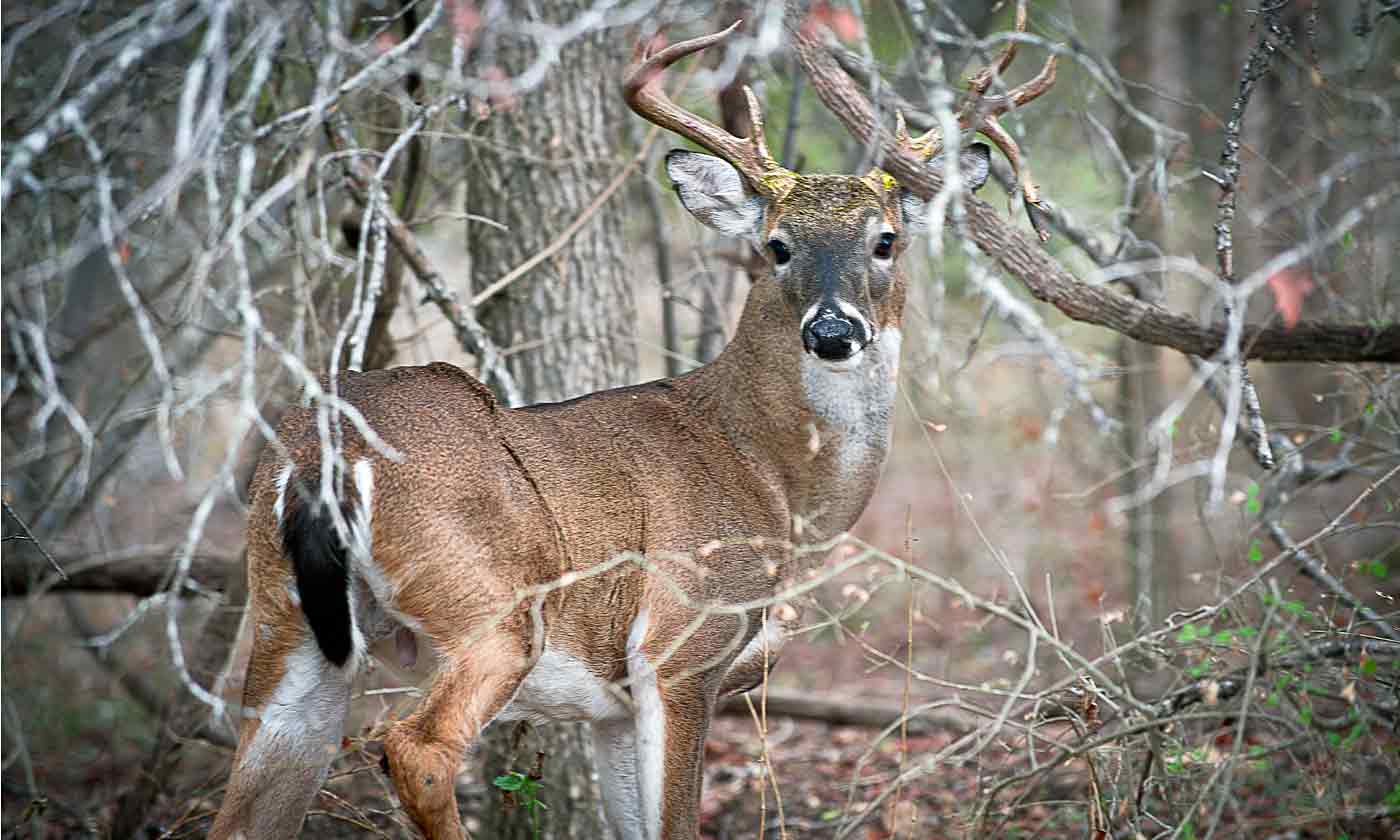
However, a 2 1/2 year old buck with 7 points may not be considered a cull because he has not had the benefit of an additional year of skeletal and antler development. Other bucks commonly considered for culling are those with very short or missing brow tines or very short tine-length overall. These traits are genetically based and can be observed in a particular buck year after year as it ages.
In short, a deer that is considered a cull varies by property/area, and most importantly by who is calling the shots regarding buck harvest, whether that be a manager or deer hunter. In the absence of competent direction culling is not recommended.
Maintaining Perspective on “Culls”
A property that has been under intensive herd management for years may consider a 5 1/2 year old buck with a 130-inch Boone & Crockett score as a cull, regardless of the number of antler points. On the flip side, this may be the best buck ever seen on another property, especially those at the early stages of deer management.
Culling “inferior” bucks is not a viable management strategy for many properties. The action does not make sense on smaller properties because not enough area can be “treated” to make a difference. A hunter can not expect the removal of an (undesirable) buck a year to make a significant change in the local deer herd.
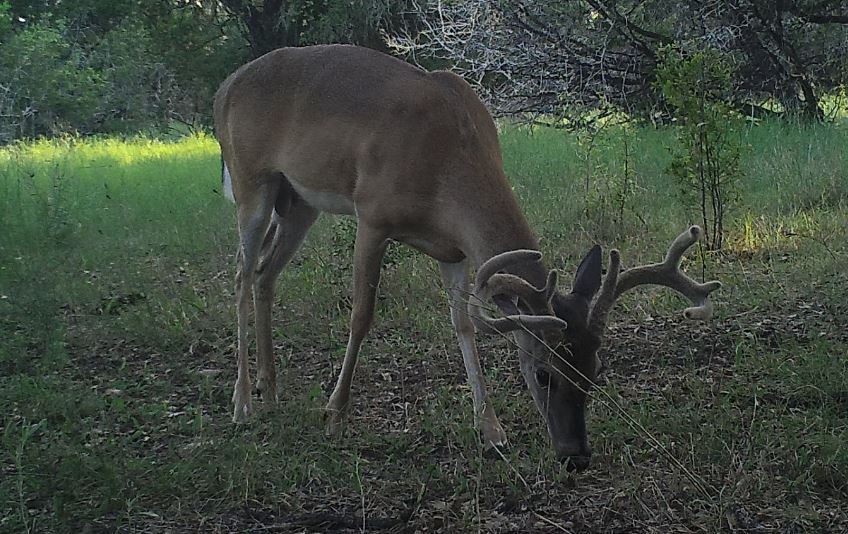
It would benefit a hunter to shoot a old, gnarly 6 point buck over an up-and-coming 10 point buck that would likely be significantly better in another year or two. The result is the same whether you call this culling, management or just deer hunting.
Looking at it from the other direction, it’s also difficult to implement selective harvest (which is what culling is) on extremely large properties; it’s just too labor intensive because not enough hunters can be deployed to remove enough undesirable bucks to make a difference. Besides, if you own/control enough property (very few of us) there will always be good, mature bucks available for harvest.
As you can see, the culling whitetail bucks is discussed much more often than it is successfully implemented in the field.
When to Cull? Management in Action
Culling typically takes place around 3 1/2 to 4 1/2 years of age, although the earlier the better in more intensive management situations. Some of the hunters reading this are probably like, “Dang, I’d love to SEE a 4 1/2 year old buck.” If this is you, then culling is not something that you need to address other than possibly switching your focus from harvesting a good, younger deer to maybe an less desirable same-age or older deer.
We can’t discuss cull bucks an not talk about spike bucks. On intensively managed properties with robust deer populations, it’s not uncommon for some managers recommend the culling of spike bucks at 1 1/2 years of age. Whether someone does this or not depends on property goals:
- Have a lot of deer, including bucks, and need to remove deer at all age classes to maintain proper deer carrying capacity? Consider shooting spikes.
- Have a low number of bucks, a high number of does and just want to have the opportunity to shoot a mature buck? Do not shoot any yearling bucks!
Besides, spikes do not remain spikes. Research has suggested that spikes generally do not develop as large of antlers later in life as the multi-point yearlings within their cohort, but that’s not important if there are very few mature bucks in your area. You need those bucks to grow older. And at maturity, a spike-antlered yearling will be a nice buck.
Culling: Selective Hunting, Management
Since a cull buck in an area is relative to other bucks at the same age class, accurately aging bucks on the hoof becomes of great importance. Typically, the manager and hunters that are most comfortable with aging bucks and selecting culls are those that have experience and knowledge about individual bucks over multiple years. You have to put in the time to become proficient at sizing up a buck.
Culling is simply selective harvest, and all hunters are selective of the bucks that they harvest in some manner. The practice of culling from a manager’s standpoint can best be thought of as delayed gratification, where less-desirable bucks, often older, are harvested so that younger bucks with more potential have the ability to age and develop into really impressive deer.
Which is the best way to manage a deer herd?
1. Shoot the does and nothing less than an 8-point buck? OR
2. Shoot spikes and 4-point bucks to allow the larger buckw to mature, while also thinning the does?
Dee, shooting does and only bucks with 8 or more antler points won’t get your deer management program very far. Keeping the deer density at the proper carrying capacity for the habitat is good, but it’s going to take more attention than an 8 point rule.
Shooting spikes and 4 point bucks is better than the 8 point rule from a buck management standpoint, but from experience I can tell you that you won’t get every spike and 4 point each year—and it may not be from a lack of effort. Some bucks just slip through, that’s why it’s called hunting. However, shooting “low-end” yearling (1 1/2 year old) bucks will help improve the quality of mature bucks on your property.
With that said, you must still cull bucks by age class. I would say shoot yearling bucks with 4 or less antler points, all bucks with 7 or fewer antler points that are 2 1/2 and older, and bucks that still have 8 points at 4 1/2 should definitely be removed if you are trying to improve the buck herd. If you just want more mature bucks, then you may want to let these deer go another year. It all depends on the objective of the ranch because deer management objectives can vary from property to property.
SHOOT BOTH
I live in Alabama we have about 500 acres to hunt. Do we need to kill the bucks with no brow tines? We see a lot of spike bucks with 9 to 12 in horns. Is that good? We are seeing a lot of spike and 4 point bucks, but not many big bucks. What do you recommend that we need do? How many food plots do we need on 500 acres? How can we get bigger bucks on our land?
I would recommend those interested in buck management taking any spike buck you see that is in the 9 to 12 inch range. Some say their antlers should split before reaching that height. We hunt in Louisiana and harvest only mature bucks, does, and very tall spikes and cull bucks (deer with messed up antlers: deformed, 1 spike 6 inches taller than the other, etc).
I have a 3.5 year old 7 point buck that was a 7 point last year. This year he is a little heavier horned and has short brow tines, but is still inside his ears. He would be considered a cull buck, wouldn’t he?
I have heard that an 8 point buck will not become a 10 point. Is that correct once they have reached maturity or is that a fact in general regardless of age or maturity? Am I being told correctly?
Dwight, if you are interested in improving your whitetail buck herd then I would suggest removing any buck that is 2 1/2 years or older that has 7 or fewer antler points. A 3 1/2 year old 7 point, or a 4 1/2 year old 7 point as in your case, is a definite shooter.
In regards to your second question, 8 point bucks can become 10 point bucks, but age is an important component. A good yearling buck (1 1/2) with it’s first set of antlers may be an 8 point deer. This is a good deer and will most likely have 10 or more antler points a year or two down the road. In fact, really good yearling bucks can have 10 points.
The problem comes at 3 1/2 years of age. An 8 point buck at this age is much less likely to develop into a 10 point buck than say a yearling or 2 1/2 year old 8 point. These 3 1/2 and 4 1/2 year old 8 point bucks are then harvested on many ranches as management bucks, knowing that odds are not in their favor at this point in their life to become superior antlered deer.
If a buck is a 6 point at 3 1/2 years old, will he get any better with age?
The bucks we consider “cull” or “management” bucks now we would have been falling over ourselves trying to be the first one to shoot 10 years ago. The more intensively you manage your ranch, the better your outcomes.
I think free-Range deer should NEVER be culled based on antler size or shape. Big studies on big ranches in Texas have proven it does not improve herd “genetics”. Harvest bucks based on AGE only and nothing more. If they meet that age criteria, harvest them; regardless of antler size or shape. If they don’t meet that age; PASS.
People need to stop watching high-fence “breeding operation” TV shows and then tryi to apply these ideas on real-world, free-range properties. Shoot a doe!
Shooting “cull” bucks is just an excuse for ego-driven hunters who want to shoot a young, small-racked buck, but know they should not because he is too young.
Look at studies from the Noble Foundation or from the King and Comanche Ranches in Texas. THEY PROVED CULLING DOES NOT WORK. Most of the “cull” bucks you all are talking about are YOUNG.
BJ, I agree that the ability of most hunters to successfully “cull” all of the right bucks on a property is low. But, we can all agree that bucks to vary in their potential for antler growth, so selective and thoughtful harvest is not going to hurt a deer management program based on strong fundamentals. Here’s a critique of one of the buck studies you mentioned.
Biologist, you’ve got a point. There have been some studies that suggest culling bucks does not work. I am familiar with the studies and have some problems with the methods used; but that’s the nature of studies. Culling is often taken as a way to just improve genetics in buck deer, when in reality culling is something that is best practiced when the primary goal is to reduce total deer numbers to lower the deer density.
The “spike rule” should be used with caution during drought conditions. During the very dry years we (30,000 acres south TX) can sometimes have 40% to 50% of 1.5 year-old and 2 year-old bucks come in as spikes or small forkies. We never shoot them… and in the following good years, they come back as nice 2.5 and 3.5 year olds. I’ve documented this with photos and surveys during the last three severe droughts down here.
Brad, I agree that drought will increase the incidence of spikes, especially since a big part of antler development and skeletal growth in yearling bucks is related to nutrition. Managers must also consider buck to doe ratio and the age structure of the buck component of the herd itself.
However, the other 50-60% of the yearlings that are not spikes (i.e. multi-point bucks) during drought periods will ultimately end up being better-antlered bucks.
I have 2 bucks I am considering cull bucks. One is a 2-2 1/2 year old buck who has around 13-14 inch spikes (if not taller). Another is a 3-3 1/2 year old 6 point who has not grew any noticeable mass or width since last year when I passed him up as a 4 pt. Most 3 1/2 year old deer on my property have at least a 13 inch inside spread if not more. Any suggestions?
Warren, I’d recommend removing both bucks, especially if you have better bucks of the same age and are interested in improved antler quality. Would love to see a photo of that spike buck since it sounds like quite a unique deer!
Is a 3.5 year old Freak a cull buck? We are trying to manage the doe density and take some cull bucks to better the buck heard. But someone took a 3.5 year old Freak that was not on the hit list as a cull buck. But the hunter is claiming that he in fact was a cull. I’m not anyway arguing with the hunter about his decision, it’s just I thought we were trying to manage our doe population first and then the bucks second. I know in my heart that I would have taken a doe over taking this 3.5 year old freak that was healthy.
Fred, you’ve got some good questions in your comment. I’ve addressed your questions in this post on selective deer harvest and management.
Someone recently shot a year and a half old spike that had a spike about 4 to 5 inches on one side and a button on other. Would you consider this a cull?
Clyde, the buck you’ve described definitely falls into the cull category. The buck likely has an issue with its pedicle, from which the antler normally grows/attached to the skull. Just a couple of weeks ago, someone sent me photos of a 2 1/2 year old buck (and pics from the year prior) that has never grown an antler on its right side.
Is there a chart or other published material that shows what is a cull or not? Antler charts over the course of it’s life cycle or something visual to assist in defining what is a cull or not at various ages?
I have a buck on my property that is a candidate for culling. The deer is probably 1 1/2 to 2 1/2 years old. Antlers go straight up about 13 or 14 inches and curve in at the top and almost touch.
Can anyone help: I have several small bucks that have 4 points. However, they are long spikes and I can’t tell if they will branch off later to full racks. Are these considered spikes or culls? They are 8-10 inches long with splitting forks on top of both sides, and narrow. Thanks.
I’m wanting to start managing a piece of land we have owned for 15 years. Can you help decide which bucks are cull and which we should let grow? I could email game camera pics. Any expert advice would be greatly appreciated.
Jon, we are here to offer assistance with regards to thoughts and age. Send any photos on!
I look after a high fence in Texas and we have been on the MLD program for several years now. And the owner told me we need to start shooting any 8 point bucks 2 1/2 years or older. The reason he told me is that after 2 1/2 if they have only 8 pts they will always be and 8 pt, but we just started really putting out 20% Protein from Spring all the way to September this year. I believe the 2 1/2 and 3 1/2 have the potential to get better with the protein. What do you think?