Each year, hunters and deer managers want to know, “What is the best thing to plant for white-tailed deer food plots in the spring?” Good question, but there really is no easy, one-size-fits-all answer to this question when it comes to plots for white-tailed deer.
Soils vary from property to property as well as from one area of a property to the other (in most cases). Rainfall and temperatures vary by region, part of the country. There are several additional questions that must first be addressed before good candidate species for a whitetail food plot can be identified:
- Spring or fall food plot?
- What type of soil do you have?
- How much rainfall do you get?
- What type of equipment do you have?
- How much do you want to spend on seed?
Obviously, there are a number of variables that determine which plant species can be used for food plot forage on piece of land in a given area. Although there is no completely stock answer to the above questions, there are some “common” plants that are more likely to work in your area.
Specifically, this article will discuss common plant species that can be planted to spring food plots for deer, although some of the species mentioned may not be available to or used by deer until later in the summer and/or fall.
Sorghum for Spring Plots
Grain sorghum, milo, or sometimes even referred to as maize, can make a great and simple spring/summer food plot for deer. Sorghum is a solid choice for food plots where high whitetail densities prevent most other grain crops from making it through the summer. The plant itself is not consumed at all during the summer, but the seed heads are well-used during the late-summer and fall.
The fact that a sorghum plant is not consumed by deer all but guarantees an annual crop. Sorghum is a more resilient plant than corn and will compete well with weeds — and still produce heads! It does not require a lot of water, so it grows well even during fairly dry summers. And since sorghum is basically a large grass, it is easy to plant. Simply prepare the ground by disking, broadcast the seeds, and roll or drag to ensure good seed-soil contact.
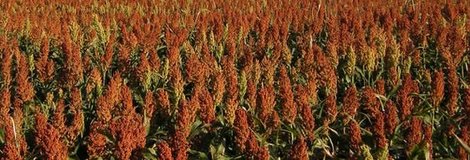
However, there is a downside to grain sorghum. Once deer become familiar with milo, deer in areas with moderate to high densities will eat the heads to the stem just as the seeds reach the “dough stage.” This is the point when the seeds take shape but have yet to dry out. It would be of more benefit to deer if the seeds were consumed later in the fall, but if they use eat them, then you still provided supplemental forage.
Another drawback of grain sorghum is the seed is less desirable by deer than corn as a source of winter carbohydrates. Thus, in areas with lower deer densities, don’t expect the deer to come running. If you have a larger chunk of property or a large number of deer, consider planting some percentage of your food plots in grain sorghum. If you are only going to plant a small area up to a few acres, evaluate alternative plant species for maximum benefit.
Corn: Spring Planting for Hunting, Food Plot
In areas that have deeper soils and receive enough rainfall to support it, it’s hard to beat corn. But one drawback right off the bat — it is not cheap — because it needs a lot of fertilizer for it to perform well. Corn is attractive to white-tailed deer, especially so during the winter when high-energy carbohydrates are critical.
A good corn plot for fall deer hunting can only be achieved if the corn is planted into a food plot during the spring season. And depending on where your hunting property is located, corn may not be the best choice.
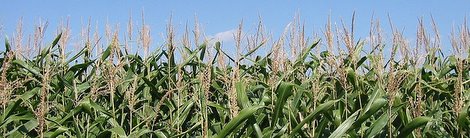
When corn is the only agricultural food available, or in areas with large numbers of deer, animals will begin to eat the green stalks and leaves during the summer! This stunts plant growth, deer make this a habit, and in some cases by late summer there may not be a stalk capable of producing an ear.
Not such a good deal if you are counting on hunting over your plot loaded down with ears of corn, but if the goal is to provide supplemental nutrition for deer during the summer stress period then you will definitely do that. Again, it depends on the location and the other foods available to deer.
Corn consumed during the summer is not the best deer food. At this time of year, corn is high in sugary carbohydrates and low in protein. In short, if you have moderate to low deer numbers and the proper soil and rainfall, corn is a strong winter attractor, provides much-need carbs during the hardest time of the year, and can improve your late season deer hunting.
Soybeans for Whitetail Deer
Soybeans make great spring and summer food plots! Soybeans are also fairly easy to establish and are as drought tolerant as grain sorghum. The plant is very good at extracting minerals from the soil that are in turn used by deer. There is little you can plant that draws bucks during the summer like soybeans.
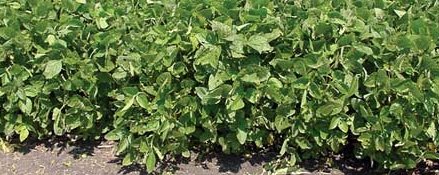
Although the beans themself provide plenty of protein, the leafy portions of the plant are also coveted by deer. During the summer, deer will only eat the leaves. However, if you have a high number of deer in your area the plants may be totally consumed before summer rolls around. Soybean plants are vulnerable when young and if a deer bites off the plant during the two-leaf stage, it will not grow back.
With that said, older soybean plants are resilient and can take a good amount of feeding pressure and still produce seed pods. Of course, once seed pods dry down, white-tailed deer will herd to soybean food plots during the fall and winter.
Deer and Spring Plots
When it comes to spring food plots for deer it does not get anymore basic than sorghum, corn and soybeans. All of these plants will perform well across the whitetail’s range. In addition, the seeds of all 3 are easy to purchase and plant, with sorghum being the easiest and probably the least attractive overall (at least initially until they become accustomed to it).
Before diving head-first into a new food plot project, whether it be 1/2 acre or 12 acres, evaluate the deer herd on the property as well as the property itself. Determine if the additional spring food provided by the plot will help achieve your objectives or if there are first aspects of the herd or habitat that should be address first.
Excellent article. My father and I are planting clover and some food plot mixes this year for the first time. We see plently of tracks but they are always going through our land, not to our land. Hopefully this year we will fare better.
Iron and clay peas make a high protein deer forage and are tougher to kill due to grazing. They grow good in the southeast as I plant it for myself and a number of clients in the Clarke City, Alabama, area. The down side is once whitetail deer know what they are looking for a year or two down the road, it’s hard to create any type of food plot using beans or peas into a 1 to 2 acre plot. They just overgraze it too early.
What else could I plant as a food plot to provide protein and forage during the antler growing stage and fawning period? We have high density deer numbers and our ground is sandy loam. The pH is 6.8 to 7.2 and we spare no expense when planting, so money is not an object. Please help.
Corn leaves contain 19% protein on a dry matter basis. Hence, the reason many are recomending it for cattle grazing in the late summer when there is limited amounts of other forages.
At our hunting club in Wikinson County, Mississippi, we have tried a variety of spring/summer plantings in our food plots. In addition to cowpeas and soybeans, we plant a mixture of alyceclover and joint vetch. Once the beans and peas get eaten, the other legumes are coming on. The alyceclover and joint vetch can stand the browsing pressure even in high deer density areas like Wilkinson County.
These plantings will typically last until the first good frost or until the plots get disked under for fall/winter food plots. I observed deer eating in spring/summer plots late into November 2009.
Alfalfa is hard to beat.
I am putting in a new food plot and can’t decide between corn or soybeans. Any suggestion will be greatly appreciated. Thanks.
Loren, why can’t you plant both? Food plots planted to several species have a greater chance of success. Treat your deer and go with both!
If you are in the northern half of the country, corn and soybeans probably make sense. In the south, the you don’t combine them in that the corn matures early and is consumed before the start of season. If you want to plant corn down this way, you need to plant about a month after the soybeans or you’re wasting your time.
This year is the first year I’ve decided to plant summer food plots. I need something high in protein and can withstand harsh, dry summers in northeast Alabama.
I am considering planting soybeans on one acre and a few half acre food plots in Central Oklahoma. The soil is not great. Has anyone had any experience with soybeans for food plots ion Oklahoma? When is the best time to plant.
Can you plant soybeans with alfalfa?
The short answer is “yes”. Now for the long answer… I’m guessing you are in an area of the country that lends itself to good climate for alfalfa. Soybeans, being a more vine type plants, could possibly out grow or “out perform” your alfalfa, thus creating a competition of sorts. So although they can be planted together, I would look at another mix.
Your on a good page though with the cover crops you are looking at. Both of them lend themselves to good forage… and in my field, good biomass for the soil. Let us know your soil types and we might be able to suggest a few mixes that could really bring in the wildlife, without putting a dent in your pocket book.
I planted a spring/summer food plot in southeast Texas where the wild hogs have been rooting around, which contain soybean, cowpeas, sorghum, buckwheat, millet, and sunflower. I planted all seed about an inch deep. Just wondering if the seed will even be there when I go back? Please let me know what anybody’s experiences have been with this. Trying to use the food plot to bring whitetail deer in.
Ok, Travis. You struck a cord with me in a good way. I manage about 13 food plots on my land, so I know a little. What I don’t know much about is the way you used the phrase “good biomass for the soil.” Alfalfa is luring more and more does in the last few years. I’ve tripled my resident does in 3 years. I just bulldozed about 3 acres of “crap” soil where cedars resided on a side of a hill. Some good dirt, but a lot of pea gravel in places too. The PH is 5 to 5.5. Yes, it’s limed…but this “biomass” you speak of. Any suggestions to improve this soil? I’d like to put in all clover/alfalfa. Soy beans get eating too quick. I’ve gone through the gimmick stages. I also am not sure what type of poison to put on the clover and alfalfa. 24D? Arrest/slayer..poast…let me know. My kill plots are all brassicas fyi.
Looking to plant some food plots this spring. What is the best performing crop for southeast Texas.
Robert, you’ve got lots of choices since you get lots of precipitation in East Tx. I would think about iron and clay cowpeas for sure, but also throw in some sorghum and annual sunflowers which will mature later in the summer and into fall.
New to food plots. I live in south central Kentucky and really have no idea for a good spring/summer food plot for deer. All I hear about is clover, but if everybody around me is planting clover why would the deer change their pattern for the same thing? Probably won’t. I’m looking at planting half an acre an acre.
Thanks
Gary, clover can make for a great food plot so do not be discouraged if “others” are planting clover, too. Whitetail have relatively small home ranges, so unless every property immediately around you has better food plots than you, why not go for it? Besides, deer use of food plots also depends on location. Maybe you can position yours where deer feel most comfortable?
Although clover is great, don’t get hung up on clover. Figure out your soils and go from there. I suspect you can grow most anything in that part of the country.
I hunt in Central Texas and have a lot of sandy loam soil. When I first started hunting out here there were a lot of peanut farmers. This area does not get a lot of rain, so I’m looking for a mixture that will grow well with little rainfall. I planted a store bought mix of sunflowers and milo and some other seeds last year and the sunflowers and milo came up well but nothing else. Any thoughts on what I could plant?
Edward, sandy loam soil is easy to work so that makes food plot prep easy. As for your plots, that part of Texas can have very high deer numbers. The first thing you may want to determine is whether some of the species you planted tried to grow and where mowed down by deer or if those certain species failed because they do not like your soil/plot site. I would try the same mix and include an exclusion cage (protects some part of the plot) so that you can at least determine whether the plot is growing for you or not. If the deer are keeping the other plants browsed down then you will want to increase the size of your food plot to address over-use.
I’m thinking about putting a mix in this spring, I live in North east Pennsylvania. My plan was to mix forage soy beans, sugar snap peas, and green beans. Does this mix sound like a winner?
Travis, a mix is definitely the way to go and I think your bean and pea mix can work well in your area. Just make sure to prepare the seedbed as well as possible and use an exclosure cage so that you can monitor the growth of the food plot compared to what they deer are consuming. Good luck!
I live in west central Georgia. I have never have planted anything for deer but fall plots. What do I plant in spring to keep my deer close? Every year four of us
hunting on 350 acres kill 3 to 5 nice 10 to 12 pointers. Any help would be appreciated. This is my families old cattle farm if that makes a difference.
Thanks, Bill
Bill, I’d recommend that you try lablab if you have more upland (drier) soils and cowpeas on more bottomland sites. Both can be planted at 10-20 pounds per acre. The perform best when soil is amended based on soil test and seed bed is properly prepared. Let us know how it goes.
I am in Eastern West Virginia. What would you plant in the summer for deer? I have planted turnips and they did very well, what else should I try? Thank you, Mark.
Mark, give soybeans a try if the deer density is no too terribly high in your area. Soybeans are high protein, produce a good amount of forage and are drought tolerant, so they can take summertime temps. It may take a year or two for your whitetail to get used to them, but once they get a taste of them you will be off to the races. Best of luck!
I am in Pearsall, Texas, on 800 acres. Each spring we plant about 30 acres of milo for a spring/summer whitetail/turkey/quail crop. The soil is very sandy and rainfall is sparse so the milo is about the only thing I have had success growing. For the fall/winter plots we plant oats and annual rye grass about the same size. Each “crop” is about 5 acres in size spread throughout the property and total about 30 acres in total.
I am just not too sure how beneficial the milo is for the deer. Would another spring/summer crop be better suited for the deer? I would prob still do some milo for the birds. What about for the fall crop? Would I be better off just using oats and stop the rye grass? Any help you can provide is appreciated.