What is Deer Management?
What is deer management and why are peopled interested in it? Well, white-tailed deer are a valuable resource. They have value in the eyes of landowners, deer hunters, and those that just enjoy watching them. Deer management is about managing deer habitat and deer populations to improve the overall health of the system. As it turns out, deer are a product of their environment. In addition, deer impact the habitat around them. Deer quality and habitat quality are directly related to each other.
Some beneficial outcomes of sound deer management program are excellent habitat, increased fawn survival, heavier deer and bucks with larger antlers. Furthermore, management results in a healthy property and better deer hunting. Managing deer and their habitat is an enjoyable and rewarding endeavor whether the goal is quality deer management or trophy deer management.
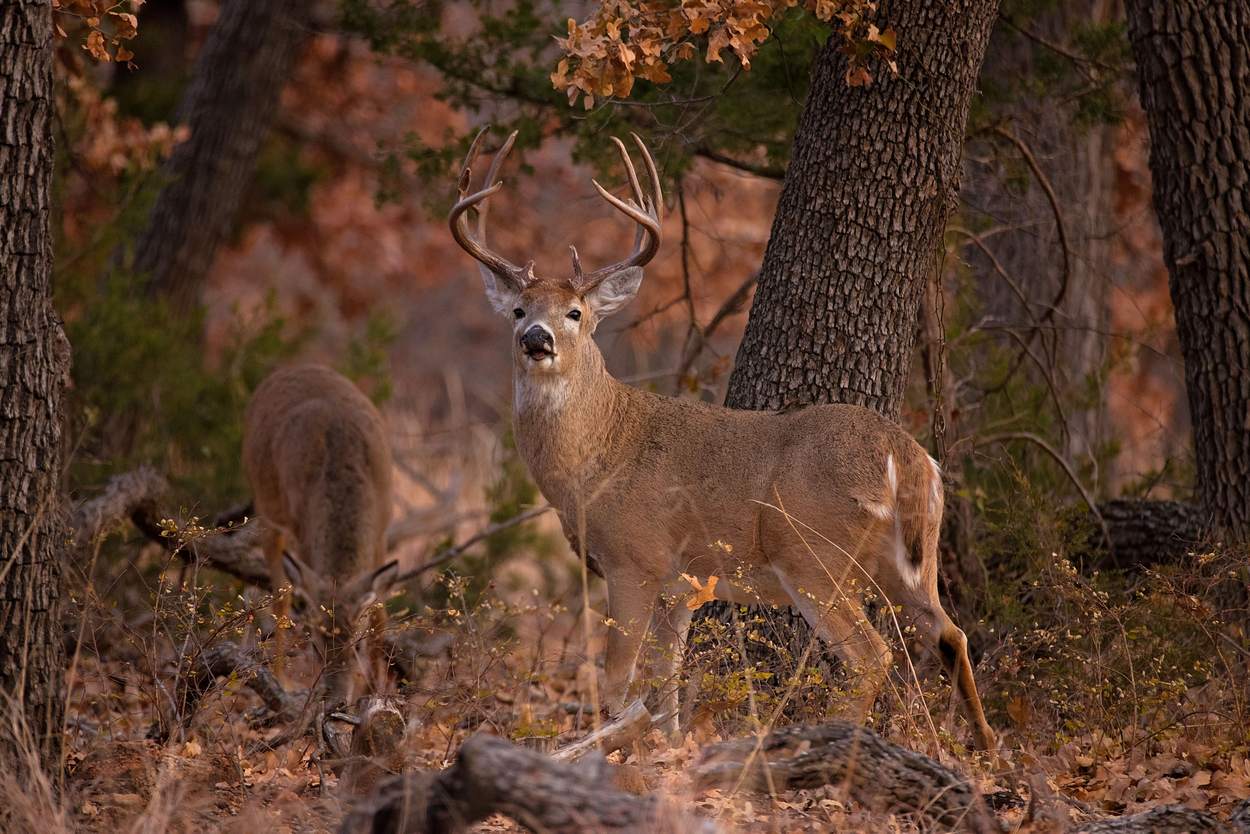
Evaluating Deer Habitat
White-tailed deer require food, cover, water and space. Whitetail thrive in high quality habitat. This is habitat that is comprised of a diversity of plant communities. In addition, these communities must consist of plants that provide both food and cover for deer. Plant availability and palatability change seasonally. As such, if a property is low in plant diversity it is potentially low on deer foods.
Each deer consumes just over 2,000 pounds of food annually. That’s a fair amount of groceries. Active deer management will ensure that forage availability exceeds the needs of the deer herd. Plant communities necessary for good white-tailed deer habitat:
- Screening Cover – Woodlands & shrublands
- Woodland Openings – Diverse browse availability
- Grasslands – Warm season perennial grasses and high forb diversity
- + Water Availability – Rivers, streams, creeks, ponds and/or troughs
The first step is to evaluate the habitat found on your property. This will help you identify limiting factors. Does the property offer enough screening cover? How much of the property is more than 100 yards from cover? Additionally, does the property have good browse composition? What are the preferred browse species in the area? Also, do you have them?
An inventory of available resources helps a manager evaluate a property’s strengths and weaknesses. In turn, this determines habitat needs. What are the limiting factors for deer on your property? You may need to modify the current land use. Once identified, the next steps involve managing the habitat so that those limiting factors no longer hold the deer herd back. It may take years to address initially, then a commitment to ongoing maintenance.
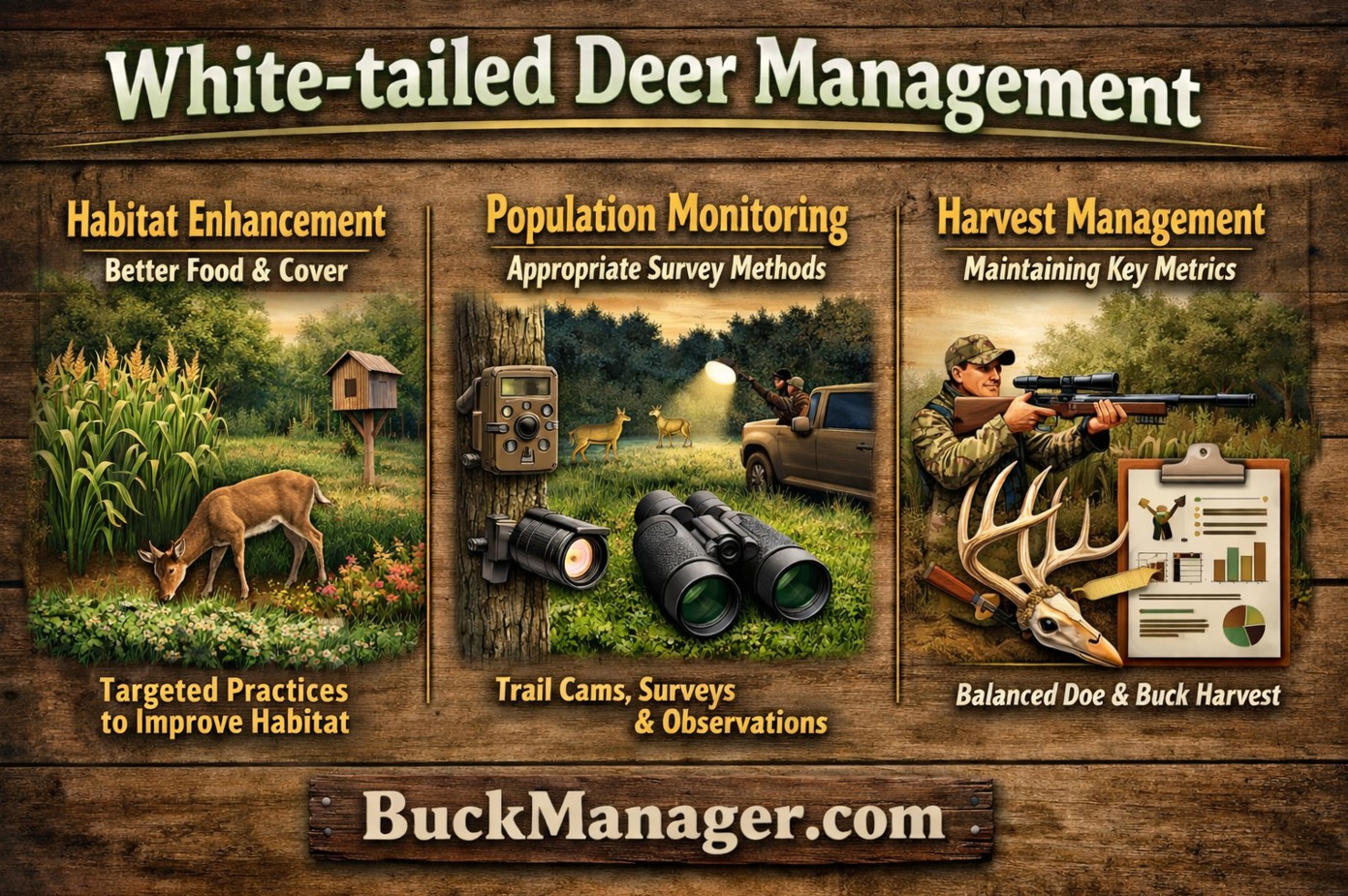
Deer Management is Habitat Management
There are many ways to maintain or improve habitat for white-tailed deer. In fact, deer habitat management practices include all activities that fit into these 5 categories: axe, cow, plow, fire and gun. We will discuss the last one (gun) later in the article. These practices will maintain or improve habitat for deer and other wildlife when properly carried out on a property. Deer habitat management includes:
- Chemical and Mechanical Brush Control
- Forest (Woodland) Thinning
- Rotational Grazing of Livestock
- Restoring Native Warm Season Grasses & Forbs
- Food Plots (Preferably Perennial)
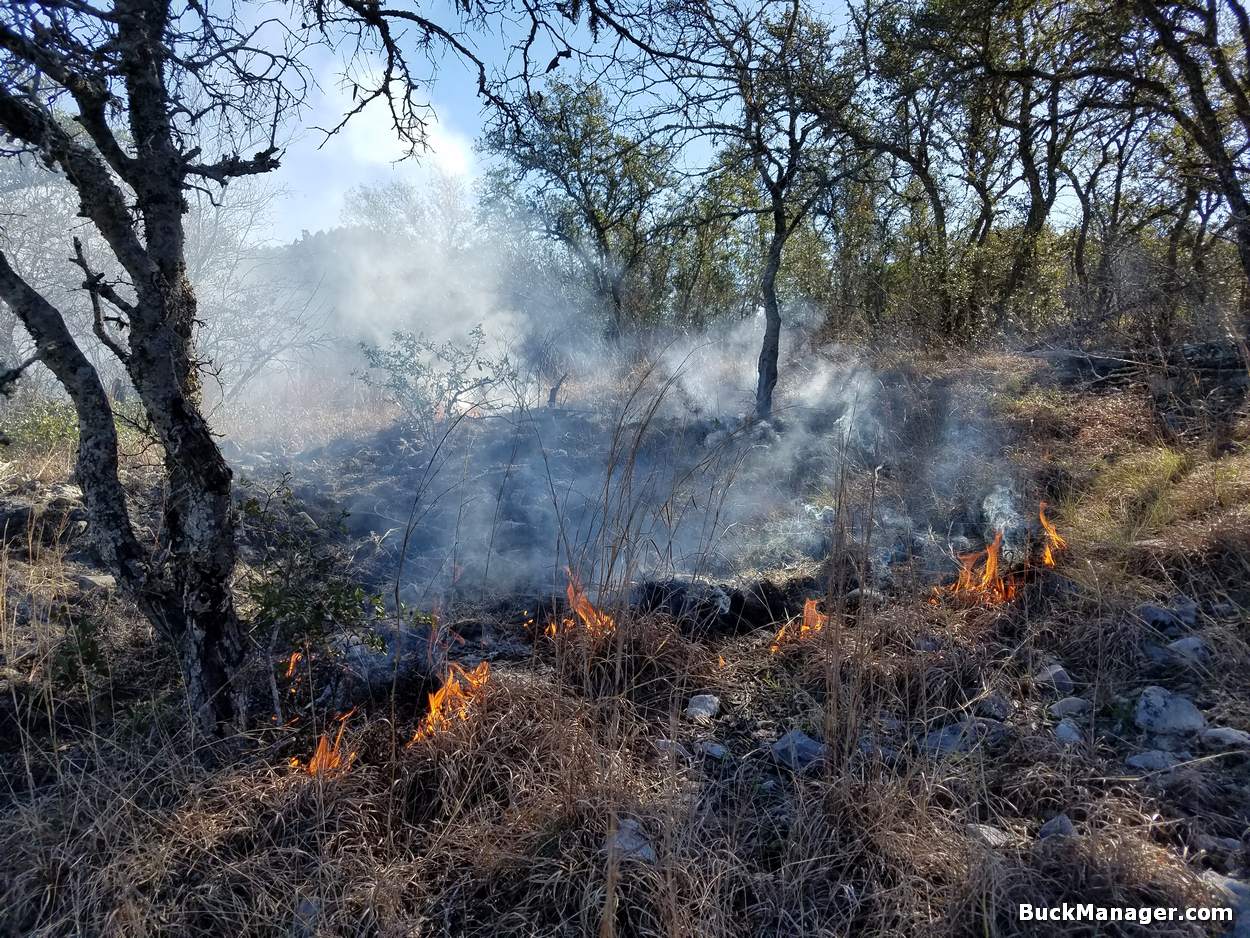
- Prescribed Fire
Mimicking or restoring natural processes are great ways to enhance white-tailed deer habitat. Furthermore, these practices impact many acres of habitat with a lower annual input. In Texas, land managers can mimic natural processes through the thoughtful use of livestock and by the periodic use of prescribed fire.
Cattle are a great habitat tool for landowners with a strong interest in deer management. A continuous grazing system with too many cows is detrimental to deer habitat. However, a rotational grazing system with a proper stocking rate is highly beneficial for habitat and deer. Additionally, cattle consume or trample old, rank grass which makes room for high quality forb growth. Deer relish high protein forbs. Conversely, whitetail eat very little grass.
Fire is a natural process that occurs throughout the whitetail’s range. Just as grazing thins grasslands and allows forbs to grow, fire reduces woody cover and promotes food plants for deer. Plants that benefit from fire include browse, grasses and forbs, too. Running a fire into open woodlands or savannah is an ideal way to manage habitat. In addition, fire will consume woody plants that have died naturally or that have been killed from other management actions.
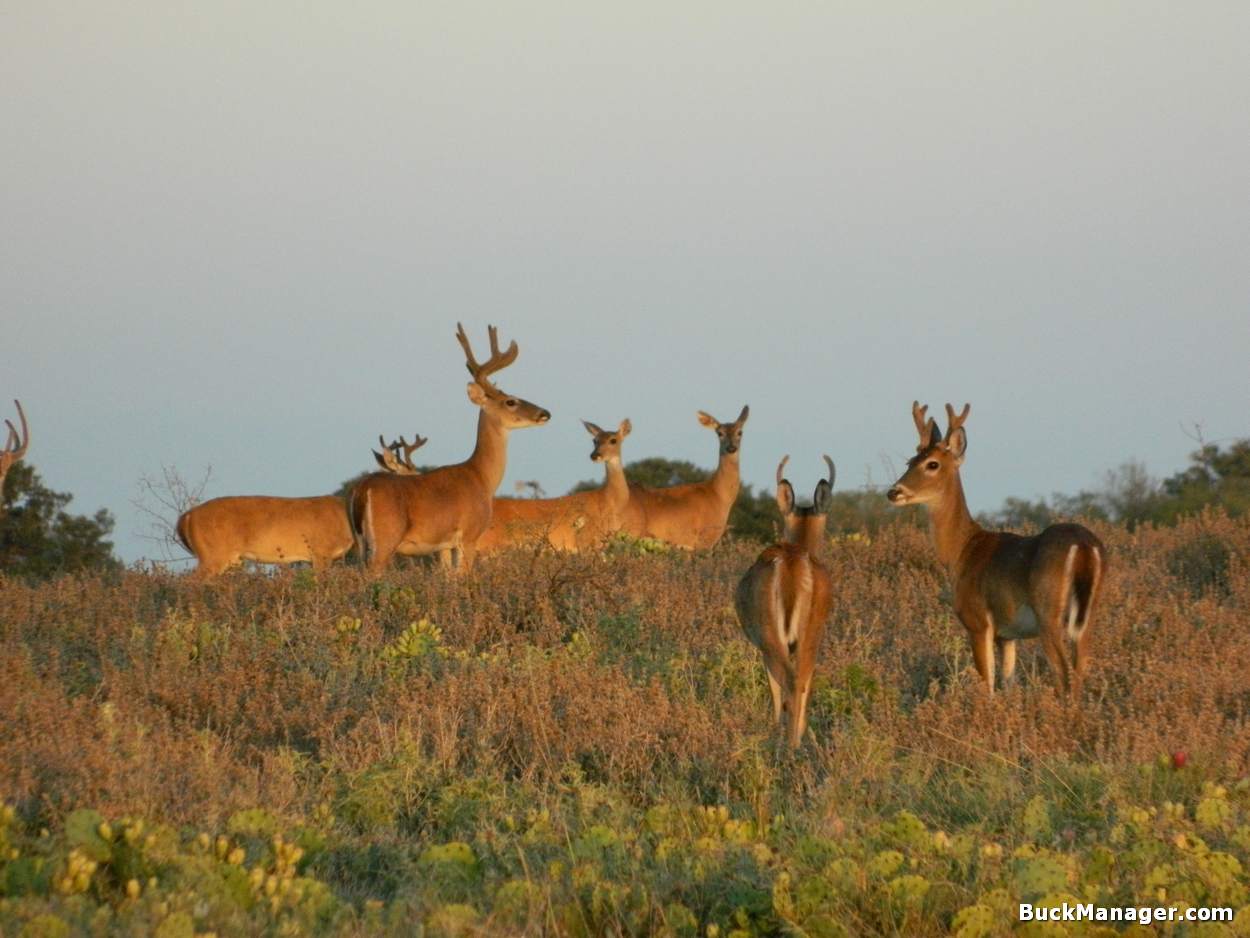
Evaluating the Deer Herd
Habitat improvement is just one part of deer management. Deer are the other part. Habitat was covered first in this article because plant communities are more important than deer from a results standpoint. Yes, deer harvest will change a deer population. However, the remaining deer will not change unless they live within good habitat. Often times, hunters and managers focus on only half of the equation, deer hunting and harvest.
Like habitat, it’s important to assess the deer population using a property. It takes surveys to estimate deer population parameters. In fact, an inventory of deer is critical for any deer management program. Deer surveys must be conducted annually to estimate the standing crop of deer. Surveys are typically conducted in late-summer and early-fall. Pre-hunting season surveys can annually estimate:
- Total Deer Density
- Buck:Doe Ratio
- Fawn Production
- Age Structure of Bucks
Estimating these herd parameters each year is critical to developing a “picture” of what the deer population looks like each year. Many hunters and alleged deer managers shoot “inferior” bucks to improve the deer herd. It’s really just a waste of time, at least management-wise, without improving the deer habitat or having a handle on what’s actually out there. But hey, it sounds good when they talk to their hunting buddies, right?
Harvest Management is Part of Deer Management
A land manager has several options when approaching deer population management. Harvest decisions, in particular, play a critical role in shaping the size, health, and habitat impact of the remaining deer population in a given area.
Quality deer management strives to produce healthy deer herds in balance with existing habitat conditions. It includes protecting young bucks from harvest and ensuring an adequate harvest of antlerless deer.
Trophy deer management also aims to keep deer numbers in line with habitat. However, this strategy aims to harvest mature bucks, 5½ to 7½ years old, with high scoring antlers. Additionally, this includes the harvest of some low-scoring middle-aged bucks and does are harvested to maintain optimum nutrition for the remaining deer herd.
Buck harvest rates vary from 15-30 percent annually in most deer management programs. It takes lower harvest rates for bucks to reach older age classes and reach full antler potential. However, the number of deer harvested will vary annually for any property managing deer. This yearly variation can be attributed to annual fawn survival; some years will be better than others.
Growing healthy deer and bucks takes age, nutrition, genetics. A manager of a free-ranging deer herd has control over the first two. Well, at least while deer are on their property. Genetics are nearly impossible to change within a free-ranging deer herd without drastic actions.
Deer Management Goals & Objectives
Starting a deer management program takes commitment. Deer habitat management is hard work. In addition, deer surveys take a fair amount of time annually. Improving the quality of the deer herd and enhancing the quality of available habitat may take several years to see results. Once you are all-in on the idea of deer management, start by setting goals and objectives for the property and the deer herd. It is critical that you develop a deer management plan.
A goal is an realistic outcome that is generally broad and long term. An objective is short term and defines measurable actions to achieve an overall goal. For example, your goal may be to improve the health of the deer and habitat found on your property. Some example objectives may include:
- Conduct prescribed fire on 60 acres in next 5 years
- Achieve a buck:doe ratio of 1:2 in 4 years
- Achieve density of 1 deer per 8 acres in 3 years
- Perform mechanical brush control on 20 acres this year
- Conduct 3 spotlight surveys in late-summer of this year
Of course, these objectives are only examples. An understanding of the the habitat and the deer population on your land is critical. This information is merely a snapshot of what you have on your property at the time. The objectives for your property will depend on where the habitat and deer herd are currently versus where you want the habitat and deer herd to be at some time in the future.
Deer Management & Realistic Expectations
Let’s keep it real. It’s all about planning and realistic expectations when it comes to wildlife and habitat improvement. Deer management promotes a balance between habitat and deer while moving towards realistic goals set by the manager. Ideally, this leads to an exciting deer hunting experience on a property with good habitat and big, healthy deer.
Hunting a deer herd with a balanced sex ration and a good number of mature bucks is very rewarding, whether you are a hunter or a landowner. Proper deer management should result in better habitat and better deer. Regardless of property size, I encourage you to do all that you can to improve the habitat and deer on your property. Lastly, please contact me if you have any questions.