Buck Manager: Harvest Management


Deer Habitat Should Provide Deer Foods »

Deer Habitat Should Provide Deer Foods

Each landowner or property manager must recognize the habitat needs of white-tailed deer on a continual basis and direct management towards meeting those needs. Since white-tailed deer have a relatively small home range of about ½ to 1-mile in radius over an annual basis, all of their needs for growth, reproduction, and cover must be met within this unit.

Whitetail will seldom move from within their home range to meet their needs, even though better conditions may exists in the surrounding area! Deer are very versatile in their feeding habits and will eat a wide variety of items, including fruits, browse, forbs, agricultural crops, and even small amounts of grass. Deer “perform” best in habitat where a great variety of preferred food items are present. (more…)

Managing White-tailed Deer on Fragmented Land »

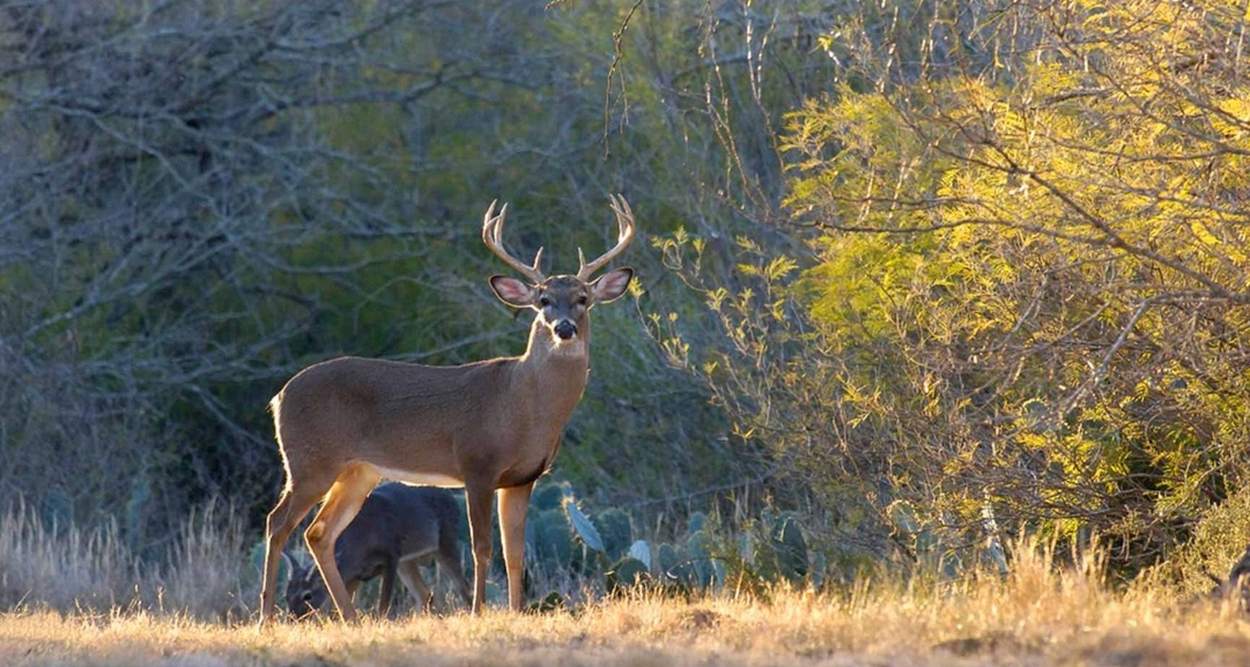
Buck on is home range

In general, white-tailed deer generally live within a home range of approximately one square mile. However, this range can increase during the breeding season, especially for bucks. Unless your property is high-fenced, a deer’s daily movements within that home range throughout the year often results in movements into habitat found on more than one adjoining landowner.

As a result, it is important to understand that landowners share individual animals. For this reason, the potential for successful white-tailed deer harvest management diminishes as landownership size decreases. It makes sense that as the size of individual ranches continues to decrease throughout an area, effective and meaningful management can be a challenge.

Fragmentation of habitat often results when changing land uses occur on adjoining tracts of land that were once uniform rangelands or woodlands. The increasing cost of land and the desire for folks to have just a small “piece of heaven” only increases fragmentation issues. (more…)

Harvest Rates for White-tailed Does »

Harvest Rates for White-tailed Does

A deer herd should be managed as two separate populations. The female segement of the herd must be managed to maintain productivity. The number of new deer added to the pre-hunt population is a function of the number of fawns born and their survival until until the fall. The number of fawns born is primarily determined by the number of does, but the survival of fawns, however, is mostly dependent upon the physical condition of does, although predation is certainly a factor is some situations. (more…)

The Question of Harvest Rates for White-tailed Deer »

The Question of Harvest Rates for White-tailed Deer

The question of how many deer to harvest and in what proportion is asked in developing all deer management plans, but seldom is answered in an objective manner. Ideally, a deer manager would know exactly how many deer of the proper age and sex should be present to best meet the management goals for a particular ranch or tract of land.

With accurate information on herd size, the buck to doe ratio and fawn survival, and with considerations for rainfall, habitat conditions, and hunting on neighboring property, the manager could then prescribe the percentage of the herd that should be harvested to optimize management objectives. Situations such as this where all pertinent information is availalbe are, of course, very rare in deer management. (more…)

Proper Harvest Essential for Good Deer Management »

Proper Harvest Essential for Good Deer Management
Harvest really is a key management tool required to manage white-tailed deer populations. However, remember that successful management must also involve proper habitat management. The basic strategy for deer population mangaement, which involves harvest, consist of the following:

1. Deer numbers must be maintained at or below the carrying capacity of the property to maintain excellent body condition and maximum antler growth. It’s kind of like cows in a pasture. You can have more, but body condition and overall health will suffer.

2. The desired sex ratio must be achieved for proper recruitment levels and desired harvest quotas. Maintaining too many does will require harvesting many deer each year. Too few does and recruitment may not be adequate to replace deer harvested.

3). The harvest rate of bucks must be established to attain the desired age structure of bucks available for harvest (which includes spikes and other culls as part of the buck harvest quota). A lower harvest rate keeps more bucks in the older age classes.

Deer Hunting in Texas: 2007-08 Looks Good »

Deer Hunting in Texas: 2007-08 Looks Good

Habitat conditions throughout most of Texas this year were in excellent condition thanks to the abundant rainfall we received throughout spring and summer. The plentiful rain translated into great warm-season forbs and browse production, which in turn put Texas’ white-tailed deer herd in outstanding condition. Bell county was no exception. Although conditions were not ideal for hunters heading to the field for the General Season opener (due to mild temperatures), that didn’t deter one Bell County hunter.

Deer Hunting in Texas: 2007-08 Looks GoodDeer Hunting in Texas: 2007-08 Looks GoodDeer Hunting in Texas: 2007-08 Looks GoodDeer Hunting in Texas: 2007-08 Looks Good

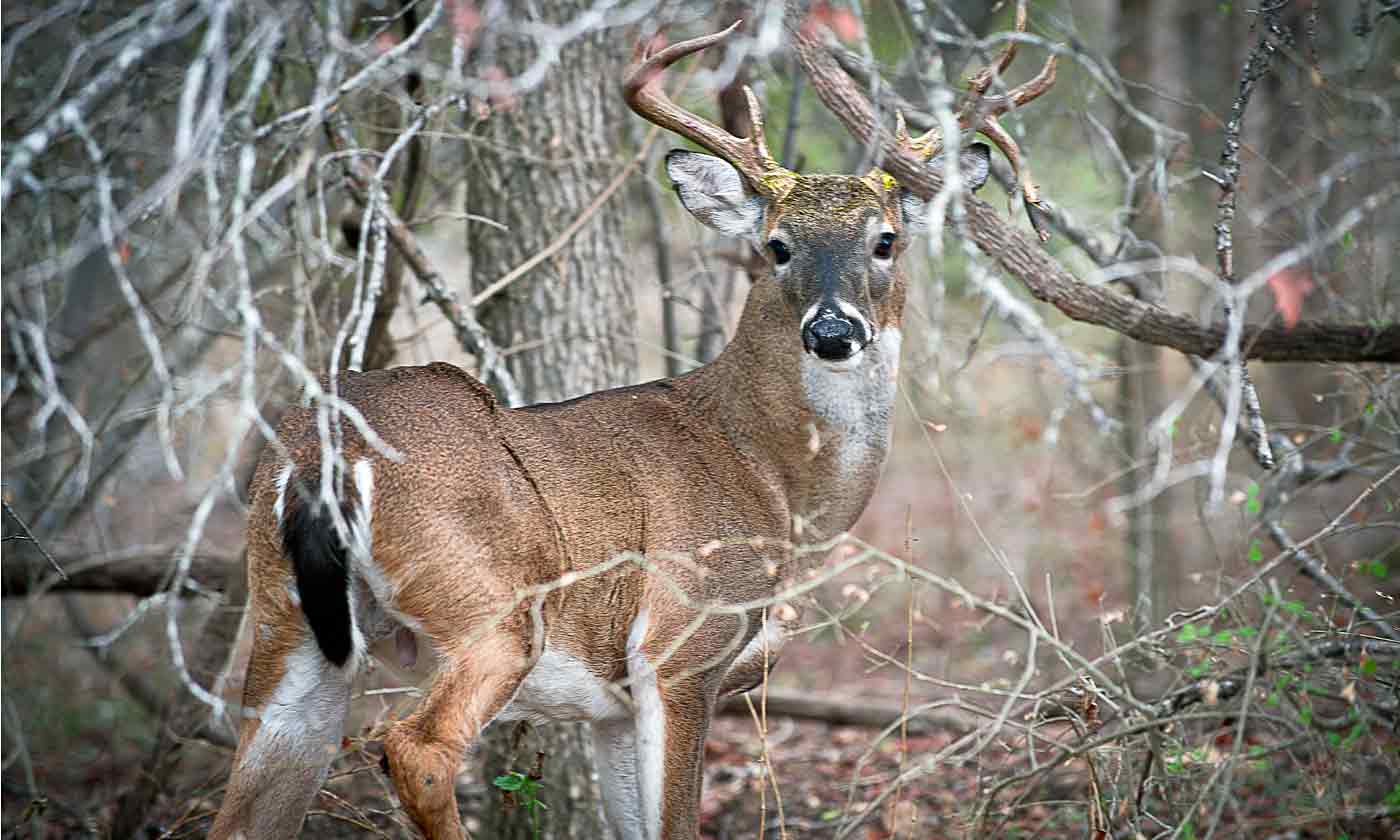
Opening morning didn’t bring the big boy out, but Sunday, just after 9:00 am, he saw this main-frame 8 point buck with split G2s step out that gross scored 130 2/8 Boone a Crockett inches, and that was enough reward for enduring the near 90 degree weather on Saturday. The buck’s main-frame 8 point rack grossed 119 2/8 inches and the buck had 11 inches of non-typical antler due to the split G2s.

Good habitat conditions, good body conditions… make for a nice 10 point buck!

Deer Surveys and Harvest Strategy »

Deer in the morning

Long-term planning is feasible in deer management, but different years can call for slight to moderate changes in annual harvests based on habitat conditions, fawn survival, and estimated population numbers. Without conducting a deer population survey to get a good estimate of your overall deer numbers and density, you are literally shooting into the wind. Although deer surveys are simply "good estimates" when properly performed, they will keep you on the right track with regards to your long-term management.  

Let's take a look at how annual changes in fawn survival can impact your annual harvests. For example, let’s assume you have a long-term goal of 100 deer on your property, the property is at carrying capacity (100 deer), and you have a 1:1 buck to doe ratio. If your late summer/early fall fawn crop is estimated at 50% (25 fawns from 50 does) then you need to remove 25 deer this fall.

However, if you have an 80% fawn crop next year, that is a total of 40 animals you have to remove from the deer herd to keep the population at carrying capacity. Although your long-term population goal stays the same, your annual harvests will fluctuate to some extent. This is an adaptive harvest strategy allows you to keep number in line with carrying capacity and stay on track. As you can see, getting annual estimates of the deer population as a whole, and particularly fawn survival, is important for the proper management of your deer herd.

Buck Harvest - How Many? »

How many bucks do I harvest? 

The harvest rate of bucks will be dependent on the objectives of the land manager. One of the concerns of many first-time and veteran deer managers is the age structure of the buck segment of the population. If one of the deer management objectives is to produce bucks with larger antlers, bucks must be allowed to reach older ages, which means that the harvest of young, immature bucks should be heavily restricted.

Restricting hunters to mature bucks only is a good management strategy to harvest old bucks, but does not address inferior bucks that are young or middle-aged. As a result, these deer must be carefully removed. Deer body characteristics, in addition to antler characteristics, should be used to determine the relative age of bucks “on-the-hoof.” Let’s discuss two different management strategies for the buck segment of your deer population.

(more…)