Lumpy Jaw
The white-tailed deer hunting season sneaks up on us each year. Most hunters are already in the woods looking for a big, mature buck. Hunters often see some strange things while in the woods. Have you ever seen lumpy jaw in deer? Sometimes, those odd things include deer afflicted with a variety of diseases and other internal and external physical issues.
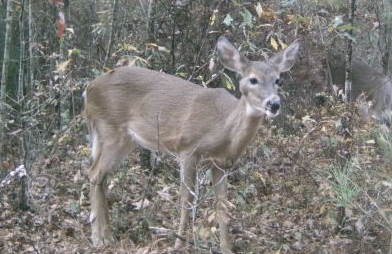
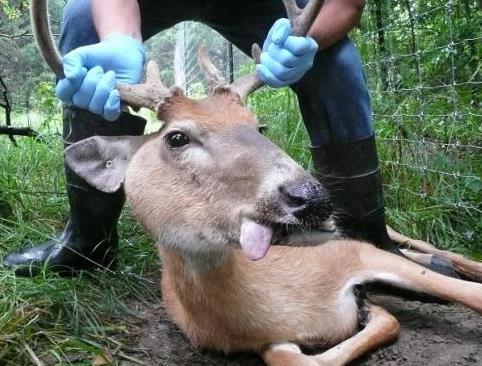
One fairly common problem in whitetail is lumpy jaw. The name “lumpy jaw” says it all because deer with this problem stick out; The animal looks like it has a lump between (or under) its jawbone and the hide. The lumpy jaw many hunters witness is the result of adult arterial nematodes (Elaeophora schneideri). These worms live primarily in the whitetail’s carotid arteries. In fact, partial paralysis of the deer’s jaw muscles occurs when high arterial worm infestations reduce blood flow.
Impact of Lumpy Jaw
An overabundance of arterial worms is bad news for deer. As a result of jaw muscle paralysis, food becomes trapped inside the deer’s mouth. This food becomes impacted and leads to the lumpy jaw and/or swollen cheek appearance. Over time, the impaction often causes tooth loss, bone decay, and sometimes even death.
So now your thinking, how do white-tailed deer get lumpy jaw? Good question! The common horsefly passes the nematode larvae from an infected deer to an uninfected one by feeding on deer blood. The horsefly carrying larvae-infected blood is ultimately what perpetuates this lumpy jaw condition in deer.
Lumpy Jaw & Deer Populations
Lumpy jaw in deer is widespread, but it poses little threat to deer populations. Luckily for property owners, hunters, and the deer, infection rates in are not high enough to impact white-tailed deer populations. Arterial worms, like most other deer issues, do not pose a risk to humans. Hunters can consume deer that exhibit lumpy jaw. Many deer have arterial worms and show no symptoms, so you’ve eaten deer with arterial worms.
However, as a hunter I don’t like to think it too much. Who wants to think about arterial worms, nasal bots, or any other of the many diseases, viruses, or things deer can possibly tote around?
More Lumpy Jaw in Deer?
Arterial worms are not the only game in town. Other creatures can give white-tailed deer that lumpy jaw appearance. A bacterium called Actinomyces bovis can also cause an infection of the jawbone. This bacterium is actually a common inhabitant of the mouths of healthy whitetail. It is only a problem when a sharp object such as a thorn punctures the inner lining of a deer’s mouth. This oral puncture allows A. bovis bacteria to invade the tissues.
Additionally, healthy deer — like all animals — can simply get large or odd-shaped food items caught in their mouth. However, food impaction in white-tailed deer is most often the result of arterial worms. This results in muscle issues that lead to food impaction and lumpy jaw syndrome. As mentioned, lumpy jaw in deer does not pose a health problem for hunters. The meat can be safely consumed.
Interested in dewormers effective in treating arterial worm in whitetail deer. Need treatment protocol.
Does anyone know of a treatment that is available for deer with lumpy jaw? Is lumpy jaw contagious?
Dear Dr. Artall, I believe that one of the female deer has this arterial worm disease. I would be so grateful if you could advise me how to help her. Thank you so much.
I have used ivermectin horse wormed in the past for worming some of the whitetail deer on my place for mange and lumpy jaw.
put in in some cracked corn small amount of wormed in about cup of cracked corn.
worked for the deer I treated.
Brandon, it sounds like the deer have all they handle at your buffet of offerings. Good nutrition aside, the best way to allow a buck to reach its potential is to let it reach maturity. Nothing tops age, but good food will help.
Wild deer with swollen jaw, assume she has lumpy jaw. It visits my yard for pieces of apple. Would ivermectin help it out, or is it even legal?
Raised a fawn whose mother was killed. He is now a 4 year old buck that visits me daily. He lets me pet him and eats from my hand. Last winter he returned after rut with a wound under his jaw. Think he fought with another buck and possibly broke his jaw or injured a tooth. It occasionally swells and drains, possibly Actinomyces bovis or an abscess tooth. Any suggestion for a home remedy? Thought about using honey as an antibiotic?
Freeda, honey may help because of it’s natural healing properties. Obviously, some sort of antibiotic would be best but giving free-ranging wildlife any type of pharmaceutical is illegal. Whitetail are tough animals so a good chance he shakes it off.
We have a doe with two small fawns visiting us every day. The mother has a swollen jaw with her tongue sticking out. We are worried. Can you recommend what authorities we need to notify about this in Somerset County, NJ?
Barbara, the best contact would be the nearest office of the NJ Division of Fish and Wildlife but they will likely not respond. The issue that your deer is facing is an individual deer issue, which is not a perceived threat to the deer population as a whole. Besides, the most likely do not have a vet on staff that could treat the animal.
I’ve recently noticed a wild deer in my yard with a very swollen jaw. I’m concerned that whether it’s bacterial or a parasitic infection it could spread to other deer or my pets. Any advice would be appreciated.
Christian, I understand your concern but there is not much that you can do with regard to protecting the other animals found in the area. Some deer will serve as host for arterial worms and may show no symptoms. The best thing one can do is keep the deer numbers in line with the available habitat so that minor issues are not cause for big issues.
I have a buck that has these symptoms, I’ve been making sure he’s eating, is there a dewormer or antiobiotic I can give him? I read another website & he said he gave his Wazine 34- he’s a deer farmer, I’d like to help him, please! He does come up to me, I can send you pictures of him.
Chrissy Rhoades, not sure of your exact situation but most states frown on medicating free-ranging deer. It’s illegal to treat wild deer (unless you are a permitted rehabber) and that deer may pose a risk to someone else should they harvest and consume it prior to the medication breaking down. If you have penned deer then there are likely some good online resources that can help you, but I don’t have a line on them.
I have a young deer who frequents my yard she has both cheeks swollen and they are growing. Is there something I can leave out for her that will help her? Thank you.
Patrick, there is nothing you can/should do to help this deer. It’s unfortunate for the deer, but not a threat to the overall population. However, I do appreciate your concern.